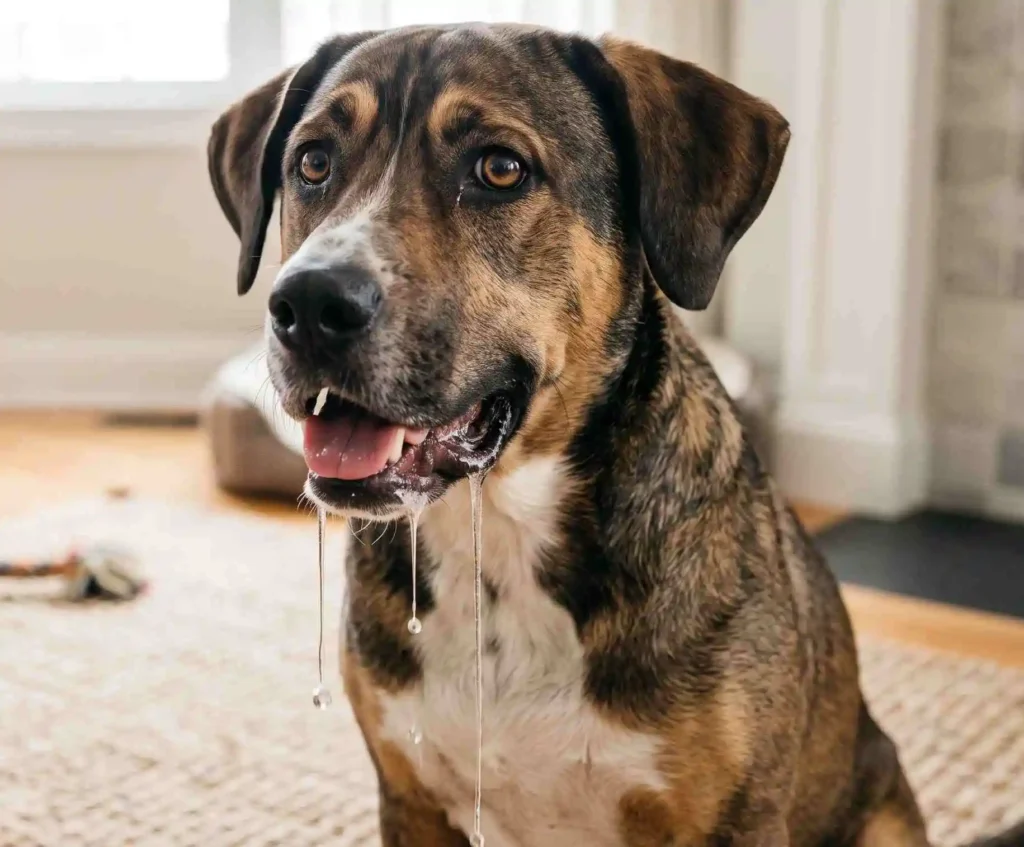
You reach down to pet your dog and your hand comes back soaked. There’s a puddle by the couch, a wet ring on the rug, and long ropes of slobber swinging from both jowls. If you’re asking yourself why is my dog drooling so much, you’re not overreacting. Some drool is normal, but a sudden change in how much your dog salivates is one of the clearest signals a dog can send you.
Quick Answer
Excessive drooling in dogs, called hypersalivation or ptyalism, usually comes from dental disease, nausea, heat stress, anxiety, or something stuck in the mouth. Most cases are minor and resolve once you find the trigger. Sudden heavy drooling paired with vomiting, a swollen face, pawing at the mouth, or collapse needs same-day veterinary care.
TL;DR: Breed and excitement explain a lot of everyday slobber, but a real change in drooling volume points to a problem in the mouth, the stomach, or the dog’s stress and temperature levels. Check the mouth first, rule out heat and toxins second, then call your vet if the drooling doesn’t stop within a day.
Key Takeaways
- Check inside your dog’s mouth first. Broken teeth, gum infection, and lodged sticks or bone fragments cause most sudden drooling.
- Drool plus lip-licking, swallowing, and grass-eating usually means nausea, not a mouth problem.
- Heat is a medical emergency. Thick, ropey drool with heavy panting means cool your dog down and call a vet.
- Some drooling is structural. Saint Bernards, Mastiffs, Newfoundlands, and Bloodhounds have loose lips that simply can’t hold saliva in.
- Any drooling with facial swelling, a foul smell, blood, tremors, or an inability to swallow is an emergency.
Why Excessive Drooling Matters
Saliva is a messenger. It tells you something changed inside your dog’s mouth, stomach, or nervous system before other symptoms show up.
Left unchecked, heavy drooling causes real problems. Constant moisture on the chin and neck creates lip fold dermatitis, a raw and infected patch of skin under the jowls. Dogs who drool because they can’t swallow properly lose fluids fast and slide into dehydration.
There’s a bigger reason to pay attention. Drooling is one of the earliest signs of toxin exposure and heatstroke, two situations where minutes matter. Owners who dismiss slobber as “just a messy dog” sometimes lose the window where treatment works best.
None of this means you should panic over a damp shirt. Most drooling has a simple explanation. The goal is knowing which type you’re looking at.
How Drooling Actually Works
Your dog has four pairs of salivary glands sitting around the jaw and under the tongue. They produce saliva constantly to soften food, protect the teeth, and help with swallowing.
Two things create visible drool. Either the glands make more saliva than usual, or the dog stops swallowing what they normally would.
The first type is called true ptyalism. Nausea, pain, and certain toxins all trigger the glands to flood the mouth. The second type is pseudoptyalism, where saliva production is normal but something blocks its exit. A tooth root abscess, a stick wedged across the roof of the mouth, or nerve damage all cause this.
Anatomy plays a role too. Breeds with heavy, pendulous upper lips have no reliable seal to hold saliva in. Their mouths simply leak. A Saint Bernard producing normal saliva looks like a disaster compared to a Border Collie producing the exact same amount.
Knowing which category you’re in narrows the search fast. Extra saliva points toward the stomach or the nervous system. Blocked saliva points toward the mouth.
The 9 Most Common Causes of Excessive Drooling
1. Dental Disease and Mouth Pain
This is the number one cause in adult dogs. Fractured teeth, gum infection, and tartar buildup all cause pain that triggers salivation. Look for bad breath, bleeding gums, chewing on one side, or reluctance to take hard treats.
2. Something Stuck in the Mouth
Sticks lodge across the upper palate. Bone shards wedge between molars. Fabric wraps around the base of the tongue. Dogs with a foreign object paw at their face and gag repeatedly.
3. Nausea and Stomach Upset
Dogs salivate hard right before vomiting. If your dog is drooling and swallowing repeatedly, nausea is likely. This often overlaps with vomiting white foam or throwing up yellow bile, both of which point to an irritated or empty stomach.
4. Heat Stress
Overheating dogs pant hard and produce thick, sticky drool. This is a genuine emergency. Understanding car and summer heat risks prevents most of these cases before they happen.
5. Anxiety and Motion Sickness
Stress activates the same nervous pathways as nausea. Car rides, vet visits, thunderstorms, and separation all produce drool. These dogs usually also pant, pace, tremble, or shake without an obvious reason.
6. Toxin or Plant Exposure
Bitter substances cause instant, dramatic drooling. Common culprits include lilies, sago palm, xylitol products, cleaning chemicals, toads, and topical flea treatments licked off the skin.
7. Bloat (GDV)
A distended abdomen with unproductive retching and heavy drool is a life-threatening emergency in deep-chested breeds. This one cannot wait.
8. Kidney or Liver Disease
Chronic organ disease causes ulcers in the mouth and constant nausea. Older dogs with gradual drooling, weight loss, and increased thirst need bloodwork.
9. Excitement and Food Anticipation
The harmless one. Dogs drool at the sight of dinner. If drooling appears only around food or play and stops afterward, you’re fine.
Common Mistakes Owners Make (and the Fixes)
- Assuming it’s “just their breed.” Even a Mastiff has a baseline. The fix: Compare today’s drooling to your dog’s normal, not to another dog’s.
- Reaching blindly into the mouth. A painful dog will bite, and you can push an object deeper. The fix: Use good light, lift the lips gently, and stop if your dog resists. Let a vet handle anything wedged.
- Waiting out heat-related drool. Heatstroke worsens by the minute. The fix: Move to shade, offer cool water, wet the belly and paws, and call your vet immediately.
- Treating nausea with human medication. Many human antacids and pain relievers are toxic to dogs. The fix: Withhold food for a few hours, offer small amounts of water, and call your vet for dosing advice.
- Ignoring the smell. Foul breath with drool almost always means infection. The fix: Book a dental exam rather than masking it with breath treats.
- Missing a slow-onset pattern. Gradual drooling over weeks reads as normal because the change is small each day. The fix: Take a short phone video monthly. Comparison beats memory.
- Skipping the tongue. Owners check teeth and stop. The fix: Look under the tongue, where string and fabric wrap most often.
Practical Tools That Reduce Drooling Triggers
Once you’ve ruled out an emergency, most manageable drooling traces back to three things you can control at home: dental health, eating speed, and stress.
Dental disease is the biggest single driver, and it builds silently. Brushing is the only home method that reliably slows tartar below the gumline. The Virbac C.E.T. Oral Hygiene Kit pairs poultry-flavored enzymatic toothpaste with both a fingerbrush and a standard brush, which matters because most dogs accept a finger long before they accept a brush handle. The enzymatic formula keeps working even if your dog swallows it, so no rinsing is needed. It’s best for owners starting a brushing routine from scratch with a cooperative dog. Honest limitation: it does nothing for existing tartar, so a dog with visible brown buildup still needs a professional cleaning first.
CHECK PRICE ON AMAZON: https://amzn.to/4bXfiRW
Gulping is the other quiet culprit. Dogs who inhale their food swallow air, which triggers nausea, lip-licking, and the drool that comes with it. Slowing the meal down often settles the stomach within days. The JASGOOD Slow Feeder Dog Bowl uses a raised maze pattern that forces a dog to work around ridges instead of scooping. It typically stretches a 30-second meal into several minutes, and the non-slip base stops the bowl from sliding across tile. Best for medium and large dogs who finish dinner before you’ve left the kitchen. Honest limitation: flat-faced breeds like Bulldogs and Pugs struggle with deep maze channels and often need a shallower design instead. If gulping is a persistent issue, our full slow feeder bowl guide covers sizing in more detail.
CHECK PRICE ON AMAZON: https://amzn.to/4bSghCM
For dogs who drool from stress rather than their stomach, a distraction that occupies the tongue works better than a treat. The LUKITO Lick Mat is a textured silicone pad that suctions to a wall or floor, spread with peanut butter or wet food. Licking is a self-soothing behavior in dogs, and the repetitive motion lowers arousal during car rides, grooming, and storms. Two mats come per pack, which helps if you want one at home and one in the car. Best for anxious dogs who need something to do with their mouth. Honest limitation: the suction cups lose grip on textured or bumpy surfaces, so it works best on tile, glass, or a smooth tub wall. Persistent stress drooling deserves a broader plan, which our dog anxiety guide walks through step by step.
CHECK PRICE ON AMAZON: https://amzn.to/4aQdOHT
Step-by-Step: What to Do When Drooling Starts
- Check for emergencies first. Look for a swollen abdomen, collapse, seizure activity, blue or bright red gums, or an inability to swallow. Any of these means go now.
- Note the timing. Did drooling start suddenly or build over weeks? Sudden onset points to a foreign object, toxin, or heat. Gradual onset points to teeth or organ disease.
- Inspect the mouth safely. In good light, lift the upper lip and pull the lower lip down. Check the gums, molars, roof of the mouth, and under the tongue. Stop immediately if your dog pulls away or growls.
- Take your dog’s temperature. Normal is roughly 101 to 102.5°F. Anything above 104°F combined with panting is a heat emergency.
- Scan the environment. Look for chewed plants, spilled cleaners, dropped medication, open trash, or an empty gum wrapper containing xylitol.
- Offer small amounts of water. Don’t let a panting dog gulp a full bowl. Small, frequent sips prevent both dehydration and vomiting.
- Withhold food for a few hours. If nausea is likely, resting the stomach often resolves mild cases on its own.
- Document it. Record a short video and note the time, duration, and any other symptoms. Your vet will use this.
- Wipe and dry the folds. Clean the chin and neck with a soft cloth and dry thoroughly to prevent skin infection.
Troubleshooting: If This, Then That
- If drooling started within minutes and your dog is pawing at the mouth, then suspect a foreign object or a stinging insect and call your vet.
- If drooling comes with lip-licking, swallowing, and grass-eating, then nausea is the likely driver. Rest the stomach and monitor.
- If drooling appears only in the car, then motion sickness or travel anxiety is the cause. Short practice drives and an empty stomach help.
- If drooling is thick, ropey, and paired with heavy panting, then treat it as heat stress and cool your dog immediately.
- If breath smells rotten and one side of the face looks puffy, then a tooth root abscess is likely. Book a dental appointment.
- If your senior dog has slowly increased drooling plus weight loss, then request bloodwork to check kidney and liver function.
- If drooling follows a flea or tick treatment, then your dog likely licked the application site. Call your vet before rinsing.
- If your dog is retching without producing anything and the belly looks tight, then treat it as bloat and go to an emergency clinic immediately.
When to See a Veterinarian
Book a same-day emergency visit for: a hard or distended abdomen, unproductive retching, collapse, tremors or seizures, pale or brick-red gums, a body temperature above 104°F, known toxin ingestion, or an inability to swallow water.
Schedule a regular appointment within a few days for: bad breath with drooling, visible tartar or a broken tooth, drooling that persists past 24 hours, blood in the saliva, facial swelling, or drooling accompanied by weight loss.
The American Veterinary Medical Association notes that periodontal disease is the most common clinical condition in adult dogs, and that it’s largely preventable with routine care. That statistic is why the mouth is always the first place to look.
Please treat everything here as general education. It isn’t a diagnosis, and no article can replace hands-on examination by your own veterinarian, who knows your dog’s history.
Expert Perspective
Veterinarians consistently rank the oral exam as the highest-yield first step in any hypersalivation case, and for good reason. The mouth contains the mechanical causes, the painful causes, and the infectious causes all in one place, and it takes under a minute to check. When the mouth is clean and comfortable, attention shifts to the gastrointestinal tract, and from there to toxin exposure and neurologic causes.
The American Kennel Club points out that context matters as much as volume. A dog who drools at the sound of the treat jar is behaving normally. A dog who drools while standing still, refusing food, or hiding is telling you something is wrong. Veterinarians also stress the value of a baseline: owners who know what their dog’s normal slobber looks like catch problems earlier than owners who don’t. That’s true whether you have a tidy-mouthed terrier or a Newfoundland with a permanently damp beard.
Frequently Asked Questions
Why is my dog drooling so much all of a sudden? Sudden drooling usually means a foreign object in the mouth, nausea, toxin exposure, or heat stress. Check the mouth and environment right away. If drooling continues past a few hours or comes with vomiting or swelling, contact your veterinarian.
Is drooling a sign my dog is in pain? Yes, it can be. Mouth pain from a fractured tooth or abscess is a common trigger. Abdominal pain also causes drooling. Look for other pain signals like reluctance to eat, hiding, restlessness, or sensitivity when touched.
Can anxiety cause a dog to drool? Absolutely. Stress activates the same nervous pathways that trigger nausea. Anxious dogs often drool during car rides, storms, vet visits, and separation. The drooling typically stops once the stressor ends and your dog settles.
Which dog breeds drool the most? Saint Bernards, Mastiffs, Newfoundlands, Bloodhounds, Boxers, Bulldogs, and Great Danes drool most. Their loose, pendulous upper lips can’t seal saliva inside the mouth. For these breeds, heavy drool is normal, but a sudden increase still matters.
Should I be worried about drooling with vomiting? Yes, monitor closely. Drooling before vomiting is normal nausea. But drooling with repeated unproductive retching and a swollen belly may indicate bloat, a life-threatening emergency. Seek immediate care if retching produces nothing.
Can dental problems cause excessive drooling? Dental disease is the single most common cause in adult dogs. Broken teeth, gum infection, and abscesses all trigger salivation. Bad breath, bleeding gums, and chewing on one side are supporting clues worth checking.
How do I stop my dog from drooling in the car? Feed several hours before travel, crack a window for airflow, and secure your dog so they can see forward. Short practice drives build tolerance. Ask your vet about anti-nausea medication for persistent motion sickness.
Is drooling always a medical problem? No. Excitement, food anticipation, hot weather, and breed anatomy all cause harmless drool. The concerning pattern is a clear change from your dog’s normal, especially when it comes with other symptoms.
What toxins cause sudden drooling in dogs? Common triggers include lilies, sago palm, xylitol, household cleaners, toads, certain mushrooms, and topical flea treatments that get licked. Contact your veterinarian or a poison control line immediately if exposure is suspected.
Can drooling cause skin problems? Yes. Constant moisture on the chin and neck folds leads to lip fold dermatitis, a red, inflamed, and often smelly skin infection. Wipe and dry the area daily if your dog drools heavily.
The Bottom Line
If you’ve been wondering why is my dog drooling so much, the answer is almost always hiding in one of three places: the mouth, the stomach, or your dog’s stress and temperature. Start with a careful look inside the mouth, since dental disease and lodged objects account for the largest share of cases. Rule out heat and toxins next, because those are the situations where speed genuinely changes the outcome. For everyday management, a consistent brushing routine, a slower meal, and a calm environment prevent most of the drooling you can actually control. Trust the pattern more than the volume. Your next step is simple: lift your dog’s lips tonight, take a good look, and book that dental exam if anything looks off.