You walk into the kitchen and find it — a puddle of white, foamy vomit on the tile. Your dog is standing a few feet away, looking up at you with those guilty-but-confused eyes. Your stomach drops. Is this serious? Should you rush to the emergency vet, or is your pup just dealing with a basic upset stomach? Dog vomiting white foam is one of the most common reasons owners panic, but understanding what’s behind it can save you a lot of unnecessary stress.
Quick Answer
Dog vomiting white foam usually happens when your dog’s stomach is empty and produces excess gastric acid, bile, and mucus that mix with air. In most cases it signals a mild stomach irritation, an empty belly, or eating too fast. However, repeated white foam vomiting — especially with lethargy, bloating, or loss of appetite — can point to more serious conditions like bloat (GDV), kennel cough, or pancreatitis that need urgent veterinary attention.
TL;DR: A single episode of white foam vomit in an otherwise playful, eating-normally dog is rarely an emergency. Multiple episodes within 24 hours, foam paired with dry heaving, or any additional symptoms like swollen abdomen or refusal to eat mean a vet visit is needed right away.
Key Takeaways
- White foam vomit is often caused by an empty stomach, eating too fast, or mild acid reflux — not always a crisis.
- Bloat (GDV) is the most dangerous cause and shows specific warning signs: unproductive retching, swollen belly, and restlessness.
- Withhold food for 12–24 hours after vomiting, then reintroduce a bland diet slowly.
- A slow feeder bowl and smaller, more frequent meals can prevent repeat episodes tied to gulping food.
- Two or more vomiting episodes in 24 hours, blood in the vomit, or signs of pain always warrant a vet call.
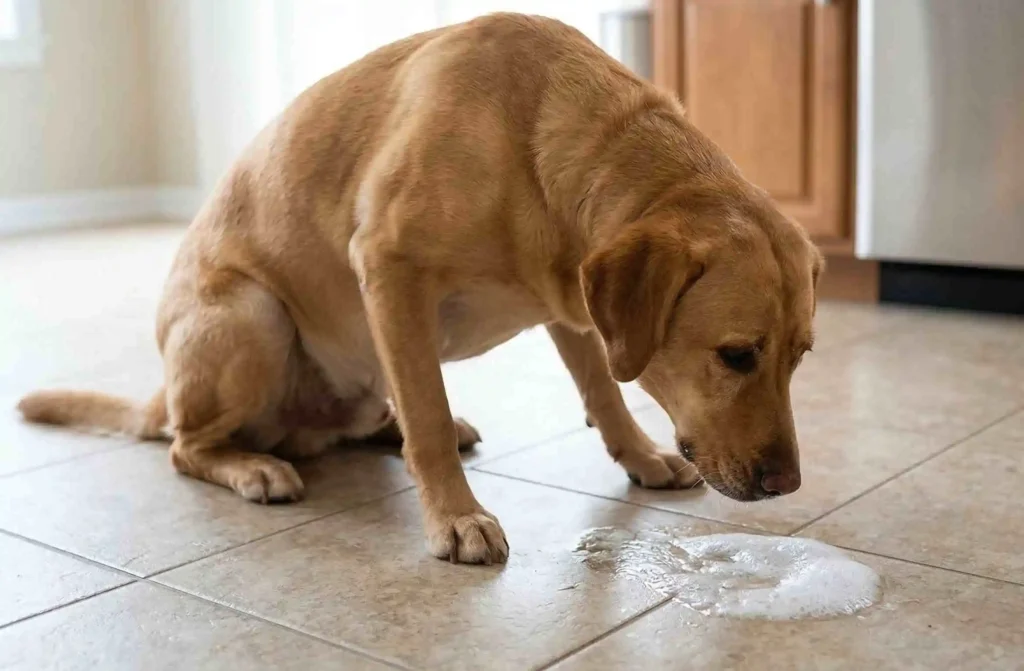
Table of Contents
Why Dog Vomiting White Foam Matters
It’s tempting to shrug off a single vomiting episode. Dogs eat grass, steal garbage scraps, and occasionally throw up — that’s just dog life, right? Usually, yes. But white foam specifically tells you something important about what’s happening inside your dog’s digestive system.
White foam forms when stomach acid, mucus, and air combine in an empty or nearly empty stomach. Think of it like the froth on a shaken bottle. When this happens once, it typically means your dog’s stomach lining got mildly irritated. When it keeps happening, it can signal chronic acid buildup, an underlying infection, or a structural emergency like gastric dilatation-volvulus (GDV).
The real risk isn’t the foam itself. It’s what you might miss by assuming every episode is harmless. Conditions like kennel cough and bloat both cause white foam vomiting but require very different responses. That’s why paying attention to the pattern — how often, what else is happening, and how your dog acts afterward — matters more than the vomit itself.
How Your Dog’s Stomach Produces White Foam
Your dog’s stomach constantly produces hydrochloric acid and a protective mucus layer. When food is present, the acid breaks it down normally. When the stomach is empty for too long, that acid has nothing to work on. It irritates the stomach lining, triggering a vomit reflex.
The “white foam” is essentially a cocktail of gastric mucus, a small amount of bile, saliva, and swallowed air. The churning motion of the stomach whips it all together into that frothy, sometimes bubbly texture you see on the floor. This is different from yellow bile vomit, which typically means bile from the small intestine has refluxed backward. If your dog is throwing up yellow bile instead, the cause and approach can differ.
In healthy dogs, the stomach lining repairs itself quickly. A one-off episode of white foam after a long gap between meals is the digestive equivalent of your own stomach growling too loudly. It’s uncomfortable, but not dangerous on its own.
9 Common Causes of White Foam Vomiting
Understanding the specific trigger helps you respond correctly. Here are the most frequent reasons dogs vomit white foam.
1. Empty Stomach (Bilious Vomiting Syndrome)
The most common culprit. When a dog goes too long without food — often overnight — stomach acid builds up and irritates the lining. This typically happens first thing in the morning and resolves once the dog eats.
2. Eating Too Fast
Dogs that gulp their food swallow large amounts of air along with barely chewed kibble. That air mixes with stomach acid and often comes right back up as white foam, sometimes within minutes of finishing the bowl.
3. Acid Reflux (Gastroesophageal Reflux)
Just like in humans, dogs can experience acid reflux where stomach contents push upward into the esophagus. The resulting irritation triggers foamy vomiting, lip-licking, and sometimes grass eating.
4. Kennel Cough
This upper respiratory infection causes a harsh, honking cough that can be forceful enough to trigger gagging and white foam vomiting. If your dog was recently at a boarding facility, dog park, or grooming salon and develops a persistent cough, kennel cough is a likely suspect.
5. Dietary Indiscretion
Dogs are opportunistic eaters. Getting into the trash, eating grass, or sampling something they shouldn’t can irritate the stomach lining and produce foamy vomiting as the body tries to expel the offender.
6. Pancreatitis
Inflammation of the pancreas — often triggered by fatty foods — causes nausea, vomiting (including white foam), abdominal pain, and a hunched posture. This is more common in middle-aged and overweight dogs.
7. Bloat / Gastric Dilatation-Volvulus (GDV)
This is the emergency. The stomach fills with gas and can twist on itself, cutting off blood supply. Dogs with GDV retch and produce white foam but cannot actually vomit up food. They pace, drool heavily, and the abdomen visibly distends. Large, deep-chested breeds like Great Danes, German Shepherds, and Standard Poodles are at highest risk. GDV is fatal without immediate surgery.
8. Toxin Ingestion
Household chemicals, certain plants, xylitol, and medications can all cause foamy vomiting as one of the first symptoms. If you suspect your dog ate something toxic, the approach differs significantly from a simple upset stomach — learn about activated charcoal and toxin response as a starting point, but always call your vet or the ASPCA Poison Control hotline (888-426-4435) first.
9. Inflammatory Bowel Disease (IBD)
Chronic inflammation of the gastrointestinal tract can cause intermittent vomiting, including white foam. IBD often comes with recurring diarrhea, weight loss, and a dull coat. It requires veterinary diagnosis and long-term management.
Common Mistakes Dog Owners Make (and Fixes)
- Mistake: Feeding a full meal right after your dog vomits. The fix: Withhold food for 12–24 hours to let the stomach settle, offering small sips of water only.
- Mistake: Assuming all vomiting is the same. The fix: Note the color, texture, frequency, and timing. White foam in the morning once a week is very different from white foam every few hours with lethargy.
- Mistake: Giving human antacids without vet guidance. The fix: Some vets do recommend famotidine (Pepcid AC) at specific doses, but never give any medication without calling your vet for the correct dosage based on your dog’s weight.
- Mistake: Ignoring unproductive retching. The fix: If your dog is trying to vomit but nothing comes up, and the abdomen looks swollen, treat this as a potential bloat emergency. Get to a vet within minutes, not hours.
- Mistake: Letting your dog eat too fast after a fasting period. The fix: Reintroduce food gradually with a bland diet — boiled chicken and plain white rice — in small portions every 3–4 hours.
- Mistake: Skipping breakfast for your dog. The fix: If your dog regularly vomits white foam in the morning, split their daily food into 3 smaller meals instead of 2, with one small portion right before bedtime.
Practical Solutions for Repeat White Foam Vomiting
When your dog vomits white foam more than once, the root cause often involves how they eat rather than what they eat. Two of the most effective interventions are slowing down mealtime and supporting gut recovery after episodes.
Dogs that inhale their food swallow excessive air, which directly contributes to foamy vomiting and increases the risk of dangerous bloat. A simple design change in the food bowl can make a real difference.
Outward Hound Fun Feeder Slo Bowl is one of the most popular slow feeder bowls for dogs prone to gulping. The raised ridges and maze-like pattern force your dog to work around obstacles, naturally slowing eating speed by up to 10 times. It holds up to 4 cups of food, works for medium and large breeds, and the non-slip base keeps it in place on hard floors. The one downside is that some very determined power-chewers may damage the ridges over time, so it works best for dogs that eat enthusiastically but aren’t destructive with their bowls.
CHECK PRICE ON AMAZON: https://amzn.to/40buzas
After a vomiting episode, your dog’s gut flora often takes a hit. Restoring healthy bacteria can speed recovery and reduce the chance of another episode.
Purina Pro Plan Veterinary Supplements FortiFlora is a veterinarian-recommended probiotic that contains a guaranteed level of live beneficial microorganisms. Each single-serve sachet sprinkles easily over food, and most dogs love the taste. It’s especially useful during and after GI upset, including vomiting episodes, antibiotic courses, and diet transitions. FortiFlora works for dogs of all sizes and ages. The main limitation is that it addresses symptoms rather than root causes — if your dog has chronic vomiting, you still need a vet diagnosis alongside probiotic support.
CHECK PRICE ON AMAZON: https://amzn.to/3ZySvV4
Step-by-Step: What to Do When Your Dog Vomits White Foam
- Stay calm and observe. Watch your dog for 15–30 minutes. Are they acting normal afterward? Playing, wagging, interested in you? Or are they lethargic, pacing, or trying to retch again?
- Check for emergency signs. Feel the abdomen gently. If it’s distended, hard, or your dog yelps in pain, go to the emergency vet immediately. Look for unproductive retching, excessive drooling, and restlessness — these are bloat warning signs.
- Remove food but offer water. Take away the food bowl for 12–24 hours. Provide small amounts of fresh water every 30 minutes to prevent dehydration. If your dog vomits up water too, stop offering it and call your vet.
- Monitor frequency. A single episode followed by normal behavior usually needs only observation. Two or more episodes within a few hours require a vet call.
- Check their temperature. A normal dog temperature is 101–102.5°F (38.3–39.2°C). Anything above 103°F or below 99°F alongside vomiting suggests infection or shock. Having a reliable thermometer at home helps you give your vet accurate information fast.
- Start a bland diet. After the fasting period, offer a small amount (¼ cup for small dogs, ½ cup for larger dogs) of boiled boneless chicken mixed with plain white rice. Feed this 3–4 times daily for 2–3 days before gradually mixing back in regular food.
- Track and report. Write down the time, appearance, and frequency of vomiting episodes. Note what your dog ate in the last 24 hours, any new treats or table scraps, and recent exposure to other dogs. This information helps your vet enormously.
One tool that helps with step 5 is a dedicated pet thermometer so you aren’t guessing about fever.
iProven Dog & Cat Thermometer (DTK-117Y) gives you an accurate rectal temperature reading in about 20 seconds — much faster than standard human thermometers. The flexible tip makes it more comfortable and safer for your dog, and it’s fully waterproof for easy cleaning. It’s a small investment that pays off every time your dog is sick and you need to decide between “wait and see” and “call the vet now.” The downside is that most dogs dislike rectal thermometers regardless of the design, so you may need a helper to keep your dog still.
CHECK PRICE ON AMAZON: https://amzn.to/3ZCZVqo
Troubleshooting: Quick If/Then Guide
- If your dog vomits white foam once in the morning but eats and acts normally → Then try splitting meals into 3 portions with a small bedtime snack. This usually resolves bilious vomiting syndrome within a few days.
- If the foam has pink or red streaks → Then call your vet the same day. This could indicate stomach ulceration or esophageal irritation.
- If your dog vomits foam and has a honking cough → Then suspect kennel cough, especially if they’ve been around other dogs recently. Most cases resolve on their own, but a vet can prescribe cough suppressants for comfort.
- If your dog retches but nothing comes up and the belly looks bloated → Then treat it as a life-threatening emergency. Drive to the nearest emergency vet immediately.
- If vomiting foam follows eating garbage or a new food → Then withhold food for 12–24 hours and monitor. If symptoms worsen or last beyond 24 hours, see your vet.
- If your dog is a puppy under 6 months vomiting white foam → Then see a vet sooner rather than later. Puppies dehydrate quickly and are more vulnerable to parvovirus and intestinal parasites.
When to See a Vet
Not every white foam episode needs a clinic visit, but certain combinations of symptoms do. Contact your veterinarian right away if you notice any of these:
- Vomiting more than 2–3 times in 24 hours
- Unproductive retching with a distended abdomen (possible bloat — go NOW)
- Blood in the vomit or blood in the stool
- Refusal to eat or drink for more than 24 hours
- Lethargy, weakness, or collapse
- Fever above 103°F
- Known or suspected ingestion of a toxic substance
- Vomiting in a puppy under 6 months or a senior dog over 10 years
- White foam vomiting that recurs weekly or more often despite diet changes
According to the AVMA, persistent vomiting can lead to dangerous dehydration and electrolyte imbalances. Don’t adopt a “wait it out” approach if the signs above are present.
Expert Opinion
Veterinarians consistently point out that the color and consistency of vomit provides valuable diagnostic clues. White foam specifically suggests upper GI involvement — meaning the stomach or esophagus — rather than lower intestinal problems. According to the AKC Canine Health Foundation, bilious vomiting syndrome (the most common cause of morning white foam) responds well to simple dietary management in the majority of cases.
That said, the veterinary community strongly cautions against assuming any repeated vomiting pattern is “just their stomach.” Chronic vomiting, even when it seems minor, can mask conditions like early-stage kidney disease, Addison’s disease, or gastrointestinal tumors. If your dog vomits white foam more than once a week for three or more weeks, a full veterinary workup — including blood panel and potentially abdominal imaging — is warranted. This information is intended as general guidance and should not replace a professional veterinary diagnosis for your individual dog.
Frequently Asked Questions
Why does my dog vomit white foam in the morning?
This usually indicates bilious vomiting syndrome, where stomach acid builds up overnight in an empty stomach. Feeding a small snack before bedtime often stops it within a few days.
Is white foam vomiting a sign of bloat?
It can be. If your dog is retching with no food coming up, pacing, drooling excessively, and the abdomen looks swollen or hard, these are bloat warning signs. Seek emergency veterinary care immediately.
Can I give my dog Pepcid for white foam vomiting?
Some veterinarians do recommend famotidine (Pepcid AC) for dogs with acid reflux. However, you should never give any medication without your vet confirming the correct dosage for your dog’s specific weight and condition.
How long should I withhold food after my dog vomits white foam?
Withhold food for 12–24 hours while offering small sips of water. Then reintroduce a bland diet of boiled chicken and rice in small, frequent portions before gradually returning to regular food.
Should I be worried if my puppy vomits white foam?
Puppies dehydrate faster than adult dogs and are more susceptible to serious conditions like parvovirus. If a puppy under 6 months vomits white foam even once, a vet check is recommended as a precaution.
Does white foam vomiting mean my dog was poisoned?
Not necessarily, but toxin ingestion is one possible cause. If you notice chewed packaging, missing household chemicals, or your dog had access to toxic plants, call your vet or ASPCA Poison Control (888-426-4435) immediately.
Can eating too fast cause white foam vomiting?
Yes. Dogs that gulp food swallow excess air, which mixes with stomach acid and often returns as white foam. Using a slow feeder bowl and splitting meals into smaller portions usually fixes this.
What’s the difference between white foam and yellow bile vomiting?
White foam indicates an empty stomach with excess acid and mucus. Yellow bile means bile from the small intestine has refluxed into the stomach. Both can stem from an empty stomach, but yellow bile more often signals bile reflux specifically.
When is white foam vomiting an emergency?
It’s an emergency when paired with unproductive retching, distended abdomen, collapse, blood in the vomit, known toxin exposure, or if the dog is a very young puppy showing signs of dehydration or weakness.
Can stress cause my dog to vomit white foam?
Yes. Anxiety, sudden changes in routine, travel, or loud events can trigger stress-related nausea and foamy vomiting. If your dog is prone to anxiety-driven stomach upset, addressing the underlying stress through behavioral support is key.
Wrapping Up
Dog vomiting white foam looks alarming, but in most cases it comes down to a simple explanation — an empty stomach, eating too fast, or a mild irritation that passes on its own. The key is knowing which situations call for patience and a bland diet, and which ones demand an immediate vet visit. Pay attention to the pattern, not just the single episode. Keep a pet thermometer handy, consider a slow feeder if gulping is the issue, and never hesitate to call your vet when something feels off. Your instincts as a dog owner matter. If your gut says something is wrong, trust it and get your dog checked out. That peace of mind is always worth it.