You fill the bowl with kibble, set it down, and before you can even stand up straight — it’s gone. Your dog inhaled the entire meal in 30 seconds flat, and now he’s gagging, burping, or looking at you for more. Sound familiar? You’re not alone. Fast eating is one of the most common feeding problems dog owners face, and a slow feeder dog bowl is one of the simplest tools to fix it.
Quick Answer: A slow feeder dog bowl is a specially designed dish with raised ridges, mazes, or patterns that force your dog to eat around obstacles. This slows down meal time from seconds to several minutes, reducing the risk of bloat, vomiting, and choking. It benefits any dog that gulps food, regardless of size or breed.
TL;DR: If your dog finishes meals in under two minutes, a slow feeder bowl is worth trying. It turns mealtime into a gentle puzzle, protects against dangerous digestive issues, and costs less than a single vet visit.
Key Takeaways
- Dogs that eat too fast swallow excess air, which can trigger bloat — a life-threatening emergency.
- Slow feeder bowls extend meal time from 30 seconds to 5–15 minutes with zero training required.
- Look for BPA-free, non-slip designs that match your dog’s muzzle size.
- Slow feeders double as mental enrichment, keeping your dog calmer after meals.
- Transition gradually — start with a simpler pattern and work up to more complex designs.
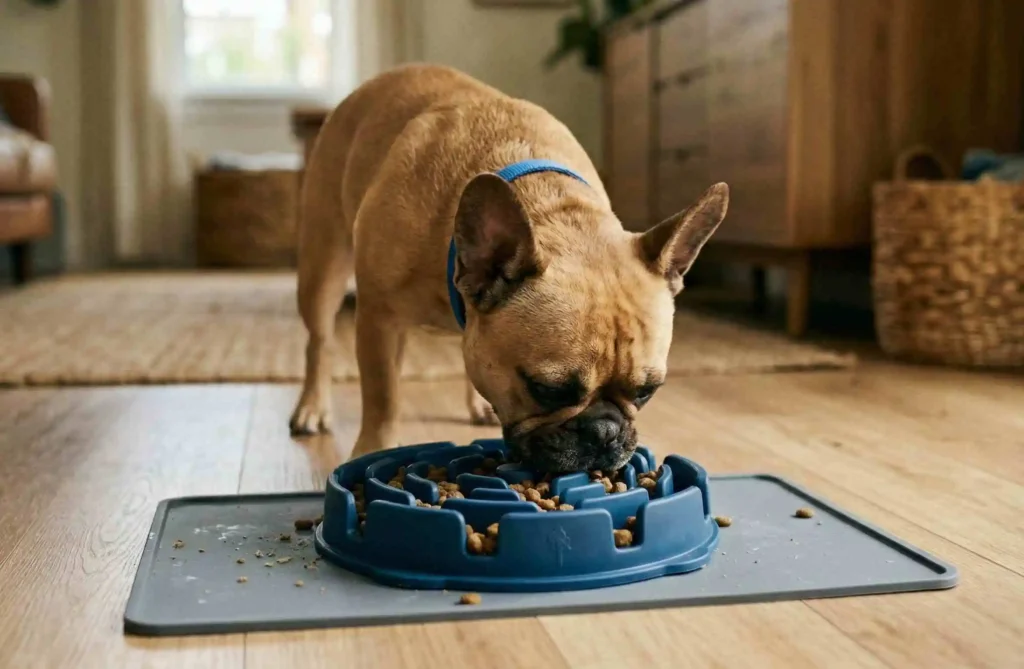
Table of Contents
Why Fast Eating Actually Matters
Most owners laugh off speed-eating as a quirky habit. But veterinarians take it seriously. When a dog inhales food, they swallow large amounts of air along with barely chewed kibble. That air builds up inside the stomach, and in large or deep-chested breeds, this can lead to Gastric Dilatation-Volvulus (GDV) — commonly known as bloat. According to the American Kennel Club, GDV is one of the leading causes of death in large breeds, and eating too quickly is a recognized risk factor.
Even if your dog isn’t a large breed, fast eating causes everyday problems you’ve probably already noticed. Vomiting undigested food shortly after meals. Painful gas and stomach distension. Choking on large chunks of kibble. These aren’t minor inconveniences — they’re signs your dog’s digestive system can’t keep up with how fast food is going in.
If your dog frequently throws up yellow bile or undigested food after meals, speed-eating could be the hidden cause.
How Slow Feeder Bowls Actually Work
The concept behind a slow feeder is wonderfully simple. Instead of a flat, open surface where food sits in a pile, a slow feeder bowl has built-in obstacles. These can be ridges, spirals, channels, or maze-like patterns molded into the base of the bowl.
Your dog has to use their tongue to work food out from between the ridges. They can’t scoop up a mouthful the way they would from a standard bowl. This forces smaller bites, more chewing, and natural pauses between each lick. A meal that used to disappear in 30 seconds now takes anywhere from 5 to 15 minutes.
The slowing effect also triggers better digestion. Smaller bites mean less air swallowed. More chewing means saliva mixes with the food before it reaches the stomach, which kickstarts the breakdown of starches and fats. Your dog absorbs more nutrition from the same amount of food simply because they’re eating it properly.
Think of it as the canine version of “chew your food.” Except your dog won’t listen to that advice — so the bowl does the work for them.
Common Mistakes Dog Owners Make with Slow Feeders (and Fixes)
Even though slow feeder bowls are straightforward, owners still run into avoidable problems. Here are the most common ones:
- Choosing a pattern that’s too difficult on day one. Some dogs get frustrated with complex mazes and give up or flip the bowl. The fix: start with a simpler ridge pattern and upgrade once your dog gets comfortable.
- Buying a bowl that’s too small for the dog’s muzzle. Flat-faced breeds like Bulldogs and Pugs struggle with deep, narrow channels. The fix: pick a wide, shallow design with gentle ridges for brachycephalic dogs.
- Not securing the bowl on the floor. Determined eaters will push, flip, or carry the bowl across the room to dump the food. The fix: choose a bowl with a non-slip rubber base, or place it on a silicone mat.
- Using a slow feeder only for kibble. Wet food, raw food, and even food mixed with healthy superfoods for dogs all work in slow feeders. The fix: spread wet food into the grooves for an even longer, more enriching meal.
- Never cleaning the ridges properly. Food residue builds up in the grooves and harbors bacteria. The fix: soak the bowl in warm soapy water after every use and scrub between the ridges with a bottle brush. Choose dishwasher-safe models when possible.
- Expecting the bowl to fix anxiety-based gulping. Some dogs eat fast because of resource guarding or stress, not habit. The fix: address the root cause with mental stimulation toys and separate feeding stations if you have multiple dogs.
Choosing the Right Slow Feeder for Your Dog
Not every slow feeder is created equal. The right one depends on your dog’s size, eating style, and muzzle shape. Here’s what actually matters when you’re shopping.
For medium to large dogs who inhale kibble, you want a bowl with deep, complex ridges and a wide base that won’t tip. Outward Hound Fun Feeder Slo Bowl is one of the most popular options on the market for good reason. It holds up to 4 cups of food, features a flower-shaped maze pattern that genuinely slows eating by up to 10x, and has a non-slip rubber base that stays put on tile and hardwood. It’s made from BPA-free, food-safe ABS plastic and is top-rack dishwasher safe — which matters when you’re scrubbing those ridges daily. The main limitation is that very large, aggressive eaters can occasionally nudge it across the floor despite the rubber base. Placing it on a silicone mat solves that.
CHECK PRICE ON AMAZON: https://amzn.to/40buzas
If you have a large breed with a wider muzzle — think Labradors, Golden Retrievers, or German Shepherds — the ridge pattern matters even more. A bowl designed specifically for bigger dogs prevents frustration and fits more food. JASGOOD Slow Feeder Dog Bowl is built with an anti-gulping design that targets large and medium breeds. The wider channels accommodate bigger muzzles comfortably, and the raised pattern is complex enough to slow eating without making your dog work so hard they quit. It’s sturdy, easy to clean, and specifically engineered to help prevent bloat and choking. One honest note: the plastic is slightly thinner than the Outward Hound, so it’s best suited for dogs that aren’t aggressive bowl-chewers.
CHECK PRICE ON AMAZON: https://amzn.to/4bSghCM
Step-by-Step: How to Transition Your Dog to a Slow Feeder Bowl
Switching bowls sounds simple, but a little patience goes a long way — especially for dogs that get anxious around food.
- Start alongside the old bowl. For the first two meals, place a small portion of food in the slow feeder and the rest in the regular bowl. Let your dog explore the new bowl on their terms.
- Gradually shift the ratio. Over the next 3–4 days, put more food in the slow feeder and less in the regular bowl. Most dogs figure out the pattern quickly and start working the ridges naturally.
- Remove the old bowl entirely. By day 5 or 6, serve the full meal in the slow feeder. Stay nearby for the first few solo meals to make sure your dog isn’t getting frustrated or trying to flip the bowl.
- Praise calm eating. When your dog slows down and licks food from the grooves patiently, offer quiet verbal praise. You’re reinforcing a behavior you want to last.
- Adjust difficulty over time. If your dog masters a simple pattern and starts eating fast again, try a more complex design or add a thin layer of wet food to increase the challenge.
- Monitor portion sizes. Slow feeders can make it harder to eyeball how much food you’re serving. Measure portions with a cup before pouring to keep calories consistent.
- Clean the bowl after every meal. Those ridges trap tiny food particles. A quick soak and scrub prevents bacterial growth and keeps the bowl hygienic.
Troubleshooting: When the Slow Feeder Isn’t Working
Even the best tools need a little fine-tuning. Here are quick fixes for common problems:
- If your dog flips the bowl → Switch to a heavier ceramic slow feeder or use a suction-cup mat underneath. Some dogs outmuscle lightweight plastic.
- If your dog seems frustrated or whines → The pattern might be too complex. Drop back to a simpler design or spread food more loosely across the ridges so it’s easier to access.
- If your dog still finishes in under two minutes → Try freezing a thin layer of wet food or peanut butter inside the bowl the night before. Frozen food dramatically increases eating time.
- If your flat-faced dog can’t reach the food → Choose a shallow, wide-ridged slow feeder specifically designed for brachycephalic breeds. Deep maze patterns are not suitable for short muzzles.
- If your dog pushes the bowl into a corner and eats from the edge → Your dog found a workaround. Try a bowl with taller, more varied ridges or switch to a puzzle feeder for a different kind of challenge.
- If your dog shows signs of dry heaving after eating → This could indicate they’re still swallowing air. Check that the kibble size is appropriate for the feeder’s groove width, and consult your vet.
When to See a Veterinarian
A slow feeder bowl solves many speed-eating problems, but some symptoms need professional attention. See your vet promptly if you notice:
- A swollen, hard abdomen after meals — this could signal bloat, which is an emergency.
- Repeated vomiting or diarrhea that doesn’t improve after switching to a slow feeder.
- Your dog refusing to eat from any bowl, which may indicate dental pain or nausea.
- Excessive drooling, pacing, or restlessness after meals — classic signs of GDV.
- Weight loss despite eating normal portions.
Veterinarians recommend treating bloat symptoms as an emergency. According to the American Veterinary Medical Association, GDV can become fatal within hours without surgical intervention. If your dog’s stomach looks distended and they can’t settle after eating, don’t wait — go to the emergency vet.
Expert Opinion
Veterinary nutritionists consistently point to eating speed as one of the most underestimated risk factors for canine digestive problems. Slowing a dog’s eating rate does more than prevent vomiting — it improves nutrient absorption, reduces gas, and lowers the statistical risk of GDV in predisposed breeds. Studies published in veterinary journals have shown that dogs eating from slow feeders consume the same calories but experience significantly fewer post-meal complications.
From a behavioral standpoint, slow feeders also provide mental enrichment. Working for food is a natural canine behavior — wolves and wild canids spend hours foraging. A slow feeder bowl taps into that instinct, turning a passive activity into an engaging one. Dogs that eat from slow feeders often show calmer post-meal behavior, less begging, and improved focus during training sessions.
Frequently Asked Questions
Are slow feeder dog bowls safe for puppies?
Yes. Puppies benefit from slower eating just like adult dogs. Choose a small, shallow design with gentle ridges so your puppy doesn’t get frustrated. Always supervise young puppies during meals.
Can I use a slow feeder with wet or raw food?
Absolutely. Spread wet food or raw food into the grooves and channels. It works even better than kibble because the food sticks to the ridges, making meals last longer.
How much slower will my dog eat with a slow feeder?
Most dogs go from finishing in under 60 seconds to taking 5–15 minutes. The exact time depends on the bowl’s pattern complexity and your dog’s determination.
Do slow feeder bowls actually prevent bloat?
They reduce a major risk factor — eating too quickly and swallowing air. While no product can guarantee bloat prevention, slowing eating speed is one of the most commonly recommended precautions by veterinarians.
What size slow feeder should I get?
Match the bowl’s capacity to your dog’s meal size. Small dogs do well with 1–2 cup bowls. Medium to large dogs need 3–4 cup capacity bowls with wider channels.
My dog pushes the slow feeder around. What can I do?
Choose a bowl with a non-slip rubber base or place it on a silicone mat. For persistent pushers, a heavier ceramic slow feeder stays put better than plastic options.
Can a slow feeder replace a puzzle toy?
A slow feeder provides some mental stimulation, but it’s not a substitute for dedicated puzzle toys. Use both for a well-rounded enrichment routine.
How often should I clean a slow feeder bowl?
After every meal. Food gets trapped in the grooves and breeds bacteria quickly. Soak in warm soapy water and scrub between ridges. Dishwasher-safe bowls make this much easier.
Are stainless steel slow feeders better than plastic?
Stainless steel is more durable and resists odors, but plastic slow feeders offer more complex ridge patterns. BPA-free plastic from reputable brands is safe. Choose based on your dog’s chewing habits.
Do slow feeders work for dogs that eat from raised bowls?
Some slow feeders fit into elevated bowl stands, but check dimensions first. Most slow feeders are designed for floor-level use and work best that way.
Wrapping Up: Give Your Dog the Gift of Slower Meals
A slow feeder dog bowl is one of the easiest, most affordable changes you can make to protect your dog’s health. It takes a problem that worries thousands of owners — frantic, too-fast eating — and solves it without medication, training, or expensive vet visits. Your dog gets better digestion, less bloating, and a more satisfying meal experience. You get peace of mind knowing every dinner isn’t a choking hazard. If your dog finishes meals before you can close the food bag, today is the day to make the switch. Pick a bowl that fits your dog’s size, start the transition gradually, and watch the difference it makes at the very next meal.