Meta Title: Dog Treadmill Guide: Safe Indoor Exercise for Every Breed Meta Description: Is a dog treadmill right for your pup? Learn how to choose one, train your dog to use it safely, and keep them fit year-round with this complete guide. URL Slug: dog-treadmill-complete-guide
It’s pouring rain for the third day straight. Your dog stares at you from the couch, tail thumping, full of energy with nowhere to spend it. You’ve already played every indoor game you know. Sound familiar? A dog treadmill can be the answer to those stir-crazy days when outdoor walks just aren’t possible.
Quick Answer: What Is a Dog Treadmill?
A dog treadmill is a motorized or manual walking platform designed specifically for dogs to walk, trot, or run indoors. It provides consistent exercise regardless of weather, schedule conflicts, or physical limitations that keep owners from walking their dogs. Dog treadmills benefit high-energy breeds, overweight dogs on vet-prescribed fitness plans, and senior dogs needing gentle, controlled movement.
TL;DR: Dog treadmills give your pup a reliable indoor workout when outdoor exercise falls short. They’re especially useful for active breeds, dogs recovering from injury, and owners with demanding schedules. Start slow, never leave your dog unsupervised, and always pair treadmill time with mental stimulation.
Key Takeaways
- A dog treadmill is not a replacement for walks — it supplements outdoor exercise and solves weather, schedule, or mobility barriers.
- Proper introduction matters — rushing your dog onto a moving belt causes fear and refusal. Gradual, positive training is essential.
- Size and speed range must match your dog — a Chihuahua and a German Shepherd need very different machines.
- Never tie your dog to a treadmill — this is dangerous and can cause serious injury or panic.
- Combine treadmill sessions with mental enrichment — physical exercise alone doesn’t tire a dog out completely.
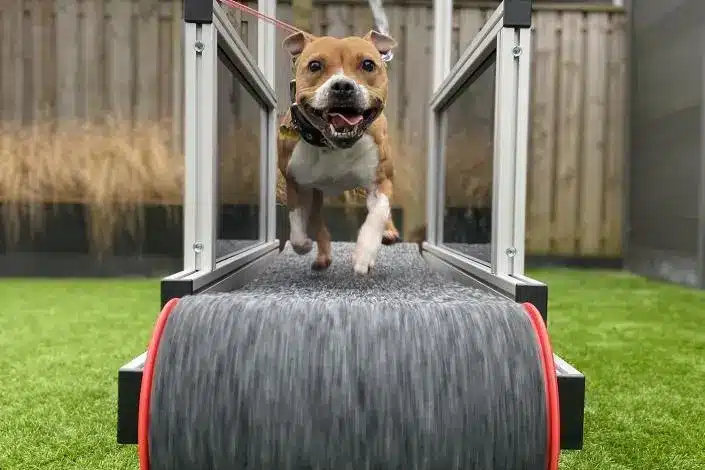
Table of Contents
Why a Dog Treadmill Matters for Your Dog’s Health
Lack of exercise is one of the leading contributors to canine obesity, joint problems, and behavioral issues. According to the Association for Pet Obesity Prevention, over 50% of dogs in the U.S. are overweight or obese. That excess weight puts strain on joints, shortens lifespan, and increases the risk of diabetes and heart disease.
A dog treadmill addresses exercise gaps that many owners face. Maybe you work long hours. Maybe your dog needs more movement than your body can provide. Maybe you live in a region with extreme heat, ice, or heavy rain for months at a time.
Veterinarians frequently recommend treadmill exercise for dogs recovering from orthopedic surgery, dogs with arthritis who need controlled low-impact movement, and high-energy breeds that simply can’t burn enough energy on a 30-minute walk. If your dog already deals with joint stiffness or mobility issues, a treadmill offers a controlled way to keep them moving without overexertion.
The key word is “controlled.” Unlike a romp at the dog park, a treadmill lets you set the exact speed, duration, and incline. That precision is valuable for weight loss plans and rehabilitation programs alike.
How Dog Treadmills Work: The Basics
Dog treadmills come in two main types: motorized and manual (dog-powered).
Motorized treadmills run on electricity and let you set a specific speed. They’re ideal for consistent pacing, structured exercise programs, and dogs who need to maintain a steady gait. Most models include side panels to keep your dog centered on the belt.
Manual or self-powered treadmills move only when your dog walks on them. These tend to be quieter and let your dog set their own pace naturally. They work well for smaller dogs and for owners who want a simpler setup.
The running surface is longer than a human treadmill because dogs have a longer stride relative to their body. Side rails or panels prevent your dog from drifting off the belt. Some models include a front bar or bumper that your dog walks toward, keeping them oriented forward.
A few things that separate dog treadmills from human ones: lower speed ranges, wider and longer belts, quieter motors, and no handrails blocking a dog’s movement. You can use a human treadmill for a dog in a pinch, but dedicated dog models are safer and more practical for regular use.
Common Mistakes Dog Owners Make With Treadmills (and How to Fix Them)
Mistake 1: Forcing your dog onto a moving belt on day one. The fix: Start with the treadmill turned off. Let your dog sniff it, walk on the still belt, and eat treats on the surface for several days before you ever press “start.”
Mistake 2: Setting the speed too high too soon. The fix: Begin at the slowest possible speed — a gentle walk. Increase speed only after your dog is visibly comfortable and relaxed at the current pace.
Mistake 3: Tying or leashing your dog to the treadmill. The fix: Never attach your dog’s leash to the machine. If they panic or stumble, being tethered can cause choking or dragging injuries. Stay beside them and use treats to encourage forward movement.
Mistake 4: Leaving your dog unsupervised. The fix: Treat every treadmill session like you’re spotting someone at the gym. Stay within arm’s reach the entire time.
Mistake 5: Using the treadmill as a complete substitute for outdoor time. The fix: Dogs need more than physical exercise. Walks provide sniffing, socializing, and environmental enrichment that a treadmill simply can’t replicate. Think of treadmill time as a supplement, not a swap. Pairing sessions with interactive puzzle toys keeps your dog mentally sharp too.
Mistake 6: Ignoring your dog’s body language. The fix: Watch for heavy panting, lagging behind, trying to jump off, or flattened ears. These are signals your dog is done. Stop the session immediately and let them rest.
Mistake 7: Skipping a warm-up and cool-down. The fix: Start each session with 2–3 minutes at the slowest speed. End the same way. Abrupt starts and stops stress joints and startle nervous dogs.
Choosing the Right Dog Treadmill for Your Dog’s Size
Not all dog treadmills are built the same. The biggest mistake owners make is buying a machine that doesn’t match their dog’s size, stride, or energy level. A motorized treadmill designed for small breeds won’t work for a 90-pound Labrador — and a heavy-duty slatmill is overkill for a 15-pound Cavalier King Charles Spaniel.
Before you buy, measure your dog from nose to the base of their tail. The running surface should be at least that length, plus a few extra inches so your dog doesn’t feel cramped mid-stride. Belt width matters too — your dog’s natural stance should fit comfortably within the edges without brushing the side panels.
For small to medium dogs, a motorized treadmill with adjustable speed settings gives you the most control over pacing and session length. The CIIHI Dog Treadmill for Medium and Small Dogs is a strong pick for breeds under 60 pounds. It features a 1.5 HP motor with speeds from 0.5 to 4.0 mph, a 360-degree rotatable display so you can monitor from any angle, and a remote control for hands-free adjustments while you stand beside your dog. The side panels keep smaller dogs centered on the belt, and the emergency stop key adds an extra layer of safety. One limitation: the belt length is sized for small to medium dogs, so larger breeds will feel restricted. It also doubles as a walking pad for human use, which is a nice bonus for apartment living.
CHECK PRICE ON AMAZON: https://amzn.to/4uTKzMF
For large and medium breeds that need a self-paced, non-motorized option, a slatmill is the way to go. The Moysoon Dog Treadmill Slatmill is built with an upgraded carbon steel frame, five adjustable incline settings, and a built-in pedometer that tracks speed, distance, and calories. The non-electric design means your dog powers the belt entirely with their own movement — they set the pace and can stop whenever they want. The handbrake gives you manual control over belt speed for added safety. It supports dogs up to 300 pounds and suits breeds like Golden Retrievers, Labradors, Huskies, and Dobermans. One downside: it’s a heavier machine, so plan on a dedicated spot rather than moving it around frequently.
CHECK PRICE ON AMAZON: https://amzn.to/4szIxj3
If you want a slatmill from a brand that specializes exclusively in dog treadmills, PawPaw’s Dog Treadmill is worth a serious look. This non-electric slatmill features a solid carbon steel frame with durable wood slat belt and aluminum rollers built to handle intense sprint sessions. It assembles in about 20 minutes, fits dogs up to 220 pounds, and works both indoors and outdoors. PawPaw’s is a small, dog-focused business that donates 1% of every sale to animal shelters. The honest limitation: the wood slats can show wear over time from heavy nail contact, and the basic model lacks a built-in brake — so supervision is essential.
CHECK PRICE ON AMAZON: https://amzn.to/4m3hnig
Step-by-Step: How to Train Your Dog to Use a Treadmill
Step 1: Let your dog investigate. Place the treadmill in a familiar room. Leave it turned off. Let your dog sniff and explore it on their own terms. Toss a few treats onto the belt. Do this for 2–3 days.
Step 2: Practice standing on the belt. Lure your dog onto the still belt with treats or a favorite toy. Reward them for standing on it calmly. Repeat until they hop on willingly.
Step 3: Turn it on nearby (not under them). Let your dog hear the motor running while they stand beside the machine, not on it. Feed high-value treats to build a positive association with the sound.
Step 4: First moving session. With your dog on the belt, start at the absolute slowest speed. Stand beside them, offering treats and calm praise. Keep this first session under 2 minutes.
Step 5: Gradually increase duration. Add 1–2 minutes per session over the next week. Most dogs do well with 10–20 minute sessions once they’re fully comfortable.
Step 6: Slowly increase speed. Once your dog walks confidently for 15+ minutes, try bumping the speed up one notch. Watch their gait closely — they should move fluidly, not scramble.
Step 7: Build a routine. Aim for 3–5 sessions per week. Consistency matters more than intensity. Many owners find that a short treadmill session before they leave for work helps reduce anxiety and restlessness in dogs who struggle with alone time.
Troubleshooting: If/Then Solutions
If your dog refuses to step on the belt → Go back to basics. Place their food bowl on the turned-off belt at mealtimes. Feed them there for a week before trying again.
If your dog keeps trying to jump off → The speed is probably too fast, or they’re not comfortable yet. Slow down and shorten the session. Never physically force them to stay.
If your dog sits down mid-session → They’re either tired, confused, or stressed. Stop the treadmill. Try again the next day with a shorter, slower session.
If your dog seems scared of the noise → Run the treadmill in another room while your dog eats meals nearby. Gradually move the machine closer over several days.
If your dog overheats → Provide fresh water before and after every session. Watch for excessive panting, drooling, or a bright red tongue. Keep the room cool and well-ventilated. A cooling mat placed near the treadmill gives your dog a comfortable spot to recover after their workout.
If your dog limps after sessions → Stop treadmill use immediately and consult your vet. Limping after exercise can signal a joint injury or underlying condition that needs attention before continuing.
When to See a Veterinarian
Talk to your vet before starting treadmill exercise if your dog:
- Is overweight or obese (a vet should set the exercise plan, not Google).
- Has a history of joint problems, hip dysplasia, or recent surgery.
- Is a senior dog over 7–8 years old.
- Shows any lameness, limping, or reluctance to move.
- Has a heart condition or breathing difficulties (especially brachycephalic breeds like Bulldogs, Pugs, and French Bulldogs).
- Becomes excessively fatigued, pants heavily, or collapses during or after short sessions.
A vet can tailor a treadmill program to your dog’s weight, breed, age, and health status. According to the American Kennel Club, exercise needs vary significantly between breeds, and pushing a dog beyond their capacity causes more harm than good.
Expert Opinion
Canine rehabilitation specialists increasingly recommend treadmill exercise as part of structured fitness and recovery programs. The controlled environment allows precise adjustments to speed, duration, and incline — something impossible during a regular outdoor walk. This level of control is particularly important for post-surgical rehabilitation, where a dog’s activity needs to increase incrementally under veterinary supervision.
The American Veterinary Medical Association emphasizes that exercise programs should be individualized based on a dog’s breed, age, body condition, and any existing health conditions. Treadmill exercise is generally considered safe when introduced gradually and supervised at all times. However, it should always complement — never replace — the sensory enrichment and socialization that outdoor walks provide. This guide provides general wellness information and is not a substitute for professional veterinary advice.
Frequently Asked Questions
Is a dog treadmill worth it?
Yes, for owners who can’t consistently provide enough outdoor exercise due to weather, work schedules, or physical limitations. It’s especially valuable for high-energy breeds and dogs on weight-loss plans.
Can I use a human treadmill for my dog?
You can, but it’s not ideal. Human treadmills have shorter, narrower belts and lack side panels. A dedicated dog treadmill is safer for regular use.
How long should a dog walk on a treadmill?
Start with 2–5 minutes and work up to 15–30 minutes over several weeks. Session length depends on your dog’s breed, fitness level, and age.
How fast should a dog treadmill go?
Most dogs walk comfortably at 1–3 mph. Active breeds may trot at 4–6 mph once fully conditioned. Always start at the lowest speed setting.
Are treadmills safe for puppies?
Puppies under 12 months generally should not use treadmills. Their joints and growth plates are still developing. Ask your vet before introducing any structured exercise for young dogs. If your puppy has excess energy, try age-appropriate training and enrichment instead.
Can a dog treadmill help with weight loss?
Absolutely. Combined with a vet-approved diet, regular treadmill sessions are one of the most effective ways to help an overweight dog shed pounds safely.
Do dogs actually like treadmills?
Many dogs grow to enjoy treadmill time, especially when it’s paired with treats and praise. Some high-drive breeds actively seek out the machine once they associate it with a positive routine.
How do I choose the right size dog treadmill?
Measure your dog from nose to tail base. The belt should be at least that long, plus a few extra inches. The belt width should comfortably fit your dog’s natural stance.
Can a treadmill replace daily walks?
No. Walks provide mental stimulation through new smells, sights, and social encounters that a treadmill cannot offer. Use the treadmill as a supplement on bad-weather days or to burn extra energy.
Is treadmill exercise good for senior dogs?
Yes, when done gently and with veterinary approval. Low-speed sessions help maintain muscle mass and joint mobility in older dogs without the uneven terrain risks of outdoor walks.
Conclusion
A dog treadmill is one of the smartest investments you can make for a dog who needs more exercise than your daily routine can provide. Whether you’re dealing with brutal winters, sweltering summers, or simply a high-energy breed that needs an extra outlet, treadmill training gives your dog a safe, controlled way to stay fit year-round.
Start slow, stay patient, and keep every session positive. Your dog doesn’t need to run marathons on day one — a few minutes of gentle walking on a still-unfamiliar machine is a huge win. Build from there, watch your dog’s body language, and adjust as needed.
If you’re ready to get started, measure your dog, research models that match their size and energy level, and talk to your vet about a safe exercise plan. Your dog’s health — and your sanity on rainy days — will thank you.