You’re chopping vegetables for dinner, and your dog is sitting at your feet giving you those impossible-to-resist eyes. You toss a carrot piece toward the floor and then freeze. Wait — can dogs eat carrots safely? Good news. You just gave your pup one of the healthiest, vet-approved snacks around. But there are a few things every owner should know before making carrots a regular habit.
Quick Answer: Can Dogs Eat Carrots?
Yes, dogs can eat carrots. Both raw and cooked carrots are safe, non-toxic, and genuinely nutritious for most dogs. Carrots are packed with beta-carotene, fiber, and vitamins that support eye health, digestion, and immune function. They work well as a low-calorie treat for dogs of all ages, from teething puppies to seniors watching their waistline.
TL;DR: Carrots are one of the safest vegetables you can share with your dog. Serve them raw (cut to size), steamed, or frozen. Avoid seasoning, and always cut pieces appropriately to prevent choking — especially for small breeds.
Key Takeaways
- Carrots are safe and healthy for dogs when served plain, without butter, salt, or seasoning.
- Raw carrots are a natural dental chew that can help scrape plaque off teeth.
- Cooked carrots unlock more beta-carotene, making nutrients easier for your dog to absorb.
- Always cut carrots to match your dog’s size — whole baby carrots can be a choking hazard for small breeds.
- Carrots should stay under the 10% treat rule — they supplement meals, they don’t replace them.
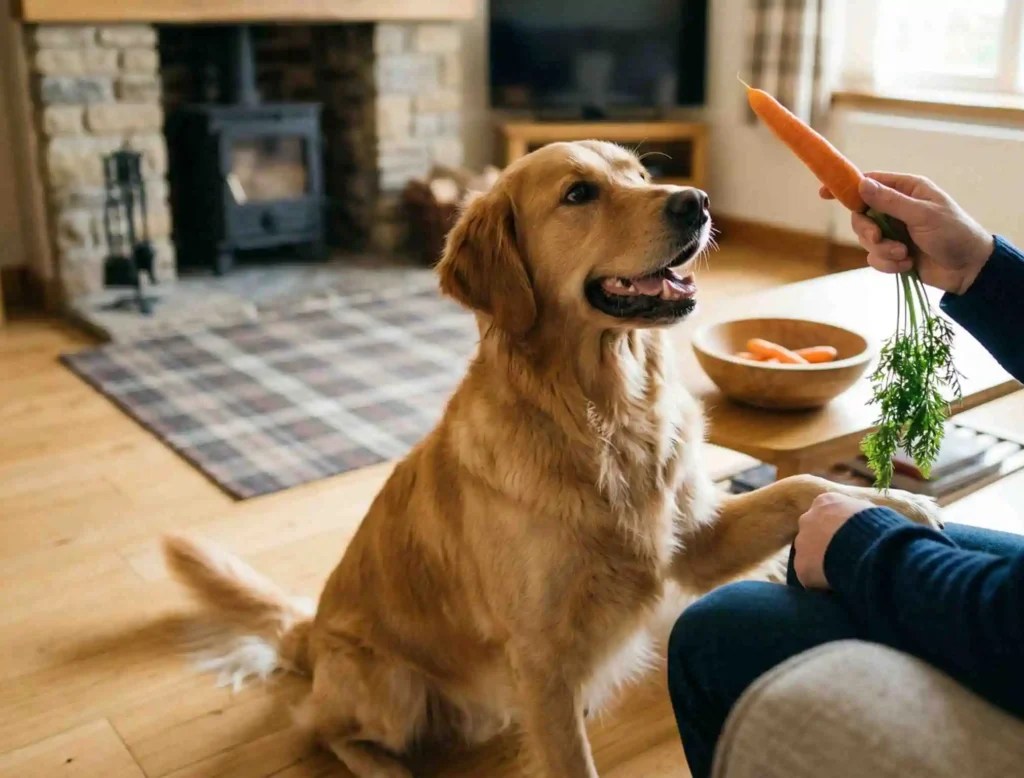
Table of Contents
Why Carrots Matter for Your Dog’s Health
You might think of carrots as a simple snack, but they’re actually doing a lot of work under the surface. Carrots are one of the most nutrient-dense, low-calorie vegetables you can offer your dog. A single medium carrot contains just about 25 calories, making it an ideal treat for dogs prone to weight gain.
Here’s what carrots deliver nutritionally. Beta-carotene converts to vitamin A in your dog’s body, which supports healthy vision, skin, and coat. Fiber promotes smooth digestion and can firm up loose stools. Vitamin K1 supports blood clotting and bone health. Potassium helps maintain proper muscle and nerve function.
Beyond the vitamin content, carrots also contain antioxidants that help combat cell damage. Veterinarians recommend carrots as a go-to alternative to processed commercial treats, especially for dogs on a calorie-restricted diet. If you’re exploring other nutrient-packed options, many of the best superfoods for dogs offer similar benefits and pair well with carrots in a balanced diet.
The key thing to remember is that carrots are a supplement to a complete diet, not a replacement for balanced dog food. They’re a tool — and a really effective one — when used correctly.
How Your Dog’s Body Processes Carrots
Dogs are omnivores with shorter digestive tracts than humans. That means they don’t break down raw plant cell walls as efficiently as we do. When your dog eats a raw carrot, they get the fiber and the mechanical chewing benefits, but they absorb less of the beta-carotene locked inside those tough cell walls.
Lightly steaming or cooking carrots breaks down the cellulose and makes the beta-carotene far more bioavailable. In simple terms, cooked carrots feed your dog more nutrients per bite. Raw carrots, on the other hand, are better for dental health because the crunching action helps scrape away soft plaque buildup.
So which is better? Both, honestly. It depends on your goal. Want a teeth-cleaning chew? Go raw. Want maximum nutrition absorption? Lightly steam them. Many owners rotate between the two and get the best of both worlds.
One thing to keep in mind: dogs don’t chew as thoroughly as humans. They tend to chomp and swallow quickly. That’s why cutting carrots into appropriate sizes is so important — not because the carrot itself is dangerous, but because the shape can become a choking risk if swallowed whole.
Common Mistakes Dog Owners Make With Carrots (and Fixes)
Even with a safe food like carrots, there are a few easy mistakes that can turn a healthy snack into a problem.
- Giving whole baby carrots to small dogs. Baby carrots are the perfect size to lodge in a small dog’s throat. The fix: Cut them lengthwise into halves or quarters for dogs under 20 pounds.
- Seasoning carrots with butter, garlic, or salt. Cooked carrots from your dinner plate often contain ingredients that are harmful to dogs. Garlic and onion are toxic. The fix: Always prepare your dog’s carrots separately, plain and unseasoned.
- Replacing meals with carrots. Carrots lack the protein, fat, and essential amino acids dogs need. The fix: Follow the 10% rule — treats, including carrots, should never exceed 10% of your dog’s daily caloric intake.
- Skipping the wash. Carrots can carry pesticide residue or soil bacteria. The fix: Rinse carrots thoroughly under running water before serving, just like you would for yourself.
- Feeding too many carrots at once. Too much fiber too fast can cause gas, bloating, or loose stools. If your dog has a sensitive stomach prone to digestive upset, start small. The fix: Introduce carrots gradually — a few small pieces per day — and increase slowly over a week.
- Assuming canned carrots are fine. Many canned vegetables contain added sodium, sugar, or preservatives. The fix: Stick to fresh or frozen plain carrots with no added ingredients.
Helping Your Dog’s Teeth With Crunchy Snacks
One of the most underrated benefits of raw carrots is what they do for your dog’s teeth. When a dog gnaws on a firm, raw carrot stick, the abrasive surface helps scrape away soft plaque before it hardens into tartar. It’s not a replacement for brushing, but it’s a surprisingly effective daily supplement to your dog’s dental routine.
According to the American Veterinary Medical Association, periodontal disease affects most dogs by age three. Daily dental care matters more than most owners realize.
If you’re already giving carrots for the crunch factor, pairing that habit with proper brushing takes your dog’s oral health to another level. The Virbac C.E.T. Oral Hygiene Kit is a solid choice for owners who want to build a real dental care routine. It comes with an enzymatic toothpaste that works even without brushing (the enzymes break down plaque chemically), plus both a finger brush for getting started and a standard pet toothbrush for thorough cleaning. The poultry flavor means most dogs actually enjoy the process. The one limitation is that very small dogs may find the standard brush head a bit large, so the finger brush is your better bet for toy breeds.
CHECK PRICE ON AMAZON: https://amzn.to/4bXfiRW
Step-by-Step: How to Safely Feed Carrots to Your Dog
Here’s a simple, no-guesswork method to start feeding carrots safely.
1. Choose fresh, whole carrots. Organic is ideal but not required. Avoid pre-seasoned, canned, or glazed carrots.
2. Wash thoroughly. Scrub under running water to remove dirt and potential pesticide residue.
3. Cut to the right size for your dog. For small breeds (under 20 lbs), dice into pea-sized pieces or thin coins. For medium breeds (20–50 lbs), cut into half-inch rounds or short sticks. For large breeds (50+ lbs), carrot sticks two to three inches long work well.
4. Decide: raw or cooked. For a dental-health chew, serve raw. For maximum nutrient absorption, lightly steam for five to eight minutes until just tender. Do not add oil, butter, salt, or seasoning.
5. Start with a small amount. Offer two or three small pieces the first time. Watch for any signs of digestive upset over the next 24 hours.
6. Gradually increase. If your dog tolerates carrots well, you can offer them daily. A good general guideline is one to two baby-carrot-sized portions per 10 pounds of body weight per day.
7. Try frozen carrots for teething puppies. Pop carrot sticks in the freezer for a soothing, natural teething toy. The cold helps numb sore gums, and the texture satisfies the urge to chew. If your puppy is going through the teething phase, frozen carrots can be a lifesaver.
Making Mealtime Safer for Fast Eaters
If your dog inhales food — and carrot pieces — without chewing, you’ve got a choking and bloating risk on your hands. Fast eating is one of the most common feeding problems, and it’s especially dangerous when you’re adding firm, chunky treats like raw carrots into the mix.
A slow feeder bowl forces your dog to work around ridges and obstacles to get each piece of food, which naturally slows down eating speed and encourages actual chewing. The Outward Hound Fun Feeder Slo Bowl is a popular option with a flower-petal ridge pattern that makes gulping nearly impossible. It holds up to four cups of food, works for medium to large breeds, and has a non-slip rubber base so it won’t slide across the floor. The one honest downside is that the deep ridges can be tricky to clean thoroughly — a bottle brush helps.
CHECK PRICE ON AMAZON: https://amzn.to/40buzas
If you’re mixing diced carrots into your dog’s regular kibble, a slow feeder is one of the easiest ways to make sure those pieces actually get chewed instead of swallowed whole.
Troubleshooting: If Something Goes Wrong
Sometimes even safe foods don’t agree with every dog. Here’s a quick reference.
- If your dog has gas or bloating after eating carrots → You probably introduced too much fiber too quickly. Cut the portion in half and build back up slowly over a week.
- If your dog vomits after eating carrots → This can happen if pieces were too large or eaten too fast. Switch to smaller, diced pieces or try steamed carrots instead. If vomiting continues, stop offering carrots and consult your vet.
- If you notice orange-tinted stool → This is normal. Carrots contain pigments that can color stool. It’s harmless and not a cause for concern.
- If your dog is diabetic → Carrots contain natural sugars. They’re still generally safe, but check with your vet about appropriate portions. Cooked carrots have a higher glycemic index than raw ones.
- If your dog shows signs of allergic reaction → True carrot allergies in dogs are extremely rare, but not impossible. Watch for itching, hives, swelling, or difficulty breathing. If you notice any of these, stop feeding carrots and contact your vet immediately. Dogs with broader food sensitivities or allergies should have any new food introduced under guidance.
When to See Your Veterinarian
Most dogs handle carrots without any issues. But there are situations where you should seek professional advice rather than troubleshooting on your own.
Contact your vet if your dog chokes on a carrot piece and has difficulty breathing, coughs persistently, or paws at their mouth. Seek help if your dog develops repeated vomiting or diarrhea after eating carrots. If your dog has a pre-existing condition like diabetes, kidney disease, or a diagnosed food allergy, always get your vet’s guidance before adding any new food — even one as seemingly simple as a carrot.
Also reach out if your dog swallows a very large piece of raw carrot whole. While carrots are digestible, a large chunk can potentially cause a temporary intestinal blockage in small breeds.
What Veterinary Experts Say About Carrots for Dogs
Veterinary nutritionists widely consider carrots one of the safest and most beneficial vegetables for dogs. According to the American Kennel Club, carrots are an excellent low-calorie snack that provides vitamins, minerals, and fiber. They’re commonly recommended by vets as a healthy alternative to high-calorie commercial treats, particularly for overweight dogs.
The consensus among veterinary professionals is straightforward: carrots are a “yes” food for dogs. The only caveats involve portion control, proper sizing to prevent choking, and the understanding that no single treat replaces a nutritionally complete diet. If you want to round out your dog’s nutrition beyond treats and whole foods, a quality multivitamin can help fill in any gaps. The Googipet Premium Dog Multivitamin covers a broad spectrum — gut health probiotics, vitamin C for immune support, and glucosamine for joints — making it a practical daily addition for puppies through senior dogs. It’s chicken-flavored, so most dogs take it willingly. The limitation is that it’s a chewable tablet, so extremely picky eaters may need it hidden in food.
CHECK PRICE ON AMAZON: https://amzn.to/3ZzV6OD
This information is general guidance and should not replace a professional veterinary diagnosis or personalized dietary plan for your dog.
Frequently Asked Questions
Can puppies eat carrots?
Yes. Carrots are safe for puppies. Frozen carrot sticks make a great natural teething toy. Cut pieces small to prevent choking, and introduce gradually to avoid digestive upset.
Are raw or cooked carrots better for dogs?
Both are beneficial. Raw carrots help clean teeth and provide fiber. Cooked carrots offer more absorbable beta-carotene. Many owners alternate between the two for the full range of benefits.
How many carrots can I give my dog per day?
Follow the 10% treat rule. For most dogs, one to three baby-carrot-sized pieces per 10 pounds of body weight daily is a safe guideline. Adjust based on your dog’s tolerance.
Can carrots cause diarrhea in dogs?
Too many carrots at once can cause loose stools due to the high fiber content. Introduce them slowly and keep portions moderate, especially if your dog has a sensitive digestive system.
Are baby carrots safe for dogs?
Yes, but cut them for small breeds. Baby carrots can be a choking hazard for dogs under 20 pounds. Slice them lengthwise before serving.
Can diabetic dogs eat carrots?
Carrots contain natural sugars, but they’re still relatively low-glycemic when served raw. Check with your vet about appropriate portions for diabetic dogs, and avoid cooked carrots, which have a higher glycemic impact.
Can dogs eat carrot tops (the green leaves)?
Yes, carrot greens are non-toxic to dogs. They taste bitter, so most dogs won’t eat them voluntarily. If your dog does enjoy them, they’re safe in small amounts.
Do carrots help clean dogs’ teeth?
Raw carrots can help remove soft plaque through the mechanical action of chewing. They’re not a substitute for brushing, but they’re a helpful addition to a dental care routine.
Can dogs eat carrot cake?
No. Carrot cake contains sugar, butter, cream cheese, and sometimes nutmeg or raisins — all of which are unhealthy or outright toxic for dogs. Stick to plain carrots only.
What other vegetables are safe for dogs?
Many vegetables are dog-safe, including cucumbers, blueberries, broccoli, and green beans. Always research each food individually before offering it.
Conclusion
So, can dogs eat carrots? Absolutely — and they probably should. Carrots are one of the easiest, most affordable, and most nutritious snacks you can add to your dog’s routine. They support dental health, deliver essential vitamins, and give your dog a satisfying crunch without the calorie load of processed treats. Whether you serve them raw for teeth-cleaning benefits, steamed for better nutrient absorption, or frozen for a teething puppy, carrots are a win across the board.
Start with a few small pieces today and see how your dog responds. Most dogs take to carrots immediately. Keep portions sensible, always size the pieces to your dog’s breed, and skip the seasoning. Your dog’s health starts with what you put in their bowl — and a carrot is one of the simplest upgrades you can make.
Your next step: Grab a carrot from your fridge, wash it, cut it to size, and let your dog try their first piece. You’ll probably have a new favorite treat on your hands within minutes.