You’re scrolling through breed profiles for the hundredth time, trying to find a dog that’s athletic enough for weekend hikes but calm enough to curl up on the couch afterward. Then you spot the Bracco Italiano — those soulful, droopy eyes, the dignified stance, and a reputation for being one of the sweetest sporting dogs alive. But is this centuries-old Italian pointer actually the right fit for your lifestyle? Let’s break it all down.
Quick Answer: What Is the Bracco Italiano?
The Bracco Italiano is one of the oldest European pointing breeds, originating in Italy over 500 years ago. Bred for bird hunting across varied terrain, this large, muscular dog combines endurance with a surprisingly gentle, people-focused temperament. The Bracco Italiano is ideal for active families, hunters, and experienced owners who can meet its need for daily exercise and mental enrichment.
TL;DR: The Bracco Italiano is a loyal, athletic Italian pointer with a calm indoor personality and high outdoor energy. They thrive with consistent training, plenty of exercise, and owners who appreciate a sensitive, velcro-type companion.
Key Takeaways
- Size & lifespan: 55–90 lbs, 21–27 inches tall, 10–14 year lifespan.
- Temperament: Gentle, affectionate, eager to please — but stubborn if training feels harsh.
- Exercise needs: At least 60–90 minutes of vigorous activity daily, plus mental stimulation.
- Health watch: Prone to hip dysplasia, ear infections, bloat, and eye conditions — early screening matters.
- Best for: Active households, hunters, and families with older children who want a devoted, low-aggression companion.
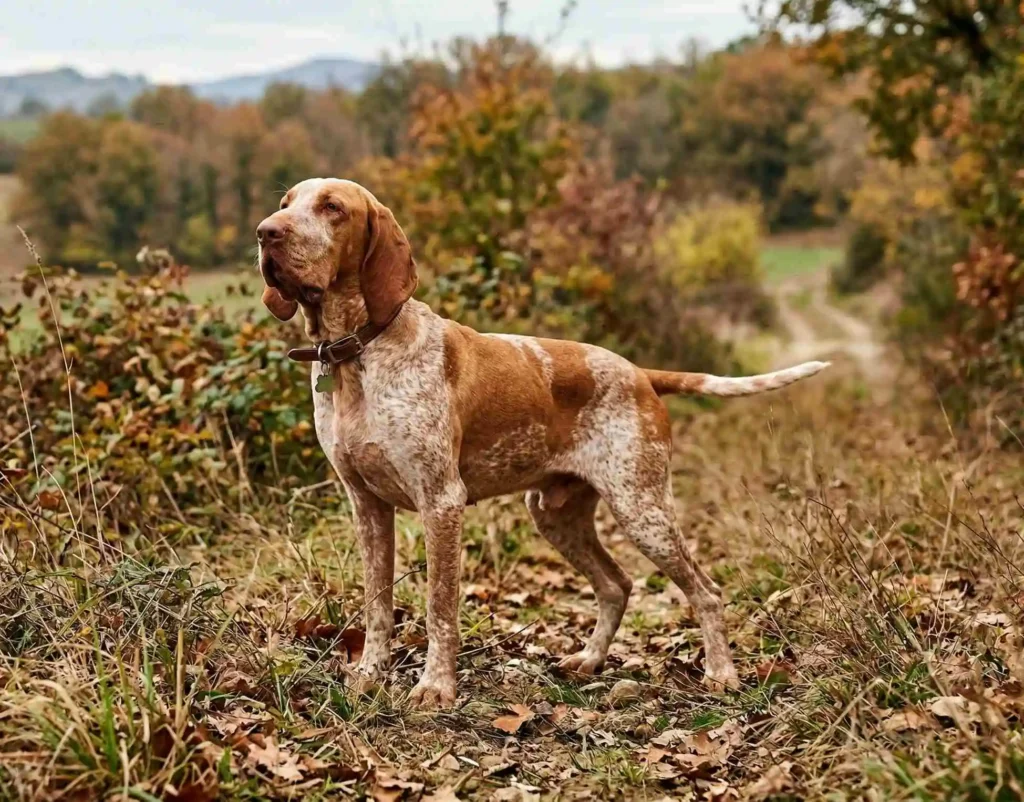
Table of Contents
Why the Bracco Italiano Matters as a Breed Choice
Choosing a dog that weighs up to 90 pounds and needs serious daily exercise isn’t a decision to take lightly. The Bracco Italiano sits in a sweet spot that few breeds occupy: powerful enough to work all day in the field, yet docile and affectionate enough to be a true family dog.
However, underestimating their exercise and mental stimulation needs leads to destructive behavior. A bored Bracco will chew furniture, dig up gardens, and bark excessively. Their droopy ears and deep chest also create breed-specific health vulnerabilities that require proactive care. Understanding these realities upfront saves you from frustration — and saves your dog from discomfort.
According to the AKC’s breed standard, the Bracco Italiano was fully recognized in 2024, making it one of the newest additions to the AKC registry despite being one of Europe’s oldest sporting breeds.
Breed Background: History, Build, and What Makes Them Unique
The Bracco Italiano traces its roots to 4th- and 5th-century Italy, where it was developed as a versatile hunting dog for Italian nobility. Two historical strains existed: a lighter, faster version from Piedmont and a heavier, more powerful type from Lombardy. Today’s Bracco blends both lines.
Physically, this breed is unmistakable. A long, sculpted head with a pronounced occipital bone, pendulous ears, and loose facial skin give the Bracco a dignified, almost hound-like appearance. Their body is square-proportioned, muscular, and built for a distinctive trotting gait that covers ground efficiently.
Their coat is short, dense, and glossy — typically white with orange or chestnut markings, or solid white with light roan patches. This low-maintenance coat sheds moderately year-round, with seasonal increases in spring and fall.
What truly sets the Bracco apart is temperament. Unlike many high-drive sporting breeds, the Bracco Italiano is remarkably calm indoors. They’re deeply bonded to their family, sensitive to harsh corrections, and genuinely eager to cooperate — when they understand what you’re asking. That last part is key, because this breed thinks before acting. They’re not robotic obedience machines. They’re thoughtful partners.
If you’re drawn to breeds that form deep family bonds, the Bracco shares personality traits with other dogs that make great companions for families.
Common Mistakes New Bracco Italiano Owners Make (and How to Fix Them)
- Skipping early socialization. Braccos can become shy or anxious without broad exposure to people, sounds, and environments before 16 weeks. The fix: start puppy socialization classes immediately and introduce new experiences daily.
- Using harsh training methods. This breed shuts down with forceful corrections. They’ll stop trying entirely. The fix: use positive reinforcement exclusively — treats, praise, and patience work dramatically better. A solid foundation in recall training is especially important for a hunting breed with a strong nose.
- Underestimating exercise needs. A 20-minute walk won’t cut it. An under-exercised Bracco becomes destructive and vocal. The fix: commit to 60–90 minutes of vigorous daily activity — running, swimming, fetch, or field work.
- Ignoring ear care. Those beautiful pendulous ears trap moisture and create a breeding ground for infections. The fix: check and clean ears weekly with a vet-recommended ear cleaning solution.
- Free-feeding large portions. Braccos eat enthusiastically and their deep chest makes them susceptible to bloat (gastric dilatation-volvulus). The fix: feed two to three smaller meals daily and avoid exercise immediately before or after eating.
- Leaving them alone for long stretches. This breed craves human connection. Extended isolation leads to separation anxiety. The fix: if you work long hours, arrange for a dog walker, daycare, or a companion animal.
- Skipping health screenings. Hip dysplasia, elbow dysplasia, and eye conditions are real risks. The fix: work with a breeder who provides OFA or PennHIP certifications and schedule annual vet checkups.
Keeping Your Bracco’s Joints Healthy for the Long Haul
Large, athletic breeds like the Bracco Italiano put significant stress on their joints — especially during their first two years of rapid growth. Hip and elbow dysplasia are among the most common health concerns in this breed, and prevention starts long before symptoms appear.
Maintaining a lean body weight is the single most important thing you can do. Excess weight accelerates joint deterioration. Beyond weight management, a quality joint supplement can support cartilage health and reduce inflammation, particularly for active dogs or seniors showing early stiffness.
VetIQ Glucosamine Hip & Joint Supplement for Dogs is a solid daily option for Bracco owners watching their budget without compromising on joint support. Each soft chew delivers glucosamine, MSM, and krill oil — a combination that supports cartilage repair and reduces inflammation. The 180-count bag lasts months, even for a large breed. It’s chicken-flavored, so most dogs take it willingly. One limitation: very picky eaters may need it wrapped in a treat. Best suited for owners who want consistent, affordable joint maintenance without a premium price tag.
CHECK PRICE ON AMAZON: https://amzn.to/4kI1iOi
Step-by-Step: Setting Up Your Bracco Italiano for Success
1. Choose a responsible breeder. Look for breeders who health-test for hip dysplasia, elbow dysplasia, and eye conditions. Ask for OFA or PennHIP certifications. The Bracco Italiano Club of America maintains a breeder referral list.
2. Puppy-proof your home — seriously. Bracco puppies are mouthy, curious, and surprisingly fast. Secure trash cans, remove chewable items from floor level, and block off rooms you can’t supervise. If you’re bringing home a puppy, a proper crate training routine makes housebreaking and safety management much easier.
3. Start training on day one. Begin with name recognition, “sit,” and “come.” Keep sessions short (5–10 minutes for puppies) and always end on a success. The Bracco responds beautifully to consistency and calm repetition.
4. Build an exercise routine around their instincts. Braccos are natural retrievers and pointers. Incorporate fetch, swimming, scent games, and — if possible — field training. Structured exercise channels their energy productively.
5. Establish a grooming schedule. Brush weekly to manage shedding. Trim nails every 2–3 weeks (if you need guidance, check out this step-by-step nail trimming guide). Clean ears weekly. Brush teeth two to three times per week.
6. Feed for their life stage. Puppies need a large-breed puppy formula to control growth rate and protect developing joints. Adults do best on a high-protein, moderate-fat diet. Seniors may benefit from added joint support and reduced calories.
7. Schedule routine vet visits. Annual checkups, vaccinations on schedule, and parasite prevention are non-negotiable. Discuss breed-specific screening tests with your vet early.
Feeding Your Bracco Wisely — and Preventing Bloat
Bloat is a genuine emergency for deep-chested breeds like the Bracco Italiano. The stomach fills with gas and can twist on itself, cutting off blood supply. It can be fatal within hours without surgery.
A slow feeder bowl is one of the simplest tools to reduce gulping — a major bloat risk factor. Slowing down mealtime also improves digestion and makes your dog work slightly for each bite, adding a layer of mental enrichment.
JASGOOD Slow Feeder Dog Bowl is designed specifically to prevent the kind of speed-eating that puts deep-chested breeds at risk. The raised ridges force your Bracco to navigate around obstacles, turning a 45-second meal into a 10-minute activity. It’s sturdy enough for a large breed and has a non-slip base that stays in place on hard floors. The one downside: some dogs figure out simpler maze patterns quickly, so choose the most complex design option. Ideal for Bracco owners who want a low-cost, everyday bloat-prevention tool.
CHECK PRICE ON AMAZON: https://amzn.to/4bSghCM
Keeping a Bracco’s Mind Sharp
This breed was built to solve problems in the field — tracking scent, reading terrain, making decisions on the fly. Without mental outlets at home, that intelligence turns into mischief. Puzzle toys, scent work, hide-and-seek games, and obedience training all satisfy the Bracco’s need to think.
Interactive puzzle toys are particularly effective because they tap into the Bracco’s natural problem-solving drive. For more options that challenge a smart sporting dog, take a look at these top interactive dog toys for mental stimulation.
Outward Hound by Nina Ottosson Dog Hide N’ Slide is a level-2 puzzle toy that challenges your Bracco to slide, flip, and lift compartments to find hidden treats. It’s engaging enough to hold a sporting breed’s attention without being so difficult that it causes frustration. The durable plastic construction holds up well to large-breed enthusiasm. One honest note: once a dog masters the pattern, you’ll want to rotate it with other puzzles to keep things fresh. Perfect for rainy days, post-walk cooldowns, or anytime you need 15 minutes of focused quiet.
CHECK PRICE ON AMAZON: https://amzn.to/4kDzKti
Troubleshooting Common Bracco Italiano Issues
- If your Bracco ignores commands outdoors → their nose has taken over. Practice recall in low-distraction environments first, then gradually increase difficulty. Always reward generously when they choose you over a scent.
- If they’re destructive when left alone → this is likely separation anxiety, not spite. Gradually build alone-time tolerance starting with just minutes. A calming product can help bridge the gap.
- If they’re pulling hard on walks → the Bracco is strong and scent-driven. A front-clip harness redirects pulling without discomfort. Check out the best leash options for dogs that pull for more practical solutions.
- If their ears smell or they’re shaking their head → moisture is likely trapped in the ear canal. Clean immediately with a vet-approved solution and schedule a vet visit if symptoms persist.
- If they refuse to eat their food → Braccos can be surprisingly finicky. Try a food topper, warm the food slightly, or switch protein sources gradually over 7–10 days.
- If they’re limping after exercise → rest them immediately and monitor for 24–48 hours. Persistent lameness warrants a vet visit to rule out joint issues. Read more about what causes limping in dogs.
When to See a Veterinarian
Some situations require professional help immediately. Don’t wait or try home remedies if your Bracco shows any of these signs:
- A bloated, hard abdomen with unproductive retching — this is a bloat emergency. Go to the vet now.
- Sudden, severe lameness or refusal to bear weight on a limb.
- Persistent head shaking, ear discharge, or foul odor from the ears that doesn’t resolve after cleaning.
- Unexplained lethargy lasting more than 24 hours, especially with loss of appetite.
- Cloudy eyes, excessive tearing, or visible redness — Braccos are prone to entropion and ectropion.
- Any lump or mass that appears suddenly or grows rapidly.
- Repeated vomiting or bloody diarrhea.
Veterinarians recommend annual wellness exams for adults and biannual visits for seniors over age 7. The AVMA’s preventive care guidelines emphasize that early detection dramatically improves treatment outcomes for breed-specific conditions.
Expert Perspective on the Bracco Italiano
The Bracco Italiano occupies a unique niche among sporting breeds. Veterinary professionals consistently note that this breed’s combination of athletic ability and calm disposition is rare — most high-drive hunting dogs require significantly more management indoors.
However, veterinarians also caution that the Bracco’s deep chest, heavy ear leather, and rapid growth make preventive care especially important. Bloat prevention protocols (including meal management, avoiding elevated bowls, and limiting post-meal activity) should be standard practice. Joint screening before age two helps catch dysplasia early, when interventions are most effective. According to veterinary orthopedic specialists, maintaining lean body condition throughout a Bracco’s life reduces joint disease risk by up to 25%. Owners who commit to proactive health management and consistent, positive training will find the Bracco Italiano to be one of the most rewarding breeds they’ll ever share a home with.
Frequently Asked Questions
Is the Bracco Italiano a good family dog?
Yes. Braccos are gentle, patient, and affectionate with family members. They do best with older children who understand how to interact calmly with a large dog. Their low aggression and strong bonding instincts make them excellent household companions.
How much exercise does a Bracco Italiano need?
Plan for 60–90 minutes of vigorous exercise daily. This includes running, swimming, fetch, hiking, or field work. Short walks alone won’t satisfy their athletic needs.
Do Bracco Italianos shed a lot?
They shed moderately year-round with heavier shedding in spring and fall. Weekly brushing keeps loose hair manageable. Their short coat doesn’t mat or require professional grooming.
Are Bracco Italianos hard to train?
Not hard, but different. They’re sensitive and thoughtful, which means harsh corrections backfire. Positive reinforcement, patience, and short training sessions produce excellent results.
How much does a Bracco Italiano puppy cost?
Expect to pay $1,500–$3,000 from a reputable breeder who provides health clearances. Prices vary by breeder reputation, lineage, and geographic location.
What health problems do Bracco Italianos have?
Common concerns include hip and elbow dysplasia, bloat, ear infections, entropion, ectropion, and kidney disease (renal amyloidosis). Responsible breeders screen for these conditions.
Can a Bracco Italiano live in an apartment?
It’s possible but challenging. They need substantial daily exercise and outdoor access. A house with a securely fenced yard is the ideal setup for this large, active breed.
Do Bracco Italianos get along with other dogs?
Generally, yes. They’re sociable and low in dog-directed aggression. Early socialization ensures they develop confident, friendly behavior around other pets.
How long do Bracco Italianos live?
The average lifespan is 10–14 years. Proper nutrition, regular exercise, preventive vet care, and maintaining a healthy weight all contribute to longevity.
Are Bracco Italianos good for first-time owners?
They can be, with commitment. First-time owners need to invest in training classes, consistent exercise, and understanding the breed’s sensitivity. They’re forgiving of beginner mistakes but require dedicated time and energy.
Conclusion
The Bracco Italiano is one of those rare breeds that truly has it all — the athleticism of a serious sporting dog wrapped in the calm, affectionate soul of a dedicated family companion. They’ll match your energy on a trail run and then melt into the couch beside you that evening without missing a beat.
But they’re not a low-maintenance choice. The Bracco Italiano demands real exercise, thoughtful training, and proactive health management. Their sensitive nature rewards patient owners and punishes impatience. Their deep chest and heavy ears require specific preventive care that you can’t skip.
If you’re an active owner who values a deep bond with your dog, enjoys training as a partnership rather than a command structure, and can commit to the exercise and health routines this breed needs — the Bracco Italiano might just be the best dog you’ll ever own. Start by connecting with the Bracco Italiano Club of America or a reputable breeder in your area, and take the first step toward welcoming this noble Italian pointer into your life.