You unscrew the jar, and suddenly your dog appears out of nowhere. Tail wagging. Eyes locked on the spoon. If you’ve ever used peanut butter to stuff a toy or hide a pill, you already know — dogs go absolutely wild for it. But can dogs eat peanut butter without any risk? The short answer is yes, most dogs can enjoy peanut butter safely. However, one hidden ingredient in certain brands can be fatal. This guide covers everything you need to know before sharing another spoonful.
Quick Answer
Yes, dogs can eat peanut butter in moderation. Plain, unsalted peanut butter is a protein-rich treat that most dogs love and digest well. The critical rule is to always check the label for xylitol (also listed as “birch sugar”), an artificial sweetener that is extremely toxic to dogs — even in small amounts.
TL;DR: Most peanut butter is safe for dogs. Always read ingredients first. Avoid any brand containing xylitol, excess sugar, or excess salt. Stick to one tablespoon or less per day for medium-sized dogs, and use it as an occasional treat — not a meal replacement.
Key Takeaways
- Check every label. Xylitol (birch sugar) in peanut butter can cause liver failure and death in dogs within hours.
- Plain and unsalted is best. Choose peanut butter with one or two ingredients: peanuts, and maybe a small amount of salt.
- Moderation matters. Peanut butter is calorie-dense — roughly 90 calories per tablespoon. Treats should make up no more than 10% of your dog’s daily calories.
- Great for enrichment. Peanut butter works well inside puzzle toys, on lick mats, or as a pill-hiding trick.
- Watch for allergies. While rare, some dogs can develop sensitivities to peanuts. Start with a tiny amount and observe.
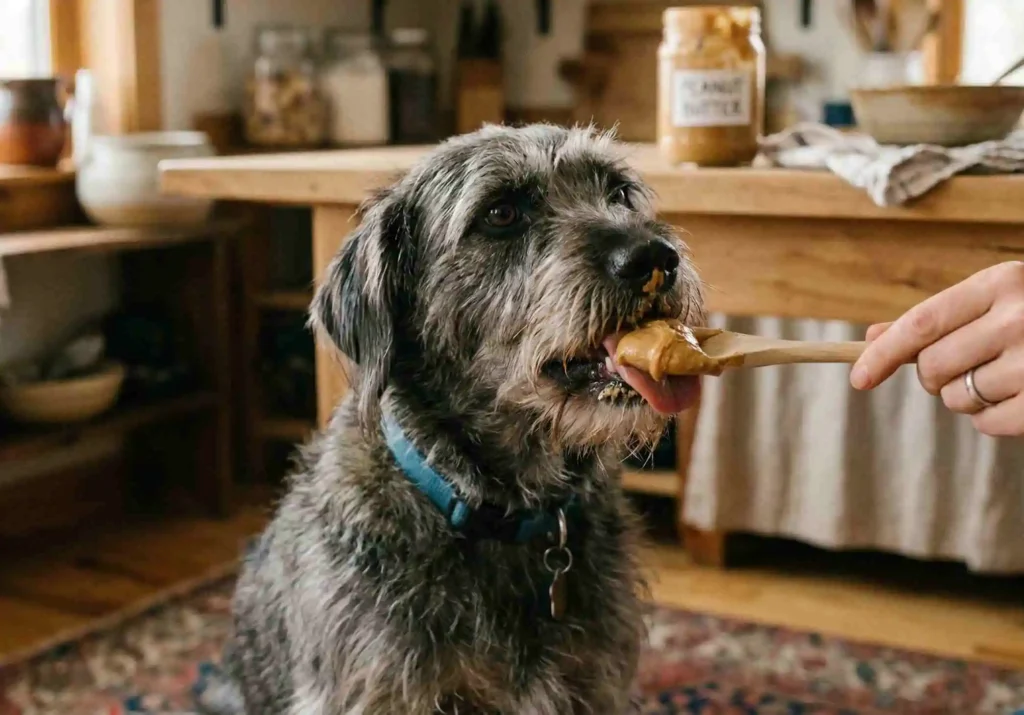
Table of Contents
Why Safe Peanut Butter Feeding Matters
Peanut butter feels like a harmless snack, and in most cases it is. But the consequences of choosing the wrong brand are severe. Xylitol triggers a rapid release of insulin in dogs. Blood sugar plummets. Without treatment, it can lead to seizures, liver failure, and death — sometimes in under an hour.
Beyond the xylitol danger, peanut butter’s high fat and calorie content can quietly contribute to obesity and pancreatitis when given too freely. According to the American Kennel Club, peanut butter is safe in moderation but owners should always read the ingredient list before sharing.
Even if your dog has eaten peanut butter for years, brands change their formulas. A jar that was safe six months ago might now include xylitol. Building a habit of checking labels every time protects your dog from an easily preventable emergency.
What Makes Peanut Butter Good (and Bad) for Dogs
Let’s break down what’s actually inside that jar. At its core, peanut butter is ground roasted peanuts. That simple base packs real nutritional value for dogs.
The good stuff:
Peanut butter contains healthy fats, protein, vitamin B6, vitamin E, and niacin. These support your dog’s coat health, muscle maintenance, and energy levels. The fat content also makes it incredibly palatable — which is why it’s such an effective training reward and medication delivery system. If your dog takes daily supplements or vitamins, wrapping a pill in peanut butter can turn a stressful routine into a treat.
The risky ingredients:
Problems start when manufacturers add extras. Here’s what to watch for:
- Xylitol / birch sugar — Deadly to dogs. Even a small amount can cause hypoglycemia, seizures, and liver failure.
- Added sugar — Contributes to weight gain, dental problems, and inflammation.
- Excess salt — Can lead to sodium toxicity in large amounts, causing vomiting, diarrhea, and tremors.
- Hydrogenated oils — Trans fats that offer zero nutritional benefit and add unnecessary calories.
- Chocolate or cocoa-flavored varieties — Chocolate is toxic to dogs. Never share flavored peanut butter without confirming every ingredient.
The safest choice is a brand with just one ingredient: peanuts. Many natural or organic peanut butters fit this description perfectly.
Common Mistakes Dog Owners Make With Peanut Butter (and How to Fix Them)
- Not reading the label every time. Brands reformulate without warning. The fix: check ingredients on every new jar, even if it’s the same brand you’ve always bought.
- Giving too much at once. A heaping spoonful is more calories than many small dogs need in treats for the entire day. The fix: use a measuring spoon. One tablespoon for medium to large dogs, one teaspoon for small breeds.
- Using peanut butter as a daily staple. It should be a treat, not a diet component. The fix: keep peanut butter to a few times per week and rotate with safer low-calorie options like fresh cucumbers or blueberries.
- Leaving the jar within reach. Dogs can chew through plastic lids. A dog that eats half a jar of peanut butter is at risk for pancreatitis. The fix: store jars in a closed cabinet or high shelf.
- Ignoring weight gain. Peanut butter calories add up fast, especially for less active or senior dogs. The fix: factor treat calories into your dog’s daily intake and adjust meal portions accordingly.
- Assuming “natural” means safe. Some natural and sugar-free brands use xylitol as a sweetener. The fix: ignore marketing claims on the front label and read the actual ingredient list on the back.
Smarter Ways to Serve Peanut Butter to Your Dog
Peanut butter really shines when you use it for enrichment rather than just scooping it straight from the jar. Spreading it on a lick mat or stuffing it inside a Kong keeps your dog engaged for much longer and slows their intake significantly.
If your dog tends to gulp treats down too fast, a lick mat turns a 10-second snack into 15 minutes of focused, calming activity. The repetitive licking action actually releases endorphins, which can help dogs who struggle with anxiety during baths, grooming, or alone time. It’s a simple swap that makes a real difference — especially for dogs who experience travel anxiety or general nervousness.
LUKITO Lick Mat for Dogs & Cats (2 Pack) is a solid starting point if you don’t already own one. It comes with suction cups that stick to floors, walls, or bathtub tiles, so your dog can’t just flip it over and lick everything off in seconds. The textured surface forces slower licking, which helps with digestion too. Each mat has a different pattern, keeping things interesting across sessions. The only real downside is that dogs with very strong jaws may eventually chew through the silicone — so it’s best used under supervision, especially with power chewers.
CHECK PRICE ON AMAZON: https://amzn.to/4aQdOHT
Step-by-Step: How to Safely Give Your Dog Peanut Butter
- Read the ingredient list. Look for xylitol, birch sugar, or any artificial sweetener. If you spot one, put the jar back immediately.
- Choose the right type. Opt for plain, unsalted peanut butter with minimal ingredients. Crunchy or smooth — both are fine. Your dog probably has a preference already.
- Measure the portion. Use a level teaspoon for small dogs (under 20 lbs), a level tablespoon for medium to large dogs. This keeps calories in check.
- Pick your delivery method. Spread it thin on a lick mat, stuff it inside a Kong toy, or use a small dab on your finger to deliver medication.
- Supervise the first time. If your dog has never had peanut butter, start with a tiny lick and wait 24 hours. Watch for itching, swelling around the face, vomiting, or loose stools.
- Freeze for longer-lasting enrichment. Spread peanut butter on a lick mat or inside a hollow toy, then freeze it for two hours. This creates a longer, more satisfying activity — perfect for crate time or when you need to step out.
- Track frequency. Aim for two to four peanut butter sessions per week at most. On peanut butter days, reduce your dog’s regular meal portion slightly to balance total calorie intake.
Troubleshooting: Common Peanut Butter Problems
- If your dog vomits after eating peanut butter → The fat content may be too rich. Try a smaller amount next time. If vomiting continues or is severe, check whether the brand contains xylitol and contact your vet immediately. Persistent vomiting can point to other underlying issues worth investigating.
- If your dog gets diarrhea → Rich, fatty foods can upset sensitive stomachs. Cut back on the amount and frequency. If diarrhea persists beyond 24 hours, see your vet.
- If your dog breaks out in hives or scratches excessively → This could signal a peanut allergy. Stop feeding peanut butter and consult your vet. Dogs with known food allergies should be especially cautious with new treats.
- If your dog ate peanut butter with xylitol → This is an emergency. Call your vet or the ASPCA Animal Poison Control Center (888-426-4435) immediately. Do not wait for symptoms to appear. Time matters.
- If your dog ate an entire jar → Even without xylitol, this much fat at once can trigger pancreatitis. Watch for vomiting, lethargy, a hunched posture, or abdominal pain. Call your vet for guidance.
- If your dog refuses peanut butter → Not all dogs love it, and that’s perfectly fine. Try alternative treat options like plain pumpkin puree, mashed banana, or fresh strawberries.
When to See a Veterinarian
Contact your vet right away if your dog shows any of these signs after eating peanut butter:
- Vomiting that won’t stop or contains blood
- Sudden lethargy, weakness, or collapse
- Seizures or uncontrolled trembling
- Swollen face, lips, or throat (anaphylaxis)
- Rapid breathing or difficulty breathing
- Yellow-tinged gums or eyes (possible liver involvement)
If you suspect your dog ingested xylitol, treat it as a life-threatening emergency. The American Veterinary Medical Association advises immediate veterinary care for any suspected poisoning. Early intervention dramatically improves outcomes.
What Veterinary Experts Say About Peanut Butter for Dogs
Veterinarians widely agree that plain peanut butter in appropriate amounts is a safe and useful treat for most dogs. It’s routinely recommended as a high-value reward during training, a way to administer oral medications, and an enrichment tool that supports mental stimulation.
The veterinary concern isn’t peanut butter itself — it’s the additives. According to guidance from the AKC’s veterinary advisors, the rise of xylitol in “sugar-free” and “natural” peanut butter brands has created a genuine safety risk that didn’t exist a decade ago. Veterinarians recommend always selecting peanut butter with the shortest ingredient list possible, ideally just peanuts. Dogs with a history of pancreatitis, obesity, or chronic digestive issues should have their peanut butter intake closely monitored or avoided entirely. When in doubt, ask your vet to recommend a specific brand that’s safe for your individual dog’s health profile.
Frequently Asked Questions
How much peanut butter can I give my dog per day?
One tablespoon for medium to large dogs, one teaspoon for small breeds. Treats should not exceed 10% of your dog’s total daily calories.
What brands of peanut butter are safe for dogs?
Look for brands with one or two ingredients — peanuts and possibly salt. Many owners choose 365 Organic, Teddie, or Smucker’s Natural. Always verify no xylitol is listed.
Can puppies eat peanut butter?
Yes, in very small amounts once they’re eating solid food consistently. Start with a tiny smear and watch for digestive upset or allergic reactions.
Is crunchy or smooth peanut butter better for dogs?
Both are equally safe. Smooth is easier to spread on lick mats and stuff into toys. Crunchy adds a bit of texture some dogs enjoy. Choose whichever your dog prefers.
Can peanut butter cause pancreatitis in dogs?
In large quantities, yes. Peanut butter’s high fat content can trigger pancreatitis, especially in breeds prone to the condition. Stick to recommended portions.
What are symptoms of xylitol poisoning in dogs?
Vomiting, loss of coordination, lethargy, seizures, and collapse — sometimes within 15 to 30 minutes. Xylitol poisoning is a veterinary emergency that requires immediate treatment.
Can dogs be allergic to peanut butter?
Peanut allergies in dogs are uncommon but possible. Signs include itching, facial swelling, hives, or gastrointestinal upset. Stop feeding peanut butter and see your vet if these occur.
Is almond butter safer than peanut butter for dogs?
Almond butter is generally safe in small amounts, but almonds are harder for dogs to digest. Peanut butter remains the easier, more digestible option for most dogs.
Can I use peanut butter to give my dog medicine?
Absolutely. A small dab of peanut butter is one of the most effective ways to hide pills. Just make sure the brand you use is xylitol-free.
How do I know if peanut butter has xylitol?
Read the ingredient list on the back of the jar. Xylitol may also be listed as “birch sugar” or “wood sugar.” If you see any of these terms, do not give it to your dog.
Wrapping Up: Enjoy Peanut Butter Safely With Your Dog
Can dogs eat peanut butter? Yes — and for most dogs, it’s one of the safest, most enjoyable treats you can offer. The key is choosing plain, unsalted peanut butter with no xylitol, serving it in moderation, and using it as a tool for enrichment rather than a free-for-all snack. A thin spread on a lick mat, a stuffed Kong in the freezer, or a tiny dab to wrap a pill — these small habits keep things safe and fun. Build a routine of reading labels, measuring portions, and watching your dog’s reaction each time. If you want to explore more dog-safe snack options, check out our guide to superfoods that support your dog’s overall health. Your dog deserves great treats — and now you know exactly how to give them the best.