Your eight-week-old bundle of joy has discovered your ankles. And the couch leg. And that expensive sneaker you forgot to put away. If you’ve been wondering how long do puppies teethe before your house survives, you’re not alone. Every new owner hits this stage, and it feels endless while you’re in it.
Quick Answer
Puppies teethe for roughly four months total. The process starts around 3 weeks old with baby teeth, and the heavy chewing phase runs from about 3 to 6 months as adult teeth push through. Most dogs finish teething by 6 to 8 months, when all 42 adult teeth are in place. This timeline helps owners plan chew supplies and manage biting behavior.
TL;DR
Active teething lasts about 3 months, peaking between 4 and 6 months of age. Give your puppy safe chew outlets, check the mouth weekly, and call your vet if baby teeth stay put past 7 months.
Key Takeaways
- Baby teeth erupt at 3 to 6 weeks; adult teeth replace them from 3 to 6 months
- The worst chewing happens between 4 and 6 months old
- Puppies lose 28 baby teeth and grow 42 adult teeth
- Retained baby teeth after 7 months need veterinary attention
- Frozen textures and appropriate chew toys ease gum soreness fast
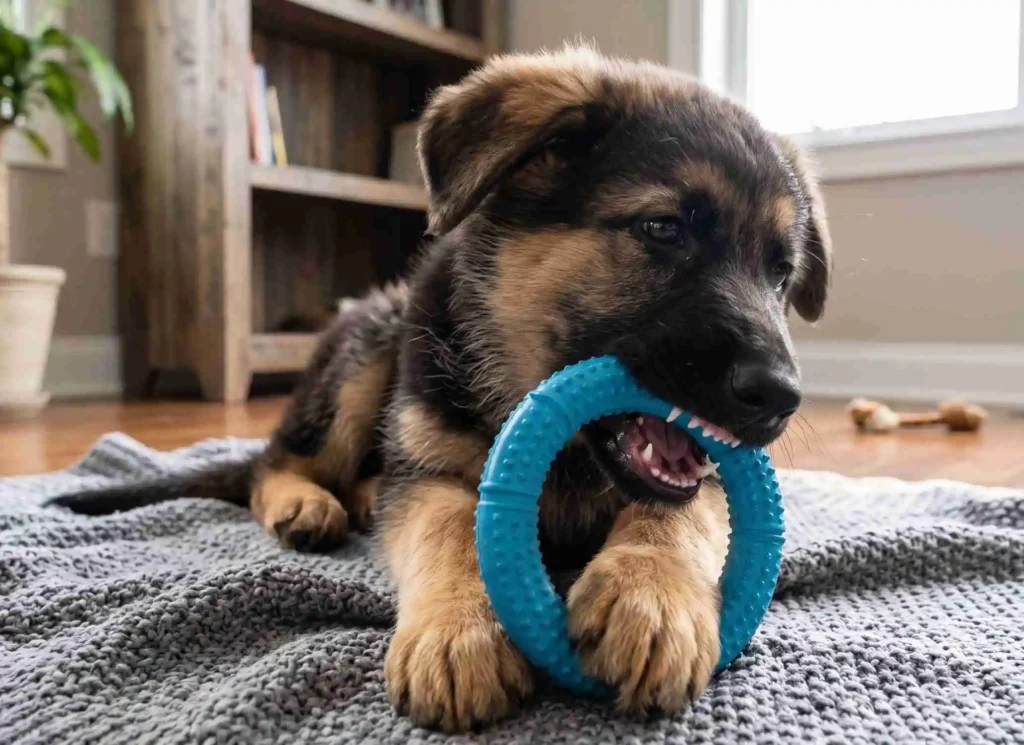
Table of Contents
Why Puppy Teething Matters More Than You Think
Teething isn’t just an inconvenience. Sore gums drive puppies to chew whatever they can reach, and some of those things are dangerous. Electrical cords, shoe soles, and hard furniture edges all pose real risks.
There’s a dental side too. If baby teeth don’t fall out, adult teeth grow in crooked. That crowding traps food and bacteria, setting up gum disease years down the line.
Teething also shapes behavior. Puppies who never learn bite inhibition during this window often keep mouthing into adulthood. Owners dealing with a puppy who won’t stop biting are usually fighting a habit that formed right here.
The good news? This stage is temporary and manageable. A little planning prevents most problems.
The Puppy Teething Timeline, Week by Week
Understanding what happens inside your puppy’s mouth makes the whole process less mysterious.
Weeks 3 to 6: Baby Teeth Arrive
Puppies are born toothless. Tiny deciduous teeth — often called milk teeth or needle teeth — start pushing through around three weeks. Incisors come first, then canines, then premolars.
By six to eight weeks, most puppies have all 28 baby teeth. This is one reason breeders begin weaning around this age. Those needle teeth are uncomfortable for mom.
Weeks 12 to 16: The Switch Begins
Around three months, the roots of baby teeth start dissolving. Incisors loosen and fall out first. You might find a tiny tooth on the floor, but most get swallowed during meals. That’s harmless.
Expect a little blood on chew toys. Light spotting is normal during this phase.
Months 4 to 6: Peak Teething
This is the hardest stretch. Canines and premolars push through, and gum pressure builds. Chewing intensity spikes. Some puppies drool more, eat slower, or seem cranky.
If your puppy suddenly hesitates at the food bowl, sore gums may be why. Softening kibble with warm water helps during these weeks.
Months 6 to 8: The Finish Line
Molars are last to arrive, usually between six and seven months. By eight months, nearly every puppy has a complete adult set of 42 teeth. Chewing calms down noticeably once the pressure stops.
Large breeds sometimes run a few weeks behind small breeds, but the general window holds across sizes. For a deeper look at the tail end of this process, our guide on when puppies stop teething breaks down the final months in detail.
Common Mistakes (and Fixes)
New owners make the same handful of errors. Here’s what to watch for.
- Offering hard bones or antlers. These can fracture developing teeth. The fix: choose chews that flex slightly under thumbnail pressure.
- Punishing chewing behavior. Scolding creates fear without teaching an alternative. The fix: redirect to an approved chew every single time.
- Giving old shoes or socks as toys. Puppies can’t tell the difference between the old sneaker and the new one. The fix: keep toy textures completely distinct from household items.
- Ignoring loose or retained teeth. Double rows of teeth cause long-term crowding. The fix: check the mouth weekly and photograph anything unusual.
- Skipping tooth brushing until adulthood. Dogs who’ve never had a brush in their mouth resist it later. The fix: start with a fingerbrush during teething.
- Freezing objects too hard. Frozen solid items can chip enamel. The fix: use softly chilled, not rock-hard, items.
- Letting kids play tug during peak teething. Pulling on sore, loose teeth hurts. The fix: pause tug games from months four to six.
Giving Sore Gums Somewhere Safe to Go
Here’s the core challenge of teething: the urge to chew doesn’t go away just because you removed the shoes. Pressure on inflamed gums genuinely relieves discomfort, so your puppy will find something. Your job is to make sure that something is safe.
A puppy-specific chew set solves this better than adult toys, which are usually too hard for developing teeth. The Nylabone New Puppy Starter Kit is built for dogs up to 25 pounds and includes a few different textures, which matters because puppies get bored fast and switch targets. The softer material flexes enough to protect baby teeth while still delivering the pressure relief they’re seeking. Combining chew toys with a natural chew treat also gives you a rotation, so no single item loses its novelty. One honest limitation: it’s sized for small breeds, so owners of large-breed puppies will outgrow it quickly and need to size up around month five.
CHECK PRICE ON AMAZON: https://amzn.to/4kCd24J
Cold is the other half of the equation. Chilled surfaces numb sore gums the same way a cold compress helps a bruise. A lick mat spread with a thin layer of plain yogurt or pumpkin and chilled for twenty minutes does double duty — it soothes gums and keeps a restless puppy occupied.
The LUKITO Lick Mat two-pack sticks to the floor or tub wall with suction cups, which stops the mat from becoming a chew toy itself. It works well for puppies who get frantic in the late afternoon, that classic teething witching hour. Licking is also self-soothing, so it lowers general arousal alongside gum relief. The limitation: suction cups hold best on smooth tile or glass, and they lose grip on textured surfaces.
CHECK PRICE ON AMAZON: https://amzn.to/4aQdOHT
Step-by-Step: Managing Teething at Home
- Puppy-proof one room first. Remove cords, shoes, and low-hanging fabric. Make this the default space when you can’t supervise.
- Stock three to four chew textures. Rubber, rope, and edible chews cover different preferences.
- Rotate toys every two days. Novelty keeps interest high without buying more.
- Chill one item each morning. Rotate it into play during the afternoon peak.
- Redirect calmly when teeth hit skin. Say nothing, offer a chew, praise when they take it.
- Check the mouth every Sunday. Lift the lips, count what you see, note anything doubled up.
- Introduce a fingerbrush at month four. Thirty seconds is plenty at first.
- Soften food if eating slows. Warm water on kibble for a week usually fixes it.
Consistency matters more than perfection here. Puppies learn from repetition, not intensity.
Troubleshooting: If This, Then That
- If your puppy bleeds lightly from the gums, then it’s normal shedding — monitor but don’t panic.
- If you see two rows of canine teeth, then book a vet check for retained deciduous teeth.
- If your puppy refuses food for more than 24 hours, then call your vet rather than waiting it out.
- If chewing targets furniture specifically, then apply a bitter deterrent and increase supervised chew time.
- If your puppy chews frantically at night, then try a chilled chew before bed and check whether crate anxiety is the real driver.
- If biting escalates during play, then end the session immediately and restart after a two-minute pause.
- If breath turns foul, then examine for trapped food or an infected gum pocket.
Puppies who chew hardest often need more mental work, not more toys. Interactive puzzle toys tire a puppy’s brain in ways that physical play can’t match.
When to See a Veterinarian
Most teething needs no medical care. Certain signs do warrant a call.
Book an appointment if baby teeth remain after seven months, especially the canines. Retained teeth almost always need extraction, and vets often handle it during the spay or neuter procedure to avoid a second anesthesia event.
Other red flags include swollen or bleeding gums that don’t resolve, a broken tooth, persistent pawing at the mouth, or refusal to eat for over a day. Foul odor alongside visible pus needs same-day attention.
This article shares general information and does not replace a veterinary diagnosis. Your vet can examine your specific puppy’s mouth.
Expert Perspective on Puppy Dental Development
Veterinarians consistently point to the teething window as a formative period for lifelong dental health. According to the American Kennel Club, puppies lose their deciduous teeth in a fairly predictable sequence, and owners who monitor that sequence catch retention problems early — long before crowding damages the adult bite.
The broader clinical view supports early habit-building. The American Veterinary Medical Association emphasizes that periodontal disease is among the most common conditions diagnosed in adult dogs, and that home care started young makes a measurable difference. Introducing a toothbrush during teething, when a puppy already accepts hands near the mouth, dramatically improves cooperation later. A complete dog dental and supplement routine built in these early months tends to stick.
Frequently Asked Questions
How long do puppies teethe in total?
About four to five months. Baby teeth arrive at 3 weeks, and adult teeth finish arriving between 6 and 8 months of age.
At what age is puppy teething worst?
Between four and six months. This is when canines and premolars erupt, causing the most gum pressure and the most destructive chewing.
Do puppies feel pain while teething?
They feel discomfort rather than sharp pain. Signs include increased chewing, mild drooling, slower eating, and occasional irritability.
Is it normal for puppies to swallow their baby teeth?
Yes. Most puppies swallow teeth during meals or play. This causes no harm and passes normally.
Should I pull a loose puppy tooth?
No. Pulling can break the root and cause infection. Let it fall out naturally or have your vet remove it.
Why does my puppy have double teeth?
That’s a retained deciduous tooth sitting beside its adult replacement. It needs veterinary removal to prevent crowding and gum disease.
Can teething cause diarrhea or fever?
No. Teething doesn’t cause systemic illness. If your puppy has digestive upset or fever, look for another cause and consult your vet.
What can I give a teething puppy for relief?
Chilled chew toys, a lick mat with frozen puree, or a damp washcloth frozen for 20 minutes. Never give human pain medication.
Do large breeds teethe longer than small breeds?
Slightly. Large breeds may finish a few weeks later, but the overall window stays similar across sizes.
When should I start brushing my puppy’s teeth?
Around four months, using a fingerbrush and dog-safe enzymatic toothpaste. Keep sessions under a minute at first.
The Bottom Line
So how long do puppies teethe? Roughly four months of active change, with the demanding stretch landing between four and six months old. It feels much longer when your furniture is under attack, but it genuinely ends. Stock a few safe chew textures, chill something every day, and check that little mouth once a week. Redirect biting calmly instead of scolding, and start a toothbrush habit before the adult teeth finish arriving. Your reward is a dog with a healthy bite and no lingering mouthing habit. Start tonight by picking one chew toy and putting it where your puppy already likes to gnaw.