It is 5 a.m. and you hear that unmistakable sound from the hallway. You flip on the light, and there it is — a puddle instead of a poop. Your dog looks up at you, tail wagging, apparently fine. If you are frantically wondering what home remedy you can give your dog for diarrhea before the vet office even opens, you are in good company.
Quick Answer
The safest home remedy for mild dog diarrhea is a short rest for the gut followed by a bland diet of plain boiled chicken and white rice, offered in small frequent portions for two to three days. Adding plain canned pumpkin for fiber and a vet-formulated probiotic often speeds recovery. This approach works best for otherwise healthy adult dogs with one bout of loose stool and normal energy.
TL;DR: Withhold food for 8–12 hours (adult dogs only), keep water flowing, then feed bland chicken and rice in small meals. Add pumpkin and a probiotic, and call your vet if diarrhea lasts past 48 hours or comes with blood, vomiting, or lethargy.
Key Takeaways
- Never fast puppies, senior dogs, toy breeds, or diabetic dogs — they can crash from low blood sugar.
- Dehydration, not the diarrhea itself, is the real danger. Water access is non-negotiable.
- Plain boiled chicken and white rice at a 1:2 ratio is the gold-standard bland diet.
- Canned pumpkin means 100% pure pumpkin — never pumpkin pie filling.
- Blood, black tarry stool, repeated vomiting, or a limp, unresponsive dog means the vet today, not tomorrow.
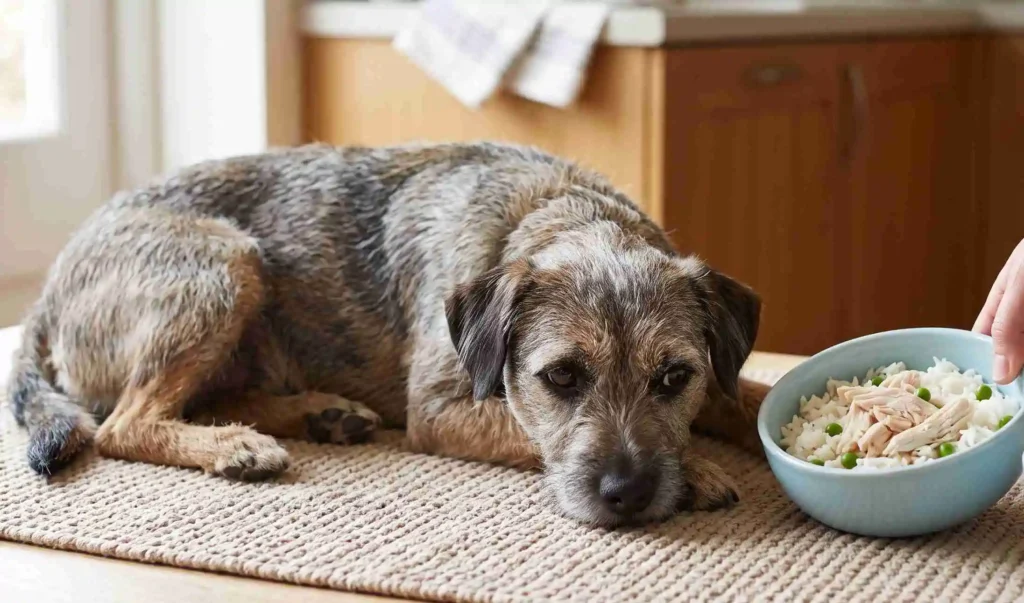
Table of Contents
Why Dog Diarrhea Matters More Than You Think
Most dog owners treat loose stool as an inconvenience. Cleanup, a shrug, back to normal. And honestly, most of the time that instinct is right — a single soft poop after your dog raided the trash usually resolves on its own.
The problem is fluid loss. Diarrhea pushes water and electrolytes out of the body far faster than a dog can replace them by drinking. A small breed dog can slip into dehydration in under 24 hours. Add vomiting on top, and that window shrinks dramatically.
There is also the question of what is causing it. Dietary indiscretion (the polite term for eating garbage) is the most common trigger. But parasites, viral infections, pancreatitis, and swallowed objects all announce themselves the same way at first. That is why home care has a hard time limit, and why watching your dog matters more than any single remedy.
This article is general information and education, not a veterinary diagnosis. Your vet knows your dog’s history in a way no website can.
How Your Dog’s Digestive System Actually Handles This
Think of your dog’s intestine as a long absorbent tube. Food moves through, and the intestinal walls pull out water and nutrients along the way. Normal stool is the leftover material after most of that water has been reclaimed.
Diarrhea happens when that system gets rushed or irritated. Two things usually go wrong. Either the gut wall becomes inflamed and stops absorbing water properly, or the muscles push everything through so fast there is no time to absorb anything. Often both happen at once.
Your dog’s gut also hosts billions of bacteria that help break down food and keep the intestinal lining healthy. Stress, antibiotics, a sudden diet change, or an infection can throw that population out of balance. When the good bacteria drop, digestion suffers, which is exactly why probiotic supplementation shows up in so many recovery plans.
Understanding this helps the remedies make sense. Fasting gives the inflamed tissue a break. Bland food gives the gut something easy to process. Fiber and probiotics help rebuild normal function.
Common Mistakes Owners Make (and How to Fix Them)
Reaching for human anti-diarrheal medication. Many over-the-counter human products contain ingredients that are toxic to dogs, and some can mask a serious problem. The fix: Never give human medication without your vet explicitly approving the product and dose for your specific dog.
Withholding water along with food. Owners hear “rest the gut” and cut off everything. This is the fastest route to dehydration. The fix: Water stays available at all times. If your dog gulps and then vomits, offer small amounts every 20 minutes instead.
Fasting a puppy. Young dogs have almost no glycogen reserve and can develop dangerously low blood sugar within hours. The fix: Puppies under six months, toy breeds, and seniors skip fasting entirely. Go straight to small bland meals and call your vet.
Using seasoned or fatty leftovers as the “bland” diet. Rotisserie chicken skin, buttered rice, and gravy are the opposite of bland. Fat is a major trigger for pancreatitis. The fix: Plain boiled skinless chicken breast, plain white rice, nothing else. No salt, no oil, no garlic, no onion.
Grabbing pumpkin pie filling instead of pumpkin. The pie version is loaded with sugar and spices, and some brands contain xylitol. The fix: Read the label. The only ingredient should be pumpkin.
Switching back to normal food too fast. Your dog eats one good meal, seems fine, and you dump a full bowl of kibble. The diarrhea returns by evening. The fix: Transition over three to four days, mixing increasing amounts of regular food into the bland diet.
Waiting too long to call. “Let’s give it another day” is the phrase vets hear most from owners of seriously ill dogs. The fix: Set a 48-hour ceiling for mild cases and a zero-hour ceiling for any red flag symptom.
Rebuilding Gut Bacteria After a Bout of Diarrhea
Here is a frustration many owners run into. The bland diet works, the stool firms up, and then three days later everything goes soft again. This yo-yo pattern usually points to a gut microbiome that has not recovered. The diarrhea flushed out much of the beneficial bacteria, and the population takes time to rebuild on its own.
This is where a targeted probiotic earns its place. Not all probiotics survive stomach acid, and human yogurt is a poor substitute for most dogs, especially those with any lactose sensitivity.
Purina Pro Plan Veterinary Supplements FortiFlora is the product most commonly stocked in vet clinics for exactly this situation. It comes as a single-serve powder you sprinkle over food, which sidesteps the whole problem of pilling a dog with an upset stomach. The strain it uses is specifically studied in dogs rather than borrowed from human research, and the liver-flavored base means most picky dogs eat it without noticing. It suits dogs recovering from dietary upset, antibiotic courses, or stress-related loose stool. The honest limitation is cost — it is noticeably more expensive per serving than generic pet probiotics, and a 30-count box does not last long if you have a big dog or multiple pets.
CHECK PRICE ON AMAZON: https://amzn.to/3ZySvV4
For daily long-term gut support rather than acute recovery, some owners prefer a broader formula. The Googipet Premium Dog Multivitamin Chewable bundles probiotics with vitamins and joint ingredients in one chew, which simplifies the supplement shelf considerably. It works well for owners who want basic ongoing coverage without juggling three bottles, and the chicken flavor gets good compliance from fussy eaters. Be realistic about what it is, though — the probiotic dose in a combination multivitamin is lower than in a dedicated product, so treat it as maintenance rather than treatment. If you are managing an active flare-up, the single-purpose option is the better tool. Anyone building out a broader supplement routine may want to review how different dog supplements fit together before stacking products.
CHECK PRICE ON AMAZON: https://amzn.to/3ZzV6OD
Step-by-Step: The 72-Hour Home Recovery Plan
- Assess before you act. Check your dog’s gums — they should be pink and moist. Gently pinch the skin between the shoulder blades. If it snaps back instantly, hydration is reasonable. If it tents and falls slowly, call your vet now.
- Rest the gut (adults only). Withhold food for 8 to 12 hours for healthy adult dogs. Skip this step entirely for puppies, seniors, toy breeds, and any dog with a known health condition.
- Keep water accessible. Fresh water at all times. For dogs that gulp and vomit, offer a quarter cup every 20 minutes instead of a full bowl.
- Cook the bland diet. Boil skinless, boneless chicken breast in plain water until fully cooked. Boil white rice separately. Mix at roughly one part chicken to two parts rice. No seasoning of any kind.
- Feed small and often. Divide the day’s food into four to six tiny meals instead of one or two large ones. Small volumes are far easier on an irritated gut.
- Add fiber if stool is still loose. Stir in plain canned pumpkin — one to two teaspoons for small dogs, one to two tablespoons for large dogs, per meal. Soluble fiber absorbs excess water and helps form stool.
- Start the probiotic. Begin on day one alongside the bland diet and continue for the full course, not just until stool firms up.
- Watch the output. Note frequency, color, and consistency. Improvement should be visible within 24 to 48 hours.
- Transition back gradually. Day one: 25% regular food. Day two: 50%. Day three: 75%. Day four: back to normal. If loose stool returns at any stage, drop back one level.
- Slow down fast eaters. If your dog inhales meals, gulped air and rushed digestion make recurrence more likely. A slow feeder bowl is a simple structural fix.
Troubleshooting: If This, Then That
- If your dog refuses the bland chicken and rice — try warming it slightly to release aroma, or swap to boiled lean ground turkey. A dog refusing food entirely for over 24 hours needs a vet call.
- If diarrhea improves but stool stays soft after four days — extend the bland diet another two days and continue the probiotic. Persistent softness past a week warrants a fecal test for parasites.
- If your dog vomits the bland food back up — stop feeding, wait two hours, then offer a single tablespoon of food. Repeated vomiting alongside diarrhea is a vet visit, not a home project. Vomiting that brings up yellow bile or white foam has its own set of causes worth understanding.
- If you see fresh red blood streaking the stool — a small streak from straining can be minor, but any significant blood, or blood appearing repeatedly, means same-day veterinary attention.
- If stool is black and tar-like — this suggests digested blood from the upper digestive tract. Go to the vet immediately. This is not a home care situation.
- If diarrhea returns every time you reintroduce the regular food — the food itself may be the problem. Discuss a diet trial with your vet, since food sensitivities often present as chronic soft stool rather than dramatic reactions.
- If your dog is eating grass obsessively alongside the diarrhea — this is common and usually harmless, though the reasons dogs eat grass are more varied than most owners assume.
- If your dog seems painful in the abdomen — a hunched posture, praying position, or yelping when touched suggests pancreatitis or obstruction. Emergency vet, no delay.
When to Skip Home Remedies and Call a Professional
Some situations are not home care situations. Contact your veterinarian right away if you notice any of the following:
Diarrhea lasting longer than 48 hours in an adult dog, or longer than 12 hours in a puppy. Blood in the stool, whether fresh red or black and tarry. Repeated vomiting combined with diarrhea. Lethargy, weakness, or collapse. Pale or tacky gums. A distended, painful, or hard abdomen. Known or suspected ingestion of a toxin, human medication, or foreign object. Any diarrhea in a puppy, senior, or dog with an existing chronic condition.
The American Veterinary Medical Association notes that infectious causes of gastrointestinal illness are a real concern in unvaccinated and partially vaccinated dogs, which is one reason puppies get a much lower threshold for professional care.
Expert Perspective
Veterinarians consistently recommend a conservative approach to acute diarrhea in otherwise healthy adult dogs. The bland diet protocol works because it reduces digestive workload while still supplying calories and protein. Most uncomplicated cases of dietary indiscretion resolve within two to three days on supportive care alone, without medication. The judgment call is not usually about which remedy to use — it is about recognizing which cases are not simple.
According to the American Kennel Club, monitoring stool consistency, frequency, and your dog’s overall demeanor gives you the clearest picture of whether things are heading in the right direction. A dog who is bright, alert, drinking normally, and producing gradually firmer stool is recovering. A dog who is withdrawn, refusing water, or getting worse needs hands-on veterinary evaluation regardless of how mild the diarrhea appears. Nothing in this guide replaces that examination.
Frequently Asked Questions
What home remedy can I give my dog for diarrhea right now? Withhold food for 8 to 12 hours if your dog is a healthy adult, keep water available, then feed small portions of plain boiled chicken and white rice. Add plain canned pumpkin for fiber.
Can I give my dog pumpkin for diarrhea? Yes. Plain canned pumpkin provides soluble fiber that absorbs excess water. Give one to two teaspoons for small dogs, one to two tablespoons for large dogs, per meal. Never use pumpkin pie filling.
How long should I fast my dog with diarrhea? Eight to twelve hours maximum for healthy adult dogs. Do not fast puppies, senior dogs, toy breeds, diabetic dogs, or any dog with a chronic health condition.
Is plain yogurt good for dog diarrhea? It is a weak option. Many dogs are lactose sensitive, and yogurt’s bacterial strains are not formulated for canine digestion. A vet-formulated dog probiotic is a more reliable choice.
Can I give my dog Imodium or Pepto-Bismol? Not without veterinary approval. Some human anti-diarrheals contain ingredients dangerous to dogs, and certain breeds have genetic sensitivities to specific medications. Always ask your vet first.
How long does dog diarrhea usually last? Simple cases from dietary indiscretion typically resolve within 24 to 48 hours with supportive care. Diarrhea persisting beyond two days needs veterinary evaluation.
What foods should I avoid while my dog has diarrhea? Skip fatty foods, dairy, seasoned leftovers, table scraps, rich treats, and any sudden new food. Fat is a particular problem because it can trigger pancreatitis in a compromised gut.
Should I still walk my dog with diarrhea? Short, gentle bathroom walks are fine and necessary. Skip vigorous exercise, long hikes, and dog park visits until stool returns to normal, partly to avoid spreading anything contagious.
When is dog diarrhea an emergency? Blood in stool, black tarry stool, repeated vomiting, lethargy, pale gums, abdominal pain, or suspected toxin ingestion all require immediate veterinary care. So does any diarrhea in a young puppy.
Can stress cause diarrhea in dogs? Absolutely. Boarding, moving, new pets, and travel commonly trigger stress colitis. Managing dog anxiety often prevents recurring digestive upset in sensitive dogs.
Conclusion
So, what home remedy can you give your dog for diarrhea? A short gut rest, a plain bland diet, steady water, some pumpkin fiber, and a quality probiotic will resolve the large majority of mild cases within two or three days. The remedies are simple on purpose — an irritated gut needs less work, not more intervention. What matters just as much is knowing where the ceiling is. Blood, repeated vomiting, lethargy, or a puppy with loose stool all mean you stop home care and pick up the phone. Start the bland diet tonight, watch closely tomorrow, and keep your vet’s number where you can find it fast. Your dog will almost certainly be back to normal by the weekend — and you will know exactly what to do the next time that 5 a.m. sound wakes you up.