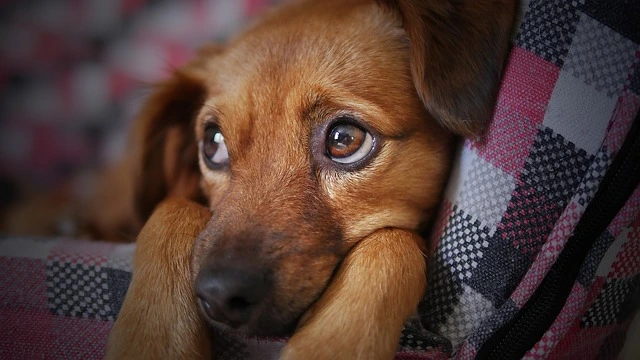
You walk into the living room and find a table leg gnawed raw. Your ten-week-old puppy looks up, tail wagging, completely unbothered. This is not bad behavior. It is a sore mouth looking for relief, and the right puppy teething toys are the fastest way to redirect it. Once you understand what your puppy’s gums are actually doing, the chewing stops feeling like a battle.
Quick Answer
Puppy teething toys are chew items made from soft rubber, nylon, rope, or freezable material that relieve gum pain while baby teeth fall out and adult teeth erupt. They give puppies a legal outlet for a biological urge, which protects your furniture and your hands. They help any puppy between roughly three weeks and seven months old.
TL;DR: Teething puppies chew because their gums hurt, not because they are naughty. Offer two or three safe textures, rotate them daily, and supervise every session.
Key Takeaways
- Teething runs from about three weeks to six or seven months, peaking around four months.
- Match toy hardness to your puppy’s size and chew style, never to an adult dog’s standard.
- Cold soothes inflamed gums. Frozen (not rock-hard) toys work well in short sessions.
- Rotate three to four toys so novelty keeps your puppy interested.
- Replace any toy once it cracks, splinters, or loses chunks.
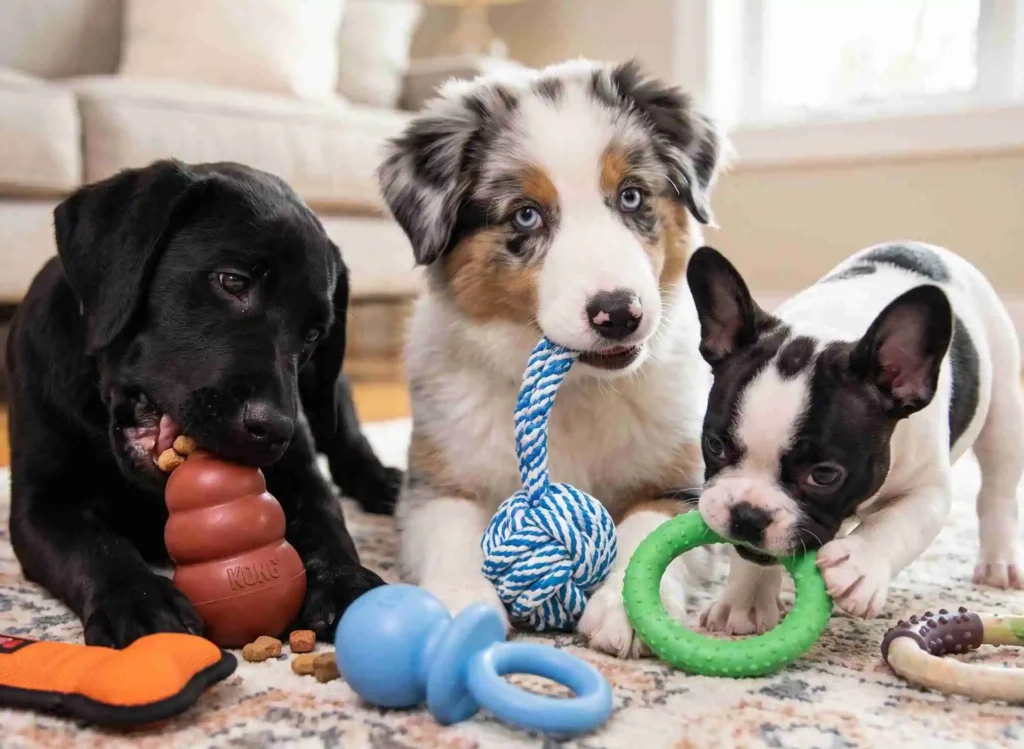
Table of Contents
Why Teething Relief Matters More Than You Think
A teething puppy is in real discomfort. Adult teeth push up through gum tissue, and the pressure aches. Chewing counter-pressure relieves that ache, which is why your puppy targets anything with resistance.
Ignore the need and two problems grow. First, your puppy learns that chair legs, shoes, and baseboards work just fine. Habits formed at twelve weeks are stubborn at twelve months. Second, the wrong objects carry real risk. Cooked bones splinter. Electrical cords burn. Sock fragments cause intestinal blockages that require surgery.
There is also a dental angle. Appropriate chewing helps loosen retained baby teeth and encourages healthy jaw development. It sets the foundation for tooth brushing later, since a puppy who accepts things in his mouth accepts a toothbrush more easily.
None of this needs to be stressful. Give the urge somewhere useful to go and most of the damage disappears on its own.
What Is Actually Happening In Your Puppy’s Mouth
Puppies are born toothless. Around three weeks, twenty-eight needle-sharp deciduous teeth start pushing through. Those are the ones that shred your sleeves.
At roughly twelve to sixteen weeks, the baby teeth begin falling out. Forty-two adult teeth replace them over the following months. Incisors go first, then premolars, then canines, with molars arriving last. According to the American Kennel Club, most puppies finish the process by six months, though some larger breeds take a little longer. If you want the full month-by-month picture, our guide on when puppies stop teething breaks down each stage.
You will probably find a few tiny teeth on the carpet. You will also swallow-miss most of them, because puppies swallow them harmlessly while eating. Slight gum bleeding and pink-tinged water bowls are normal during this window.
What is not normal is a puppy who refuses food entirely, cries when touched near the muzzle, or still has baby canines beside adult canines at seven months. Those situations need a veterinary look.
Choosing the Right Chew: Texture, Size, and Hardness
Not all chews suit all puppies. The fingernail test is the simplest guide most veterinary dentists use. Press your thumbnail into the toy. If it does not give at all, it is too hard for a puppy and risks fracturing a tooth.
Soft rubber suits gentle chewers and very young puppies. Firmer nylon suits determined jaws that destroy softer material within days. Rope offers a flossing action, though loose strands need watching. Freezable rubber or fabric adds cold relief, which is the single best trick for a four-month-old in peak discomfort.
Size matters just as much. A toy that fits fully behind the back teeth is a choking hazard. Buy something your puppy cannot swallow, even at his largest predicted weight.
Common Mistakes (and Fixes)
- Giving old shoes or knotted socks. Puppies cannot tell a retired sneaker from a new one. The fix: Use only purpose-made chew toys so the category stays clear.
- Buying one toy and expecting it to last. Novelty fades within days and your puppy goes hunting elsewhere. The fix: Keep four toys, offer two, and swap them every couple of days.
- Offering antlers, hooves, or hard nylon bones. These are common causes of slab fractures on premolars. The fix: Apply the fingernail test before every purchase.
- Punishing the chewing itself. Scolding teaches your puppy to chew in private, not to stop. The fix: Interrupt calmly, hand over a legal toy, then praise the swap.
- Leaving a destroyed toy in circulation. Cracked rubber and shredded rope become swallowable pieces. The fix: Inspect toys weekly and bin anything damaged.
- Free-feeding chews without supervision. Even good toys need eyes on them for the first several sessions. The fix: Chew time happens where you can see it.
- Treating teething as a training failure. Frustration leaks into your handling and your puppy notices. The fix: Remember this ends. If mouthing is aimed at your hands specifically, our guide on what to do when a puppy won’t stop biting covers the bite-inhibition side.
Tools That Actually Solve the Problem
Once you have identified your puppy’s chew style, the right gear does most of the work.
If your puppy tears through soft rubber in an afternoon and you are constantly replacing toys, you need something built for pressure. The Nylabone New Puppy Starter Kit bundles three items designed specifically for teething mouths, including textured chew toys and a natural chew treat. It suits small-breed puppies up to about 25 pounds who chew with real commitment. The textured surface massages gums while the puppy works, and the flavoring keeps interest high past the first day, which is where cheaper toys usually fail. The honest limitation: it is sized for smaller dogs, so a large-breed puppy will outgrow the set quickly and need bigger equivalents.
CHECK PRICE ON AMAZON: https://amzn.to/4kCd24J
A different problem shows up at night and during crate time. Your puppy is uncomfortable, alone, and chewing on the crate bars instead of a toy. Comfort, not texture, is the missing piece here.
The Original Snuggle Puppy Heartbeat Toy contains a pulsing heartbeat unit and an optional heat pack, mimicking the littermates your puppy just left. It is aimed at new puppies in their first weeks home, especially during crate training and overnight settling. Owners consistently report shorter whining episodes and calmer nights, which indirectly reduces stress-chewing. It also gives your puppy something soft to nuzzle rather than gnaw. The limitation: it is not a chew toy. A determined destroyer can open the fabric, so it belongs in supervised or settled contexts, not in a crate with a puppy who shreds soft goods. Pairing it with a solid crate training routine works better than either alone.
CHECK PRICE ON AMAZON: https://amzn.to/4kCZCoX
There is a third scenario worth naming. Some puppies chew because they are bored, not because they hurt. Their gums settle down but the destruction continues, usually in the late afternoon.
The LUKITO Lick Mat takes a different approach entirely. You spread peanut butter, wet food, or yogurt across the textured surface and let your puppy work at it. Licking is self-soothing and releases calming signals, so it drains mental energy that would otherwise go into your rug. It suits anxious puppies and any dog who needs a wind-down activity before bed. The suction cups let you stick it to a wall during bath time too. The limitation: it needs washing after every use, and messy fillings are best kept to hard floors or the tub.
CHECK PRICE ON AMAZON: https://amzn.to/4aQdOHT
Step-by-Step: Building a Teething Routine
- Puppy-proof one room first. Move cords, shoes, and low decor. Your puppy earns access to more space as reliability grows.
- Buy three or four toys with different textures. One soft rubber, one firmer nylon, one rope, one freezable.
- Freeze one toy each evening. Wet a rope toy or fill a rubber toy with plain yogurt and leave it overnight. Cold numbs inflamed gums.
- Offer two toys at a time. Store the rest out of sight. Rotate every two days so each reappearance feels new.
- Time chew sessions with the mouthy hours. Most puppies peak in the early morning and again around dusk. Preload a toy before those windows.
- Practice the swap. When your puppy grabs something illegal, say nothing dramatic. Present a toy, wait for the trade, then praise warmly.
- Supervise the first five sessions with any new toy. Watch how your puppy attacks it. Some are shredders, some are gnawers, and the toy needs to match.
- Inspect every toy weekly. Flex the rubber, check the seams, and look for missing chunks. Replace immediately if damaged.
- Add a physical outlet. A tired puppy chews less. Short walks and structured play beat unlimited backyard time. Interactive toys and puzzles cover the mental half.
- Start gentle mouth handling now. Lift a lip, touch a tooth, offer a treat. This makes future dental care simple.
Troubleshooting: If This, Then That
- If your puppy ignores every toy, then try smearing a little wet food on it, or freeze it. Temperature and scent restart interest.
- If your puppy destroys a toy in under an hour, then move up one hardness level and reassess size. He may need large-breed gear early.
- If chewing spikes when you leave the house, then you may be looking at separation stress rather than teething. Our dog anxiety guide walks through the difference.
- If your puppy bleeds from the gums after chewing, then a small amount is normal during tooth loss. Persistent bleeding is not.
- If your puppy swallows a piece of toy, then call your veterinarian immediately with the toy’s size and material. Do not wait for symptoms.
- If chewing stops suddenly and appetite drops, then something painful may be happening. A retained tooth or fractured premolar is worth ruling out.
- If your puppy chews only on you, then this is bite inhibition, not teething relief. Redirect every time, without exception.
When to Call Your Veterinarian
Most teething needs nothing but patience and good toys. Certain signs deserve a professional look, though.
Book an appointment if you notice a baby tooth still sitting beside its adult replacement past six or seven months. Retained deciduous teeth crowd the mouth and trap food, and they usually need extraction.
Also call if your puppy refuses food for more than a day, paws repeatedly at his face, drools heavily, or has visibly swollen gums. Bad breath that does not fade after teething finishes can point to infection.
A fractured tooth is another red flag. Look for a chipped edge or a dark spot on the crown, especially on the large upper premolars. These hurt and can abscess.
This article offers general guidance and does not replace a veterinary diagnosis. Your vet can examine the mouth directly, which no article can do.
Expert Perspective
Veterinarians consistently recommend the fingernail test as the practical standard for choosing chews. The reasoning is straightforward. If a toy will not flex under your thumbnail, it will not flex under a tooth either, and enamel loses that contest. The American Veterinary Medical Association notes that dental disease is among the most common conditions veterinarians treat, and habits built during puppyhood shape that risk for years.
According to AKC guidance, redirection consistently outperforms correction during teething. A puppy who is punished for chewing does not stop needing to chew. He simply moves the activity somewhere unsupervised, which is worse for your furniture and more dangerous for him. Offering a legal alternative in the same moment teaches a durable rule with none of the fallout. Combine that with a predictable daily rhythm of exercise, chewing, and rest, and most teething damage resolves without drama.
Frequently Asked Questions
At what age do puppies start teething? Baby teeth begin erupting around three weeks. The heavy chewing phase starts closer to twelve weeks, when adult teeth begin pushing through, and peaks around four months.
Are frozen teething toys safe for puppies? Yes, when they are soft enough to give under pressure. Freeze rubber or wet rope toys, not solid items that become rock-hard. Limit sessions to ten or fifteen minutes.
Can I give my puppy ice cubes? Plain ice cubes are generally fine for supervised, brief relief. Avoid them for very small puppies who might crack a tooth, and never leave a bowl of ice unattended.
How many teething toys does a puppy need? Three to four is ideal. Offer two at a time and rotate the others. Variety maintains interest and lets you match texture to your puppy’s mood.
Are rawhide chews good for teething puppies? Most veterinarians advise caution. Rawhide softens into swallowable chunks that can cause choking or intestinal blockage. Purpose-made puppy chews are the safer choice.
Why is my puppy’s breath bad during teething? Mild odor is common while gum tissue is disrupted and food traps in the gaps. Persistent foul breath after teething ends suggests infection and needs a vet visit.
Do teething puppies lose their appetite? Slightly reduced appetite for a day or two is normal. Softening kibble with warm water helps. Refusing food entirely for over 24 hours warrants a call to your vet.
Is it normal to find blood on toys? Small amounts of blood on chew toys are typical when baby teeth loosen. Steady bleeding, swelling, or obvious pain is not, and should be examined.
When will my puppy stop chewing everything? Most puppies calm significantly by six or seven months once adult teeth settle. Ongoing chewing after that is usually boredom, anxiety, or habit rather than pain.
Can teething cause my puppy to whine at night? Yes. Sore gums and general discomfort disrupt sleep. A frozen toy before bed and a comforting item in the crate often help. Our guide on puppy whining in the crate covers the rest.
Wrapping Up
Teething is temporary, but the habits your puppy builds during it are not. Good puppy teething toys do two jobs at once. They ease real physical discomfort, and they teach your puppy where chewing belongs. Match hardness to your puppy’s jaw, rotate a small collection so novelty never runs out, and freeze one item each night for the worst days. Supervise, inspect, and replace damaged toys without hesitation. Most of all, redirect instead of scold, because a puppy who learns to trade is a dog who listens later. Pick up two or three safe chews this week and start the rotation tonight.