You slice a kiwi over your morning yogurt, and suddenly there’s a nose at your knee. Those hopeful eyes make it hard to say no. But before you toss a green slice across the kitchen, it’s worth asking whether dogs can eat kiwi at all. The short version is reassuring, though the details around skin, seeds, and portion size matter more than most owners expect.
Quick Answer
Yes, dogs can eat kiwi in small amounts. The peeled flesh is non-toxic and delivers vitamin C, potassium, and fiber. Kiwi should stay an occasional treat rather than a daily food, and it must be peeled and cut into small pieces first. This guide helps any dog owner who wants to share fruit safely.
TL;DR: Peeled kiwi flesh is safe for most healthy dogs in moderation. The fuzzy skin is a choking and blockage risk, and too much fruit causes loose stools. Start with one or two small cubes and watch how your dog responds.
Key Takeaways
- Always peel kiwi before serving. The fibrous skin is the main hazard, not the fruit itself.
- Cut kiwi into pea-sized or dime-sized pieces based on your dog’s size.
- Keep fruit and all treats under 10% of your dog’s daily calories.
- Skip kiwi entirely for diabetic dogs, dogs with sensitive stomachs, or dogs on restricted diets without vet approval.
- Watch for vomiting, straining, or repeated retching after any new food.
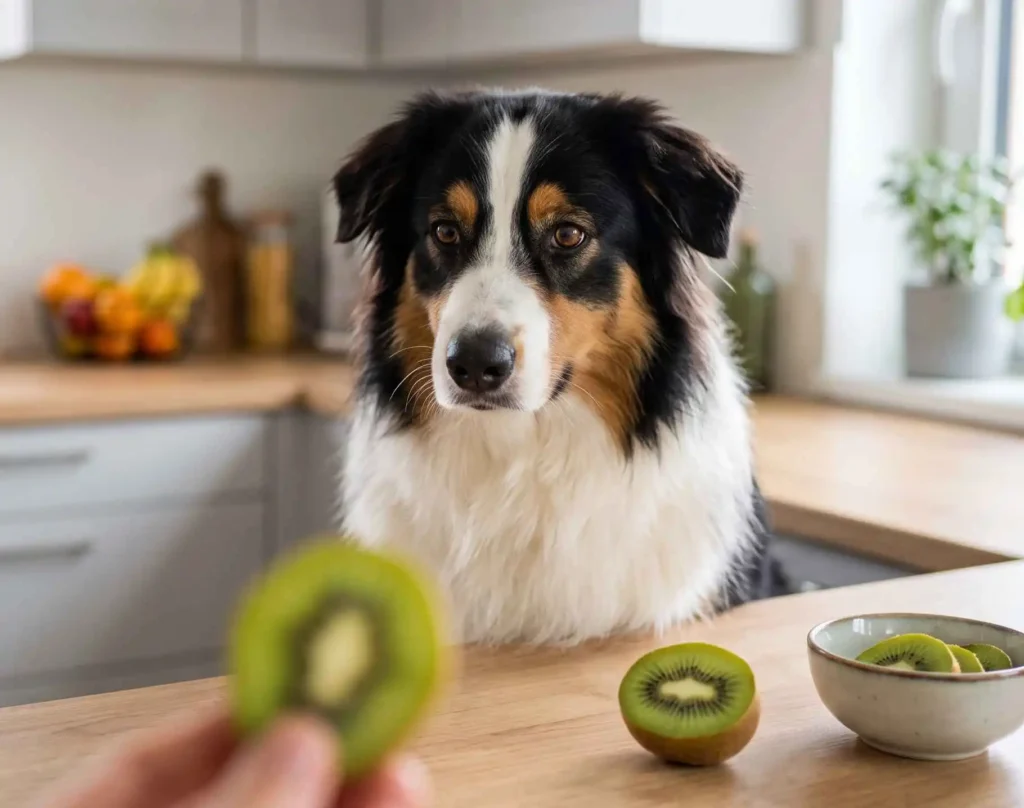
Table of Contents
Why Feeding Kiwi Safely Matters
Most fruit questions come down to two things: toxicity and mechanics. Kiwi passes the toxicity test easily. It contains none of the compounds that make grapes, raisins, or macadamia nuts dangerous for dogs.
The mechanical risks are the real concern. A whole kiwi is roughly the size of a golf ball. For a small dog, that shape is a textbook choking hazard. Even for a large dog who swallows it whole, an unpeeled kiwi can lodge in the digestive tract.
Then there’s the sugar. Kiwi contains natural fruit sugar, and dogs process sugar differently than we do. Regular sugary treats contribute to weight gain, and excess weight puts strain on joints over a dog’s lifetime. If your dog already shows stiffness or slows down on walks, a targeted joint support routine matters far more than any fruit you add to the bowl.
Finally, fiber. Kiwi is fiber-rich, which sounds healthy until a 12-pound terrier eats half a fruit and spends the evening in the yard.
What’s Actually Inside a Kiwi
Kiwi is mostly water, which is part of why it’s a refreshing summer treat. The rest is a mix of carbohydrates, dietary fiber, and micronutrients.
Vitamin C. Kiwi is famously loaded with it. Here’s the honest caveat: unlike humans, healthy dogs synthesize their own vitamin C in the liver. So the headline nutrient in kiwi is the one your dog needs least from food.
Potassium. This mineral supports muscle and nerve function. Your dog’s complete diet already covers it, but a little extra from whole food does no harm.
Fiber. Kiwi contains both soluble and insoluble fiber. Small amounts can support regularity. Large amounts do the opposite.
Actinidin. This is an enzyme unique to kiwi that breaks down protein. It’s the reason kiwi tenderizes meat and occasionally causes mouth tingling in sensitive people. In dogs, it’s an uncommon but real source of oral irritation.
The Skin, the Seeds, and the Core
The tiny black seeds are the least concerning part. They’re soft, small, and pass through without issue. You don’t need to scrape them out.
The skin is a different story. It’s fuzzy, tough, and hard to break down. Some dogs eat it without incident. Others cough, gag, or develop an obstruction. There’s no nutritional payoff that justifies the risk, so peel it.
The pale core is safe but denser than surrounding flesh. Small dogs do better without it.
Common Mistakes and How to Fix Them
Serving kiwi whole. Handing a dog an entire kiwi is a choking risk regardless of breed size. The fix: Peel it, then cut it into cubes appropriate for your dog’s mouth.
Assuming “healthy for me” means “healthy for my dog.” Human nutrition logic breaks down fast across species. The fix: Treat fruit as an occasional snack, not a nutritional strategy.
Overdoing the first serving. A dog who loves kiwi will happily eat too much of it. The fix: Offer one or two small pieces the first time. Wait 24 hours before offering more.
Feeding dried or canned kiwi. Dried fruit concentrates sugar dramatically. Canned versions often sit in heavy syrup. The fix: Fresh, ripe, peeled kiwi only.
Ignoring your dog’s baseline digestion. Dogs with chronically loose stools react badly to sudden fiber increases. The fix: If your dog already struggles with ongoing digestive upset, skip fruit experiments and talk to your vet first.
Letting kiwi replace balanced meals. Fruit has no protein and little fat. The fix: Keep all treats under the 10% rule.
Forgetting about the trash can. Kiwi peels tossed in an accessible bin become a midnight snack. The fix: Use a lidded bin, especially with counter-surfing dogs.
When Enthusiasm Becomes a Problem
Some dogs inhale food. If yours swallows treats without appearing to chew, cut kiwi smaller than you think necessary. Fast eating raises choking risk with any soft, slippery food, and kiwi is exactly that.
A slower pace helps more than portion control alone. The JASGOOD Slow Feeder Dog Bowl uses raised ridges that force a dog to work around obstacles instead of gulping. It suits medium and large dogs who finish meals in under a minute, and it works for kibble, wet food, and chopped fruit mixed in. Two benefits stand out: it stretches mealtime to a healthier length, and the puzzle element adds light mental engagement. The honest limitation is cleaning. The ridges trap wet food, so it needs a proper scrub rather than a quick rinse.
CHECK PRICE ON AMAZON: https://amzn.to/4bSghCM
If your dog is a determined gulper, a slow feeder is worth pairing with the broader habits covered in our guide to choosing the right slow feeder bowl.
If Kiwi Upsets the Stomach
Occasional loose stools after a new food are common. When digestion stays unsettled for a day or two after a diet change, gut bacteria often need support to rebalance.
Purina Pro Plan Veterinary Supplements FortiFlora is a probiotic powder that comes in single-dose packets you sprinkle over food. It’s designed for dogs with digestive upset, including the kind triggered by dietary changes. The advantages are simplicity and palatability, since most dogs eat it without noticing. The limitation is that it addresses symptoms, not causes. Persistent diarrhea still warrants a vet visit rather than a supplement.
CHECK PRICE ON AMAZON: https://amzn.to/3ZySvV4
How to Serve Kiwi: Step by Step
- Choose a ripe kiwi. Press gently. It should give slightly, like a ripe peach. Rock-hard kiwi is unpleasantly tart and harder to digest.
- Wash the outside. Even though you’re peeling it, rinsing prevents surface residue from transferring to the flesh.
- Peel completely. Use a paring knife or run a spoon between the skin and flesh. Remove every trace of fuzz.
- Slice into rounds, then dice. For dogs under 20 pounds, aim for pea-sized pieces. For medium dogs, dime-sized. For large breeds, roughly a half-inch cube.
- Start with a test portion. One or two pieces. That’s the whole first serving.
- Watch for 24 hours. Look for normal stools, normal appetite, and no scratching around the face or mouth.
- Set a sustainable amount. Small dogs: one or two small pieces. Medium dogs: two to three. Large dogs: three to four cubes, a couple of times per week at most.
- Store leftovers properly. Cut kiwi keeps three days refrigerated in a sealed container.
Simple Serving Ideas
Frozen kiwi cubes make a good hot-weather treat for dogs who tolerate the fruit well. Blend a small amount with plain unsweetened yogurt and freeze in an ice cube tray. Some owners spread the mixture thin on a lick mat, which turns a 20-second snack into several calm minutes.
For dogs on higher-value enrichment routines, kiwi also works as a topper inside an interactive puzzle toy rather than as a plain handout.
Troubleshooting: If This, Then That
- If your dog gags right after eating kiwi: Check the mouth for a lodged piece. Cut smaller next time.
- If stools are loose the next morning: Withhold fruit for a week. Return to regular food only.
- If your dog paws at their face or licks their lips repeatedly: This may be actinidin irritation. Discontinue kiwi.
- If your dog ate a whole unpeeled kiwi: Call your vet, especially for small breeds. Monitor for vomiting or a hunched posture.
- If your dog refuses kiwi: That’s fine. Many dogs dislike tart flavors. Try carrot pieces or blueberries instead.
- If your dog vomits once and then acts normal: Withhold food for a few hours, then offer a small bland meal.
- If your dog is diabetic or overweight: Skip fruit entirely unless your vet clears it.
When to Call a Veterinarian
Most kiwi reactions are mild and resolve on their own. Certain signs are not mild.
Contact your vet promptly if you see repeated vomiting, especially retching that produces nothing. Watch for a distended or painful abdomen, refusal to eat for more than 12 hours, or lethargy that seems out of character. Straining to defecate without producing stool is another red flag.
Facial swelling, hives, or difficulty breathing after any new food requires emergency care. True fruit allergies in dogs are rare, but they exist.
Note that this article offers general information. It does not replace an examination by your veterinarian, who knows your dog’s history and current health.
Expert Perspective
Veterinarians generally treat fruit as a low-priority category in canine nutrition. A complete, balanced commercial diet already covers a dog’s vitamin and mineral requirements, which means fruit adds variety and enjoyment more than measurable nutritional value. The American Kennel Club notes that kiwi is safe for dogs when peeled and served in moderation, with portion size scaled to the dog’s weight.
The broader principle comes down to caloric discipline. The American Veterinary Medical Association has flagged pet obesity as a widespread and preventable health issue, and treats are a common driver. Every kiwi cube counts toward the daily total. If your dog gets fruit in the afternoon, the evening biscuit should probably disappear. That kind of accounting does more for long-term health than any single ingredient choice.
Frequently Asked Questions
Can dogs eat kiwi skin? No. The fuzzy skin is tough, difficult to digest, and poses a choking and blockage risk. Always peel kiwi completely before serving it to your dog.
Are kiwi seeds safe for dogs? Yes. Kiwi seeds are tiny, soft, and non-toxic. They pass through the digestive system without causing problems, so there’s no need to remove them.
How much kiwi can a dog eat? Small dogs should get one to two pea-sized pieces. Medium dogs can have two to three dime-sized pieces. Large dogs can handle three to four half-inch cubes, a few times weekly.
Can puppies eat kiwi? Puppies have sensitive digestive systems and specific nutritional needs. Wait until your puppy is on a stable diet, then check with your vet before offering fruit.
Is golden kiwi safe for dogs? Yes. Golden kiwi has smoother skin and a sweeter taste, but the same rules apply. Peel it, dice it, and serve small amounts.
Can dogs eat frozen kiwi? Yes, if it’s peeled and cut small before freezing. Frozen cubes can be hard, so supervise dogs who chew aggressively or have dental issues.
Will kiwi give my dog diarrhea? It can, if fed in excess. Kiwi’s fiber content is significant for a dog’s size. Start small and increase slowly, if at all.
Can diabetic dogs eat kiwi? Generally no. Kiwi contains natural sugars that affect blood glucose. Ask your veterinarian before offering any fruit to a diabetic dog.
What should I do if my dog ate a whole kiwi? Contact your vet, particularly for small breeds. Unpeeled whole fruit can cause obstruction. Watch for vomiting, appetite loss, or abdominal discomfort.
Are there better fruit options than kiwi? Blueberries, watermelon without seeds or rind, and cucumber are all easier to portion and lower in sugar. Kiwi is fine, just not exceptional.
The Bottom Line
So, can dogs eat kiwi? Yes, with sensible limits. Peel it, dice it, and keep portions small. The fruit itself is non-toxic, mildly nutritious, and enjoyable for dogs who like tart flavors. The real hazards live in the skin and in overfeeding, and both are entirely within your control. Start with a single small piece and pay attention to how your dog’s stomach handles it over the next day. If everything looks normal, kiwi earns a spot in your occasional treat rotation. If not, there are plenty of other fruits that will make those hopeful eyes just as happy.