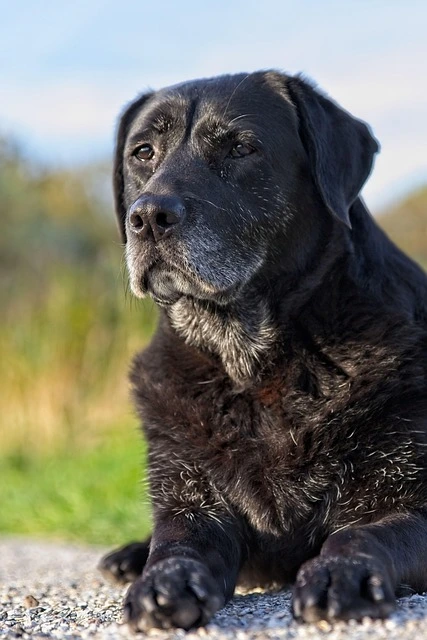
You measure your puppy against the doorframe every few weeks. One month he barely clears your knee. The next, his paws hang off the edge of the couch. Every owner eventually asks the same question: when do dogs stop growing, and is mine done yet? The honest answer depends far more on size than on breed charts or guesswork.
Quick Answer
Most dogs stop growing between 6 and 24 months old, depending on adult size. Small breeds finish height growth around 8 to 10 months. Large and giant breeds keep filling out until 18 to 24 months. Knowing your dog’s window helps you time food changes, exercise limits, and joint care correctly.
TL;DR: Small dogs finish first, giant dogs finish last. Height stops before weight does, so a lanky teenage dog still has muscle and chest depth to gain for months afterward.
Key Takeaways
- Toy and small breeds reach full height by 8–10 months and full weight by about 12 months.
- Medium breeds finish around 12 months; large breeds at 15–18 months; giant breeds at 18–24 months.
- Growth plates close before the dog looks “finished” — filling out continues afterward.
- Switching off puppy food too early or too late both carry real risks.
- Overfeeding a large-breed puppy speeds growth and raises orthopedic problems later.
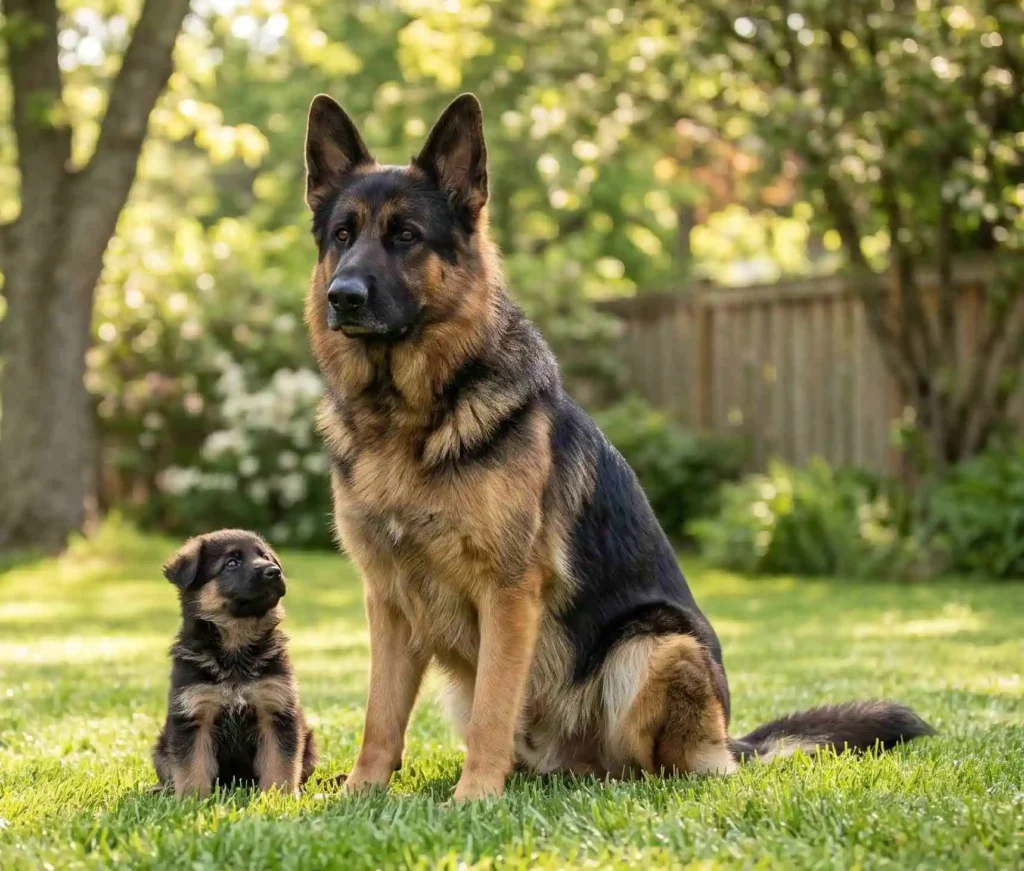
Table of Contents
Why Growth Timing Actually Matters
Growth is not just a number on a scale. It is a window where bones, joints, and cartilage are soft and reshaping daily. During that window, your choices have outsized effects.
Feed too much calcium to a Great Dane puppy and you can push bone development faster than cartilage can keep up. Let a five-month-old Lab jump off a tailgate repeatedly and you stress joints that have not sealed yet. Neither problem shows up that week. Both can show up at age four.
Timing also affects your wallet. Puppy food costs more than adult formulas. Neutering age, exercise plans, harness sizing, and crate purchases all depend on knowing roughly where your dog is on the curve.
The calm version of this: puppies are resilient, and you do not need to panic. You just need a rough map of the timeline so your decisions land at the right moment.
How Puppy Growth Actually Works
Long bones — the femur, humerus, radius — do not grow from the middle. They grow from soft cartilage bands near each end called growth plates, or physes. New cells form there, then harden into bone. The bone gets longer from the ends outward.
When a dog reaches skeletal maturity, those plates fill in with solid bone and close. Once closed, height is locked. No amount of extra food adds another inch.
Why Size Drives the Timeline
A Chihuahua needs to add maybe six inches of height. A Newfoundland needs to add two feet. Bigger dogs simply need their plates open longer to cover the distance. That is the entire reason giant breeds take twice as long.
Growth also slows rather than stopping abruptly. Most puppies grow fastest between 8 and 16 weeks, then the curve flattens steadily until it plateaus.
Height Versus Weight
These finish at different times, which confuses a lot of owners. Height typically caps first. Weight keeps climbing as the chest deepens and muscle fills the frame. A 14-month-old Boxer often looks skinny and leggy. By 20 months, the same dog looks substantial without gaining a single inch of height.
The Size-by-Size Timeline
Toy breeds (under 12 lbs) — Chihuahuas, Yorkies, Pomeranians. Full height around 6–8 months. Full weight by 9–12 months. Many small breeds that stay tiny forever are essentially adult-sized before their first birthday.
Small breeds (12–25 lbs) — Beagles, Miniature Poodles, French Bulldogs. Height finishes at 8–10 months, weight at 12 months.
Medium breeds (25–50 lbs) — Border Collies, Cocker Spaniels, Australian Shepherds. Height by 10–12 months, weight by 14 months.
Large breeds (50–90 lbs) — Labradors, German Shepherds, Golden Retrievers. Height by 12–15 months, full adult weight and chest depth by 18 months.
Giant breeds (90+ lbs) — Great Danes, Mastiffs, Newfoundlands, Saint Bernards. Height by 15–18 months, full maturity at 24 months or slightly beyond.
Mixed breeds land wherever their adult weight lands. Estimate adult size first, then read across.
Common Mistakes (and Fixes)
- Switching to adult food by the calendar, not by size. A Dane at 12 months is still growing. The fix: switch when your dog nears expected adult height, not on a fixed birthday.
- Free-feeding a large-breed puppy. Constant access drives fast growth and heavy joint loading. The fix: measured meals two or three times daily.
- Adding calcium supplements to a complete puppy food. Excess calcium is a documented orthopedic risk in large breeds. The fix: feed a balanced large-breed puppy formula and skip the extras unless a vet directs otherwise.
- Long forced runs before plates close. Repetitive high-impact work is different from free play. The fix: let the puppy set the pace; save structured jogging for after 15–18 months in big breeds.
- Assuming a lean teenager is underfed. Many adolescents look ribby and gangly. The fix: score body condition by feel, not by looks.
- Panicking about a growth pause. Plateaus of two or three weeks are normal. The fix: track monthly, not weekly.
- Buying a crate for current size. Puppies outgrow them fast. The fix: buy adult-size with a divider panel.
Feeding Through the Growth Window
The single biggest lever you control during growth is intake. Slow, steady growth produces better adult joints than fast growth. That is well established, and it is why large-breed puppy formulas exist with controlled calcium and calorie density.
Speed of eating matters too. Deep-chested large breeds are the ones still growing longest, and they are also the ones most vulnerable to bloat. A puppy that inhales a full bowl in forty seconds swallows a lot of air along with it. Slowing the meal down is a cheap, low-effort fix.
The Outward Hound Fun Feeder Slo Bowl handles this with molded ridges that force the dog to work food out of channels. It suits medium to large growing dogs, holds four cups, and typically stretches a rushed meal into several minutes. The non-slip base stops the shoving that defeats most slow bowls. Honest limitation: the ridges trap kibble dust and need a proper scrub, and it is not dishwasher-friendly on the top rack in every model batch.
CHECK PRICE ON AMAZON: https://amzn.to/40buzas
For dogs that are strong enough to flip a bowl or push it across the floor, the JASGOOD Slow Feeder Dog Bowl uses a deeper maze pattern and a wider footprint. It works well for large and medium dogs that treat mealtime as a race. The tradeoff is that determined eaters occasionally learn to tip it and eat off the floor, so it works best on a mat or in a corner. Either bowl solves the same problem — the choice comes down to your dog’s size and how aggressive a gulper you are dealing with. If you want the full comparison, our breakdown of slow feeder bowl designs covers the different maze styles.
CHECK PRICE ON AMAZON: https://amzn.to/4bSghCM
Protecting Joints While Plates Are Open
Large and giant breeds carry more weight on cartilage that has not finished hardening. That is not cause for alarm, but it is cause for sensible habits: soft surfaces, controlled stair use, and no repetitive jumping in the first year.
Some owners of at-risk breeds start joint support during late adolescence, usually on vet advice rather than as a default. Wuffes Advanced Dog Hip and Joint Supplement combines glucosamine, chondroitin, MSM, omega-3, and green lipped mussel in a pork-flavored chew sized for small and medium breeds. Palatability is its strong point — most dogs take it as a treat. The honest limitation is that joint supplements are preventive support, not treatment, and results are gradual rather than obvious. Talk to your vet about whether and when it makes sense for your specific breed. If you want the wider picture first, our guide to choosing dog supplements sensibly explains what actually has evidence behind it.
CHECK PRICE ON AMAZON: https://amzn.to/4aRkWUs
Step-by-Step: Tracking Your Puppy’s Growth
- Estimate adult size. Use the breed standard, or for mixes, the parents’ weights if known.
- Weigh monthly, same day each month. Small dogs on a kitchen scale; big dogs by holding them and subtracting your own weight.
- Measure height at the withers, the ridge between the shoulder blades — not the head. Use a wall and a level book.
- Log both numbers. A phone note is enough. Patterns matter more than single readings.
- Watch for the plateau. Three consecutive months of flat height means growth has likely stopped.
- Score body condition monthly. You should feel ribs easily under a thin fat layer, and see a waist from above.
- Time the food switch to when height plateaus, then transition over 7–10 days.
- Adjust gear — collar, harness, crate divider — every eight weeks during the fastest phase.
Troubleshooting: If This, Then That
- If height has been flat for three months but weight is still rising → normal filling out. Keep monitoring body condition.
- If your puppy seems small for the breed → check the parents’ sizes and confirm deworming is current before worrying.
- If growth suddenly stalls at four or five months → book a vet visit. Parasites, poor absorption, or endocrine issues can be involved.
- If your large-breed puppy is gaining fast and looks chunky → cut portions by 10% and recheck in three weeks.
- If your puppy limps after play → rest for 48 hours. Persistent limping needs a vet, since limping has several distinct causes that need different treatment.
- If your dog looks lanky and awkward at 10 months → that is the adolescent phase. It resolves.
- If chewing spikes around 4–6 months → that is teething, not growth. Our puppy teething timeline explains the overlap.
When to See a Veterinarian
Most growth questions resolve on their own. A few warrant a professional look.
Book an appointment if your puppy shows no measurable growth over two months during the first year, limps for more than a couple of days, has visibly swollen joints or wrists, walks with a stiff or bunny-hopping gait, or loses weight while eating normally. Bowed front legs or a marked size gap versus littermates also deserves examination.
This article is general information and does not replace an exam. Only your veterinarian can diagnose your individual dog.
Expert Perspective
Veterinarians consistently emphasize controlled growth over maximum growth in large-breed puppies. According to the American Kennel Club, feeding a formula appropriate to expected adult size — with attention to calcium and calorie levels — supports steadier skeletal development than simply feeding more. The goal is a lean puppy that grows at a moderate pace, not the biggest puppy in the litter.
The American Veterinary Medical Association similarly frames preventive care and nutrition as the foundation of long-term musculoskeletal health. Practical translation for owners: measure meals, keep body condition lean, avoid supplement stacking on a complete diet, and let free play rather than forced exercise build the young dog’s fitness. These habits during the growth window pay off in mobility a decade later.
Frequently Asked Questions
At what age do dogs stop growing? Between 6 and 24 months, depending on adult size. Toy breeds finish near 8 months, medium breeds near 12 months, and giant breeds around 18 to 24 months.
Do dogs keep growing after one year? Small and medium dogs are usually done. Large and giant breeds continue adding chest depth and muscle mass until 18 to 24 months, even after height stops.
How can I tell if my puppy has stopped growing? Measure height at the withers monthly. Three consecutive months without a change means growth plates have likely closed and adult height is set.
Do paw size predict adult size? Loosely. Oversized paws on a young puppy suggest more growth ahead, but the signal is rough. Parent size is a far better predictor.
When should I switch from puppy to adult food? When height plateaus. That means roughly 10–12 months for small dogs, 12–15 months for large breeds, and 18–24 months for giant breeds.
Does neutering affect growth? Early neutering can delay growth plate closure, producing slightly taller adults with altered joint angles. Discuss timing with your vet, especially for large breeds.
Can overfeeding make my dog bigger? It cannot increase genetic height. It can accelerate growth rate and add fat, both of which raise orthopedic risk in large breeds.
Why does my puppy look skinny during growth? Adolescents often stretch upward before filling out. If ribs are palpable but not visible and energy is normal, this is typical.
Do mixed breeds follow the same timeline? Yes. Timing follows adult weight, not ancestry. Estimate adult size, then use the size-based ranges.
Is a growth plateau normal? Short pauses of two to three weeks happen regularly. A stall lasting two months or longer during the first year deserves a vet check.
Bringing It Together
So, when do dogs stop growing? Small dogs finish before their first birthday, medium dogs around it, and large and giant breeds keep developing well into their second year. Height locks in first; weight and muscle follow for months afterward. The practical takeaway is simple: match your feeding, exercise, and gear decisions to your dog’s size category rather than a generic timeline. Measure monthly, keep your puppy lean, and let growth happen at its own pace. Start a growth log this week — a note on your phone with weight and height takes two minutes and tells you more than any chart. Your dog’s joints will thank you in ten years.