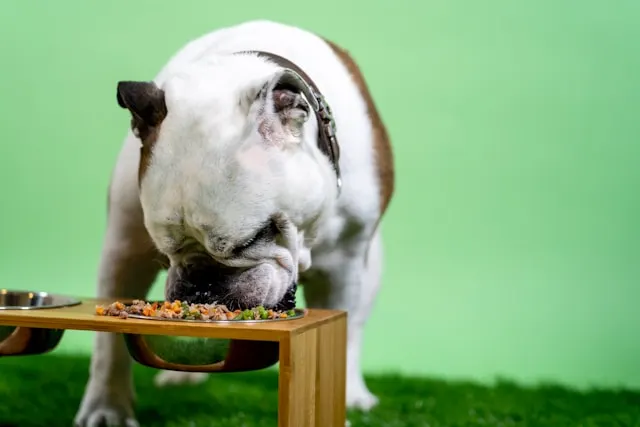
You are slicing a pork loin for dinner when two brown eyes lock onto your hands. The tail thumps. The drool starts. Before you toss a scrap, you probably want to know: can dogs eat pork without ending up at the emergency clinic? The short version is yes, with real conditions attached, and the details matter more than most owners expect.
Quick Answer: Can Dogs Eat Pork?
Dogs can eat pork when it is plain, thoroughly cooked, unseasoned, and boneless. Lean cuts like tenderloin offer high-quality protein and B vitamins. Raw pork, cured pork like bacon and ham, and cooked pork bones are not safe. This guide helps owners who want to share table protein without risking pancreatitis or parasites.
TL;DR: Plain cooked pork in small amounts is generally fine for healthy dogs. Skip anything raw, salted, smoked, seasoned, or attached to a bone, and keep portions to a treat-sized serving rather than a meal replacement.
Key Takeaways
- Cook pork to at least 145°F internal temperature and let it rest before serving.
- Remove all bones, fat trim, skin, and seasoning before it reaches the bowl.
- Bacon, ham, sausage, and pepperoni are off the list because of salt, fat, and preservatives.
- Keep pork treats under roughly 10% of your dog’s daily calories.
- Watch for vomiting, a hunched posture, or lethargy in the 24 hours after a fatty pork snack.
Table of Contents
Why This Question Matters More Than It Seems
Pork is one of the most commonly shared human proteins, and that is exactly the problem. It shows up seasoned, cured, fried, and bone-in far more often than it shows up plain and lean. Most pork-related vet visits do not come from pork itself. They come from what was done to it.
The two biggest concerns are pancreatitis and physical injury from bones. Both are avoidable. Neither is rare.
Fatty foods can trigger pancreatitis, an inflammation of the pancreas that ranges from a miserable night to a hospital stay. Small breeds, overweight dogs, and dogs with a history of digestive trouble carry higher risk. If your dog has ever been treated for a pancreatic flare-up, fatty pork is not worth the gamble.
Then there is sodium. A single strip of bacon can carry more salt than a small dog should get in an entire day. Regular cured pork also nudges dogs toward weight gain, and extra weight puts pressure on joints your dog needs for the next decade.
What Pork Actually Offers Nutritionally
Pork is a complete protein. It contains all the essential amino acids dogs need to maintain muscle, repair tissue, and support immune function. It is also rich in thiamine, a B vitamin that pork carries in unusually high concentrations, plus niacin, vitamin B6, phosphorus, and zinc.
That sounds great on paper. The catch is fat content, which swings wildly by cut.
Pork tenderloin is comparable to skinless chicken breast in leanness. Pork belly is roughly ten times fattier. Shoulder and ribs sit in the middle but usually come with heavy marbling. When people say pork is fatty, they are describing certain cuts, not the whole animal.
Safe Cuts Versus Risky Cuts
Lean and generally acceptable when plain and cooked: tenderloin, loin chops with fat trimmed, and center-cut roast.
Higher risk because of fat load: belly, shoulder, ribs, and anything with skin or crackling attached.
Never appropriate: bacon, ham, prosciutto, sausage, hot dogs, pepperoni, and any pork prepared with garlic, onion, or heavy spice blends. Garlic and onion are toxic to dogs, and they appear in almost every commercial pork rub and marinade.
The Raw Pork Problem
Raw pork carries a specific risk that raw chicken and beef do not: Trichinella spiralis, a parasite that causes trichinellosis. Modern commercial pork has a low incidence, but “low” is not “zero,” and the infection is unpleasant enough that veterinarians consistently advise cooking pork thoroughly.
Freezing helps but is not a guaranteed fix for every parasite strain, and home freezers rarely hit the temperatures used commercially. If you follow a raw feeding approach, this is one protein where sourcing and handling deserve extra scrutiny. Owners comparing feeding philosophies can find a fuller breakdown in this raw versus kibble comparison, which covers handling protocols in depth.
Why Cooked Pork Bones Are Dangerous
Cooking dries out bone and changes its structure. Cooked pork bones, especially rib bones and chop bones, splinter into sharp fragments. Those fragments can lacerate the mouth, lodge in the esophagus, perforate the intestine, or cause an obstruction that requires surgery.
The bone from your dinner plate is not a dog treat. It never was. Hand your dog a durable chew instead, since the chewing instinct is real and worth satisfying safely.
Common Mistakes Owners Make With Pork
Assuming “a little bacon won’t hurt.” One strip occasionally will not poison a healthy large dog, but it normalizes a food that is 40% fat and heavily salted. The fix: use a tiny piece of plain cooked pork loin as your high-value treat instead. Dogs cannot tell the difference in enthusiasm.
Feeding pork that was cooked with the family dinner. Your seasoning is the hazard, not the meat. Garlic powder, onion powder, and salt are standard in nearly every pork recipe. The fix: set aside an unseasoned portion before you cook, not after.
Giving the fat trim as a “treat.” Owners often save the fat cap thinking they are being generous. This is the single most common trigger for a pancreatitis episode. The fix: trim fat into the trash, not the bowl.
Serving pork bones because “dogs love bones.” They do love them. That does not make cooked bones safe. The fix: offer a purpose-made chew toy sized for your dog’s jaw strength.
Introducing a large portion all at once. A sudden protein switch commonly produces loose stool. The fix: start with a teaspoon-sized amount for a small dog and watch for 24 hours before offering more.
Overlooking pork in processed treats. Some jerky and chew products contain cured pork with high sodium. The fix: read ingredient panels rather than trusting the front-of-bag photo.
Feeding pork to a dog with a known pancreatic or digestive history. The fix: ask your veterinarian first. For these dogs, the answer is often a firm no regardless of cut.
When Rich Food Meets a Fast Eater
Here is a scenario that plays out constantly. An owner offers a small piece of pork. The dog inhales it in under a second, swallows air along with it, then paces and burps for the next hour. Nothing was wrong with the food. The problem was the delivery speed.
Dogs that gulp are more likely to experience gas, regurgitation, and in deep-chested breeds, elevated bloat risk. When you add a richer-than-usual protein into a fast-eating dog’s routine, you stack two variables at once. Slowing the meal down solves half the equation before it starts.
The JASGOOD Slow Feeder Dog Bowl is built around this exact issue, using a maze-style ridged interior that forces a dog to work around obstacles instead of scooping mouthfuls. It suits medium and large dogs who finish a meal in under a minute, and it can stretch eating time to a more reasonable five to ten minutes. That pacing helps with gulping-related gas and gives the stomach a saner workload. The honest limitation is cleaning. The grooves need a brush to get fully clean, and wet food dries into the channels if you leave it sitting.
CHECK PRICE ON AMAZON: https://amzn.to/4bSghCM
If you want the full picture on pacing tools and which designs work for which snout shapes, this slow feeder bowl guide breaks down the options in more detail.
Supporting Gut Health During a Diet Change
Any new protein can shift stool consistency for a few days. That is normal within reason. The gut microbiome adjusts to novel inputs, and a small amount of softening usually resolves on its own. What owners want to avoid is a mild adjustment spiraling into days of diarrhea.
This is where a targeted probiotic earns its place, particularly for dogs with historically sensitive digestion.
Purina Pro Plan Veterinary Supplements FortiFlora is a single-serve powder you sprinkle over food, formulated to support digestive health and stool quality. It is a reasonable choice for dogs who react to dietary changes or who are recovering from a bout of loose stool. Most dogs take it readily because it is highly palatable, which removes the usual supplement battle. The limitation worth naming: it is priced per sachet, so daily long-term use adds up faster than a bulk supplement would.
CHECK PRICE ON AMAZON: https://amzn.to/3ZySvV4
Probiotics support digestion. They do not neutralize a bad food choice. If your dog ate a plate of seasoned ribs, a sachet of powder is not the answer. A phone call to your vet is.
How to Serve Pork Safely: Step by Step
- Choose a lean cut. Tenderloin or a trimmed loin chop. Skip belly, ribs, and anything cured.
- Trim visible fat and remove the skin. Be thorough. Fat is the main pancreatitis trigger.
- Remove every bone. Check twice. Small rib fragments hide easily.
- Cook to 145°F internal temperature and let it rest for three minutes. Use a meat thermometer rather than guessing by color.
- Add nothing. No salt, no oil, no garlic, no onion, no marinade, no rub.
- Let it cool completely. Hot meat can burn the mouth and throat.
- Cut into small, bite-appropriate cubes. Size to your dog, not to your hand.
- Start small. A teaspoon for a small dog, a tablespoon for a large one, on the first offering.
- Watch for 24 hours. Note stool quality, appetite, and energy level.
- Keep the total under 10% of daily calories if pork becomes a regular treat.
Store leftover plain cooked pork in the fridge for no more than three days, or freeze it in single-serving portions.
Troubleshooting: If This, Then That
If your dog swallowed a cooked pork bone, then call your veterinarian immediately, even if the dog seems fine. Do not induce vomiting without instruction, because a sharp fragment can do more damage coming back up.
If your dog ate several strips of bacon, then offer fresh water, withhold the next meal only if your vet advises it, and monitor for vomiting or abdominal discomfort for 24 hours.
If stool is soft but your dog is bright and eating, then hold the pork, return to the regular diet, and reassess in two days. Persistent looseness warrants the same attention outlined in this guide to dog diarrhea causes and home treatment.
If your dog vomits once and then acts normal, then withhold food for a few hours, offer small amounts of water, and reintroduce a bland meal. Repeated vomiting is a different situation entirely.
If your dog got into seasoned pork containing garlic or onion, then contact your vet or a pet poison line right away. Onion and garlic toxicity can be delayed and affects red blood cells.
If your dog seems restless, drools heavily, or has a swollen abdomen, then treat it as an emergency. These can indicate bloat, which is time-critical.
When to Call a Veterinarian
Some signs justify skipping the wait-and-see approach entirely. Contact your veterinarian promptly if you observe:
- Repeated vomiting, especially with retching that produces nothing
- A hunched back or “praying” stretch position, a classic pancreatitis posture
- Abdominal swelling or tenderness when touched
- Bloody or black, tarry stool
- Refusal to eat combined with lethargy for more than 12 hours
- Any known ingestion of a cooked bone
- Pale gums or visible weakness
Small breeds and dogs with existing health conditions should get a lower threshold for calling. So should puppies, whose systems handle dietary insults poorly. If your dog is shaking or trembling after a rich meal, that is worth mentioning to your vet, since pain and nausea both present that way.
An Evidence-Based Perspective
Veterinarians generally treat plain cooked pork as an acceptable occasional protein rather than a staple. The reasoning is consistent: the meat itself is nutritious, but the typical human preparation of pork introduces fat and sodium levels that dogs are poorly equipped to process. The American Kennel Club notes that pork can be fed to dogs when it is cooked plain without seasonings, while emphasizing that cured products like bacon and ham should be avoided due to their salt content.
Pancreatitis remains the most cited concern in clinical practice. The American Veterinary Medical Association highlights that high-fat dietary indiscretion is a recognized trigger for pancreatic inflammation in dogs, which is why the fat trim matters more than the meat. Complete, balanced commercial diets are formulated to meet nutritional requirements without supplementation, so pork should be treated as an occasional extra rather than a nutritional necessity. Owners building a broader nutrition plan may find this dog supplements guide useful for understanding what actually fills a gap.
This article provides general information and does not replace an examination by your veterinarian. Every dog has a different history, weight, and tolerance, and only your vet can advise on your specific animal.
Frequently Asked Questions
Can dogs eat cooked pork? Yes, if it is plain, boneless, thoroughly cooked to 145°F, and free of seasoning. Lean cuts like tenderloin are the safest choice. Serve in small portions as a treat rather than a meal.
Can dogs eat bacon? No. Bacon is very high in fat and sodium, and both raise the risk of pancreatitis and sodium-related problems. A single accidental piece rarely causes harm, but bacon should not be a regular treat.
Can dogs eat ham? Ham is not recommended. It is cured with large amounts of salt and often contains preservatives and sugars. The sodium load is a particular concern for small dogs and dogs with heart or kidney conditions.
Can dogs eat pork bones? No. Cooked pork bones splinter and can cause mouth injuries, choking, esophageal damage, intestinal perforation, or blockage. Raw bones carry infection risks. Use a purpose-made chew toy instead.
Can dogs eat raw pork? Raw pork is not recommended because of the risk of trichinellosis, caused by a parasite that cooking reliably kills. Bacterial contamination is an added concern. Cook pork thoroughly before offering it.
How much pork can I give my dog? Treats of all kinds should stay under roughly 10% of daily calories. For most dogs that means a few small cubes, not a portion of a meal. Start smaller on the first serving.
Can puppies eat pork? Puppies can have tiny amounts of plain cooked lean pork, but their digestive systems are sensitive. Their nutritional needs are best met by a complete puppy food. Check with your vet before introducing new proteins.
Is pork a common dog allergen? Pork allergies exist but are less common than beef, dairy, and chicken sensitivities. Signs include itchy skin, ear inflammation, and digestive upset. A veterinary elimination diet is the only reliable way to confirm one.
Can dogs eat pork sausage or hot dogs? No. These are heavily processed, high in sodium and fat, and frequently contain garlic and onion powder, which are toxic to dogs. Avoid them entirely, including as pill-hiding vehicles.
What should I do if my dog ate seasoned pork? Note what seasonings were used and contact your veterinarian, especially if garlic or onion was involved. Monitor for vomiting, lethargy, or pale gums. Do not wait for severe symptoms to appear.
The Bottom Line
So, can dogs eat pork? Yes, with meaningful limits. Plain, lean, thoroughly cooked, boneless, unseasoned pork is a perfectly reasonable occasional treat for a healthy dog. The trouble almost never comes from the pork itself. It comes from bacon, from bones, from garlic-heavy marinades, and from generous fat trim handed over with the best intentions. Set aside an unseasoned piece before you cook, trim it, cube it, and keep the portion honest. Your dog gets a high-value reward and you skip the midnight worry. Next time pork is on the menu, carve off a small plain piece first, and check any other human food against a reliable safety guide before it hits the bowl.