You buy a squeaky duck. Your dog loves it for eleven minutes. Then it sits under the couch forever, next to four other forgotten purchases. Meanwhile, your shoes keep disappearing. The right dog toy isn’t about price or packaging — it’s about matching the toy to how your dog is wired to play.
Quick Answer: What Makes a Good Dog Toy?
A good dog toy matches your dog’s play style, chew strength, and size. The best options either satisfy a natural drive (chewing, sniffing, shaking, problem-solving) or burn mental energy. This guide helps owners stop wasting money on toys that get ignored — or destroyed in an afternoon.
TL;DR: Dogs don’t need more toys. They need the right three or four, rotated regularly, sized correctly, and matched to whether your dog is a chewer, a shredder, a fetcher, or a thinker.
Key Takeaways
- Identify your dog’s play style first — chewer, shredder, fetcher, or puzzle-solver — before buying anything.
- Size up, not down. A toy that fits behind the molars is a choking risk.
- Rotate toys weekly. Four toys in rotation feel like twelve toys to a dog.
- Puzzle and lick-based toys tire dogs out faster than a walk around the block.
- Inspect toys weekly and toss anything cracked, shredded, or missing pieces.
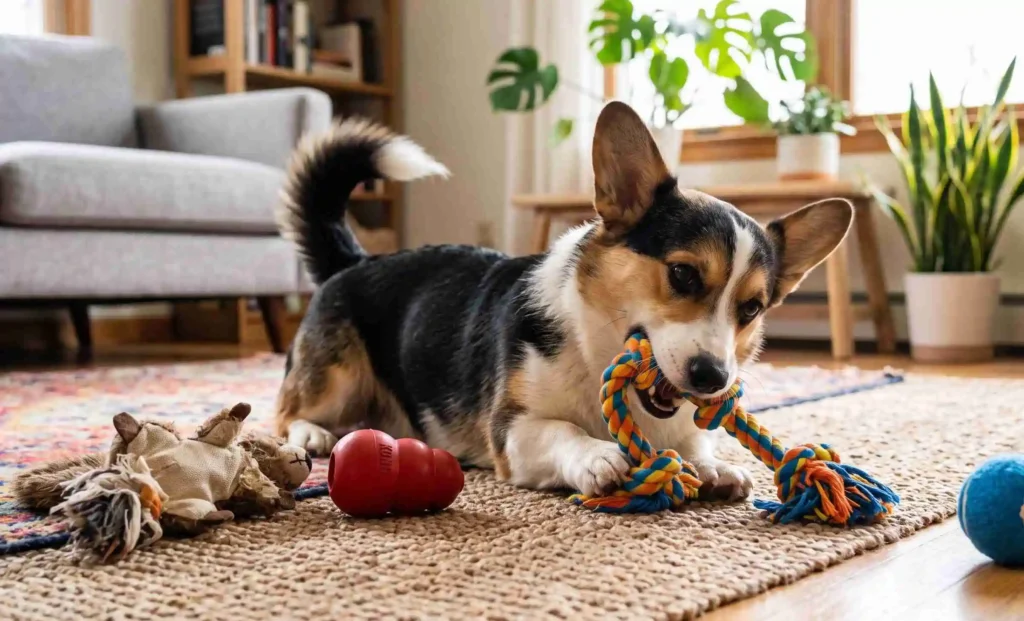
Table of Contents
Why the Right Dog Toy Matters More Than You Think
Toys look like an extra. They’re not. For most dogs, play is how boredom gets discharged safely.
An under-stimulated dog finds its own entertainment. That usually means chewing baseboards, digging up the yard, or barking at nothing for an hour. Owners often assume this is a training problem. Frequently it’s an outlet problem.
There’s a safety layer too. Toys made from the wrong material, or sized for a smaller dog, cause real emergencies. Vets regularly treat intestinal blockages from swallowed squeakers, rope strands, and tennis ball fuzz. The American Kennel Club notes that toy safety depends heavily on supervision and correct sizing, not just the label on the package.
And there’s the mental side. Dogs that get daily problem-solving time tend to settle more easily in the evening. If your dog seems restless at bedtime, boredom may be part of why they’re panting and pacing at night.
How Dogs Actually Play: The Four Drives
Play isn’t random. Most dogs lean heavily toward one or two instincts.
The Chewer
Chewing releases tension and feels good on the jaw. Labs, Pit Bull types, and most puppies live here. Chewers need durable rubber or nylon, not plush.
The Shredder
Some dogs want to dissect. Terriers especially. This mimics the old prey-dismantling instinct. Shredders love plush toys — and destroy them in minutes.
The Fetcher
Retrievers, Border Collies, spaniels. They want motion. Balls, discs, and anything that flies keeps them happy.
The Thinker
These dogs get bored physically before they get bored mentally. Puzzle feeders and scent games are their thing.
Most dogs blend two drives. A Golden might fetch for twenty minutes, then settle in to chew. Watching your dog for a week tells you more than any product review.
Common Mistakes (and Fixes)
Mistake 1: Buying toys sized for looks, not safety. A tennis ball fits neatly in a Lab’s throat. The fix: choose a toy wider than your dog’s muzzle, and size up whenever you’re between options.
Mistake 2: Leaving plush toys out unsupervised. Stuffing and squeakers are the two most common swallowed items. The fix: treat plush as supervised-play-only, and remove it when you leave the room.
Mistake 3: Giving a dog every toy at once. Ten toys on the floor become background scenery. The fix: keep four out, store the rest, swap weekly.
Mistake 4: Using toys that are too hard. If you can’t press a fingernail into it, it can crack a molar. Antlers and hard nylon bones are frequent culprits. The fix: use the thumbnail test before buying.
Mistake 5: Assuming “indestructible” means safe. No toy is indestructible. The fix: inspect weekly and retire anything with cracks or exposed material.
Mistake 6: Ignoring mental toys entirely. Physical exercise alone rarely satisfies a smart dog. The fix: add one food-based puzzle to the daily routine.
Mistake 7: Never playing with the toy yourself. Many dogs value a toy only when you’re involved. The fix: spend five minutes engaging with a new toy before expecting solo interest.
When Chewing Turns Destructive
Here’s the pattern most owners recognize. The dog is fine for three hours, then suddenly the couch cushion is open. That’s usually not spite. It’s accumulated energy with nowhere to go.
The most reliable fix is a chew object built to outlast enthusiasm — something the dog can return to whenever the urge hits. Puppies especially need this, because teething discomfort creates a near-constant chewing drive from roughly three to seven months.
The Nylabone New Puppy Starter Kit is a sensible starting point for small-breed puppies under 25 pounds. It bundles textured chew toys with a natural chew treat, which matters because puppies get bored of a single texture fast. The flavored nylon holds up far better than plush, and the varied shapes give sore gums different pressure points to work against. One honest limitation: it’s genuinely sized for small dogs, so a growing Lab puppy will outgrow the pieces quickly and need a larger, tougher option. Supervise early sessions to see how aggressively your puppy works it.
CHECK PRICE ON AMAZON: https://amzn.to/4kCd24J
If your dog is already a committed destroyer rather than a teething puppy, the calculus changes. Adult power chewers need thicker walls and denser material, and it’s worth reading up on toys built for aggressive chewers before spending money on something that lasts one evening.
The Boredom Problem: Mental Work Beats More Walking
A tired body isn’t the same as a tired mind. Plenty of owners walk their dog an hour a day and still come home to chaos.
Sniffing and problem-solving drain energy at a different rate. Ten minutes of nose work often settles a dog more than a thirty-minute stroll. That’s why food-based enrichment has become such a staple.
The Outward Hound Hide N’ Slide puzzle is a Level 2 intermediate toy, which is the sweet spot for most adult dogs. Treats hide under sliding covers and rotating discs, so the dog has to figure out sequence rather than just flip a lid. It works well for dogs who solve beginner puzzles in thirty seconds and then look at you expectantly. Two things to know: it’s not dishwasher-safe in practice — hand washing keeps the sliders moving smoothly — and determined chewers will eventually damage the plastic if left alone with it. Use it as a supervised activity, not a leave-it-out toy.
CHECK PRICE ON AMAZON: https://amzn.to/4kDzKti
For dogs who inhale their meals, there’s a related trick worth knowing. Turning dinner itself into the puzzle solves two problems at once, which is why a slow feeder bowl often reduces both gulping and post-meal restlessness.
Toys for Anxious Dogs
Not every dog plays to burn energy. Some need toys that lower arousal instead of raising it.
Licking is the clearest example. Repetitive licking is self-soothing for dogs, releasing calming signals in a way that fetch simply doesn’t. That’s the mechanism behind lick mats — smear something soft across the textured surface and the dog works at it slowly.
The LUKITO Lick Mat 2-pack comes with suction cups, which is the detail that matters. Mats that slide across the floor get flipped and abandoned within a minute. Stuck to a bathroom wall, they turn nail trims and baths into tolerable events instead of wrestling matches. They’re also useful for dogs who panic during thunderstorms or when guests arrive. The limitation: they’re best with soft spreads like plain yogurt or wet food, so they don’t work as a general treat dispenser. Freezing them first roughly triples how long they occupy a dog.
CHECK PRICE ON AMAZON: https://amzn.to/4aQdOHT
Toys help with mild nervousness, but they aren’t a treatment. Persistent trembling, hiding, or destructive panic when left alone points toward something more serious, and it’s worth understanding the difference between boredom and real dog anxiety before assuming a toy will fix it.
Step-by-Step: Building a Toy Rotation That Works
- Watch first, buy second. Spend a week noting what your dog does with existing toys. Shakes them? Chews them? Carries them around? That’s your drive.
- Pick four categories. One durable chew, one interactive puzzle, one fetch or motion toy, one soft comfort toy. That’s a complete kit.
- Size correctly. The toy should be too large to fit fully behind the back teeth. When unsure, go bigger.
- Test supervised. Give any new toy while you’re in the room. Watch for pieces coming off in the first ten minutes.
- Store the rest. Keep four out. Put everything else in a bin, out of sight.
- Rotate weekly. Swap two toys every Sunday. Novelty resets interest without new spending.
- Inspect on rotation day. Squeeze each toy. Check seams, cracks, and missing chunks. Retire anything questionable.
- Play together three times a week. Five minutes of tug or fetch keeps toys emotionally valuable.
Troubleshooting: If This, Then That
- If your dog ignores every new toy — then try engaging with it yourself first, or rub a treat on it to build interest.
- If toys are destroyed within an hour — then you’re buying below your dog’s chew strength; move up a durability tier.
- If your dog guards toys and growls — then stop free access and hand out toys individually during structured play.
- If your puppy chews everything but the toys — then check whether the toy texture is too soft or too hard for teething gums.
- If your dog swallows pieces — then remove that toy type entirely and switch to solid, one-piece designs.
- If the puzzle toy gets solved instantly — then increase difficulty a level or add a physical barrier over the treats.
- If your dog only plays when you’re watching — then that’s normal social behavior, not a defect; build in short daily play sessions.
When to Call Your Vet
Some situations need professional eyes, not a new toy.
Call your vet if your dog swallows a toy piece, especially rope strands or squeakers. Watch for vomiting, appetite loss, straining, or a hunched posture — these can signal an obstruction, which is a genuine emergency.
Also seek advice if a tooth chips or bleeding appears after chewing, or if your dog suddenly loses interest in play they previously loved. A sharp behavioral change often has a medical root. Persistent obsessive chewing or licking, likewise, sometimes reflects pain or anxiety rather than boredom. Note this article offers general information and doesn’t replace an exam by your own veterinarian.
Expert Perspective on Toy Safety
Veterinarians consistently emphasize supervision over product claims. The American Veterinary Medical Association highlights that many household pet emergencies involve swallowed objects, and toys are a common source. No material is truly indestructible, and manufacturer durability ratings reflect average dogs rather than committed destroyers.
According to AKC guidance, the practical rules are straightforward: choose toys too large to swallow, avoid anything with removable parts your dog can extract, discard damaged items promptly, and skip toys harder than your dog’s teeth. Rope toys deserve particular caution — swallowed strands can cause linear foreign body obstructions, which are among the more serious surgical presentations. Owners who follow these basics avoid the overwhelming majority of toy-related incidents.
Frequently Asked Questions
How many toys does a dog need? Four to six is plenty. Keep four accessible and rotate weekly. More toys on the floor at once reduces interest rather than increasing it.
Are tennis balls safe for dogs? Only with supervision. The abrasive fuzz wears down tooth enamel over time, and the ball can compress into the throat of a large dog. Choose a rubber ball sized larger than the muzzle.
What toys are best for teething puppies? Soft rubber or flexible nylon designed for puppies. Frozen wet washcloths also help. Avoid hard antlers and bones, which can crack developing teeth.
Are rope toys dangerous? They can be. Swallowed strands cause serious intestinal blockages. Use rope only for supervised tug, and retire it as soon as it frays.
How do I get my dog interested in toys? Play with the toy yourself first. Move it like prey — short, erratic motions. Rubbing a treat on it or hiding food inside also builds initial value.
Do puzzle toys really tire dogs out? Yes. Problem-solving and sniffing use significant mental energy. Ten to fifteen minutes of puzzle work often calms a dog more effectively than an equivalent walk.
How often should I replace dog toys? Inspect weekly and replace on damage, not schedule. Toss anything cracked, shredded, or missing pieces immediately.
Can toys stop separation anxiety? No. Toys help mild boredom, not true separation anxiety. Real cases need behavior modification and often veterinary support.
Are squeaky toys bad for dogs? The squeak itself is fine and drives natural prey interest. The internal squeaker is the risk. Supervise, and remove the toy once the casing opens.
What’s the safest toy material? Solid, one-piece natural rubber is generally safest for unsupervised chewing. It flexes rather than shatters and has no removable components.
Final Thoughts
The right dog toy isn’t the most expensive one on the shelf. It’s the one that matches how your specific dog wants to play. Watch your dog for a week, identify whether they chew, shred, fetch, or think, and build a small kit around that. Keep four toys out, rotate them weekly, and inspect every one on swap day. Size up when you’re uncertain, and treat plush and rope as supervised-only items. That approach costs less than the scattershot buying most of us start with, and it produces a calmer, more settled dog.
Start tonight: pick up every toy in your house, keep the four your dog actually uses, and put the rest away for next week.