You’re chopping cabbage for dinner and a leaf hits the floor. Before you can grab it, your dog has already claimed the prize. Now you’re standing there wondering whether you need to worry, or whether that crunchy green scrap was actually a decent snack. So can dogs eat cabbage without trouble? The short answer is yes, with a few rules worth knowing.
Quick Answer
Yes, dogs can eat cabbage. It’s non-toxic and packed with fiber, vitamin C, and vitamin K. Plain cooked or raw cabbage in small amounts makes a low-calorie treat for most healthy dogs. The main downsides are gas and, in very large daily quantities, potential thyroid interference.
TL;DR
Cabbage is safe for dogs when served plain, unseasoned, and in moderation. Start with a tablespoon or two of chopped cabbage, watch for bloating, and skip it entirely if your dog has a diagnosed thyroid condition.
Key Takeaways
- Cabbage is non-toxic to dogs in green, red, savoy, and napa varieties.
- Cooking reduces both the gas problem and the thyroid-related compounds.
- Keep cabbage under 10% of your dog’s daily calories, treats included.
- Never serve cabbage with onion, garlic, butter, salt, or dressing.
- Chop it small: large leaves can become a choking hazard for gulpers.
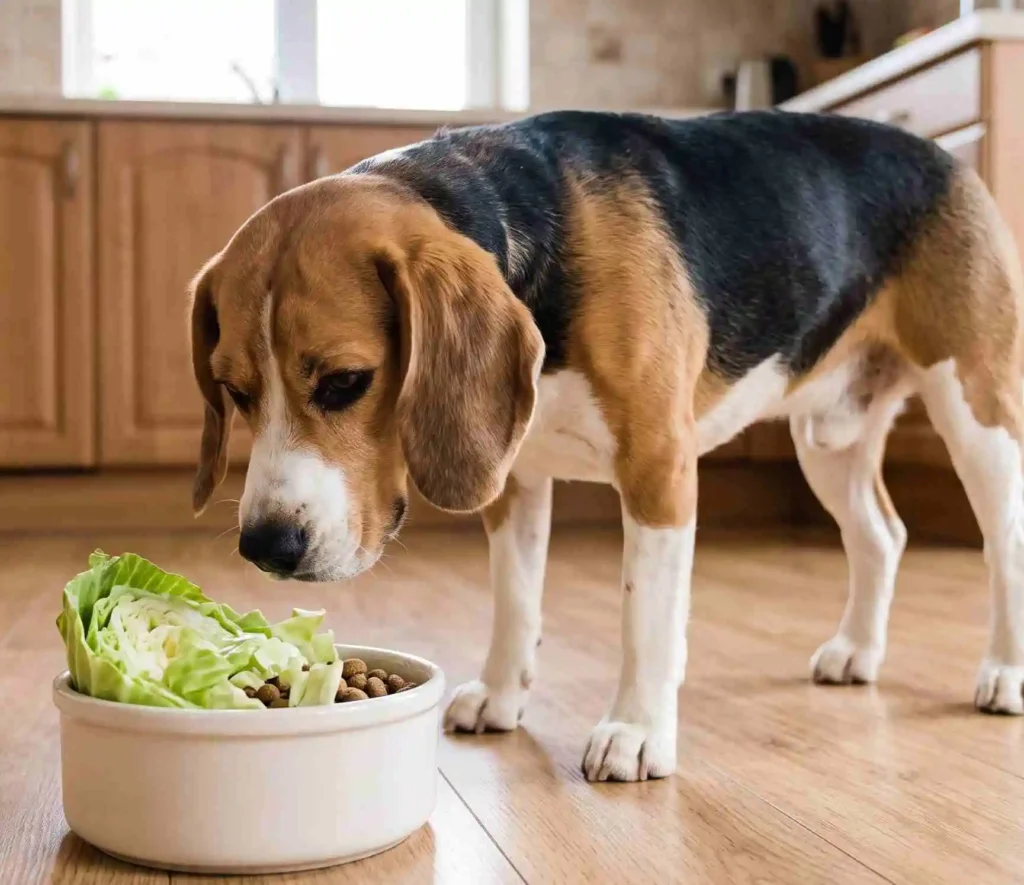
Table of Contents
Why It Matters
Most cabbage-related vet calls aren’t emergencies. They’re gas, loose stool, and an uncomfortable dog pacing the living room at 11pm. That’s the realistic risk, and it’s very manageable.
The bigger concern is portion creep. A leaf here, a handful there, and suddenly a third of your dog’s diet is vegetables instead of balanced nutrition. Dogs need complete protein, fat, and specific micronutrients that cabbage simply doesn’t provide.
There’s also a smaller, often-overexaggerated issue: goitrogens. These are natural compounds in cruciferous vegetables that can interfere with thyroid hormone production. Your dog would need to eat enormous amounts of raw cabbage daily for months before this became a real problem. Still, if your dog already has hypothyroidism, it’s worth a conversation with your vet.
What’s Actually In Cabbage
Cabbage is roughly 92% water. That’s why it feels so filling for so few calories, and why it works well for dogs on a weight management plan.
The rest is mostly fiber, both soluble and insoluble. Soluble fiber feeds beneficial gut bacteria. Insoluble fiber adds bulk and helps move things along. Both are useful, but too much too fast overwhelms the system.
Nutritionally, cabbage delivers vitamin K for blood clotting, vitamin C as an antioxidant, and small amounts of vitamin B6 and folate. Red cabbage contains anthocyanins, the same purple pigments found in blueberries, which have antioxidant properties. Like other superfoods for dogs, cabbage works best as a supplement to a complete diet rather than a replacement for anything.
Why Cabbage Causes Gas
Cabbage contains raffinose, a complex sugar dogs can’t fully digest in the small intestine. It travels down to the colon, where bacteria ferment it. That fermentation produces gas.
Cooking breaks down some of the raffinose before it ever reaches your dog. That’s the single easiest fix for the gas problem, and it takes about eight minutes of steaming.
Common Mistakes (and Fixes)
Serving cabbage cooked in butter or oil. Fat-heavy vegetables can trigger pancreatitis in sensitive dogs. The fix: steam or boil in plain water, no seasoning of any kind.
Adding cabbage from a stir-fry or coleslaw. Onion and garlic are toxic to dogs, and both hide in prepared cabbage dishes. The fix: cook your dog’s portion separately before you season anything.
Giving too much on the first try. A big serving of new fiber almost guarantees loose stool. The fix: start with one or two tablespoons for a medium dog, then wait 24 hours.
Serving whole or torn leaves. Dogs who inhale their food can choke on a folded leaf. The fix: chop into pieces no larger than a dime.
Feeding cabbage cores. The stem is dense, tough, and difficult to break down. The fix: discard the core, use only the leafy portion.
Ignoring an existing thyroid diagnosis. Goitrogens matter more for dogs already on thyroid medication. The fix: ask your vet before making cabbage a regular addition.
Assuming fermented cabbage is the same thing. Sauerkraut and kimchi are loaded with sodium and often garlic. The fix: skip fermented cabbage products entirely.
Making Cabbage Work at Mealtime
Here’s a situation that comes up constantly. A dog is on a reduced-calorie plan, and the smaller portions leave them hungry and frantic at the bowl. Owners see the frustration and feel guilty. Cabbage helps here, because it adds volume without adding much energy.
But adding bulky vegetables to the bowl often makes a fast eater worse. They inhale everything, swallow air, and the cabbage gas compounds an already uncomfortable stomach. Slowing the meal down solves both problems at once.
The Outward Hound Fun Feeder Slo Bowl works well for this. The raised ridge pattern forces a dog to work around obstacles rather than gulping, which typically stretches a meal from thirty seconds to several minutes. It’s a good match for medium and large dogs eating kibble mixed with chopped vegetables, and the non-slip base keeps it from sliding across tile. One honest limitation: the grooves take real effort to clean when wet food gets packed in, so a bottle brush is worth having.
CHECK PRICE ON AMAZON: https://amzn.to/40buzas
For deep-chested breeds where gulping raises bloat concerns, the JASGOOD Slow Feeder Dog Bowl uses a tighter maze pattern that slows eating even further. It suits dogs who have already outsmarted simpler designs and just push food around the ridges. The trade-off is that some smaller dogs find the narrow channels genuinely frustrating and give up mid-meal, so it fits better with medium to large breeds. If you’re weighing designs, our full slow feeder dog bowl guide breaks down the differences.
CHECK PRICE ON AMAZON: https://amzn.to/4bSghCM
If Cabbage Upsets the Gut
Some dogs handle new fiber poorly no matter how carefully you introduce it. Their stool loosens, their stomach gurgles, and the whole experiment feels like a mistake.
A probiotic can smooth that transition. Purina Pro Plan Veterinary Supplements FortiFlora is a vet-recognized powder that you sprinkle over food, and it’s commonly used to support dogs during dietary changes or after digestive upset. Most dogs treat it as a flavor enhancer rather than a supplement, which makes dosing painless. The limitation worth naming: it comes in single-serve sachets, so the per-day cost runs higher than tub-based probiotics. If loose stool persists beyond a day or two, our guide to dog diarrhea causes and treatment covers when it stops being a food issue.
CHECK PRICE ON AMAZON: https://amzn.to/3ZySvV4
How to Serve Cabbage: Step by Step
- Choose a firm head. Green, red, savoy, and napa cabbage are all fine. Avoid anything wilted or slimy at the edges.
- Wash thoroughly. Pesticide residue sits on outer leaves. Remove and discard the outermost layer.
- Cut out the core. Keep only the softer leaf material.
- Chop small. Dime-sized pieces or smaller, regardless of your dog’s size.
- Steam for 6 to 8 minutes. Plain water only. The cabbage should be tender but not mushy.
- Cool completely. Hot vegetables can burn a dog’s mouth.
- Start with a test portion. One tablespoon for dogs under 20 pounds, two for medium dogs, up to a quarter cup for large breeds.
- Wait a full day. Watch for gas, loose stool, or reduced appetite before offering more.
- Mix into regular food. Cabbage works better as a topper than a standalone snack.
Portion Guidance by Size
Small dogs under 20 pounds do well with about one tablespoon, two or three times a week. Medium dogs at 20 to 50 pounds can handle two to three tablespoons. Large dogs over 50 pounds can take up to a quarter cup.
These are ceilings, not targets. The general rule veterinarians use is that treats and extras should stay under 10% of total daily calories.
Troubleshooting
- If your dog gets gassy after cabbage: switch to fully cooked only, and halve the portion.
- If stool turns loose within 24 hours: stop cabbage for a week, then reintroduce at half the amount.
- If your dog refuses to eat it: try mixing a small amount into wet food, or accept that cabbage isn’t their vegetable.
- If you see vomiting: withhold cabbage entirely and monitor. Occasional dry heaving after eating warrants a closer look.
- If your dog ate a large amount of raw cabbage: expect gas and possible discomfort for 12 to 24 hours. Provide fresh water and watch for a distended belly.
- If cabbage was cooked with onion or garlic: call your vet promptly. This is not a wait-and-see situation.
- If your dog is on thyroid medication: pause cabbage and ask your vet before continuing.
When to Call Your Veterinarian
Most cabbage reactions resolve on their own. A few signs mean you should stop guessing and get professional input.
Call your vet if you see a hard, swollen abdomen combined with unproductive retching. This can indicate bloat, which is a genuine emergency in deep-chested breeds. Also call if vomiting continues past two or three episodes, if diarrhea lasts more than 48 hours, or if your dog becomes lethargic and refuses water.
Any suspected onion or garlic ingestion needs same-day attention regardless of how your dog seems. These cause damage to red blood cells that may not show symptoms for a day or more.
Expert Perspective
Veterinary nutritionists generally agree that non-toxic vegetables can supplement a complete commercial diet, but shouldn’t displace it. According to the American Kennel Club, cabbage is safe for dogs and offers antioxidant and fiber benefits, though the goitrogen content means large raw quantities aren’t advisable for regular feeding. Cooking is the practical middle ground: it reduces goitrogenic compounds and makes the fiber gentler on the digestive tract.
The American Veterinary Medical Association emphasizes that any complete-and-balanced dog food already meets a healthy dog’s nutritional needs. That’s worth keeping in mind. Cabbage isn’t filling a nutritional gap for most dogs, it’s adding enjoyable volume at low calorie cost. That’s a legitimate reason to feed it, but it isn’t a health intervention. This article provides general information and does not replace a diagnosis or treatment plan from your own veterinarian.
Frequently Asked Questions
Can dogs eat raw cabbage? Yes, raw cabbage is non-toxic. However, it causes more gas than cooked cabbage and contains higher levels of goitrogens. Chop it finely and keep portions small if you serve it raw.
Can dogs eat red cabbage? Yes. Red cabbage is safe and contains anthocyanins, antioxidant pigments not found in green varieties. Serve it the same way: plain, chopped, and in moderation.
Will cabbage give my dog gas? Often, yes. Cabbage contains raffinose, a sugar that ferments in the colon. Cooking the cabbage first reduces this effect significantly.
How much cabbage can a dog eat? Roughly one tablespoon for small dogs, two to three for medium dogs, and up to a quarter cup for large dogs. Keep all treats under 10% of daily calories.
Can puppies eat cabbage? Small amounts of cooked cabbage are generally fine after 12 weeks. Puppies have sensitive digestive systems, so introduce it slowly and in tiny portions.
Is cabbage good for dogs with itchy skin? Cabbage isn’t a treatment for allergies. If itching persists, a targeted dog food for itchy skin and a vet consultation are more useful starting points.
Can dogs eat coleslaw? No. Coleslaw contains mayonnaise, sugar, and often onion. The fat and additives make it unsuitable, even in small amounts.
Is sauerkraut safe for dogs? It’s best avoided. Sauerkraut is very high in sodium and frequently contains garlic, which is toxic to dogs.
Does cabbage help with weight loss? It can help by adding low-calorie bulk to meals, which makes reduced portions feel more satisfying. It works alongside a vet-approved plan, not on its own.
What other vegetables are safe alongside cabbage? Carrots, cucumbers, and broccoli are all reasonable options. Our guides on whether dogs can eat carrots and can eat cucumbers cover the specifics for each.
The Bottom Line
So, can dogs eat cabbage? Yes, and it can be a genuinely useful addition to your dog’s bowl. Keep it plain, keep it chopped, and cook it when you can to soften both the fiber and the gas. Start with a small test portion and give it a full day before offering more. Watch for loose stool or bloating, and back off if either shows up. If your dog has a thyroid condition or a history of digestive sensitivity, check with your vet first. Try a tablespoon of steamed cabbage stirred into tonight’s dinner and see how your dog responds.