You are on the couch when it starts. Three sneezes. Then five. Then a wet, rattling burst that sprays your coffee table. A dog sneezing a lot can turn a quiet evening into a worry spiral fast. The good news is that most sneezing fits are harmless, and the ones that aren’t usually give you clear warning signs.
Quick Answer
Frequent sneezing in dogs is most often caused by nasal irritants, seasonal allergies, or playful excitement. It becomes a medical concern when sneezing is paired with bloody discharge, one-sided drainage, facial swelling, or appetite loss. This guide helps owners tell everyday sneezing apart from problems that need a vet visit.
TL;DR: Occasional sneezing is normal dog behavior. Sneezing that lasts more than a few days, comes with colored or bloody discharge, or seems violent and one-sided deserves a professional exam.
Key Takeaways
- Dust, pollen, cleaning sprays, and candles trigger most everyday sneezing fits.
- Reverse sneezing sounds terrifying but is usually harmless and self-resolving.
- One-sided discharge or nosebleeds often point to a foreign object or growth.
- Brachycephalic breeds sneeze more because of compressed nasal anatomy.
- Track frequency, timing, and discharge color before your vet appointment.
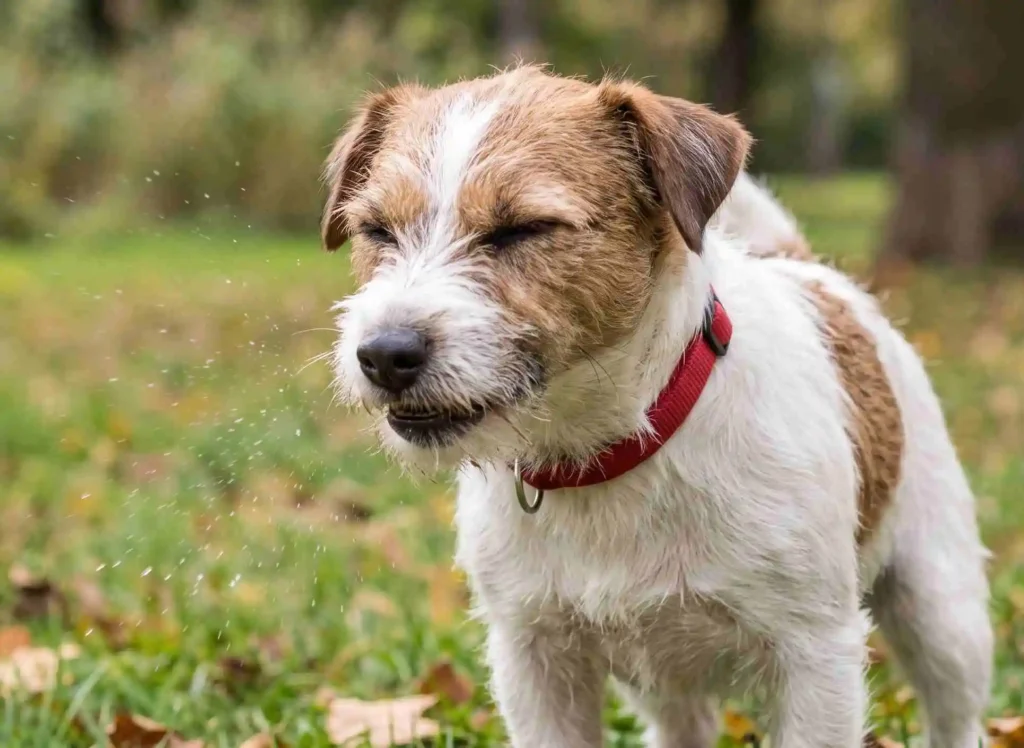
Table of Contents
Why Frequent Sneezing Matters
A sneeze is your dog’s built-in cleaning system. The nose traps particles, and a sharp burst of air pushes them out. That system works well. When it starts firing constantly, something is overwhelming it.
Chronic irritation matters because it rarely stays put. Inflamed nasal tissue swells. Swollen tissue traps mucus. Trapped mucus invites bacteria. What began as a dust reaction can become a secondary infection within a week or two.
There is also a comfort issue owners underestimate. A dog with a congested nose sleeps poorly and eats less. Dogs rely heavily on smell to decide whether food is worth eating. Block that sense and appetite drops.
None of this means panic. It means paying attention. Most causes are fixable at home once you identify the trigger.
How Your Dog’s Nose Actually Works
Your dog’s nose contains a maze of thin, scroll-shaped bones called turbinates. These are wrapped in moist tissue packed with nerve endings and scent receptors. Air swirls through this maze on every breath.
That design gives dogs their legendary sense of smell. It also gives irritants an enormous surface area to land on. A speck of dust that would never bother you can hit a nerve-rich fold and set off a reflex.
The sneeze reflex itself is simple. Nerves detect an irritant. A signal travels to the brainstem. Chest and throat muscles contract, and air blasts out at high speed.
Reverse sneezing works differently. Here the irritation sits further back, near the soft palate. The dog pulls air in sharply instead of pushing it out. The sound is honking and alarming, but the mechanism is a spasm, not a crisis. If your dog does this regularly, understanding the difference between reverse sneezing and coughing will save you a lot of unnecessary worry.
The 9 Most Common Causes of Frequent Sneezing
1. Airborne Household Irritants
This is the top cause and the easiest to fix. Aerosol sprays, plug-in air fresheners, scented candles, carpet powder, and cigarette smoke all irritate nasal tissue. Dogs walk at floor level, where dust and particles concentrate.
2. Seasonal and Environmental Allergies
Pollen, mold spores, and dust mites trigger allergic rhinitis in dogs, though skin symptoms usually dominate. Sneezing that spikes in spring or after lawn mowing points here. Allergy-driven sneezing often travels with itchy paws and ears.
3. Play Sneezing
Some dogs sneeze during rough play or greetings. It is a communication signal that says the interaction is friendly. This sneezing is short, happy, and stops when play stops. No treatment needed.
4. Foreign Objects
Grass seeds, foxtails, and blades of grass lodge in the nasal passage during sniffing. The giveaway is sudden, violent, repeated sneezing that starts out of nowhere, often after a walk. Pawing at the nose usually accompanies it.
5. Nasal Mites
These tiny parasites cause intense sneezing, nosebleeds, and reverse sneezing. They spread between dogs through direct contact. Diagnosis requires a vet, and treatment is straightforward once identified.
6. Dental Disease
The roots of the upper teeth sit millimeters from the nasal cavity. An infected root can erode through and create a passage. Sneezing from dental disease often comes with bad breath and one-sided discharge.
7. Infections
Bacterial, viral, and fungal infections all cause sneezing. Kennel cough is the most familiar, though it produces more coughing than sneezing. If your dog has been boarded or at a daycare recently, review whether the kennel cough vaccine is current.
8. Brachycephalic Anatomy
Pugs, Bulldogs, Boxers, and Shih Tzus have compressed skulls with the same nasal tissue packed into less space. Crowded turbinates mean more contact with irritants and more sneezing. These breeds also snort and snuffle at baseline.
9. Nasal Tumors and Polyps
Uncommon but serious, especially in dogs over seven. Warning signs include progressive one-sided discharge, facial swelling, and sneezing that worsens steadily over weeks rather than fluctuating.
Common Mistakes Owners Make (and How to Fix Them)
- Giving human decongestants. Many contain xylitol or pseudoephedrine, both dangerous to dogs. The fix: Never give any human medication without your vet approving the specific product and dose.
- Ignoring one-sided symptoms. Owners often note discharge from one nostril and wait to see if it clears. The fix: Treat unilateral discharge as a same-week vet call. It strongly suggests a localized problem like a foreign body or tooth root.
- Masking odors with more fragrance. Reaching for air freshener when the house smells doggy adds irritants. The fix: Ventilate and vacuum instead of spraying.
- Assuming allergies without testing the theory. Owners self-diagnose allergies and stop investigating. The fix: Remove one suspected trigger at a time for a week and log the response.
- Missing the dental connection. Sneezing and bad breath together get treated as two separate issues. The fix: Ask your vet to examine the upper premolars and molars specifically.
- Overusing the humidifier. Excess moisture encourages mold growth, which worsens sneezing. The fix: Keep indoor humidity between 40 and 50 percent.
- Panicking during reverse sneezing. Owners rush to emergency clinics for episodes that end in thirty seconds. The fix: Learn the sound, film one episode, and show your vet at the next routine visit.
Supporting Your Dog Through an Irritation Flare
When sneezing traces back to allergies or environmental irritants, the underlying issue is usually an overactive inflammatory response. You are not going to fix that with a tissue. Reducing overall inflammatory load helps, and diet is where owners have the most leverage.
Omega-3 fatty acids are the most researched nutritional tool here. They moderate inflammatory pathways throughout the body, including respiratory and skin tissue. Dogs with allergy-driven sneezing frequently have itchy skin at the same time, and omega-3s address both.
Zesty Paws Wild Alaskan Omega-3 Blend Pollock + Salmon Oil is a practical option for owners who want a liquid they can pour over food. It suits dogs already eating a complete diet who need an anti-inflammatory boost, and the pump dispenser makes dosing by weight simple. The main benefit is dual action on coat quality and inflammatory response, and most owners notice coat changes within four to six weeks. The honest limitation: it smells strongly of fish, and picky dogs sometimes refuse food it has been added to. Introduce it gradually.
CHECK PRICE ON AMAZON: https://amzn.to/4akcAVn
A second angle is gut health. A meaningful portion of immune regulation happens in the digestive tract, and dogs with chronic allergic symptoms often have disrupted gut flora. Purina Pro Plan Veterinary Supplements FortiFlora is the probiotic most commonly stocked in veterinary clinics, which tells you something about its reputation among practitioners. It comes in pre-measured sachets, so there is no guesswork, and the palatability is high enough that most dogs eat it without noticing. The trade-off is cost per serving, which runs higher than bulk probiotic powders. For dogs on antibiotics after a nasal infection, it is worth the premium. If you want a broader view of what actually helps, our guide to dog supplements covers what the evidence supports.
CHECK PRICE ON AMAZON: https://amzn.to/3ZySvV4
Step-by-Step: What to Do When Your Dog Won’t Stop Sneezing
- Stay calm and observe. Count the sneezes and note whether they come in bursts or steadily. Panic makes anxious dogs worse.
- Check the nostrils. Look for discharge and note the color. Clear is usually benign. Yellow, green, or bloody needs veterinary attention.
- Determine if it is one-sided. Hold a small mirror near each nostril and watch which side fogs. Uneven airflow is a meaningful clue.
- Look inside the mouth. Check for red gums, tartar buildup, and odor around the upper back teeth.
- Scan the environment. What changed in the last 48 hours? New cleaner, new candle, new bedding, or a recent walk through tall grass?
- Remove the obvious triggers. Ventilate the room, stop using aerosols, and wash bedding in unscented detergent.
- Film an episode. Sneezing rarely performs on cue at the clinic. A ten-second video is worth more than any description you can give.
- Log it. Write down times, duration, and discharge for three days. Patterns emerge quickly on paper.
- Book the vet if it persists. More than seven days of frequent sneezing without improvement warrants an exam.
Troubleshooting: If This, Then That
- If sneezing started suddenly after a walk → suspect a foreign body and call your vet within 24 hours.
- If discharge is clear and both-sided → likely an irritant or mild allergy; remove triggers and monitor for a week.
- If discharge is thick, yellow, or green → suspect infection and book an exam.
- If you see blood → this is not a wait-and-see symptom; contact your vet promptly.
- If sneezing only happens during play → no action needed; this is social behavior.
- If the sound is an inward honk → this is reverse sneezing; gently stroke the throat and it should pass.
- If sneezing pairs with a persistent cough → the issue may be lower in the airway, so review the common causes of coughing in dogs.
- If there is facial swelling or eye bulging → seek same-day veterinary care.
- If sneezing comes with paw licking and itchy skin → allergies are the likely driver, and dog food for itchy skin may be part of the solution.
When to See a Professional
Some symptoms should skip the home-monitoring phase entirely. Call your veterinarian right away if you observe any of the following.
Blood from either nostril, at any volume, is a red flag. So is facial or muzzle swelling, which suggests infection or a mass pressing outward. Discharge from one nostril only, particularly if it thickens over days, needs imaging to rule out foreign bodies and growths.
Watch for systemic signs too. Lethargy, refusal to eat, fever, or noticeable weight loss alongside sneezing changes the picture from local irritation to something whole-body. Labored breathing or open-mouth breathing at rest is an emergency.
Age matters. In dogs over seven, sneezing that progressively worsens over three to four weeks deserves a thorough workup rather than a trial of antihistamines.
This article provides general educational information and is not a substitute for veterinary diagnosis. Your veterinarian is the only person who can examine your specific dog.
Expert Perspective
Veterinarians generally approach chronic sneezing as a localization problem before a treatment problem. The first question is whether the issue sits in the nasal passage, the back of the throat, or lower in the airway, because each points toward a different set of causes. This is why vets ask so many questions about timing, discharge, and which side is affected. According to the American Kennel Club, occasional sneezing is a normal part of canine life, and context is what separates routine from concerning.
Diagnostic tools escalate in a predictable order. A physical exam and oral inspection come first, since dental disease is both common and often missed. If that is inconclusive, imaging or rhinoscopy follows. The American Veterinary Medical Association emphasizes that oral health directly affects systemic and adjacent-structure health, which is precisely why the upper tooth roots get attention in sneezing cases. Owners who arrive with a written symptom log and a short video consistently shorten the path to a diagnosis.
Frequently Asked Questions
Is it normal for a dog to sneeze a lot? Occasional sneezing is normal. Frequent sneezing over multiple days is not. If your dog sneezes repeatedly for more than a week, or shows discharge, schedule a vet exam.
Why does my dog sneeze when excited? Play sneezing is a social signal. Dogs use it to communicate that their behavior is friendly and non-threatening. It is harmless and needs no treatment.
Can dogs catch colds from humans? No. Human cold viruses do not transmit to dogs. Dogs have their own respiratory viruses, including canine influenza and parainfluenza, which spread between dogs.
What is reverse sneezing in dogs? Reverse sneezing is a spasm of the soft palate causing rapid inward air pulls. It sounds like honking or snorting. Episodes last under a minute and usually resolve on their own.
Can I give my dog Benadryl for sneezing? Only with veterinary approval. Dosing depends on weight, and many formulations contain decongestants that are unsafe for dogs. Always confirm the product and dose first.
Why is my dog sneezing blood? Bloody discharge suggests a foreign object, trauma, nasal mites, clotting disorder, or a growth. This is never a wait-and-see symptom. Contact your veterinarian promptly.
Do certain breeds sneeze more? Yes. Flat-faced breeds like Pugs, Bulldogs, and Shih Tzus sneeze and snort more because their nasal passages are compressed into a shorter skull.
Can food allergies cause sneezing? Food allergies in dogs usually cause skin and digestive symptoms rather than sneezing. Environmental allergens like pollen and dust are far more likely respiratory triggers.
How long should sneezing last before I worry? Sneezing lasting more than seven days without improvement warrants an exam. Any sneezing with blood, one-sided discharge, or appetite loss warrants immediate attention.
Can dental problems really cause sneezing? Yes. Upper tooth roots sit adjacent to the nasal cavity. An infected root can create a passage between mouth and nose, causing sneezing and one-sided discharge.
The Bottom Line
A dog sneezing a lot is usually telling you something simple about their environment. Dust, pollen, a new candle, or a face full of grass explains the vast majority of cases. Start by removing obvious irritants and giving it a few days. Keep a short log of when the sneezing happens and what the discharge looks like, because that record is genuinely useful at the clinic. Escalate without hesitation if you see blood, one-sided drainage, facial swelling, or appetite changes. Your next step is easy: spend two minutes scanning the rooms where your dog sleeps and eats, and remove anything scented. That single change resolves more sneezing than any supplement ever will.