You scroll past a fluffy, fox-faced pup curled up in a sunbeam and wonder, “What breed is that?” Chances are, you’ve just spotted one of the many beautiful Japanese dog breeds taking the internet by storm. From the loyal Shiba Inu to the dignified Akita, these dogs blend ancient heritage with serious charm. This guide walks you through the most beloved breeds, their quirks, and what life with one really looks like.
Quick Answer
Japanese dog breeds include six native types recognized by the Japanese Kennel Club, plus a handful of newer favorites. The most popular are the Shiba Inu, Akita, Shikoku, Kishu Ken, Hokkaido, Kai Ken, Japanese Spitz, Japanese Chin, Tosa Inu, and Japanese Terrier. They suit owners who appreciate independence, loyalty, and stunning natural beauty.
TL;DR
Japan has produced some of the world’s most striking dogs, ranging from compact Shibas to powerful Akitas. Most share a fox-like face, double coat, and a famously dignified personality. Pick the right breed by matching its energy and grooming needs to your lifestyle.
Key Takeaways
- Six native Japanese breeds (the Nihon Ken) share ancient bloodlines and prick ears.
- Shibas and Akitas top the popularity charts, but smaller and rarer breeds may suit apartment life better.
- Most Japanese breeds are heavy seasonal shedders thanks to their thick double coats.
- These dogs tend to be loyal, alert, and reserved with strangers, requiring early socialization.
- Joint care, coat maintenance, and patient training are non-negotiable for long, happy lives.
Table of Contents
Why Japanese Dog Breeds Matter to Owners Today
Owners often fall for Japanese dog breeds because of their looks, then stay for the personality. These dogs were built for centuries to hunt boar, guard estates, or warm royal laps, so each one carries a clear purpose in its DNA. That history shapes how they bond, learn, and behave at home.
Choosing the wrong breed can lead to mismatched energy, frustration, and rehoming. A high-drive Shikoku in a quiet apartment, for example, will struggle. Understanding the temperament, exercise needs, and health risks of each breed helps you make a kinder, smarter choice for both of you.
A Quick Look at the Six Native Breeds (Nihon Ken)
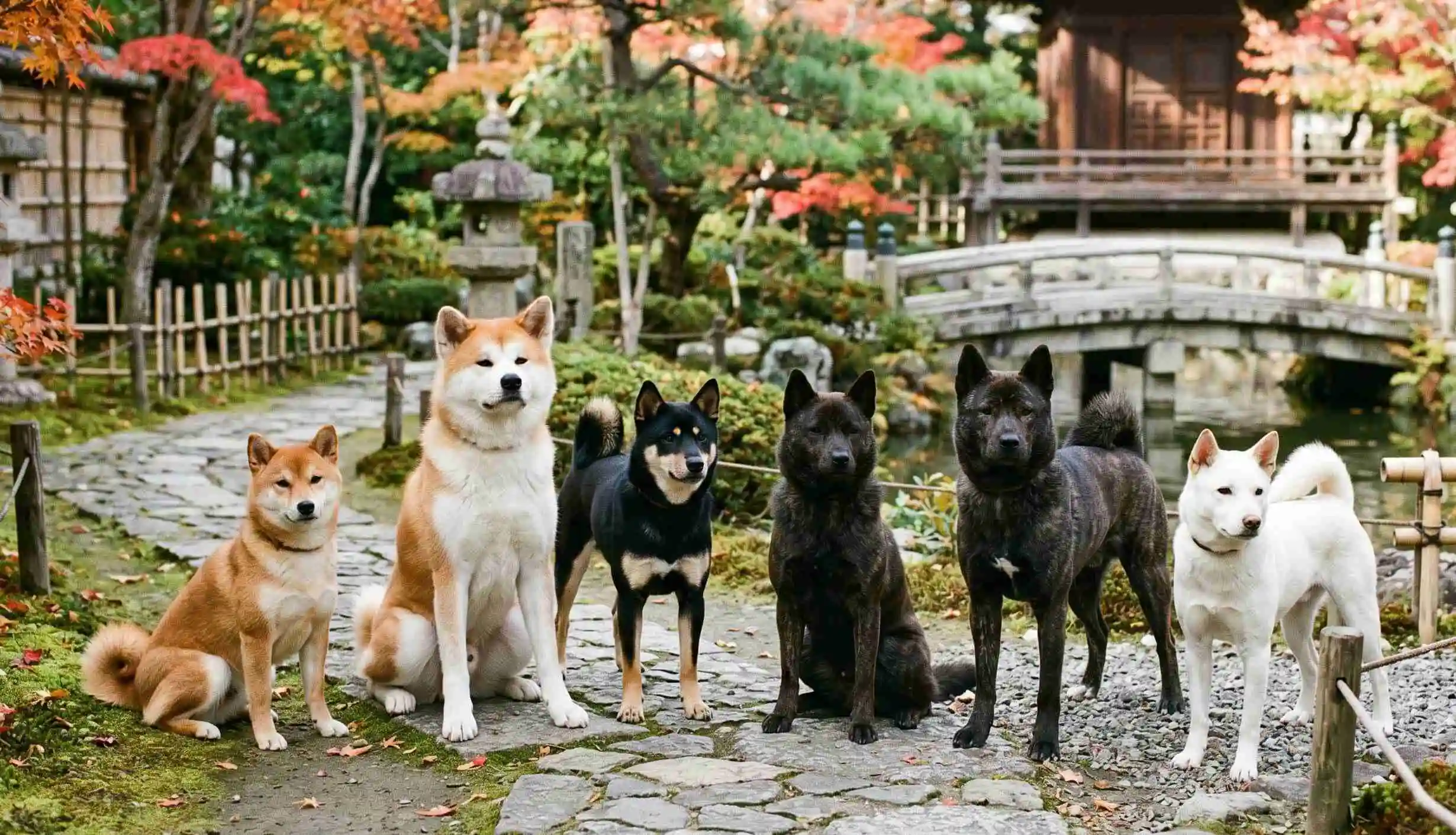
Japan officially recognizes six native breeds, all sharing a similar spitz-type look: curled tail, almond eyes, pricked ears, and a thick coat. They evolved across different regions of Japan to handle specific terrain and game.
The six are the Akita, Shiba Inu, Shikoku, Kishu Ken, Hokkaido, and Kai Ken. According to the American Kennel Club, these breeds are prized for loyalty, alertness, and a calm-but-watchful nature. Most are independent thinkers, not eager-to-please retrievers.
The 10 Most Notable Japanese Dog Breeds
Below is a closer look at each breed, including size, temperament, and what daily life with one feels like. Some are common in the West, others are rare gems you might see only at specialty shows.
1. Shiba Inu
The Shiba Inu is the smallest of the native six and easily the most internet-famous. They weigh 17 to 23 pounds and live 12 to 16 years.
Shibas are cat-like: clean, independent, and mildly suspicious of nonsense. They bond deeply with their people but rarely tolerate cuddles on demand. Expect strong prey drive, a loud “Shiba scream” when annoyed, and a stubborn streak that requires creative training. They’re a good fit for patient owners who enjoy a dog with opinions.
2. Akita
Akitas are the giants of the group, often topping 100 pounds. They were originally bred to hunt bear and boar in mountainous northern Japan.
These dogs are dignified, deeply loyal, and quietly affectionate with their family, but reserved or even aloof with strangers. They need early socialization, firm boundaries, and consistent leadership. Akitas don’t bark much, but when they do, you’ll listen. Their thick double coat sheds heavily twice a year.
3. Shikoku Ken
The Shikoku is sometimes called the “Japanese Wolfdog” because of its lean, primitive look. It’s medium-sized, weighing 35 to 55 pounds, and originates from the mountainous Shikoku region.
This breed is energetic, agile, and intensely focused. Shikokus thrive with active owners who hike, run, or do dog sports. They’re rarer outside Japan, so finding a reputable breeder takes patience and research.
4. Kishu Ken
Kishus look like white Shikokus but with a softer expression. They typically weigh 30 to 60 pounds and were bred to hunt boar and deer.
They’re calm indoors, fiercely devoted, and quieter than most spitz breeds. Kishus form a strong one-person bond, which is sweet but can complicate multi-pet homes. Daily exercise and mental engagement keep them balanced.
5. Hokkaido
The Hokkaido (sometimes called Ainu Ken) is one of the oldest Japanese breeds, evolved to survive harsh winters on Japan’s northernmost island. They weigh 45 to 65 pounds.
Hokkaidos are hardy, brave, and surprisingly affectionate with their family. They have an extra-thick coat for cold climates, which means heavy shedding and frequent brushing. This breed is rare worldwide.
6. Kai Ken
Kai Kens have a distinctive brindle coat that ranges from black-brindle to red-brindle. They’re medium-sized at 25 to 55 pounds and were bred to hunt deer and boar in the Kai region.
They’re agile climbers (yes, they can climb trees), loyal, and gentler than other native breeds with family. Kai Kens are nicknamed the “Tora Inu,” meaning tiger dog, after their striped coat.
7. Japanese Spitz
The Japanese Spitz looks like a cotton ball with bright black eyes. They weigh 10 to 25 pounds and, despite the dramatic coat, are surprisingly low-maintenance to groom.
This breed is cheerful, social, and great with kids and other pets. They’re alert watchdogs without being yappy. The Japanese Spitz suits families and apartment dwellers who want a smaller, friendlier alternative to the Shiba.
8. Japanese Chin
The Japanese Chin is a toy breed that once warmed the laps of Japanese royalty. They weigh just 7 to 11 pounds and live 10 to 14 years.
Chins are quirky, affectionate, and almost cat-like in their grace. They tend to be quiet, gentle companions who love a sunny windowsill. Their flat faces (brachycephalic skull) mean they need protection from heat and humidity.
9. Tosa Inu
The Tosa Inu was bred for dog fighting in 19th-century Japan and remains one of the largest, most powerful Japanese breeds. They can exceed 130 pounds.
Today’s Tosas are calm, watchful, and loyal family guardians, but they require an experienced handler. Some countries restrict or ban ownership, so check your local laws before considering one. They’re not for first-time owners.
10. Japanese Terrier
The Japanese Terrier is a small, lively dog weighing about 5 to 9 pounds. They’re rare even in Japan, with only a few thousand registered worldwide.
These terriers are spirited, affectionate, and adaptable to apartment living. They have a short, low-maintenance coat (a refreshing change from all the fluff above) and tend to bond closely with one person.
Common Mistakes Owners Make (and Fixes)
Even devoted fans of Japanese breeds slip into avoidable patterns. Here are the biggest ones.
- Treating them like a Labrador. The fix: respect their independence, use reward-based training, and skip the “blind obedience” mindset.
- Skipping early socialization. The fix: introduce puppies to people, sounds, and other dogs gently from 8 weeks onward.
- Underestimating shedding. The fix: invest in a slicker brush and a quality undercoat rake before the first coat blow.
- Off-leash freedom too soon. The fix: keep prey-driven breeds (Shiba, Shikoku, Kai) leashed in unfenced areas; recall takes time.
- Overfeeding small breeds. The fix: measure portions and track treats; toy breeds gain weight fast.
- Ignoring joint health in large breeds. The fix: start hip and joint supplements early in giants like the Akita and Tosa.
- Forcing affection. The fix: let aloof breeds approach you; build trust over months, not days.
Caring for the Coat and Joints: Practical Solutions
Most Japanese breeds share two daily-life challenges: heavy shedding and (for the larger breeds) joint stress. The good news is that both are very manageable with the right tools and a steady routine.
Managing the Big Twice-a-Year Coat Blow
Akitas, Shibas, Hokkaidos, and Spitzes “blow coat” twice a year, and it can feel like a small snowstorm in your living room. Daily brushing during these windows is non-negotiable. Many owners also do a thorough at-home grooming session every few weeks to keep mats and tangles in check.
Cordless clippers are a smart investment for owners with thick-coated breeds. The oneisall Dog Clippers for Grooming are designed for thick, heavy coats and run on a quiet, low-noise motor, which matters with sound-sensitive breeds like the Shiba. They’re cordless, waterproof, and come with stainless steel blades. The trade-off: thick double coats can dull blades faster than expected, so you’ll want to clean and oil them often. They suit owners who do their own touch-ups between professional grooms.
CHECK PRICE ON AMAZON: https://amzn.to/40agbz9
A glossy, healthy coat starts from the inside, too. Adding an omega-3 supplement supports skin barrier function and reduces dryness, which is especially helpful for breeds prone to seasonal allergies like the Shiba. Zesty Paws Wild Alaskan Omega-3 Blend combines pollock and salmon oil in a liquid you pour over food. It supports skin, coat, and joint health in one bottle. The downside is the fishy smell, which most dogs love but some humans find strong. It works well for any size dog and pairs nicely with regular grooming.
CHECK PRICE ON AMAZON: https://amzn.to/4akcAVn
Protecting the Joints of Larger Breeds
Akitas and Tosas carry a lot of body weight, and according to the AKC, both are prone to hip dysplasia. Starting joint support early can make a real difference in their later years. A daily glucosamine chew, calm walks on soft surfaces, and avoiding stair sprints in puppyhood all help. For deeper guidance, this overview of canine supplements is a solid starting point.
The Wuffes Advanced Dog Hip and Joint Supplement combines glucosamine, chondroitin, MSM, omega-3, and green-lipped mussel in a pork-flavored chew. It’s formulated for small to medium dogs but works well for any breed under 50 pounds; larger breeds may need a bigger dose. Owners often report easier movement within four to six weeks. The honest limitation: it’s a daily commitment, and skipping doses reduces results. It’s best for proactive owners who plan ahead.
CHECK PRICE ON AMAZON: https://amzn.to/4aRkWUs
Bloat Prevention for Deep-Chested Breeds
Akitas have deep chests and are at higher risk for gastric dilatation-volvulus (bloat), a life-threatening twisting of the stomach. Eating too fast is one of the biggest triggers. A slow feeder bowl is a cheap, effective tool that turns mealtime into a calm puzzle.
The Outward Hound Fun Feeder Slo Bowl has a flower-pattern ridge design that forces dogs to eat around the obstacles. It’s non-slip, holds up to 4 cups, and is dishwasher safe. It’s not ideal for flat-faced breeds like the Japanese Chin who can struggle with the deep ridges, but it’s perfect for medium and large dogs. It’s a small upgrade with potentially life-saving benefits.
CHECK PRICE ON AMAZON: https://amzn.to/40buzas
Step-by-Step: Choosing the Right Japanese Breed for You
Picking a breed is a 10-to-15-year decision. Walk through these steps before falling in love with a face on Instagram.
- Honestly assess your activity level. A Shikoku needs a runner; a Japanese Chin is happy with a brisk stroll.
- Map out your living space. Akitas need room to stretch; toy breeds thrive in studios.
- Factor in shedding tolerance. If allergies or fur-on-everything bothers you, skip the double-coated giants.
- Consider grooming time. Japanese Spitzes look fluffy but are easy; Akitas demand daily brushing in shedding season.
- Research breed-specific health risks. Hip dysplasia, allergies, and bloat are common in larger breeds.
- Find a reputable breeder or rescue. Health-test certifications matter, especially for rare breeds.
- Plan for socialization. Most native Japanese breeds are reserved; early exposure is critical.
- Budget for ongoing care. Quality food, vet visits, supplements, and grooming add up.
If you’re leaning toward a smaller breed, this roundup of dogs that stay small forever includes several Japanese options. For families considering a larger fluffy companion, this guide to big fluffy dog breeds covers the Akita and similar gentle giants.
Troubleshooting Common Behavior Issues
Japanese breeds aren’t broken; they’re just wired differently. Here’s how to handle common hiccups.
- If your Shiba refuses to come when called → Then practice recall in low-distraction environments daily; never punish them for coming back.
- If your Akita is aloof with guests → Then respect their nature; force-greeting can damage trust.
- If your Japanese Spitz barks at every sound → Then teach a “quiet” cue and reward calm behavior consistently.
- If your puppy struggles with crate time → Then build positive associations slowly using a step-by-step crate training plan.
- If your Shiba scratches constantly → Then check for allergies and consider a diet designed for itchy skin.
- If your dog seems anxious in new places → Then start with short, positive outings and review this guide to managing dog anxiety.
When to See a Veterinarian
Most issues respond to time, training, and good care. But some signs need professional attention right away.
Call your vet promptly if you notice persistent limping, sudden lethargy, repeated vomiting, a swollen belly (especially in deep-chested breeds), or skin that smells yeasty or has open sores. Akitas and Tosas should also have routine hip screenings starting around two years old. The AVMA recommends annual wellness exams for all dogs and twice-yearly visits for seniors and giant breeds.
Health information here is general guidance, not a substitute for veterinary diagnosis. Your vet knows your dog’s history and can make personalized recommendations.
Expert Opinion
Veterinarians and behaviorists who work with Japanese breeds often share a similar message: these dogs are emotionally intelligent and incredibly observant, but they aren’t push-button trainable. According to AVMA-affiliated veterinary behaviorists, primitive breeds like the Shiba Inu and Akita respond best to clear, consistent boundaries paired with positive reinforcement, not heavy-handed correction.
According to AKC breed standards, most Japanese breeds were developed as independent hunters or guardians, which means they make decisions on their own. That’s a feature, not a flaw, but it requires owners to think like a partner rather than a commander. A relationship-based training approach, daily mental stimulation, and respect for personal space tend to produce confident, well-adjusted dogs.
Frequently Asked Questions
What are the six native Japanese dog breeds?
The six native Japanese breeds, known as the Nihon Ken, are the Akita, Shiba Inu, Shikoku, Kishu Ken, Hokkaido, and Kai Ken. All share spitz-type traits like curled tails, prick ears, and dense double coats.
Are Japanese dogs good for first-time owners?
Some are. The Japanese Spitz and Japanese Chin tend to be friendly and forgiving for new owners. Shibas, Akitas, and Tosas usually require experienced handlers due to their independence, strong-willed nature, and grooming or training demands.
Do Japanese dog breeds shed a lot?
Most do. Akitas, Shibas, Hokkaidos, Kishus, and Spitzes have thick double coats that shed year-round and “blow” heavily twice a year. The Japanese Terrier and Japanese Chin shed far less.
Are Akitas dangerous?
Not inherently. Akitas are powerful and naturally protective, which can be misread as aggression. With early socialization, training, and a respectful owner, they’re loyal, calm family dogs. They’re not recommended for first-time owners.
What’s the difference between a Shiba Inu and an Akita?
Size is the biggest difference. Shibas weigh 17 to 23 pounds; Akitas often top 100 pounds. Shibas are agile, cat-like hunters; Akitas were bred to take down large game and serve as devoted guardians.
Are Japanese dog breeds hypoallergenic?
No. None of the recognized Japanese breeds are considered hypoallergenic. The Japanese Terrier sheds least, but no breed is fully allergen-free. People with allergies should spend time around the breed before committing.
How long do Japanese dog breeds live?
Lifespans vary by size. Smaller breeds like the Shiba Inu and Japanese Chin often live 12 to 16 years. Larger breeds like the Akita and Tosa Inu typically live 9 to 12 years.
Can Japanese dogs live in apartments?
Yes, with the right match. The Japanese Chin, Japanese Spitz, and Japanese Terrier adapt well to apartment life. Shibas can manage in apartments with daily exercise. Akitas, Shikokus, and Tosas usually need more space.
Do Japanese dog breeds get along with kids?
Many do, but it depends on the breed and individual dog. The Japanese Spitz and Japanese Chin are typically excellent with kids. Akitas and Shibas can be wonderful with children they grew up with, but supervised introductions are essential.
Where can I find a Japanese dog breed in my country?
Start with breed-specific clubs and AKC-registered breeders. For rarer breeds like the Shikoku or Kai Ken, you may need to join a waiting list or import from overseas. Always avoid backyard breeders and pet stores.
Conclusion
Japanese dog breeds offer something rare: a blend of beauty, brains, and ancient heritage that’s hard to find elsewhere. Whether you’re drawn to the bold loyalty of an Akita, the sass of a Shiba, or the cloud-like charm of a Japanese Spitz, there’s a breed that can fit your home with the right preparation. Take your time, match the dog to your real lifestyle, and lean on quality grooming, joint care, and patient training to set them up for a long, happy life. The right Japanese dog isn’t just a pet; they’re a quiet, loyal partner for years to come. Ready to take the next step? Bookmark this guide, talk to a reputable breeder or rescue, and start preparing your home today.