You hear that sound at 6 a.m. The gag, the gulp, the wet splat on the hallway rug. You flip on the light and find a tidy tube of kibble that looks almost exactly like it did in the bowl last night. A dog throwing up undigested food is one of the most common things owners panic about, and one of the most misunderstood. Most of the time it points to how your dog eats, not a serious illness.
Quick Answer
When a dog brings up food that still looks like food, it usually means the meal never reached the stomach’s acid, or it left the stomach too fast. The most common causes are eating too quickly, drinking a lot of water right after a meal, exercising on a full stomach, or a food that doesn’t agree with them. Slowing the meal down solves it for a large share of dogs, though repeated episodes always deserve a vet’s opinion.
TL;DR
Undigested food coming back up within a few hours is usually regurgitation or a fast-emptying stomach, not true illness. Slow the eating, split meals into smaller portions, and rest your dog after dinner. If it happens daily, comes with weight loss, or your dog seems unwell, book a vet visit.
Key Takeaways
- Undigested food usually means the meal came up before stomach acid did its work.
- Speed eating is the number one culprit, and the easiest one to fix.
- Regurgitation is passive and quiet; vomiting involves heaving and abdominal effort.
- Two or three smaller meals beat one large meal for most fast eaters.
- Daily episodes, weight loss, lethargy, or a bloated belly mean call the vet today.
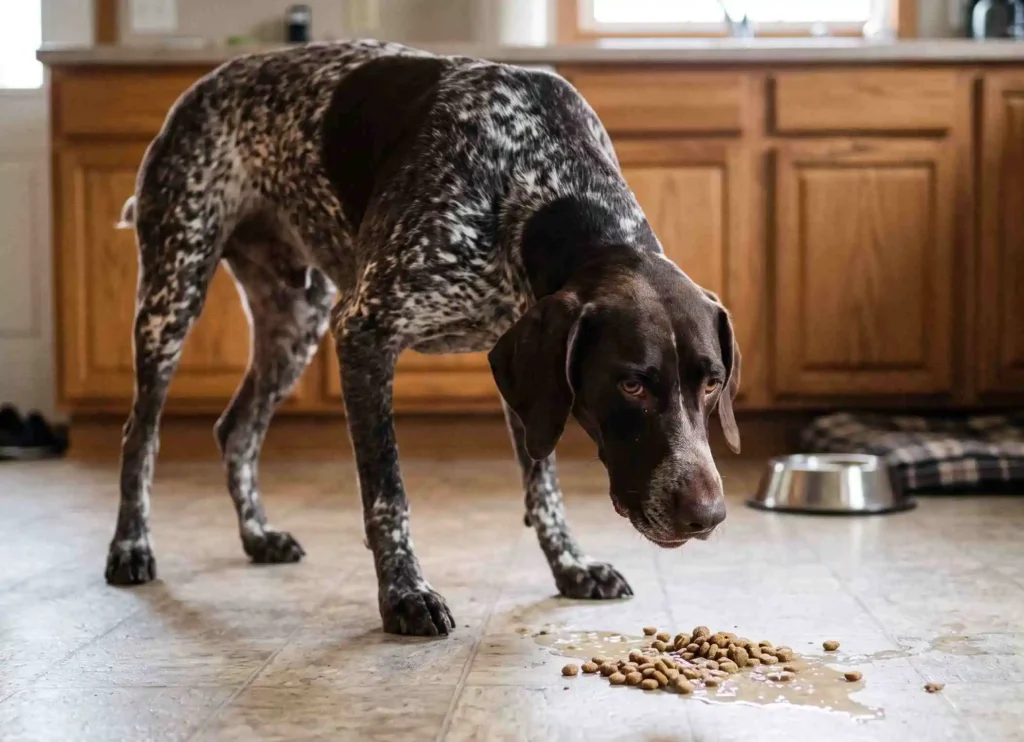
Table of Contents
Why It Matters
A single pile of undigested kibble is rarely an emergency. A pattern is different. Food that keeps coming back up means your dog isn’t absorbing the calories in it. Over weeks, that shows up as a dull coat, low energy, and a dropping weight on the scale.
There’s also a mechanical risk. When food travels back up the esophagus, small amounts can slip into the airway. Veterinarians call this aspiration, and it can seed a stubborn pneumonia. Dogs with flat faces and long-bodied breeds face slightly higher odds.
Then there’s bloat. Gulping food and air, especially in deep-chested dogs, is one of the recognised risk factors for gastric dilatation-volvulus. This is a true emergency. Reducing gulping is not just about the carpet.
None of this means you should be scared. It means a repeating pattern is worth taking seriously rather than mopping up and moving on.
What’s Actually Happening Inside Your Dog
Food travels from the mouth down the esophagus, a muscular tube that pushes it toward the stomach in waves. Once it lands, stomach acid and enzymes go to work breaking it apart. That process takes hours.
So if the material on your floor still looks like kibble, one of two things happened.
Regurgitation: the food never made it in
Regurgitation is passive. There’s no warning, no heaving, no drama. Your dog lowers their head and the food simply falls out, often shaped like a tube because it held the shape of the esophagus. It usually happens within minutes to an hour of eating. The food is undigested and unmixed with bile.
Common triggers include eating too fast, swallowing a lot of air, drinking a big bowl of water immediately after, or excitement right after a meal.
Vomiting: the stomach pushed it back
Vomiting is active. You’ll see the belly contract, hear the retching, and often notice drooling and lip-licking beforehand. Vomit that comes up quickly can still contain recognisable kibble because acid hasn’t had time to break it down yet.
If it’s been several hours and the food still looks whole, that’s more unusual. It can point to a stomach that isn’t emptying properly, or something irritating the gut lining.
Reading the timeline
The clock is your best diagnostic tool at home.
- Under 30 minutes, no heaving: almost certainly regurgitation from speed or air.
- 1 to 3 hours, with heaving: likely vomiting, often from irritation or a food that didn’t sit well.
- Over 6 hours and still recognisable: worth a vet call. Food shouldn’t be sitting that long.
Note what you see. Colour, timing, texture, and whether your dog immediately wants to eat again. That short list answers half your vet’s questions before they ask.
Common Mistakes (and Fixes)
Most owners make at least one of these. They’re all easy to correct.
- Feeding one big meal a day. A large volume stretches the stomach and encourages gulping. The fix: split the same daily amount into two or three smaller meals.
- Letting your dog drink a full bowl right after eating. Water on top of dry kibble makes it swell fast. The fix: keep water available all day, but discourage tank-filling in the ten minutes after a meal.
- Walking or playing right after dinner. Movement on a full stomach is a classic trigger for both regurgitation and bloat. The fix: build in a calm 45 to 60 minute window after eating.
- Switching food overnight. Abrupt changes shock the gut. The fix: transition over seven to ten days, mixing increasing amounts of the new food in.
- Feeding from a raised bowl without a reason. Elevated bowls help some medical cases but aren’t a general fix. The fix: use a standard-height bowl unless your vet has specifically advised otherwise.
- Free-feeding in a multi-dog house. Competition makes dogs inhale food. The fix: feed separately, in different rooms if needed.
- Ignoring the first few episodes. Owners often wait weeks before mentioning it. The fix: start a simple note on your phone with dates and times.
Slowing the Meal Down
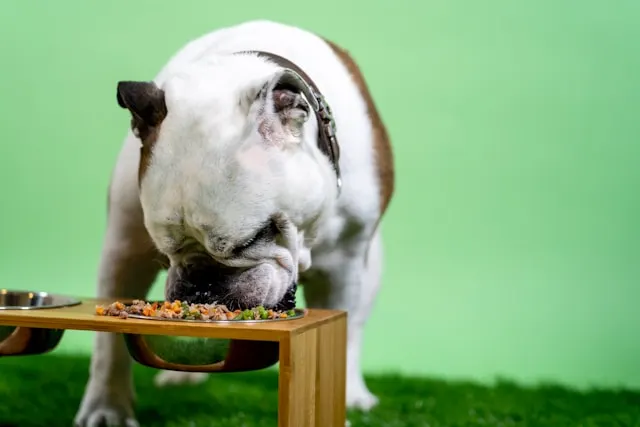
Here’s the thing about speed eaters: you can’t train the enthusiasm out of them. A Labrador who inhales dinner in eleven seconds isn’t being naughty. They’re being a Labrador. What you can do is change the shape of the bowl so physics does the work for you.
A slow feeder bowl has ridges, mazes, or raised islands moulded into the base. Your dog has to nose food out of the channels instead of scooping mouthfuls. Meals that took fifteen seconds start taking three to five minutes. That’s usually all it takes for regurgitation to stop.
The Outward Hound Fun Feeder Slo Bowl is the version I’d point most owners toward first. It holds four cups, which suits medium and large dogs eating a full portion, and the flower-pattern ridges are deep enough to genuinely slow a determined eater. The non-slip base matters more than people expect, since frustrated dogs will shove a bowl across a kitchen floor. Honest limitation: the moulded channels take real effort to clean properly, and it isn’t ideal for wet or raw food, which packs into the grooves.
CHECK PRICE ON AMAZON: https://amzn.to/40buzas
For dogs who are more aggressive gulpers, or where bloat risk is a specific worry, a tighter maze pattern helps. The JASGOOD Slow Feeder Dog Bowl uses a denser anti-gulping layout built around reducing choking and bloat risk in larger breeds. It works well for the dog who has already learned to defeat a simple ridged bowl by tipping it. Honest limitation: the narrow channels can frustrate flat-faced breeds like Bulldogs and Pugs, who struggle to reach into deep grooves. If you have a brachycephalic dog, choose the wider-channel option instead.
CHECK PRICE ON AMAZON: https://amzn.to/4bSghCM
If you want to compare designs in more depth before buying, our full breakdown of how slow feeder dog bowls actually work covers the different maze styles and which breeds suit each one.
When the Gut Itself Needs Support
Sometimes the eating speed is fine and the food still doesn’t stay down. If your dog has recently finished antibiotics, been through a stressful move, or had a bout of loose stools alongside the vomiting, the balance of bacteria in their gut may be off. An unsettled gut empties unpredictably, and that shows up as food returning hours later than it should.
Veterinarians often suggest a probiotic in these situations to help the digestive tract settle. Purina Pro Plan Veterinary Supplements FortiFlora is the one most commonly recommended, and it comes as a single-serve powder you sprinkle over food. Dogs take it readily because it’s palatable, which matters when you’re dealing with a dog whose appetite is already shaky. It’s designed to support digestive health and is frequently used alongside vet care for diarrhoea. Honest limitation: it’s noticeably more expensive per serving than generic probiotics, and it supports the gut rather than treating an underlying cause. If vomiting continues past a few days, you still need a diagnosis.
CHECK PRICE ON AMAZON: https://amzn.to/3ZySvV4
Worth knowing: if what comes up is foamy rather than food, that’s a different signal entirely. Our guide to why dogs vomit white foam explains what that texture usually means. And if the vomit is yellow and slick, bile on an empty stomach is the more likely explanation.
Step-by-Step: What to Do Right Now
- Look before you clean. Note the shape, colour, and whether it’s recognisable food. Snap a photo if you’re unsure. Vets genuinely find this useful.
- Check your dog, not just the mess. Are the gums pink? Is the belly soft, not tight or swollen? Is your dog alert and moving normally?
- Rest the stomach briefly. For an adult dog who seems otherwise fine, hold food for six to eight hours. Never fast a puppy, a toy breed, or a diabetic dog. Their blood sugar can drop dangerously.
- Keep water flowing. Offer small amounts often rather than a full bowl at once. Ice chips work well for dogs who gulp.
- Reintroduce food gently. Start with a quarter of a normal portion of plain boiled chicken and white rice, or a vet-recommended bland diet.
- Build back over two to three days. Increase portion size gradually and mix their normal food back in.
- Change the setup before the next meal. Slow feeder in place, calm room, no water gulping straight after, no walk for an hour.
- Track it. Three dates on a note is data. “It happens sometimes” is not.
Most cases resolve inside 48 hours with nothing more than this.
Troubleshooting: If This, Then That
- If it happens within minutes of eating, with no heaving, then it’s regurgitation. Focus on meal speed and portion size.
- If it happens right after drinking, then reduce water volume immediately post-meal and offer smaller drinks more often.
- If it only happens after walks, then extend the rest window after eating to a full hour.
- If it started when you changed food, then go back to the old food and transition again far more slowly.
- If it comes with itchy skin or chronic ear trouble, then a food sensitivity is possible. A diet formulated for allergies is worth discussing with your vet.
- If your dog is heaving with nothing coming up, then treat it as urgent. Unproductive dry heaving can signal bloat, especially in deep-chested breeds.
- If there’s blood, or coffee-ground looking material, then call the vet immediately. Do not wait.
- If your dog eats grass beforehand, then it’s usually normal behaviour rather than a cause. Our piece on why dogs eat grass covers the current thinking.
When to See a Professional
Call your vet the same day if you see any of these.
- Vomiting more than twice in 24 hours, or daily for several days
- Any blood, or dark material that looks like coffee grounds
- A hard, swollen, or painful belly
- Repeated heaving with nothing coming up
- Lethargy, weakness, collapse, or pale gums
- Refusing water, or unable to keep water down
- Weight loss over recent weeks
- Known or suspected swallowing of a toy, sock, bone, or rock
- A puppy, senior, or dog with an existing health condition showing any vomiting
Puppies deserve extra caution. Their reserves are small and they dehydrate fast. The same goes for tiny breeds and dogs already managing kidney, liver, or endocrine disease.
Expert Perspective
Veterinary guidance consistently draws a line between the occasional isolated episode and a repeating pattern. The American Kennel Club notes that vomiting has an enormous range of causes, from dietary indiscretion through to obstruction and systemic disease, which is exactly why frequency and accompanying symptoms matter more than any single incident. A dog who brings up breakfast once and then bounces around the garden is telling a different story than one who does it three mornings running.
The American Veterinary Medical Association also highlights how often vomiting is the first visible sign that a dog has eaten something they shouldn’t have. Household plants, human medications, and discarded food are frequent culprits. If vomiting starts suddenly in a dog with no history of it, think about what they might have found on a walk or in the bin. This article is general information for dog owners and is not a substitute for a diagnosis from your own veterinarian, who can examine your dog directly.
FAQs
Why is my dog throwing up undigested food hours after eating? Food should leave the stomach within a few hours. If it still looks whole after six hours or more, the stomach may not be emptying properly. Occasional episodes can be dietary, but a repeating pattern needs a vet exam.
Is regurgitation the same as vomiting in dogs? No. Regurgitation is passive and quiet, with no heaving, and the food comes up looking unchanged. Vomiting involves visible abdominal effort, retching, and usually drooling first. The distinction helps your vet narrow down causes quickly.
Should I feed my dog again after they throw up? Wait six to eight hours for a healthy adult, then offer a small bland meal. Never fast a puppy, toy breed, or diabetic dog. If your dog can’t keep water down, skip the waiting and call your vet.
Can eating too fast really cause vomiting? Yes, and it’s the most common cause. Fast eaters swallow large amounts of air alongside food. The stomach stretches quickly and pushes the contents back up, often within minutes.
Do slow feeder bowls actually work? For most speed eaters, yes. They extend a fifteen-second meal to several minutes by forcing the dog to nose food out of channels. Many owners see regurgitation stop within days of switching.
Is it normal for a dog to eat their vomit? It’s common and usually harmless, driven by instinct rather than illness. Try to clean it up first, though. Re-eating food that came up too fast often restarts the whole cycle.
When is vomiting an emergency in dogs? Treat it as urgent if you see blood, a swollen or painful belly, repeated heaving with nothing coming up, pale gums, collapse, or an inability to keep water down. Deep-chested breeds especially need fast assessment.
Could my dog’s food be causing this? Possibly. Abrupt diet changes, overly rich food, or an individual sensitivity can all trigger it. Transition new foods over seven to ten days, and mention any pattern to your vet before switching again.
Does raising the food bowl help? Only in specific medical cases your vet identifies. For most dogs, a standard-height bowl is fine. Raised bowls have been debated as a possible bloat factor in large breeds, so don’t use one without guidance.
How long should I wait before calling the vet? One isolated episode in an otherwise bright, playful dog can be watched for 24 hours. Two or more episodes, any concerning symptom, or any vomiting in a puppy or senior means call the same day.
The Bottom Line
Finding your dog throwing up undigested food is unsettling, but it’s usually your dog’s body telling you something simple about pace rather than something frightening about health. Speed, volume, timing, and water are the four levers you control, and adjusting them fixes a large share of cases within a week. Watch the clock, note the pattern, and give the stomach a calm hour after every meal. If the episodes keep coming, arrive at your vet with dates and a photo rather than a vague description, because that detail shortens the path to an answer. Start tonight by splitting dinner into two smaller portions and slowing the bowl down. Your carpet, and your dog’s gut, will both thank you.