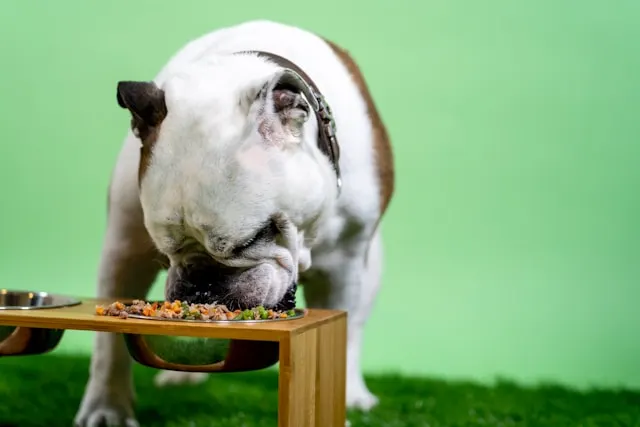
You’re slicing a tomato for a salad, and your dog is giving you that look — the one that says “if you love me, you’ll share.” Before you toss a piece over, it’s worth knowing that the answer to “can dogs eat tomatoes” is genuinely complicated. Most fruits get a simple yes or no. Tomatoes? They fall into a gray zone that trips up even experienced dog owners.
Quick Answer
Ripe, red tomatoes are generally safe for dogs in small amounts — the flesh is low in the compounds that cause harm. However, unripe green tomatoes, tomato leaves, and tomato stems contain solanine and tomatine, two naturally occurring toxins that can make dogs seriously ill. If your dog eats a fully ripe tomato chunk as an occasional treat, you likely have nothing to worry about. But portions, ripeness, and the parts of the plant matter enormously.
TL;DR: Ripe tomato flesh = OK in small amounts. Green tomatoes, leaves, and stems = toxic. Always watch for symptoms like vomiting, tremors, or lethargy after your dog eats any tomato.
Key Takeaways
- Ripe red tomato flesh is low in harmful compounds and safe in small, occasional amounts for most dogs.
- Green tomatoes, stems, and leaves contain solanine and tomatine — both toxic to dogs and potentially dangerous even in moderate quantities.
- Symptoms of tomato toxicity include vomiting, diarrhea, drooling, muscle weakness, and in severe cases, seizures.
- Tomato-based products like ketchup, pasta sauce, and canned tomatoes are NOT safe — they contain salt, garlic, onion, and other additives harmful to dogs.
- Always check with your vet before adding any new food to your dog’s diet, especially if your dog has underlying health conditions.
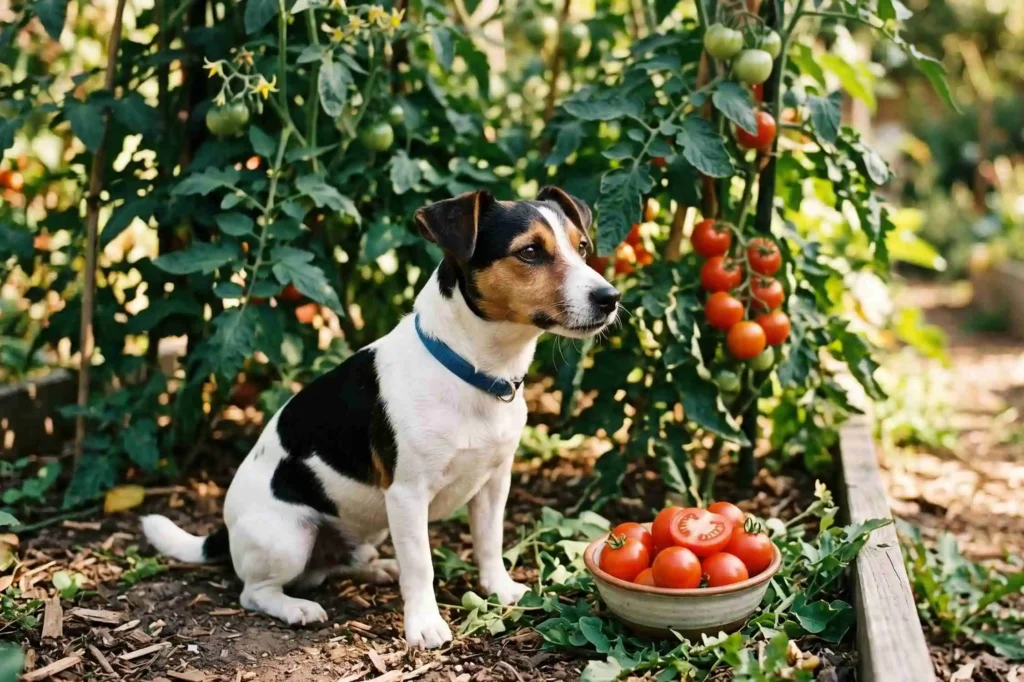
Table of Contents
Why It Matters: The Tomato Plant Isn’t Entirely Dog-Friendly
Here’s something most dog owners don’t realize: tomatoes belong to the Solanaceae family — the nightshade family — which includes some of the most toxic plants on earth. That doesn’t make the ripe fruit dangerous on its own, but it does mean parts of the plant carry real risk.
The two compounds to know are solanine and tomatine. Both are natural pesticides the plant produces to protect itself. In ripe tomatoes, these compounds are present at very low concentrations. In unripe tomatoes and especially in the green parts — the stems, leaves, and vines — concentrations are much higher.
Dogs who raid the garden and chew on tomato vines or unripe fruits are at genuine risk of toxicity. Even a curious puppy mouthing a tomato plant stem could ingest enough tomatine to trigger GI upset.
Small dogs are at higher risk than large breeds simply because a smaller body weight means a lower toxic threshold. A nibble that passes without issue in a Labrador could cause real trouble for a Chihuahua.
The Science Behind Tomato Toxicity
Solanine and Tomatine: What They Do
Solanine and tomatine are glycoalkaloids — compounds that disrupt normal cell membrane function. When ingested in sufficient amounts, they interfere with the nervous system and gastrointestinal tract. In humans, it would take a huge quantity of these compounds to cause harm. In dogs, particularly smaller breeds, the threshold is lower.
The critical factor is concentration. Ripe tomatoes have undergone natural enzymatic processes that break down most of their tomatine content as they ripen. By the time a tomato is fully red and ready to eat, the tomatine levels are a fraction of what was present when it was green. This is why a piece of ripe tomato is unlikely to cause problems, while a chewed-up green tomato or stem segment poses real risk.
For context, the American Kennel Club notes that the Solanum species — the family tomatoes belong to — can be toxic to dogs, and veterinary guidance consistently warns against allowing dogs access to tomato plants.
What About Tomatoes in Dog Food?
You’ve probably noticed that some commercial dog foods and treats contain tomato — usually as tomato pomace, the byproduct of tomato processing. This is safe because it comes from ripe tomatoes, processed to remove harmful compounds, and used in controlled small amounts. It’s a very different situation from a dog chewing through your garden plants.
Common Mistakes Dog Owners Make With Tomatoes (And the Fixes)
- Sharing pasta sauce or ketchup. These products are packed with garlic, onion, and salt — all toxic to dogs. Even a lick of tomato sauce is problematic. The fix: keep processed tomato products completely off the menu.
- Assuming “natural” means safe. Owners sometimes think anything from the garden must be fine. Parts of the tomato plant are genuinely toxic. The fix: treat tomato plants like any other potentially hazardous garden plant — fence them off.
- Feeding unripe tomatoes. Green tomatoes have significantly higher solanine and tomatine levels than ripe ones. The fix: only offer fully ripe, red tomato flesh, with seeds and skin removed where possible.
- Giving too much at once. Even ripe tomatoes contain natural acids and sugars that can cause digestive upset in large amounts. The fix: think of tomato as an occasional treat — a few small pieces, not a bowl.
- Ignoring the stems and leaves. If your dog has access to a tomato garden, they may chew on stems or leaves when you’re not watching. The fix: supervise garden time or use raised beds and barriers to block access.
- Missing early symptoms. Owners often dismiss initial vomiting as “just an upset stomach” without connecting it to something the dog ate hours earlier. The fix: note what your dog has eaten in the past 12 hours any time they show GI symptoms.
- Not checking ingredient labels on dog treats. Some commercial treats contain tomato-adjacent ingredients alongside garlic or onion powder. The fix: read ingredient labels carefully and look up anything unfamiliar.
How to Feed Ripe Tomatoes Safely: A Step-by-Step Guide
If you want to share a tomato with your dog, here’s how to do it responsibly.
Step 1: Choose only ripe, fully red tomatoes. Avoid any tomato that shows even patches of green. Ripe tomatoes are soft, uniformly red, and have a strong, pleasant scent. The riper, the lower the tomatine concentration.
Step 2: Remove the stem, leaves, and any attached vines. These parts have the highest concentration of toxic compounds. Cut them off completely before preparing the tomato.
Step 3: Wash the tomato thoroughly. Remove any pesticide residue or surface contaminants. Organic tomatoes are ideal if you’re offering them regularly.
Step 4: Remove seeds if possible. Tomato seeds aren’t toxic, but they can be a minor irritant for dogs with sensitive stomachs. Removing them adds a layer of caution.
Step 5: Cut into small, manageable pieces. Match the piece size to your dog’s size. A tiny morsel is enough — you’re offering a treat, not a meal supplement.
Step 6: Start with a very small amount. Introduce any new food gradually. Offer one or two pieces and wait 24 hours to see how your dog’s digestive system reacts before offering more.
Step 7: Monitor for any adverse reactions. Watch for vomiting, diarrhea, excessive drooling, lethargy, or loss of appetite in the following hours.
Supporting Gut Health After Introducing New Foods
Whenever you introduce a new food to your dog’s diet — even something as benign as a bite of ripe tomato — it’s worth thinking about gut health. Dogs with sensitive stomachs can react to novel foods with temporary digestive upset even when the food itself is safe.
Purina Pro Plan Veterinary Supplements FortiFlora Daily Probiotics is a vet-recommended probiotic powder that supports digestive balance and helps normalize gut bacteria. It’s one of the most commonly recommended probiotic supplements in clinical veterinary practice. Each sachet contains a guaranteed level of live active cultures, and it’s easy to mix into food. It’s particularly useful if your dog experiences mild loose stools after eating something new.
Honest limitation: it’s a daily supplement rather than an instant fix, and results typically show within a few days rather than immediately.
CHECK PRICE ON AMAZON: https://amzn.to/3ZySvV4
Dogs that are already prone to digestive upset — perhaps after eating something unusual like an acidic food — benefit most from consistent probiotic support. You might also want to explore our complete guide to treating dog diarrhea at home if your dog shows loose stools after eating tomatoes.
Troubleshooting: What to Do in Common Scenarios
My dog ate a ripe tomato chunk off the kitchen counter. → Stay calm. Monitor for the next few hours. A small amount of ripe tomato is unlikely to cause harm in a healthy adult dog.
My dog chewed through a tomato plant stem in the garden. → Call your vet immediately or contact the ASPCA Animal Poison Control Center (888-426-4435). The stem is where tomatine concentration is highest.
My dog ate a green tomato. → Contact your vet right away. Describe the size of the tomato and estimate how much was eaten. Don’t wait for symptoms to develop.
My dog licked some tomato sauce from my plate. → Assess the ingredients. If the sauce contained garlic, onion, or high salt, contact your vet. A small lick of plain tomato sauce may cause mild GI upset but is less dangerous.
My dog is vomiting after eating tomatoes. → Withhold food for a couple of hours, ensure fresh water is available, and contact your vet if vomiting continues, becomes severe, or is accompanied by other symptoms.
My dog ate tomato leaves and seems fine. → Contact your vet regardless of apparent symptoms. Some toxic reactions are delayed, and your vet may recommend monitoring or intervention.
I’m not sure whether what they ate was ripe or unripe. → Treat it as if it were unripe and call your vet to be safe.
Being Prepared: When Accidents Happen
If you have a dog who’s prone to counter-surfing or garden raids, having a well-stocked first aid kit on hand is genuinely useful. The Cat & Dog First Aid Kit is a comprehensive 100-piece kit that includes a dog thermometer, tick remover, and a pet first aid manual — everything you need to assess your dog’s condition quickly while waiting to speak with your vet.
Knowing your dog’s baseline temperature and being able to check vital signs is a practical skill for any owner whose dog regularly gets into things they shouldn’t. Taking a temperature reading can help you give your vet useful information over the phone.
Honest limitation: this is a preparedness tool, not a substitute for veterinary care. In any suspected poisoning scenario, calling your vet is always the first step.
CHECK PRICE ON AMAZON: https://amzn.to/3ZDeyKc
When to See a Vet: Red Flags You Should Not Ignore
Most cases of a dog eating a small piece of ripe tomato don’t need veterinary attention. But there are clear signs that warrant an immediate call to your vet or an emergency animal clinic.
Contact your vet right away if your dog shows:
- Repeated vomiting or vomiting that doesn’t stop after a couple of hours
- Severe or bloody diarrhea
- Excessive drooling or foaming at the mouth
- Muscle weakness or tremors
- Dilated pupils or apparent vision changes
- Lethargy, unsteadiness, or collapse
- Rapid breathing or elevated heart rate
- Seizures
These are signs of potential solanine or tomatine toxicity and require professional assessment. Don’t wait for symptoms to escalate. According to the AVMA, when in doubt about what your pet has ingested, contacting a veterinarian promptly is always the right call.
If your dog has eaten any toxic plant material, you can also contact the ASPCA Animal Poison Control Center at 888-426-4435 (note: a consultation fee may apply).
As a comparison, tomatoes are far less dangerous than other foods that are absolutely off-limits — unlike grapes and raisins, which can cause acute kidney failure in dogs even in tiny amounts. That said, “less dangerous” is not the same as “safe across the board.”
Expert Opinion
Veterinarians consistently distinguish between the tomato fruit and the tomato plant when advising dog owners. The ripe fruit, in small amounts, is not considered a significant toxicity risk for most healthy dogs. The primary concern lies with access to the plant itself — the leaves, stems, and unripe fruits — which contain tomatine and solanine at concentrations that can cause clinical symptoms.
The AKC’s guidance on tomatoes notes that while small amounts of ripe tomato are generally fine, owners should prevent dogs from having access to tomato plants entirely, particularly in home gardens where unripe tomatoes and plant material are readily available.
Veterinary nutritionists also caution against viewing tomatoes as a meaningful dietary supplement for dogs. Unlike certain fruits and vegetables — such as blueberries or carrots, which offer antioxidants and fiber — the nutritional benefit of tomatoes for dogs is minimal. If you’re looking to add whole-food variety to your dog’s diet, there are safer and more nutritionally impactful options. Please note that the guidance in this article is general information and not a substitute for advice from your personal veterinarian.
FAQs: Can Dogs Eat Tomatoes?
Q: Can dogs eat tomatoes at all? Yes — ripe red tomato flesh in small quantities is generally safe for healthy adult dogs. The risk comes from green parts, unripe tomatoes, leaves, and stems, which contain higher levels of toxic compounds.
Q: Can dogs eat tomato sauce or ketchup? No. Most tomato sauces and ketchup contain garlic, onion, salt, and sugar — all of which are harmful to dogs. Even if the tomato itself were safe, these additives are not.
Q: What makes green tomatoes dangerous for dogs? Unripe green tomatoes contain significantly higher concentrations of solanine and tomatine — natural compounds that can disrupt the nervous system and GI tract when ingested in sufficient amounts.
Q: My dog ate a small piece of ripe tomato. Should I be worried? Probably not. A small piece of ripe tomato is unlikely to cause harm to a healthy adult dog. Monitor for any symptoms over the next 12–24 hours and contact your vet if anything seems off.
Q: Can dogs eat cherry tomatoes? Yes, if fully ripe and the stem and leaves are removed. Cut them in half or quarters to prevent choking. The same rules apply — ripe flesh is fine in small amounts; the plant parts are not.
Q: Are tomatoes in commercial dog food safe? Yes. Commercial dog food that contains tomato typically uses processed tomato pomace from ripe fruits, which is safe and used in very controlled amounts. It’s very different from a dog eating raw tomato plant material.
Q: Can puppies eat tomatoes? Puppies have more sensitive digestive systems and are smaller, lowering their toxic threshold. It’s best to avoid tomatoes entirely in very young puppies. For older puppies, consult your vet before introducing any new food.
Q: What other vegetables are safe for dogs? Many vegetables are safe and nutritious for dogs in moderation. Cucumbers, broccoli, carrots, and celery are popular dog-friendly options. Always research individual foods before sharing.
Q: How much ripe tomato can a dog eat? Think of it as a tiny treat, not a meal component. A few small pieces — perhaps 1–2 tablespoons of diced ripe tomato — is a reasonable upper limit for an occasional snack. Less is more.
Q: What should I do if my dog ate tomato leaves? Contact your vet immediately, even if your dog appears fine. Describe the amount ingested as best you can. Don’t wait for symptoms to appear — prompt veterinary guidance is the safest course of action.
Conclusion
So, can dogs eat tomatoes? The short answer is: a little ripe tomato flesh is fine, but the rest of the plant is a real risk. The ripeness, the part of the plant, and the amount all determine whether a tomato is harmless or harmful for your dog. When in doubt, skip it — there are plenty of safer treats that deliver more nutritional value for your dog without any gray area.
If you do share tomatoes, keep portions tiny, stick to fully ripe red flesh only, and never let your dog have access to tomato plants, vines, or unripe fruits. And always have your vet’s number ready — because when it comes to your dog’s health, a quick phone call is always worth it. Want to explore more about what dogs can safely eat? Check out our full guide to superfoods for dogs for a broader look at dog-safe nutrition.