You’re peeling a juicy orange on the couch, and your dog is doing that thing — the soft eyes, the little lean-in, the hopeful stare. You wonder: can dogs eat oranges, or is citrus actually dangerous for them? It’s a fair question, and the answer is more nuanced than a simple yes or no.
Can Dogs Eat Oranges?
Yes, dogs can eat oranges — but only the flesh, in small amounts, and not every dog should. Oranges are non-toxic to dogs and can offer a small boost of vitamin C and hydration. However, the high sugar content and acidity mean that too much can upset sensitive stomachs. Dogs with diabetes, obesity, or gastrointestinal issues should avoid them entirely.
TL;DR: Oranges are safe for most healthy adult dogs in small portions. Stick to the flesh only, remove all seeds and peel, and keep servings to one or two segments a day maximum.
Key Takeaways
- Orange flesh is non-toxic and safe for most healthy adult dogs in small quantities
- Always remove the peel, pith, and seeds before offering any to your dog
- Limit servings to 1–2 segments per day to avoid sugar overload and digestive upset
- Dogs with diabetes, weight issues, or sensitive stomachs should skip oranges entirely
- Can dogs eat mandarin oranges? Yes — the same rules apply; mandarins are slightly sweeter, so keep portions even smaller
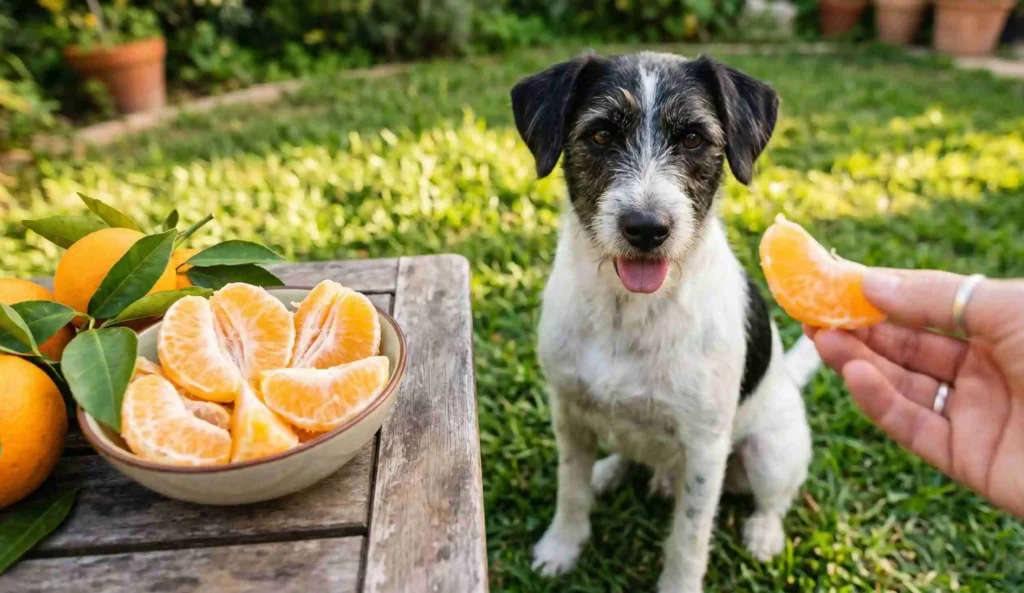
Table of Contents
Why It Matters: The Real Risks Behind a “Safe” Fruit
A fruit being non-toxic doesn’t mean it’s consequence-free. Oranges are naturally high in sugar — one medium orange contains about 12 grams of it. For a 10-pound dog, even one or two segments can contribute a meaningful sugar spike. Feed too many too often and you’re looking at weight gain, dental wear from acid, and potentially loose stools.
The peel is where things get genuinely risky. Orange peel and the white pith beneath it contain compounds called essential oils and flavonoids — specifically limonene and linalool — that can irritate a dog’s digestive system and, in large amounts, become toxic. The seeds contain trace amounts of cyanogenic compounds. Neither belongs anywhere near your dog’s bowl.
And then there’s the acidity. Citrus acid can irritate the stomach lining, especially in dogs already prone to vomiting or sensitive digestion. If your dog has a history of throwing up yellow bile or chronic digestive upset, it’s better to offer a safer alternative fruit entirely.
What’s Actually in an Orange? The Nutritional Picture
Before you decide whether oranges are worth offering, it helps to understand what’s in them.
Vitamin C gets the most attention. Dogs produce their own vitamin C in the liver, so they don’t technically need it from food the way humans do. That said, a small supplemental boost from food sources doesn’t hurt healthy dogs and may provide mild antioxidant support.
Fiber is present in the flesh and can support healthy digestion — but only in small amounts. Too much dietary fiber at once can cause loose stools or diarrhea, particularly in smaller breeds.
Water content is high, around 87%, which makes oranges mildly hydrating as a hot-weather treat.
Sugar is the main concern. Oranges sit at roughly 9–12 grams of natural sugar per fruit. Dogs don’t metabolize sugar the same way humans do, and a diet too rich in even natural sugars contributes to obesity, dental decay, and insulin imbalance over time.
Can Dogs Eat Mandarin Oranges?
Yes, dogs can eat mandarin oranges using the same rules that apply to regular oranges — flesh only, no peel, no seeds, and in small portions. Mandarins are actually a bit sweeter and smaller than navel oranges, which means the sugar concentration per segment is slightly higher. Because of this, one segment is a more appropriate serving for small and medium dogs.
The texture is softer and easier for dogs to chew, which makes mandarins a popular choice for owners who want to offer citrus as an occasional treat. Just keep the same caution in mind: sweet doesn’t mean unlimited.
Common Mistakes Dog Owners Make With Oranges (and the Fixes)
- Leaving the peel on. Orange peel contains essential oils that irritate the GI tract and can cause vomiting. The fix: Always remove the peel and as much of the white pith as possible before offering any segment.
- Feeding too many segments at once. More than two segments in one sitting is too much for most dogs. The fix: Treat oranges the way you’d treat any high-sugar snack — a little is fine, a lot is a problem.
- Offering oranges to diabetic or overweight dogs. The sugar content is genuinely problematic for dogs managing blood sugar or weight. The fix: Skip oranges for these dogs. Try cucumber or blueberries instead — much lower in sugar.
- Not removing the seeds. Orange seeds aren’t as dangerous as apple seeds, but they contain small amounts of cyanogenic compounds and can be a choking risk in smaller dogs. The fix: Check each segment and remove any visible seeds before serving.
- Giving orange juice instead of the whole fruit. Juice is concentrated sugar with none of the fiber that slows absorption. It’s far more likely to spike blood sugar and cause stomach upset. The fix: Only ever offer fresh orange flesh, never juice.
- Assuming all citrus is equal. Lemon, lime, and grapefruit are a different story — their essential oil content is much higher, and they’re far more likely to cause toxicity symptoms. The fix: Stick to sweet oranges or mandarins when offering citrus to your dog.
- Introducing it too fast. Any new food given in too large a quantity at once can cause digestive upset, even safe ones. The fix: Start with half a segment and watch for any reaction over 24 hours before making it a regular treat.
How Oranges Affect a Dog’s Digestive System
The digestive angle is where most problems show up. A dog’s gut microbiome is sensitive to sudden dietary changes, and the combination of fiber, acidity, and sugar in oranges can tip the balance toward loose stools or vomiting — especially if your dog isn’t used to fruit.
This is particularly relevant for dogs who are already managing a sensitive stomach. If you notice softer stools, excessive gas, or a dog that seems nauseous after a citrus treat, it’s a sign the digestive system isn’t handling the acidity well. Cutting back the portion size or stopping entirely is the right call.
For dogs dealing with ongoing GI sensitivity, supporting the gut with a quality probiotic can make a real difference — not because of the orange specifically, but because a stronger digestive baseline means less disruption from occasional food novelties.
Purina Pro Plan Veterinary Supplements FortiFlora Daily Probiotics is one of the most widely recommended options in this space, and for good reason. This veterinarian-developed probiotic contains a guaranteed level of live microorganisms specifically shown to support healthy intestinal microflora in dogs. It comes in easy-to-use single-serve powder sachets that sprinkle directly onto food — no pill wrestling required. It’s particularly well-suited for dogs prone to dietary-related GI upset, dogs recovering from antibiotics, or any dog whose stomach reacts to new foods. The main limitation is that it’s sold per box of 30 sachets, so costs can add up if you’re using it daily long-term.
CHECK PRICE ON AMAZON: https://amzn.to/3ZySvV4
The Vitamin C Conversation: Do Dogs Even Need It From Fruit?
Here’s something most dog owners don’t know: healthy adult dogs synthesize their own vitamin C in the liver. Unlike humans, they’re not dependent on dietary sources to meet their needs. So the vitamin C in an orange isn’t filling a nutritional gap — it’s more of a bonus.
Where this changes is in dogs under significant physical or emotional stress, elderly dogs with declining organ function, or dogs with certain health conditions where liver function may be compromised. In those cases, additional vitamin C from food or supplements may provide mild support. Still, that’s a conversation to have with your vet, not something to self-prescribe with a bowl of orange slices.
If you’re looking to genuinely shore up your dog’s micronutrient intake — including vitamin C — rather than relying on fruit treats, a broad-spectrum supplement is a more reliable approach.
Googipet Premium Dog Multivitamin Chewable covers the nutritional bases that fruit treats can’t: vitamins, minerals, probiotics, and joint-supportive glucosamine all in one chicken-flavored chew. It’s designed for dogs of all life stages and includes vitamin C among its active ingredients, making it a smart way to support antioxidant health without relying on high-sugar fruit. The chew format makes it easy to administer — most dogs treat it like a snack. One honest note: the glucosamine content is on the lower end compared to dedicated joint supplements, so dogs with significant joint issues may need a targeted formula as well.
CHECK PRICE ON AMAZON: https://amzn.to/3ZzV6OD
Step-by-Step Guide: How to Safely Feed Oranges to Your Dog
- Choose a ripe, fresh orange. Avoid anything that’s overripe, bruised, or has been sitting out. Fresher fruit means less fermentation and lower risk of stomach upset.
- Wash the outside thoroughly. Even if you’re removing the peel, pesticide residue on the skin can transfer to your hands and then to the flesh.
- Peel completely and remove all pith. The orange peel and the white spongy layer beneath it should be fully removed. Don’t rush this step — the pith contains compounds that can irritate the digestive tract.
- Check for and remove all seeds. Pull apart each segment and look for seeds. Even small amounts of cyanogenic compounds in seeds aren’t worth the risk.
- Start with half a segment. For a first-time citrus introduction, give your dog just half a segment and observe over the next several hours. Look for loose stools, vomiting, or signs of stomach discomfort.
- Limit the serving. For small dogs (under 20 lbs), stick to one segment. For medium and large dogs, two segments is a reasonable maximum per day.
- Make it occasional, not daily. Oranges work well as a hot-weather treat or occasional reward — not as a regular dietary fixture. The sugar load and acidity justify keeping it infrequent.
Troubleshooting: When Something Goes Wrong
If your dog ate orange peel: Monitor for vomiting, drooling, lethargy, or signs of GI distress. A single accidental exposure to a small amount of peel is unlikely to be serious, but call your vet if symptoms persist beyond a few hours or seem severe.
If your dog ate multiple segments at once: Expect possible loose stools over the next 12–24 hours. Keep water available and withhold the next meal if vomiting occurs. Most dogs recover quickly from a sugar/fiber overload without intervention.
If your dog seems unusually lethargic or is vomiting repeatedly after eating orange: This warrants a vet call, particularly if the dog consumed peel or seeds. These are the parts most likely to cause a reaction worth treating.
If your dog has diabetes and ate orange: Contact your vet. Monitor for unusual thirst, urination changes, or behavioral differences. A single small segment is unlikely to cause a crisis, but the vet should be aware.
If your small dog stole a whole orange: Small dogs have less body mass to buffer the sugar and acid load. Call your vet for guidance rather than waiting to see what happens.
When to See a Vet
Most orange-related incidents in dogs are minor and resolve on their own. But these signs warrant a prompt call to your veterinarian:
- Repeated vomiting or vomiting that doesn’t stop after 1–2 episodes
- Obvious abdominal pain, bloating, or your dog refusing to move normally
- Lethargy that lasts more than a few hours following ingestion
- Any sign that the dog consumed significant amounts of peel, seeds, or rind
- A diabetic dog that ate more than a small piece of orange flesh
- Diarrhea lasting more than 24 hours or containing blood — you can find more detail on that scenario in this guide to dog diarrhea causes and home treatment
When in doubt, the ASPCA Animal Poison Control Center (888-426-4435) is available 24/7 for guidance on potential toxic exposures.
Expert Opinion
Oranges fall into the category of fruits that veterinarians consider safe for healthy dogs in moderation. The key qualifiers there are “healthy” and “moderation.” According to the American Kennel Club, treats of any kind — including fruit — should make up no more than 10% of a dog’s daily caloric intake. For a 20-pound dog eating roughly 600 calories per day, that’s just 60 calories of treat allowance total. One orange segment contains about 5–8 calories, which keeps it well within range when offered in the quantities recommended here.
The American Veterinary Medical Association emphasizes that changes to a dog’s diet should always be introduced gradually and with awareness of the individual animal’s health history. Dogs with metabolic conditions, including diabetes or pancreatitis, have a different risk profile than healthy adults. For those dogs, the sugar and acidity of citrus fruit represent an unnecessary risk when there are lower-sugar alternatives available. Always consult your own veterinarian before introducing any new food to a dog with an existing health condition.
FAQs: Can Dogs Eat Oranges?
Can dogs eat oranges every day? It’s not recommended. Daily consumption adds unnecessary sugar and acidity to a dog’s diet. Once or twice a week as an occasional treat is a much safer and more appropriate frequency.
Can dogs eat mandarin oranges? Yes. Mandarin oranges are safe for dogs using the same rules — flesh only, no peel or seeds, and small portions. Mandarins are slightly sweeter than navel oranges, so keep it to one segment for small dogs.
Can puppies eat oranges? Puppies have more sensitive digestive systems than adult dogs. While oranges aren’t toxic to puppies, the acidity and sugar make them a poor choice. Stick to puppy-formulated treats until they’re older and their gut is more established.
Is orange juice safe for dogs? No. Orange juice is concentrated sugar and acid with none of the fiber that helps slow absorption in whole fruit. It’s very likely to cause stomach upset and provides no meaningful nutritional benefit to dogs.
Can dogs eat orange peels? No. Orange peel should never be fed to dogs. It contains essential oils, including limonene and linalool, that can cause vomiting, diarrhea, and GI irritation. The pith beneath the peel is also problematic.
Can dogs eat clementines? Yes, with the same precautions as mandarins and regular oranges. Flesh only, no peel, no seeds, small portions. Clementines are seedless in most cases, which makes preparation slightly easier.
Are oranges good for dogs? They offer small amounts of vitamin C, fiber, and hydration — but dogs synthesize their own vitamin C and get fiber from their regular food. Oranges are a safe treat, not a meaningful health food for dogs.
What fruits are better alternatives to oranges for dogs? Lower-sugar options like blueberries, watermelon (seedless and rind-free), and strawberries are excellent alternatives with less acidity and a more manageable sugar load.
How much orange can a large dog eat? For large dogs (over 50 lbs), up to two to three segments occasionally is generally fine. Even large dogs don’t need more than that — the sugar ceiling doesn’t shift dramatically with body size.
Can dogs eat the white part of the orange? The white pith should be avoided. It contains compounds that irritate the digestive system and contributes to GI upset. Remove as much as possible along with the outer peel.
Conclusion
So, can dogs eat oranges? Yes — with preparation, portion control, and a clear understanding of which dogs should skip them entirely. The flesh of a fresh orange is non-toxic and offers minor nutritional perks, but the peel, seeds, and pith are off the table. Keep servings small, make it an occasional treat rather than a daily habit, and always introduce any new food slowly.
The same logic applies when asking can dogs eat mandarin oranges — the answer is yes, with even smaller portions given their higher sugar concentration per segment. If you’re looking for fruit treats with less acidity and lower sugar, other dog-safe options like mango, blueberries, and watermelon are worth exploring. And if you want to support your dog’s nutrition in a more consistent way than occasional fruit treats allow, a daily multivitamin or probiotic gives you that baseline without the sugar load. When in doubt about your specific dog’s health needs, your vet is always the right first call.