You’re sitting on the couch enjoying a handful of grapes when your dog gives you those big, pleading eyes. You’ve shared plenty of snacks before, so what’s the harm in tossing one over? Here’s the thing — when it comes to grapes, that one small toss could send you racing to the emergency vet. If you’ve ever wondered “can dogs eat grapes,” the answer is a firm and absolute no, and understanding why could save your dog’s life.
Quick Answer
No, dogs cannot eat grapes. Grapes and raisins are highly toxic to dogs and can cause acute kidney failure, which may be fatal even in small amounts. This applies to all grape varieties — red, green, seedless, peeled, and dried (raisins, sultanas, currants). Every dog owner should treat grapes as a zero-tolerance food.
TL;DR: Grapes and raisins are one of the most dangerous human foods for dogs. There is no safe amount. If your dog eats even a single grape, contact your veterinarian or an emergency pet poison hotline immediately.
Key Takeaways
- All grape forms are toxic — fresh, dried, cooked, juiced, or baked into foods like raisin bread and trail mix.
- There is no known safe dose — some dogs have become critically ill after eating just one or two grapes.
- Symptoms can appear within 6–12 hours — watch for vomiting, lethargy, loss of appetite, and decreased urination.
- Immediate veterinary treatment is critical — early intervention dramatically improves survival rates.
- Plenty of safe fruit alternatives exist — blueberries, watermelon, and cucumbers are dog-friendly options you can share instead.
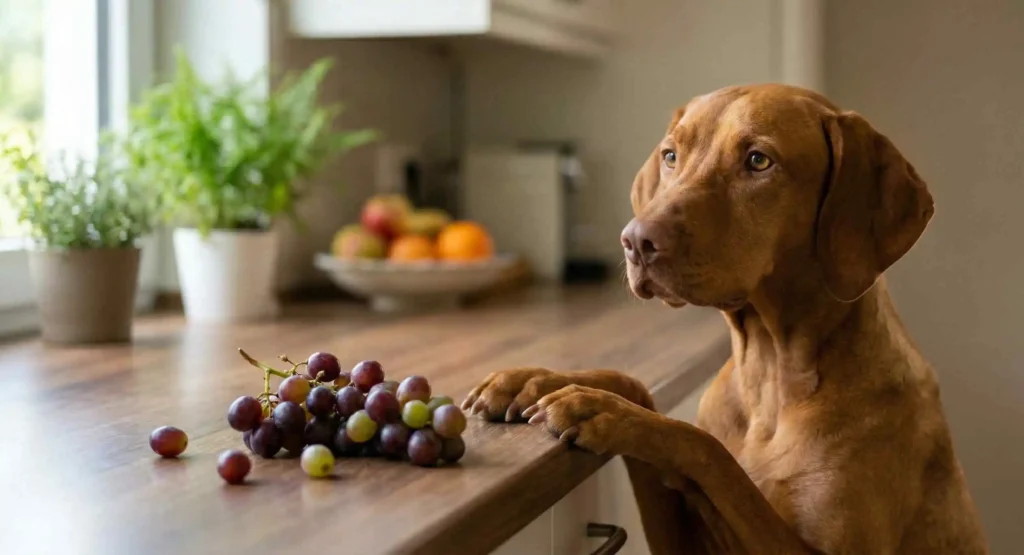
Table of Contents
Why Grape Toxicity Matters More Than You Think
Grape toxicity in dogs is not an overblown internet scare — it’s one of the most well-documented food poisoning emergencies in veterinary medicine. According to the ASPCA Animal Poison Control Center, grape and raisin ingestion consistently ranks among the top food-related toxicity calls they receive each year.
What makes grape poisoning so dangerous is the speed at which it attacks the kidneys. Once the toxic compound reaches the renal system, it can trigger acute kidney injury (AKI). If the kidneys shut down completely, the damage may be irreversible. Dogs who don’t receive treatment within the first few hours face significantly higher mortality rates.
The scariest part? Size, breed, and overall health don’t reliably predict which dogs will have a severe reaction. A large Labrador might collapse after a few grapes, while a small terrier might show milder symptoms from the same amount. Veterinarians still can’t predict individual reactions, which is exactly why there is no “safe” threshold.
This unpredictability is what separates grape toxicity from many other food hazards. With chocolate, for example, toxicity is dose-dependent and somewhat predictable based on body weight. With grapes, that math simply doesn’t apply. Every exposure is a gamble.
How Grape Toxicity Works in a Dog’s Body
For decades, the exact toxic compound in grapes remained a mystery. Researchers ruled out pesticides, fungal contaminants, and seed content. In 2021, veterinary scientists at the ASPCA Animal Poison Control Center identified tartaric acid as the most likely culprit behind grape and raisin toxicity in dogs.
Tartaric acid is found naturally in grapes, and its concentration varies between grape varieties, growing regions, and ripeness levels. This explains the wide range of reactions dogs have — some grapes simply contain more tartaric acid than others.
Here’s what happens inside your dog’s body after ingestion. The tartaric acid is absorbed through the digestive tract and begins circulating through the bloodstream. When it reaches the kidneys, it damages the renal tubular cells — the tiny structures responsible for filtering waste from the blood. As these cells break down, the kidneys lose their ability to produce urine and remove toxins.
This process can begin within hours. Vomiting is typically the first visible sign, often appearing within 2–6 hours of ingestion. Over the next 24–72 hours, the kidneys may start failing. Once a dog becomes anuric (stops producing urine entirely), the prognosis becomes very poor.
Raisins are actually more dangerous per gram than fresh grapes because the drying process concentrates the tartaric acid. A small box of raisins carries a much higher toxic load than the same weight of fresh grapes. This makes trail mix, granola bars, and raisin bread particularly risky household items if you have dogs.
Common Mistakes Dog Owners Make (and Fixes)
- Assuming “just one grape” is harmless. There is no established safe dose. The fix: treat every grape exposure as an emergency, regardless of quantity.
- Forgetting about raisins in baked goods. Raisin bread, oatmeal cookies, and fruitcakes all contain concentrated grape products. The fix: read ingredient labels on any human food before sharing, and keep baked goods off accessible countertops.
- Waiting to see if symptoms develop before calling the vet. By the time visible symptoms like reduced urination appear, kidney damage may already be advanced. The fix: call your vet or a poison control hotline immediately after ingestion — don’t wait for signs.
- Inducing vomiting at home without veterinary guidance. Using hydrogen peroxide or other home remedies incorrectly can cause additional harm, especially if your dog has a flat face or underlying conditions. The fix: always call your vet first and follow their specific instructions on whether to induce vomiting.
- Not knowing which other foods contain grapes. Wine, grape juice, grape jelly, and grape-flavored snacks may all pose risks. The fix: eliminate all grape-derived products from your dog’s reach and educate all family members.
- Leaving grapes on low tables or within counter-surfing range. Dogs are opportunistic eaters and will grab food the moment you look away. The fix: store grapes in sealed containers in the refrigerator and clean up dropped fruit immediately.
Being prepared for emergencies extends beyond grape toxicity. A well-stocked first aid kit gives you tools to respond quickly to a range of situations while you get your dog to the vet. Cat & Dog First Aid Kit is a 100-piece pre-assembled kit that includes a pet thermometer, tick remover, and a first aid manual written specifically for pet owners. It’s ideal for families who want peace of mind at home or on the road. The reflective, high-visibility case is easy to grab in a rush. One honest limitation: it doesn’t include activated charcoal or syringes for inducing vomiting, so you’d need to add those separately based on your vet’s recommendations.
CHECK PRICE ON AMAZON: https://amzn.to/3ZDeyKc
What to Do If Your Dog Eats Grapes: Step-by-Step
- Stay calm but act fast. Panicking wastes precious time. Take a deep breath and move to action mode.
- Remove any remaining grapes. If there are more grapes or raisins accessible to your dog, pick them up immediately to prevent further ingestion.
- Estimate the amount eaten. Try to figure out roughly how many grapes or raisins your dog consumed. This information helps your vet assess the severity.
- Call your veterinarian or a pet poison hotline immediately. The ASPCA Animal Poison Control Center can be reached at (888) 426-4435 (a consultation fee may apply). If your vet’s office is closed, head to the nearest emergency animal hospital.
- Follow professional instructions about vomiting. Your vet may instruct you to induce vomiting at home using 3% hydrogen peroxide, but only do this if specifically directed. Inducing vomiting is most effective within the first 1–2 hours after ingestion.
- Get to the vet clinic as soon as possible. Even if your dog vomits at home, they still need professional evaluation. The vet will likely run blood work to check kidney function and may administer IV fluids, activated charcoal, or other treatments to limit absorption of the toxin.
- Monitor your dog closely for 72 hours. Even after veterinary treatment, watch for decreased urination, lethargy, loss of appetite, abdominal pain, and unusual thirst. Report any changes to your vet immediately.
The first two hours after ingestion are the most critical window for treatment. Decontamination (removing the grapes from the stomach) is far more effective than trying to treat kidney damage after it begins.
Symptoms of Grape Poisoning: What to Watch For
Not every dog reacts at the same speed, but here are the most common warning signs organized by when they typically appear.
Within 6–12 hours: Vomiting (often the first sign), diarrhea, loss of appetite, lethargy, and abdominal tenderness. If your dog is vomiting repeatedly, this alone warrants an emergency call.
Within 24–48 hours: Decreased or absent urination, excessive thirst, dehydration, weakness, and trembling. These signs suggest the kidneys are struggling.
Within 48–72 hours: Complete lack of urination (anuria), severe lethargy, oral ulcers, seizures, and coma. At this stage, kidney failure may already be irreversible.
If your dog develops persistent diarrhea alongside vomiting after any suspected food exposure, don’t wait — get them to a vet.
Troubleshooting: Quick If/Then Scenarios
- If your dog ate grapes more than 2 hours ago and isn’t vomiting, then still call your vet — they may recommend in-clinic decontamination or IV fluid therapy.
- If your dog vomited on their own after eating grapes, then don’t assume the danger has passed. Partial absorption may have already occurred, and your vet needs to run kidney panels.
- If you’re unsure whether the food contained grapes or raisins, then err on the side of caution and call poison control. It’s always better to make an unnecessary call than to miss a toxic exposure.
- If your dog ate grape jelly or drank grape juice, then contact your vet. While these processed forms may contain less tartaric acid, the risk is not zero, and professional assessment is still necessary.
- If your dog seems completely fine 24 hours later, then still follow up with a vet for blood work. Kidney damage can be subclinical (present without obvious symptoms) in the early stages.
When to See a Veterinarian
With grape ingestion, the answer is almost always “right now.” But here are specific red flags that demand an immediate emergency vet visit:
- Your dog has stopped urinating or is producing very small amounts of dark urine.
- Vomiting persists for more than a few hours or contains blood.
- Your dog becomes suddenly weak, collapses, or seems disoriented.
- You notice seizures, excessive drooling, or trembling.
- Your dog refuses water entirely despite appearing dehydrated.
Grape toxicity is never a “wait and see” situation. Early blood work can detect rising kidney values (BUN and creatinine) before clinical signs become obvious. Aggressive IV fluid therapy in the first 48 hours is the single most effective treatment for preventing permanent kidney damage.
Expert Opinion
Veterinary toxicologists have been studying grape and raisin toxicity in dogs for over two decades. According to the American Kennel Club, grapes and raisins are among the top household foods most toxic to dogs, and no amount should be considered safe. The identification of tartaric acid as the probable toxic agent in 2021 was a breakthrough, but veterinarians emphasize that this discovery doesn’t change the clinical approach — prevention and rapid treatment remain the cornerstones.
The American Veterinary Medical Association (AVMA) recommends that all pet owners familiarize themselves with common food toxins before an emergency occurs. The information provided in this article is intended as general educational guidance. It is not a substitute for professional veterinary diagnosis or treatment. Always consult your veterinarian for advice specific to your dog’s health condition and circumstances.
Safe Fruit Alternatives Your Dog Will Love
The good news is that plenty of fruits are perfectly safe and even nutritious for dogs. Instead of grapes, try offering your dog these vet-approved options:
Blueberries are packed with antioxidants and make a perfect low-calorie training treat. Watermelon (seedless, rind removed) is hydrating and rich in vitamins A and C. Apples (without seeds or core) provide fiber and a satisfying crunch. If you want to explore more options, check out this guide to superfoods that can boost your dog’s health.
As a general rule, fruits should make up no more than 10% of your dog’s daily caloric intake. Always introduce new foods gradually and in small pieces to watch for any individual sensitivities.
Frequently Asked Questions
Can one grape kill a dog?
While it’s rare for a single grape to be fatal, it has caused serious illness in some dogs. Because individual sensitivity varies wildly, even one grape should be treated as a potential emergency. Call your vet immediately.
Are raisins more toxic than grapes?
Yes. Raisins are dried grapes with a higher concentration of tartaric acid per gram. A small handful of raisins can deliver a more potent toxic dose than the same weight of fresh grapes.
Can dogs eat grape jelly or grape juice?
These products are not considered safe either. While processing may reduce tartaric acid levels somewhat, the risk isn’t zero. Any grape-derived product should be kept away from dogs.
How long after eating grapes will a dog show symptoms?
Most dogs begin vomiting within 2–6 hours. More serious signs like decreased urination and lethargy typically appear within 24–48 hours. Some dogs may appear fine initially but deteriorate rapidly.
My dog ate grapes and seems fine — should I still worry?
Absolutely. Kidney damage can occur silently before visible symptoms appear. Contact your vet for blood work even if your dog seems normal. Early detection can make all the difference.
What does the vet do for grape poisoning?
Treatment typically includes inducing vomiting (if recent), administering activated charcoal to reduce absorption, IV fluid therapy to protect the kidneys, and monitoring kidney values through blood work over 48–72 hours.
Are all grape varieties equally toxic?
Yes, all types — green, red, black, seedless, and seeded — are considered toxic. The tartaric acid content varies by variety and growing conditions, but no grape type has been proven safe.
Can dogs eat grape leaves or grapevines?
There isn’t enough research to confirm safety. Given that the toxic compound is present in the fruit, veterinarians generally recommend avoiding all parts of the grape plant as a precaution.
Is grape seed extract safe for dogs?
Some commercial supplements contain grape seed extract and are marketed as safe. However, veterinarians remain divided. Always consult your vet before giving any supplement containing grape-derived ingredients.
What about wine — can dogs have even a small sip?
No. Wine contains grape-derived compounds plus alcohol, both of which are toxic to dogs. Even a small amount of wine poses a dual toxicity risk and should never be given to dogs.
Conclusion
So, can dogs eat grapes? The answer is a clear and definitive no — not one grape, not one raisin, not in any form. Grape toxicity is one of the most serious food-related dangers dogs face, and the unpredictable nature of individual reactions means there is simply no safe amount to test. The good news is that prevention is straightforward. Keep grapes, raisins, and all grape-containing products stored securely out of your dog’s reach, and make sure every family member and visitor knows the rule. If an accident does happen, speed is everything — contact your vet or a poison control hotline within the first hour for the best possible outcome. Your dog has plenty of safe, delicious fruit options to enjoy, so there’s no reason to take the risk. Bookmark this page, share it with a fellow dog parent, and make your home a grape-free zone for your furry best friend.
This article is intended for educational purposes only and does not replace professional veterinary advice. If your dog has ingested grapes or raisins, please consult a licensed veterinarian immediately.