You just watched your Cane Corso inhale an entire bowl of kibble in forty-five seconds flat. Now you’re staring at the bag, wondering if what’s inside is actually good enough for a dog that could outweigh most teenagers. Choosing the best dog food for Cane Corso dogs isn’t just about filling a big bowl. It’s about protecting joints that carry over 100 pounds, fueling lean muscle, and keeping that massive frame healthy for years to come.
Quick Answer: The best dog food for a Cane Corso is a high-protein, moderate-fat formula designed for large or giant breeds. Look for real meat as the first ingredient, a protein content between 24–30%, controlled calcium and phosphorus ratios, and added joint support like glucosamine. Avoid grain-free formulas unless your vet specifically recommends one.
TL;DR: Cane Corsos need large-breed or giant-breed specific food with high protein, moderate fat, controlled minerals for bone health, and joint-supporting ingredients. Feed twice daily using a slow feeder to reduce bloat risk. Switch to a senior formula around age six.
Key Takeaways
- Choose a formula labeled for large or giant breeds with 24–30% protein from real animal sources.
- Controlled calcium (1.0–1.5%) and phosphorus (0.8–1.2%) levels protect growing bones and joints.
- Feed adult Cane Corsos twice daily rather than once to lower bloat risk.
- Omega-3 fatty acids from fish oil support skin, coat, and joint health in this breed.
- Transition foods slowly over 7–10 days to prevent digestive upset.
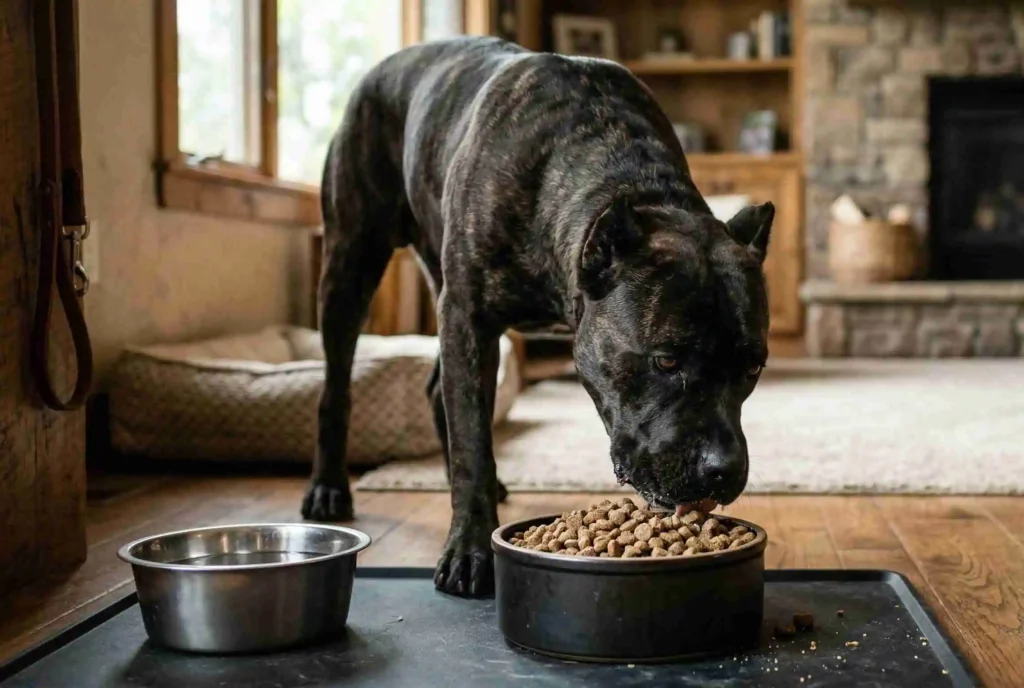
Table of Contents
Why the Right Food Matters for This Breed
Cane Corsos are a working mastiff breed that typically weighs between 90 and 120 pounds. Some males push past 130. That size creates specific nutritional demands you can’t ignore.
Their rapid growth phase during the first 18 months is one of the most critical periods. Growing too fast puts stress on developing bones and joints. According to the American Kennel Club, Cane Corsos are prone to hip dysplasia and joint problems. Feeding an inappropriate diet during puppyhood can accelerate those issues.
Beyond joints, this breed is at elevated risk for gastric dilatation-volvulus, commonly known as bloat. Bloat is a life-threatening emergency where the stomach twists on itself. Diet, feeding habits, and bowl type all play a role in prevention.
Their short, dense coat also needs nutritional support. Without adequate omega fatty acids, Cane Corsos can develop dry, flaky skin. And if you’ve ever dealt with excessive drooling in large breeds, you know that digestive discomfort only makes it worse.
How Cane Corso Nutrition Works
Understanding what goes into your Cane Corso’s bowl starts with three macronutrients: protein, fat, and carbohydrates.
Protein: The Foundation
Protein builds and maintains the lean muscle mass that defines this breed. Aim for 24–30% crude protein from identifiable animal sources. Think chicken, beef, lamb, salmon, or turkey listed as the first ingredient. Meat meals like “chicken meal” are also acceptable since they’re concentrated protein sources.
Avoid formulas where the first ingredient is a grain, plant protein, or unnamed “meat by-products.”
Fat: Energy Without Excess
Fat provides concentrated energy, but too much leads to rapid weight gain. For adult Cane Corsos, a fat content between 12–18% works well. Puppies can handle slightly higher levels to fuel growth.
Named fat sources matter. Chicken fat and salmon oil are excellent. Generic “animal fat” is a red flag.
Carbohydrates and Fiber
Whole grains like brown rice, oatmeal, and barley provide steady energy and fiber for healthy digestion. Sweet potatoes and peas are solid options too. The key is avoiding formulas loaded with corn, wheat, or soy as primary ingredients, since these offer less nutritional value and can trigger sensitivities in some dogs.
Critical Minerals
Calcium and phosphorus ratios are especially important for giant breed puppies. The AVMA recommends working with your veterinarian to ensure proper mineral balance. For large-breed puppy formulas, look for calcium around 1.0–1.5% and phosphorus around 0.8–1.2%.
Excess calcium during the growth phase can actually cause skeletal abnormalities in giant breeds. More is not better here.
Common Feeding Mistakes (and How to Fix Them)
Even well-meaning owners make these errors with their Cane Corsos:
- Feeding puppy food too long. Many owners keep their Cane Corso on puppy food past 12–14 months. Giant breeds should transition to an adult large-breed formula around 12–18 months, depending on growth rate. The fix: ask your vet to assess your pup’s growth curve and switch at the right time.
- Free-feeding from a giant bowl. Leaving food out all day encourages overeating and rapid gulping, both of which increase bloat risk. The fix: feed measured portions twice daily on a consistent schedule.
- Choosing grain-free without medical reason. The FDA has investigated a potential link between grain-free diets and dilated cardiomyopathy (DCM) in dogs. The fix: stick with grain-inclusive formulas unless your vet diagnoses a specific grain allergy.
- Ignoring the feeding guidelines and eyeballing portions. A Cane Corso eating just 10% more than needed daily can gain significant weight over a few months. The fix: use a kitchen scale or measuring cup and adjust based on body condition, not just the bag’s recommendations.
- Skipping joint support entirely. This breed is genetically predisposed to hip and elbow dysplasia. Waiting until symptoms appear is too late for prevention. The fix: choose a food with added glucosamine and chondroitin, or add a quality joint supplement to the diet early.
- Switching foods overnight. Cane Corsos have sensitive stomachs despite their tough appearance. The fix: transition gradually over 7–10 days by mixing increasing amounts of the new food with the old.
Slowing Down Mealtime to Prevent Bloat
One of the most dangerous mistakes Cane Corso owners make is ignoring how fast their dog eats. This breed is deep-chested, which is the number one physical risk factor for bloat. When a dog inhales food in seconds, they swallow large amounts of air along with it. That trapped air can contribute to stomach torsion.
A slow feeder bowl is one of the simplest tools for reducing this risk. The raised ridges inside the bowl force your dog to work around obstacles, naturally slowing their eating pace by up to ten times.
JASGOOD Slow Feeder Dog Bowl is built specifically for large and medium breeds like the Cane Corso. The anti-gulping maze pattern turns mealtime into a gentle puzzle, which slows eating and reduces air intake. It’s made from non-toxic, BPA-free materials and has a non-slip base that won’t slide across the floor when your 110-pound dog goes at it. The only downside is that dogs who are extremely aggressive chewers might try to flip it, so pairing it with a non-skid mat helps. It’s an affordable first line of defense against a life-threatening condition.
CHECK PRICE ON AMAZON: https://amzn.to/4bSghCM
Step-by-Step: How to Choose and Transition Food for Your Cane Corso
Step 1: Determine your dog’s life stage. Puppies under 18 months need a large-breed puppy formula. Adults aged 18 months to six years need a large-breed adult formula. Dogs over six should move to a senior-specific diet.
Step 2: Check the first five ingredients. A named animal protein should be first. Ideally, you’ll see two animal proteins in the top five. Whole grains or vegetables should follow.
Step 3: Verify the guaranteed analysis. Protein should be 24–30%. Fat should be 12–18% for adults. Check that calcium and phosphorus levels are listed and within the ranges discussed above.
Step 4: Look for functional extras. Glucosamine, chondroitin, omega-3 fatty acids, and probiotics are all valuable additions for this breed. If the food doesn’t include them, you can supplement separately.
Step 5: Calculate daily portions. Most adult Cane Corsos need 4–6 cups of food per day, split into two meals. Active dogs or those in working roles may need more. Use your dog’s body condition score rather than weight alone to dial in the right amount.
Step 6: Transition gradually. Days 1–3: 75% old food, 25% new. Days 4–6: 50/50. Days 7–9: 25% old, 75% new. Day 10: 100% new food. If your dog shows loose stools, slow the transition down. Owners who deal with digestive issues like diarrhea during food changes can extend this timeline to two full weeks.
Step 7: Monitor and adjust. After four to six weeks on the new food, evaluate your dog’s coat quality, energy level, stool consistency, and body condition. Good food shows results you can see and feel.
Adding Omega-3s for Skin, Coat, and Joint Health
Cane Corsos are prone to both joint stiffness and dry skin. Omega-3 fatty acids from marine sources address both problems at once. These essential fats reduce inflammatory responses in joints and promote a healthy, glossy coat. Most standard kibbles include some omega-3s, but the amounts are often too low for a giant breed with elevated needs.
Zesty Paws Wild Alaskan Salmon Oil is a liquid pump supplement that mixes directly into your Cane Corso’s food. It’s sourced from wild-caught Alaskan pollock and salmon, delivering EPA and DHA in highly bioavailable form. The pump bottle makes dosing easy, and most dogs love the taste. One limitation is that the bottle should be refrigerated after opening to maintain freshness, which can be easy to forget. For a breed that benefits enormously from omega-3 support, this is one of the most practical daily additions you can make.
CHECK PRICE ON AMAZON: https://amzn.to/4akcAVn
Troubleshooting Common Feeding Problems
- If your Cane Corso is gaining too much weight → Reduce daily portions by 10% and reassess in two weeks. Cut treats to no more than 10% of daily calories. Increase exercise gradually.
- If your dog refuses the new food → Try warming it slightly or adding a splash of low-sodium bone broth. Some dogs respond to food toppers like freeze-dried raw pieces.
- If stools are consistently loose → The food may contain an ingredient your dog doesn’t tolerate well. Try a limited-ingredient formula. If the issue is persistent, explore food allergy solutions.
- If your dog is eating too fast even with a slow feeder → Try splitting meals into three smaller portions instead of two. Puzzle feeders and interactive toys can also make mealtime last longer.
- If your puppy seems constantly hungry → Giant breed puppies should stay lean during growth. Feeling ribs easily is normal and healthy. Overfeeding to satisfy apparent hunger causes faster growth than the skeleton can support.
- If coat quality doesn’t improve after switching foods → Give it at least six to eight weeks. If there’s no change, consider adding a dedicated omega-3 supplement or consulting your vet about potential underlying issues.
When to See a Veterinarian
Some feeding-related symptoms require professional attention. Don’t wait on these:
- Sudden refusal to eat lasting more than 24–48 hours.
- Visible bloating, unproductive retching, or restless pacing after meals, which are signs of bloat requiring emergency care.
- Persistent vomiting or diarrhea that doesn’t resolve within two days.
- Rapid, unexplained weight loss or gain.
- Limping, stiffness, or reluctance to move, which may indicate joint problems worsened by nutritional deficiencies.
- Excessive itching, hair loss, or chronic ear infections that could signal a food sensitivity or allergy.
Veterinarians recommend annual bloodwork for giant breeds to catch nutritional imbalances early. A board-certified veterinary nutritionist can also create a customized feeding plan if your Cane Corso has complex health needs.
What Veterinary Experts Say About Feeding Giant Breeds
Veterinary nutritionists consistently emphasize that giant breeds like the Cane Corso have fundamentally different dietary needs than medium or small breeds. The controlled growth approach is not optional for this group. Overnutrition during the first 18 months is one of the leading preventable causes of orthopedic disease in large and giant breed dogs.
The American Kennel Club recommends that Cane Corso owners work closely with their veterinarian to select a food that meets AAFCO nutrient profiles for large-breed dogs. AAFCO-approved foods have undergone feeding trials or meet established nutritional standards. This matters because supplements marketed as “superfoods” are not a substitute for a nutritionally complete base diet. While adding healthy whole-food toppers can complement a balanced diet, the foundation must be a properly formulated food.
Disclaimer: This article provides general nutritional guidance and is not a substitute for professional veterinary advice. Always consult your veterinarian before making significant changes to your Cane Corso’s diet.
Frequently Asked Questions
How much should a Cane Corso eat per day?
Most adult Cane Corsos eat 4–6 cups of high-quality kibble daily, split into two meals. Exact amounts vary by age, activity level, and the specific food’s calorie density. Use body condition scoring to fine-tune portions.
Is grain-free food good for Cane Corsos?
Not typically. The FDA has investigated links between grain-free diets and heart disease in dogs. Unless your vet diagnoses a grain allergy, a grain-inclusive large-breed formula is the safer choice for Cane Corsos.
What protein percentage is best for a Cane Corso?
Aim for 24–30% crude protein from named animal sources. Puppies do well at the higher end of that range. Senior dogs may need slightly lower protein depending on kidney health.
Can Cane Corsos eat raw food?
Some owners feed raw diets successfully, but they require careful planning to meet all nutritional needs. If you’re considering this approach, research raw feeding guidelines and work with a veterinary nutritionist.
How often should I feed my Cane Corso puppy?
Puppies under four months should eat three to four times daily. From four to twelve months, three meals works well. After twelve months, transition to two meals per day.
What ingredients should I avoid in Cane Corso food?
Avoid artificial colors, flavors, and preservatives like BHA, BHT, and ethoxyquin. Skip foods with unnamed meat by-products, excessive corn or soy fillers, and added sugar.
Do Cane Corsos need supplements?
A complete and balanced food covers most needs. However, glucosamine for joint support and omega-3 fish oil for skin and coat health are beneficial additions for this breed. Consult your vet before starting any supplement.
When should I switch my Cane Corso to senior food?
Most Cane Corsos benefit from a senior formula around age six. Giant breeds age faster than smaller dogs, so earlier transition supports joint health and weight management.
Why does my Cane Corso have gas after eating?
Gas often results from eating too fast, sudden food changes, or ingredients the dog doesn’t digest well. A slow feeder bowl and gradual food transitions usually resolve it. Persistent gas warrants a vet visit.
How do I know if my Cane Corso is overweight?
You should be able to feel your dog’s ribs without pressing hard. When viewed from above, there should be a visible waist behind the ribcage. If your Cane Corso looks barrel-shaped from above, it’s time to reduce portions.
Feeding Your Cane Corso Right Starts Today
Choosing the best dog food for Cane Corso dogs doesn’t have to be overwhelming once you know what to look for. Focus on high-quality animal protein, appropriate fat levels, controlled minerals, and joint-supporting ingredients. Feed twice daily using a slow feeder to protect against bloat. Monitor body condition regularly and don’t hesitate to adjust portions as your dog’s needs change with age and activity level.
The investment you make in proper nutrition now pays off in fewer vet bills, better mobility, and more active years with your dog. Start by evaluating what’s currently in your Cane Corso’s bowl against the guidelines in this article. If it falls short, begin a gradual transition to a formula that truly meets this breed’s demands. Your Cane Corso is counting on you to get this right.