You’re making dinner, and your dog is staring at you with that look — the one that says please, just one piece. You’re peeling potatoes, and you wonder: is this actually safe? Can dogs eat potatoes, or is this one of those foods that looks harmless but isn’t?
The short answer is that it depends heavily on how the potato is prepared. Getting this wrong can cause real health problems, but getting it right means your dog can safely enjoy this common kitchen staple.
Can Dogs Eat Potatoes? Here’s the Quick Answer
Yes, dogs can eat plain, cooked potatoes in moderation. Boiled or baked potatoes without any seasoning, butter, or toppings are generally safe for healthy adult dogs and can provide a modest source of energy and vitamins. However, raw potatoes, green potatoes, and any preparation loaded with salt, garlic, or dairy are a firm no.
TL;DR: Plain cooked potatoes = OK in small amounts. Raw, green, or seasoned potatoes = avoid completely. Always check with your vet if your dog has diabetes, kidney issues, or is overweight before adding potatoes to their diet.
Key Takeaways
- Plain boiled or baked potatoes are safe for most healthy dogs in small portions.
- Raw potatoes contain solanine, a compound toxic to dogs — always cook them first.
- Green-tinged potatoes have higher solanine levels and must be avoided entirely.
- Mashed potatoes with butter, milk, garlic, or salt are unsafe for dogs.
- Sweet potatoes are actually a more nutritious option and are widely vet-approved.
- Portion control matters — potatoes are high in carbohydrates and can contribute to weight gain.
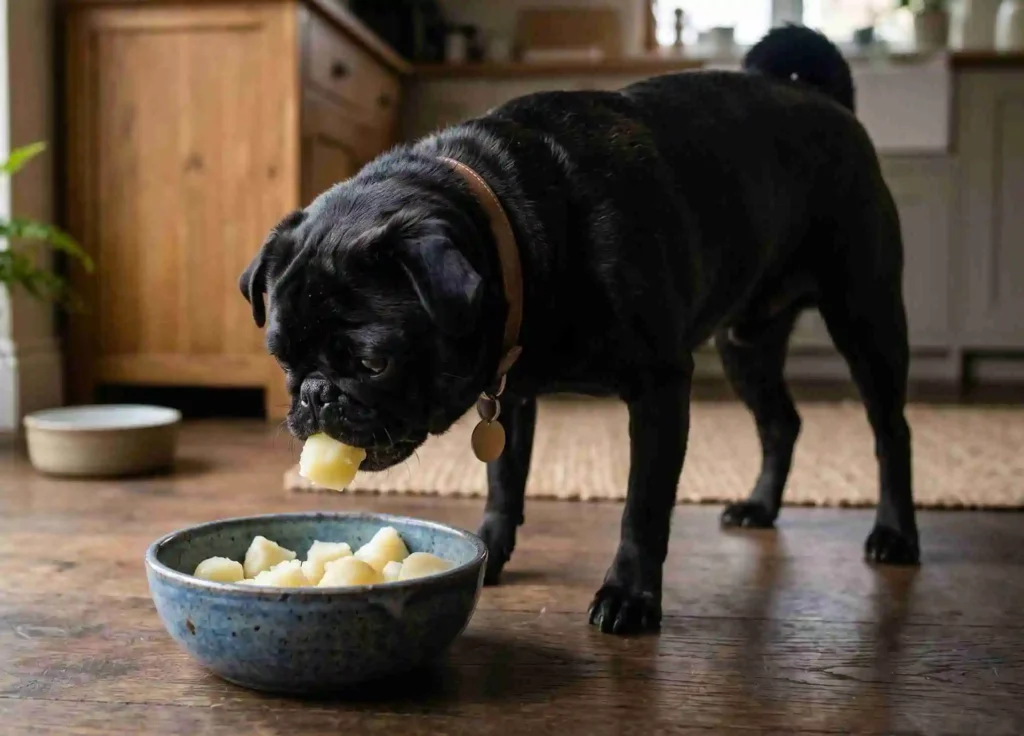
Table of Contents
Why It Matters: The Real Risks of Getting This Wrong
Potatoes seem like such an ordinary food that it’s easy to assume they’re either always fine or always dangerous. The truth is somewhere in between, and the details really matter.
Feeding your dog raw or green potatoes exposes them to solanine, a naturally occurring glycoalkaloid found in plants of the nightshade family. Solanine can cause vomiting, diarrhea, lethargy, confusion, and in high doses, more serious neurological symptoms. Small amounts may only cause mild stomach upset, but it’s not a risk worth taking.
Beyond toxicity, potatoes are starchy and calorie-dense. Dogs that eat too many can gain weight quickly, which puts pressure on joints, the heart, and the digestive system. For dogs already managing diabetes, obesity, or kidney disease, even plain cooked potatoes can cause problems by spiking blood sugar or adding unnecessary phosphorus to the diet.
The good news: a small amount of plain cooked potato, offered as an occasional treat, is unlikely to harm a healthy dog. The risks come from frequency, preparation, and portion size.
The Science Behind Potatoes and Dogs
What’s Actually Inside a Potato
Potatoes are members of the Solanaceae (nightshade) family — the same botanical family as tomatoes, peppers, and eggplant. That family connection matters because all nightshades produce solanine as a natural defense against pests and fungi.
In a ripe, fully cooked potato, solanine levels are low enough to be relatively harmless. But the moment a potato is raw, undercooked, or starts to turn green (which happens through light exposure), solanine concentrations rise sharply.
From a nutritional standpoint, potatoes offer vitamin C, vitamin B6, potassium, and iron. They’re also high in carbohydrates and contain some fiber. None of this makes them a nutritional powerhouse for dogs — dogs derive most of their energy from protein and fat — but a small cooked portion isn’t without value.
The FDA Warning You Should Know About
In 2018, the U.S. Food and Drug Administration issued an alert investigating a possible link between grain-free diets high in legumes and potatoes and dilated cardiomyopathy (DCM), a serious heart condition in dogs. The research is still ongoing and the causative relationship hasn’t been definitively proven, but veterinarians widely recommend not making potatoes a significant or daily part of your dog’s diet. Occasional treats are very different from using potato as a dietary staple.
Can Dogs Eat Mashed Potatoes?
This question comes up constantly, and the answer is: it depends entirely on how they were made.
Plain mashed potatoes with no added ingredients — just boiled potatoes, roughly mashed, no seasoning — are technically safe in tiny amounts. But let’s be honest. Almost no one makes mashed potatoes that way for themselves, and most dogs end up getting a spoonful of the human version.
Standard mashed potatoes contain butter, milk or cream, salt, and sometimes garlic or onion. Every single one of those additions is a problem for dogs.
- Butter and cream: High in fat, can trigger pancreatitis in sensitive dogs.
- Salt: Can cause sodium ion poisoning in larger quantities; symptoms include excessive thirst, urination, and vomiting.
- Garlic and onion: Both are toxic to dogs, even in small amounts. They damage red blood cells and can cause hemolytic anemia.
- Milk: Many dogs are lactose intolerant, leading to gas, bloating, and diarrhea.
If you want to give your dog a taste of something potato-like, make a small separate portion — just plain boiled potato, cooled, no extras.
Can Dogs Eat Sweet Potatoes?
Sweet potatoes are actually the better potato choice for dogs, and many vets actively recommend them. Unlike white potatoes, sweet potatoes are not members of the nightshade family and don’t carry the solanine concern.
Sweet potatoes are genuinely nutrient-dense. They’re rich in dietary fiber, beta-carotene (which converts to vitamin A), vitamin C, potassium, and manganese. The fiber content supports healthy digestion and can be especially helpful for dogs that experience irregular bowel movements.
You’ll also find sweet potato as an ingredient in many commercial dog foods and treats, which reflects just how well-tolerated it is. Boiled, steamed, or baked sweet potato — plain, no seasoning — can be a healthy and tasty addition to your dog’s diet in moderation.
Dogs that enjoy exploring new flavors tend to love sweet potato alongside other dog-safe produce. If you’re already letting your pup try fruits and vegetables, you might find our guide on whether dogs can eat carrots useful, since carrots share a similar nutritional profile as a crunchy, low-calorie dog-friendly snack.
Common Mistakes Dog Owners Make With Potatoes (And the Fixes)
Mistake 1: Feeding raw potato chunks as a treat. Raw potatoes are harder to digest and contain higher solanine levels. The fix: always cook potatoes fully before offering them — boiled or baked works best.
Mistake 2: Sharing leftover mashed potatoes from dinner. Table-prepared mashed potatoes almost always contain butter, salt, and sometimes garlic. The fix: make a tiny unseasoned mashed portion separately, or skip the mash and offer a plain boiled piece instead.
Mistake 3: Overlooking green-tinged skin. Green coloration on potato skin is a signal that solanine levels are elevated. The fix: discard any potato with green patches entirely. Don’t peel the green part off and use the rest — the toxin can penetrate deeper than it looks.
Mistake 4: Not removing potato skin. The skin can be harder for dogs to digest and may have been sprayed with pesticides. The fix: always peel potatoes before feeding them to your dog.
Mistake 5: Giving too much, too often. Potatoes are high in starch and calories. Even plain portions can contribute to weight gain if given regularly. The fix: treat potato as an occasional snack, not a meal addition — a few small pieces, not a whole potato.
Mistake 6: Assuming all potato products are equal. Potato chips, fries, and instant mashed potato powder are all off the table. These are loaded with salt, fat, or artificial flavoring. The fix: stick to plain, freshly cooked potato only.
Mistake 7: Skipping the vet check for dogs with health conditions. Diabetic dogs can experience blood sugar spikes from starchy foods. Dogs with kidney disease may not tolerate the phosphorus. The fix: if your dog has any chronic health condition, consult your vet before introducing potatoes.
Supporting Gut Health When Introducing New Foods
Any time you introduce a new food — even a safe one — your dog’s digestive system may need a moment to adjust. Some dogs handle new foods perfectly. Others, especially those with sensitive stomachs, can experience a day or two of loose stools or gas.
One practical way to support your dog’s gut during dietary changes is with a daily probiotic. Probiotics help maintain the balance of healthy bacteria in the gut, which can reduce the impact of dietary shifts and support overall digestive resilience.
Purina Pro Plan Veterinary Supplements FortiFlora Daily Probiotics for Dogs is one of the most widely recognized probiotic supplements on the market. It’s recommended by veterinarians and comes in single-serve sachets that you sprinkle directly onto your dog’s food. Each packet contains a guaranteed level of live active cultures and also includes antioxidants to support immune health. It’s easy to use, palatably formulated (most dogs eat it without hesitation), and suitable for dogs of all sizes. The main limitation is cost — buying it monthly does add up — but the consistency it provides for sensitive stomachs is hard to replicate with cheaper alternatives.
CHECK PRICE ON AMAZON: https://amzn.to/3ZySvV4
How to Safely Feed Your Dog Potatoes: Step-by-Step
Step 1: Choose the right potato. Pick a fresh, fully ripened potato with no green patches, no sprouting, and no soft spots. Discard any potato showing signs of going bad.
Step 2: Wash and peel it. Rinse thoroughly, then peel the skin completely. Potato skin can be hard on a dog’s digestive system and may carry residual pesticides.
Step 3: Cut it into small pieces. Chop into small, bite-sized chunks appropriate for your dog’s size. This makes cooking more even and reduces any choking risk.
Step 4: Cook it plain. Boil in plain water until fully soft, or bake at a moderate temperature until cooked through. No oil, no salt, no butter, no seasoning of any kind.
Step 5: Let it cool completely. Dogs can burn their mouths on hot food. Wait until the potato has fully cooled to room temperature before offering it.
Step 6: Offer a small test portion first. Start with a piece or two. Watch for any signs of digestive upset — loose stool, gas, vomiting — over the next 24 hours.
Step 7: Keep portions small and infrequent. If your dog tolerates it well, a few small pieces once or twice a week as an occasional treat is a reasonable limit for a healthy adult dog. It should not replace any part of their regular meal.
Troubleshooting: What to Do If Something Goes Wrong
If your dog ate raw potato: Watch closely for vomiting, diarrhea, lethargy, or trembling. Mild symptoms from a small amount may resolve on their own. If symptoms persist beyond a few hours or seem severe, call your vet.
If your dog ate potato with onion or garlic: Contact your veterinarian immediately. Onion and garlic toxicity can be serious even in small amounts and the effects may not appear right away.
If your dog ate a large amount of mashed potatoes: Watch for signs of gastrointestinal distress. High salt intake can cause excessive thirst, restlessness, and in more serious cases, sodium poisoning. Call your vet if your dog seems unwell.
If your dog has loose stools after plain potato: Reduce the amount or stop altogether. Some dogs simply don’t tolerate starchy foods well. A bland diet for a day or two and some probiotic support should help things return to normal. If dog diarrhea persists beyond 48 hours, consult your vet.
If your dog vomits after eating potato: A single vomiting episode after trying a new food can be normal. If vomiting is repeated or accompanied by other symptoms, seek veterinary advice. Our guide on why dogs throw up yellow bile explains how to tell mild stomach upset from something more concerning.
If your dog refuses to eat potato: That’s fine — some dogs simply aren’t interested in plain boiled vegetables. Don’t force it. There are plenty of other dog-safe foods they may enjoy.
Nutritional Balance: Thinking Beyond Potatoes
Potatoes can be a fine occasional treat, but they’re not a nutritional priority for dogs. If your goal is to support your dog’s overall wellbeing through diet, it’s worth thinking about the bigger picture.
Dogs need a well-rounded intake of protein, healthy fats, vitamins, and minerals. When food variety is limited or a dog is a picky eater, a high-quality multivitamin can help fill in nutritional gaps. It’s also a useful safeguard when you’re experimenting with adding whole foods to your dog’s routine.
Googipet Premium Dog Multivitamin Chewable is a comprehensive daily supplement designed for dogs at every life stage — from puppies to seniors. Each chew combines probiotics for gut health, vitamin C for immune support, glucosamine for joint health, and a range of essential nutrients. It’s chicken-flavored, which means most dogs take it eagerly. This isn’t a replacement for a quality diet, but it does provide a reliable nutritional baseline, especially for dogs whose diet is still being fine-tuned. Worth noting: it’s formulated for general health maintenance, not as a substitute for treating specific deficiencies diagnosed by a vet.
CHECK PRICE ON AMAZON: https://amzn.to/3ZzV6OD
When to See a Vet
Most dogs that eat a small amount of plain cooked potato will be just fine. But there are situations where you should contact your veterinarian:
- Your dog ate raw, green, or sprouted potato and is showing any symptoms.
- Your dog ate potato prepared with garlic, onion, or large amounts of salt.
- Vomiting or diarrhea lasts more than 24–48 hours.
- Your dog seems lethargic, disoriented, or is shaking after eating potato.
- You have a dog with diabetes, kidney disease, obesity, or heart disease and you’re unsure whether potatoes are safe for them specifically.
- You notice your dog gaining unexplained weight after you started offering starchy treats.
A phone call to your vet — or even a quick message through a telehealth service — can save a lot of worry and catch problems early.
Expert Opinion
The American Kennel Club (AKC) notes that potatoes are safe for dogs to eat when they are plain and cooked, but cautions that they should not be a dietary staple. The concern around the FDA’s ongoing DCM investigation means vets generally recommend keeping potatoes as an occasional treat rather than a regular ingredient.
Veterinary nutritionists consistently emphasize that dogs are not humans — their carbohydrate needs are much lower, and their digestion is optimized for protein and fat. While a bite of boiled potato won’t harm a healthy dog, it also doesn’t provide the nutritional value it would for a human. The better nutritional play for dog owners looking to add variety to their dog’s diet is to explore fruits and vegetables with stronger health profiles for canines — things like blueberries, broccoli, and sweet potato tend to show up on vet-recommended lists far more frequently than white potato.
It’s also worth noting that this article provides general health guidance only and is not a substitute for personalized veterinary advice. If you have any concerns about your dog’s diet or health, always consult your veterinarian.
Frequently Asked Questions
Can dogs eat potato skin? No, it’s best to remove the skin. Potato skin can be hard to digest, and it may carry pesticide residue from farming. Always peel potatoes before offering any to your dog.
Can puppies eat potatoes? Puppies can technically eat small amounts of plain cooked potato, but their developing digestive systems are more sensitive. It’s better to stick to their formulated puppy food and introduce any new foods cautiously and after consulting your vet.
Are potato chips safe for dogs? No. Potato chips are high in salt, fat, and often contain artificial flavoring. Even a few chips can deliver far more sodium than a dog should consume in a day. Keep chips away from dogs entirely.
Can diabetic dogs eat potatoes? Generally no. Potatoes are high in starch and can cause blood sugar spikes. If your dog has diabetes, consult your vet before offering any starchy treat.
Are sweet potatoes better than white potatoes for dogs? Yes. Sweet potatoes are more nutritious, higher in fiber, and not part of the nightshade family, so they don’t carry the solanine concern. They’re a much better choice for dogs overall.
Can dogs eat potato chips or French fries? No. Both are heavily processed, high in salt and fat, and may contain seasonings that are toxic to dogs. These are never a safe option.
How much potato can I give my dog? Think of it as a treat, not a food group. A few small plain boiled pieces (roughly 10% of their daily caloric treat allowance) is a reasonable maximum for a healthy adult dog. Less is always better.
Can dogs eat instant mashed potatoes? No. Instant mashed potato products contain sodium, artificial flavorings, and preservatives. They’re not appropriate for dogs.
Why is my dog vomiting after eating potato? Mild stomach upset from a new food is possible. However, if vomiting is repeated or your dog also seems lethargic or in pain, contact your vet. Raw or green potato exposure can cause more significant symptoms.
Can dogs eat baked potatoes? Yes, if the baked potato is plain — no butter, sour cream, cheese, salt, or toppings. The plain flesh of a fully baked potato (no skin) in a small portion is safe for most healthy dogs.
Conclusion
So, can dogs eat potatoes? The answer is yes — but only under the right conditions. Plain, fully cooked, peeled, and unseasoned potato is safe as an occasional treat for healthy adult dogs. Raw potatoes, green potatoes, mashed potatoes loaded with dairy and seasoning, and any processed potato products are off the table entirely.
Sweet potatoes are the smarter choice if you want to offer your dog something from the potato family — they’re more nutritious, digest more easily, and don’t carry the solanine risk. Pair that with a well-rounded diet and you’re doing right by your dog.
If you’re building out your dog’s food knowledge, it’s worth exploring what other whole foods are genuinely safe and beneficial. Our guides on whether dogs can eat broccoli, watermelon, and blueberries are a great place to start. And if you’re looking for foundational nutrition guidance beyond individual foods, our superfoods for dogs guide covers the whole-food ingredients that genuinely move the needle on canine health.
When in doubt, keep portions small, preparation plain, and your vet in the loop.