You’re curled up on the couch with a bowl of cashews. Two hopeful eyes are locked on your every move. Your dog’s nose twitches at every crunch, and that paw on your knee means one thing: they want in. Before you toss one over, it’s worth pausing for a second. Can dogs eat cashews safely, or is this one snack better left for humans only?
Quick Answer
Yes, dogs can eat cashews in small amounts. They should be plain, unsalted, and not mixed in with other nuts. They aren’t toxic to dogs the way macadamia nuts are, but their high fat content means moderation really matters. A few now and then are unlikely to cause harm. Regular or large servings raise the odds of an upset stomach, weight gain, or pancreatitis. That makes cashews an occasional treat, not a daily snack, for dogs of any size.
TL;DR: Plain, unsalted cashews are safe for most dogs in tiny amounts. Skip salted, flavored, or mixed nuts entirely. Check with your vet first if your dog has a history of pancreatitis or weight problems.
Key Takeaways
- Plain, unsalted cashews are safe for most healthy dogs in small quantities.
- Cashews are not toxic like macadamia nuts, but their fat content still carries real risk.
- Stick to roughly 1-2 cashews for small dogs, and a small handful for large breeds, as an occasional treat.
- Never give salted, honey-roasted, flavored, or mixed nuts. Added salt and other ingredients raise the danger.
- Dogs with a history of pancreatitis, obesity, or a sensitive stomach are safer skipping cashews altogether.
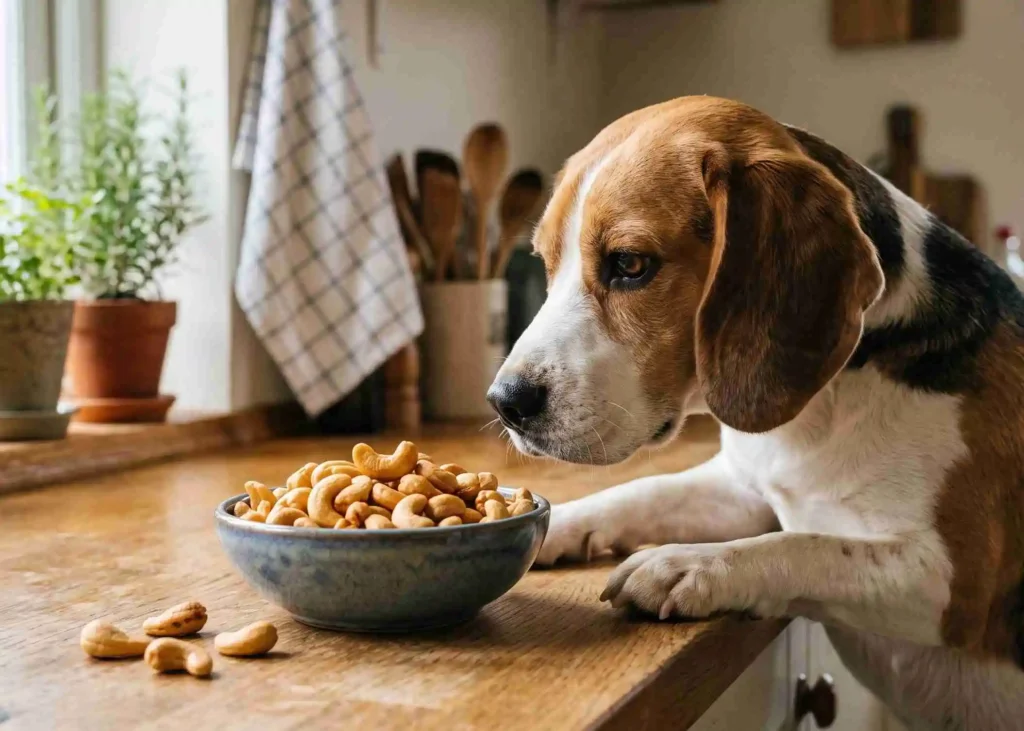
Table of Contents
Why Cashews Deserve a Second Thought
Cashews aren’t dangerous the way some human foods are. According to the American Kennel Club, they aren’t toxic to dogs the way macadamia nuts are. A stray nut off the floor isn’t a poison-control emergency. But “not toxic” doesn’t mean risk-free. This snack is high in fat and calories, and dogs process fat very differently than people do.
Feeding fatty snacks on a regular basis can overwork a dog’s pancreas. That’s the organ behind a painful condition called pancreatitis. Cashews can also pack on extra pounds surprisingly fast. A single ounce holds a hefty calorie count for a body that size. A small dog may only need a couple hundred calories a day. A small handful of cashews can eat up a big share of that in one go.
Dogs already managing food sensitivities need even more caution here. If your dog reacts to new proteins or fats, take a look at our guide to choosing the right food for allergies. It’s worth reading before adding any new snack to the rotation. Salted or seasoned cashews raise the stakes further. Excess sodium can lead to serious dehydration and, in rare cases, salt poisoning.
What Makes a Cashew Different From Other Nuts
Cashews aren’t technically nuts in the strict botanical sense. They’re actually seeds that grow from the bottom of a tropical fruit called the cashew apple. That quirk matters more than you’d think. In their truly raw state, cashew shells contain a natural oil from the same chemical family as poison ivy. That’s why every one you find in a store has already been steamed or roasted. This removes the shell and neutralizes that oil long before it reaches your pantry.
This puts cashews in a different category from foods that are genuinely toxic no matter how they’re prepared. Grapes, for example, can trigger sudden kidney failure regardless of serving size or preparation. Our breakdown of why dogs can’t safely eat grapes walks through that risk in more detail. Cashews fall into a gentler category, where danger scales with quantity and prep rather than the nut itself. A dog’s digestive system also handles fat differently than a person’s does. The pancreas releases enzymes to break fat down, and a sudden flood of rich food can overwhelm that process. That’s exactly why moderation matters so much here.
Nutritionally, cashews aren’t empty calories. They carry protein, fiber, and small amounts of magnesium, copper, and zinc, along with healthy-sounding fats. The catch is that dogs get all of this, and more, from a complete commercial diet already. Some breeds also carry a genetic predisposition toward pancreatitis, including Miniature Schnauzers and other small terrier types. Owners of those breeds have extra reason to be cautious with any fatty snack, cashews included.
Common Mistakes Owners Make With Cashews
Even careful owners slip up here. Watch for these patterns:
- Grabbing from a mixed nut bowl. Party mixes often hide macadamia nuts or seasoned almonds right alongside the cashews. The fix: keep a separate, clearly labeled stash of plain ones for your dog.
- Choosing salted or honey-roasted varieties. The seasoning coating is where most of the danger hides, not the cashew itself. The fix: set aside a small plain, unsalted batch specifically for your dog.
- Treating cashews like a low-calorie snack. An ounce carries a surprising calorie punch for a dog’s size. The fix: count them toward your dog’s daily treat allowance instead of giving extra on top.
- Assuming all nuts and snacks follow the same rules. Owners often lump cashews in with other crunchy snacks. The safety rules aren’t identical across the board. Our guide on dogs and popcorn covers a similar but slightly different set of precautions. The fix: look up each specific food before sharing it.
- Skipping the portion check for small breeds. A cashew is a non-issue for a Labrador. It can be a real choking risk for a Chihuahua. The fix: break cashews into smaller pieces for toy and small breeds.
- Not researching other “safe” human foods the same way. The same plain-and-unsalted rule applies to foods like cheese, too. The fix: check each new food individually instead of assuming one blanket rule covers everything.
- Leaving snack bowls within reach. A curious dog can clear a bowl of cashews in seconds. It only takes one moment with your back turned. The fix: store nuts on a high shelf or in a sealed container, not out on the coffee table.
Smarter Snack Swaps Worth Keeping on Hand
Part of the appeal of cashews comes down to their rich, satisfying fat content. It helps to have a version of that benefit built specifically for dogs. Zesty Paws Wild Alaskan Omega-3 Blend is a fish oil supplement made from pollock and salmon oil. It’s formulated to give dogs the skin-and-coat benefits of healthy fat, without the pancreatitis gamble that comes with fatty snacks. It suits owners who want to boost their dog’s diet with beneficial fats. The dose stays controlled and measured, not a guessing game like counting out nuts.
One limitation worth knowing: it’s a supplement, not a treat. It won’t satisfy a dog’s urge to crunch on something. Pair it with your dog’s regular meals for a safer way to cover that nutritional ground. Our dog supplements guide covers the basics of getting the dose right.
CHECK PRICE ON AMAZON: https://amzn.to/4akcAVn
Sometimes a dog sneaks a few too many cashews, salted or not. Mild digestive upset is the most common result. Purina Pro Plan FortiFlora is a daily probiotic supplement built to support gut health and ease diarrhea after a dietary slip-up. It’s designed for dogs recovering from an upset stomach or transitioning to something new. Plenty of owners keep a box on hand for exactly this kind of moment.
The main downside is that it’s not an instant fix. Noticeable improvement usually takes a day or two of consistent use. If loose stool sticks around longer than that, read through the signs in our guide to dog diarrhea. It explains when home care is enough, and when it’s time to call the vet.
CHECK PRICE ON AMAZON: https://amzn.to/3ZySvV4
Cashews are also a legitimate choking concern, especially for small breeds and enthusiastic eaters who don’t chew before swallowing. Having a Cat & Dog First Aid Kit on hand means you’re not digging through a junk drawer if a snack situation turns urgent. It comes stocked with the basics, including a thermometer and tick remover. It’s a first-response tool, though, not a substitute for an actual vet visit if things look serious. Keeping one in the car or by the door means you’re prepared no matter where snack time happens to strike.
CHECK PRICE ON AMAZON: https://amzn.to/3ZDeyKc
How to Safely Offer Your Dog a Cashew
- Check the label first. Confirm the cashews are plain and unsalted, with no seasoning, honey coating, or added oils.
- Portion by size. Offer one or two cashews for small dogs, two or three for medium dogs, and a small handful for large breeds.
- Break it up for small dogs. Chop or crush the cashew into smaller pieces if your dog is under 20 pounds. The same goes for dogs that tend to gulp food without chewing.
- Offer it on its own. Skip trail mix or party blends where other, riskier nuts might be hiding.
- Watch the first hour. Keep an eye out for vomiting, diarrhea, or unusual lethargy the first time your dog tries cashews.
- Space it out. Treat cashews as an occasional extra, not a weekly habit. Rotate in other healthy options, like the ones in our superfoods for dogs guide.
Troubleshooting: If This Happens, Here’s What to Do
- If your dog eats a small handful of plain cashews: Monitor them for the next few hours. Mild symptoms are unlikely, but it’s still worth keeping an eye out.
- If your dog gets into salted or flavored cashews: Offer fresh water right away. Watch for excessive thirst, vomiting, or lethargy over the next 24 hours.
- If your dog eats cashews from a mixed nut bowl: Contact your vet or an animal poison control line right away. Macadamia nuts may be mixed in.
- If you notice vomiting or diarrhea after cashews: Hold food for a few hours, then reintroduce a bland diet. Call your vet if symptoms last beyond a day.
- If your dog already has pancreatitis or is overweight: Skip cashews entirely and stick to vet-approved treats instead.
- If you notice itching, swelling, or hives after cashews: Stop feeding them immediately and call your vet. True nut allergies are rare in dogs, but not impossible.
When to See a Professional
Most cashew mishaps resolve on their own. But a few signs mean it’s time to call your vet without waiting. Watch for repeated vomiting, diarrhea that doesn’t ease up after a day, a hunched or “praying” posture, a swollen or tender belly, or noticeable lethargy. These can point to pancreatitis, which needs prompt veterinary attention.
If your dog got into a mixed nut bowl and you can’t rule out macadamia nuts, treat it as an emergency. Call your vet or a poison control hotline right away, rather than waiting to see if symptoms show up. If you still have the bag or container, bring it with you. Knowing exactly what else was in the mix helps your vet act faster.
What Veterinary Guidance Says
Veterinarians and organizations like the AKC consistently point to the same core message. Cashews aren’t on the list of foods considered truly dangerous for dogs. But their high fat content puts them firmly in occasional-treat territory, not an everyday snack. The AKC notes that even foods with no direct toxicity can still lead to weight gain and digestive upset when fed in excess. Dogs with a history of pancreatitis are especially prone to repeat episodes triggered by fatty foods.
The AVMA offers similar advice: plenty of foods safe for humans still need extra caution before they end up in a dog’s bowl. This guidance is general information, not a substitute for a one-on-one conversation with your own veterinarian. That’s especially true if your dog has an existing health condition.
Frequently Asked Questions
Can dogs eat cashews safely? Yes, in small amounts. Plain and unsalted, they’re generally safe as an occasional treat. The high fat content just means moderation matters more than with lower-fat snacks.
How many cashews can a dog eat? As a general guide: 1-2 for small dogs, 2-3 for medium dogs, and a small handful for large breeds. Treat it as an occasional serving, not a regular one.
Are cashews toxic to dogs like macadamia nuts? No. They aren’t toxic the way macadamia nuts are. The main risks come from fat content, added salt, and choking hazard, not poisoning.
Can puppies eat cashews? It’s best to wait. Puppies have more sensitive digestive systems, so introducing a rich, fatty snack this early is riskier than it is for adult dogs.
What happens if my dog eats too many cashews? Expect possible vomiting, diarrhea, or stomach discomfort. Large amounts or frequent servings raise the risk of pancreatitis, which needs veterinary attention.
Can dogs eat cashew butter? Plain cashew butter can be safe in small amounts if it has no added sugar, salt, or xylitol. Check the label closely, since many brands add extras.
Are salted cashews dangerous for dogs? Yes, more than plain ones. Excess sodium can cause dehydration and excessive thirst, and in severe cases, sodium poisoning. Always choose unsalted varieties.
Can dogs eat raw cashews? Store-bought “raw” cashews have already been processed to remove a toxic shell oil. They’re safe in the same small amounts as roasted ones.
Is it okay if my dog has cashews every day? No. Daily fatty snacks raise the risk of weight gain and pancreatitis over time. Save them for occasional treats rather than a daily habit.
Can dogs with pancreatitis eat cashews? No. Dogs with a history of pancreatitis should avoid them and other high-fat foods entirely, since fat is a common trigger for flare-ups.
The Bottom Line on Cashews and Your Dog
Sharing a snack with your dog doesn’t have to mean choosing between a happy pup and a safe one. Plain, unsalted cashews in small amounts are a reasonable occasional treat for most healthy dogs. Just watch the portion size, and skip anything salted, seasoned, or mixed with other nuts. The bigger risks, like pancreatitis, weight gain, and choking, all come down to quantity and preparation rather than the nut itself. If your dog has an existing health condition or you’re ever unsure, a quick check with your vet always beats guessing. Next time those hopeful eyes find you mid-snack, you’ll know exactly how many cashews are safe to share.