You refill the water bowl. Then you refill it again. By the end of the day, your dog has downed what feels like a bathtub’s worth of water — and you’re starting to wonder if something’s wrong. If your dog is drinking a lot of water, you’re right to pay attention. Changes in water intake are one of the clearest signals a dog’s body sends when something is off.
Quick Answer: Why Is My Dog Drinking a Lot of Water?
A dog drinking a lot of water — a condition veterinarians call polydipsia — can stem from causes ranging from hot weather and high activity to serious medical conditions like diabetes, kidney disease, or Cushing’s syndrome. The key is understanding what “a lot” actually means and pairing that with other symptoms. Most of the time there’s a simple explanation, but sudden, dramatic increases in thirst always deserve a vet call.
TL;DR: Increased thirst is normal after exercise or in heat, but persistent, unexplained drinking — especially alongside other symptoms — is a red flag. Track how much your dog drinks daily and call your vet if it changes sharply without an obvious reason.
Key Takeaways
- Normal water intake for dogs is roughly 1 ounce per pound of body weight per day — so a 40-lb dog should drink about 40 oz.
- Sudden, dramatic increases in thirst (polydipsia) paired with frequent urination (polyuria) are the most common signs of an underlying health issue.
- Common medical causes include diabetes mellitus, kidney disease, Cushing’s syndrome, urinary tract infections, and liver disease.
- Many non-medical factors — diet changes, heat, exercise, medications — can temporarily spike water consumption.
- Early diagnosis dramatically improves outcomes for most conditions that cause excessive thirst.
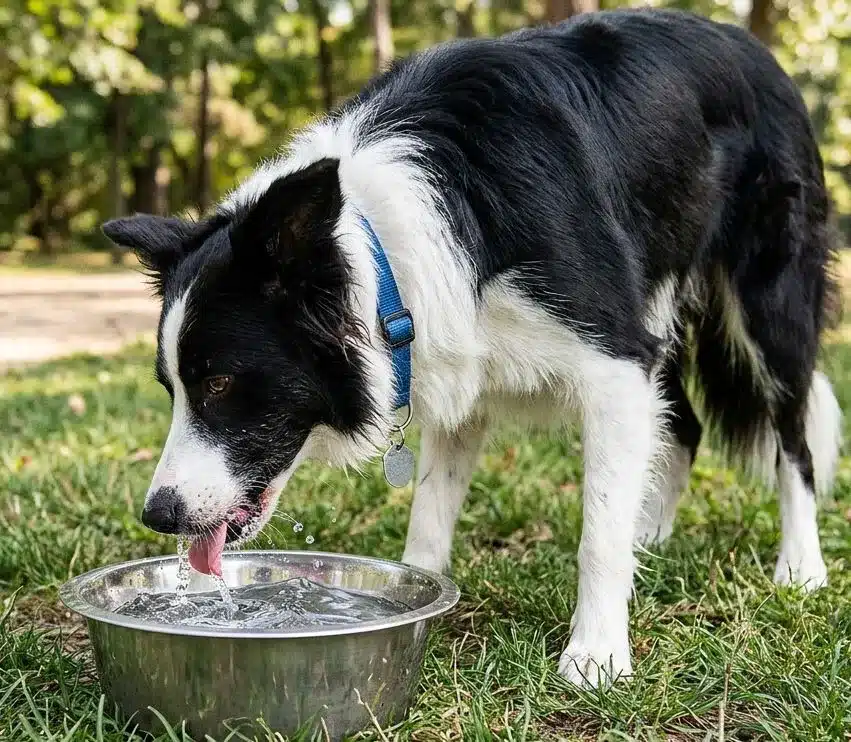
Table of Contents
Why It Matters: More Than Just a Full Bowl
It’s easy to dismiss a thirsty dog, especially on a hot day. But persistent excessive drinking is rarely just a quirk. Polydipsia is often the first visible symptom of conditions that, left undiagnosed, can cause serious organ damage.
Kidney disease, for example, often goes undetected until 70% of kidney function is already lost. Diabetes and Cushing’s syndrome are progressive conditions that worsen without treatment. Catching them early — when your dog first starts draining the bowl — can be the difference between manageable and critical.
On the flip side, dehydration is a real risk too. If your dog is urinating excessively and can’t keep up with fluid loss, electrolyte imbalances can set in quickly. Dogs with unexplained shaking alongside excess thirst need prompt veterinary attention, as these two symptoms together can indicate a metabolic crisis.
This isn’t meant to alarm you — most cases of a dog drinking a lot of water have a benign explanation. But it’s one symptom you should never brush off for more than a day or two.
Understanding Normal vs. Excessive Thirst
What’s the Baseline?
According to the American Kennel Club (AKC), most dogs need about one ounce of water per pound of body weight each day under normal conditions. That means:
- A 20-lb dog: ~20 oz (~2.5 cups)
- A 50-lb dog: ~50 oz (~6 cups)
- A 90-lb dog: ~90 oz (~11 cups)
These numbers shift with heat, activity level, and diet — particularly if your dog eats dry kibble versus wet food, since wet food provides significant moisture.
How to Measure Your Dog’s Intake
The most accurate method is simple: use a measured water container. Fill it to a known amount in the morning, let your dog drink freely, then measure what’s left at the end of the day. Do this for two or three days to get a reliable baseline. If your dog is consistently drinking more than 100 ml per kg of body weight daily, that’s a flag worth raising with your vet.
The 9 Most Common Causes
1. Hot Weather and Exercise
The most obvious and innocent reason. Dogs cool themselves primarily through panting, which expels water vapor rapidly. A long walk in July can double or triple your dog’s water needs for that day. This kind of increased thirst resolves quickly with rest and shade.
If your dog is panting excessively and draining the bowl after outdoor time, you might also want to look into a cooling mat for dogs — reducing your dog’s core temperature reduces panting, which reduces fluid loss.
2. Diet Changes
Switching from wet food to dry kibble is one of the most common reasons owners notice their dog drinking a lot of water. Dry kibble contains only 6–10% moisture; wet food can be up to 80% moisture. If your dog’s bowl suddenly seems to empty faster after a food change, diet is almost certainly the culprit.
High-sodium treats or table scraps can also trigger temporary spikes in thirst — just like salty food makes you reach for a glass of water.
3. Medications
Several commonly prescribed medications dramatically increase thirst as a side effect. These include:
- Prednisone and other corticosteroids — among the most frequent culprits
- Diuretics (furosemide, for example)
- Phenobarbital (anti-seizure)
- Some antiparasitic medications
If your dog recently started a new prescription and is now drinking more, tell your vet. Do not stop any medication without guidance — but the side effect is worth flagging.
4. Urinary Tract Infection (UTI)
UTIs cause irritation and urgency in the bladder, which can trigger a reflexive increase in water intake. Female dogs are more susceptible to UTIs than males. Other signs include straining to urinate, frequent small urinations, blood in the urine, or licking the genital area. UTIs are highly treatable with antibiotics, but they need to be diagnosed with a urine culture first.
5. Diabetes Mellitus
Canine diabetes is one of the most well-known causes of polydipsia. When blood glucose is elevated, the kidneys work overtime trying to filter the excess sugar — pulling water with it into the urine. The result is frequent urination and insatiable thirst. Other signs include weight loss despite a good appetite, cloudy eyes (especially in certain breeds), and lethargy.
According to the American Veterinary Medical Association (AVMA), diabetes in dogs is manageable with insulin therapy and dietary changes, but early diagnosis is critical for long-term quality of life.
6. Kidney Disease (Chronic Kidney Disease / CKD)
Healthy kidneys concentrate urine efficiently. When kidney function declines, the kidneys lose this ability and produce large volumes of dilute urine — which forces the dog to drink more just to stay hydrated. This vicious cycle is a hallmark of CKD. Other signs include decreased appetite, weight loss, vomiting, and bad breath with a chemical or ammonia-like odor.
Owners managing a dog with kidney disease often notice that their pet also experiences vomiting and yellow bile episodes, particularly in the morning when the stomach is empty — a common co-occurring symptom worth monitoring.
7. Cushing’s Syndrome (Hyperadrenocorticism)
Cushing’s syndrome results from the body producing too much cortisol, usually due to a tumor on the pituitary or adrenal gland. It is more common in middle-aged to older dogs and in certain breeds like Beagles, Poodles, Dachshunds, and Boxers.
The classic symptom quartet is: excessive thirst, excessive urination, increased appetite, and a pot-bellied appearance. Hair loss, skin thinning, and muscle weakness are also common. Cushing’s is manageable with medication, but the diagnosis process involves specific blood tests and imaging.
8. Liver Disease
The liver plays a central role in filtering blood and regulating numerous metabolic processes. When liver function is compromised, it can disrupt fluid balance and cause polydipsia. Signs of liver disease often include yellowing of the skin or whites of the eyes (jaundice), abdominal swelling, dark urine, and behavioral changes like confusion or circling.
9. Psychogenic Polydipsia
Less common but real — some dogs, particularly those with anxiety or obsessive-compulsive tendencies, drink excessively for psychological rather than physical reasons. Bored dogs left alone for long periods sometimes develop compulsive water-drinking habits. This is a diagnosis of exclusion, meaning your vet will rule out all physical causes first. Addressing dog anxiety through enrichment, training, and behavioral support is the primary treatment path.
Common Mistakes Dog Owners Make (And How to Fix Them)
- Waiting weeks before acting. If your dog’s thirst has increased noticeably for more than 48–72 hours without an obvious cause like heat or exercise, call your vet. The fix: Set a mental rule — unexplained changes lasting more than two days get a vet call.
- Restricting water access. Some owners, worried about their dog urinating indoors more frequently, limit water access. This is dangerous and can cause rapid dehydration. The fix: Never restrict water unless a vet specifically instructs you to. Manage indoor accidents with puppy pads while you seek diagnosis.
- Assuming it’s “just the heat.” Seasonality tricks many owners into missing medical causes that happen to emerge in summer. The fix: Track daily intake with a measured bowl for a few days. If it’s consistently high — not just after walks — that’s data your vet needs.
- Not noting other symptoms. Polydipsia rarely travels alone. Owners who mention only the thirst may delay diagnosis. The fix: Write down everything — appetite changes, urination frequency, stool consistency, energy levels, weight changes. Bring that list to the appointment.
- Switching foods without accounting for moisture difference. Owners sometimes panic when a new kibble triggers more drinking, calling the vet unnecessarily — or worse, missing a real issue by attributing everything to the food change. The fix: Understand the moisture content difference between food types and factor it in before drawing conclusions.
- Ignoring nighttime drinking. A dog getting up to drink water at 2 am is worth noting — it’s not normal behavior and often signals an underlying issue. The fix: If your dog is waking at night to drink, bring it up at your next vet visit.
- Skipping the urine sample. A fresh urine sample at the vet appointment is one of the most valuable diagnostic tools for polydipsia cases. Many owners don’t think to bring one. The fix: Call your vet before the appointment and ask if you should collect a first-morning urine sample in a clean container.
Monitoring Tools That Can Help
When your dog is drinking a lot of water, one of the most useful things you can do at home is track their temperature alongside their fluid intake. A fever — even a mild one — dramatically increases thirst and can point to infection.
The iProven DTK-117Y Dog & Cat Thermometer is a reliable, vet-quality digital thermometer designed specifically for pets. It takes a rectal reading in just 20 seconds with a flexible, comfortable tip that makes the process far less stressful for your dog. Whether you’re checking for a post-illness rebound or simply ruling out fever as a cause of excess drinking, having an accurate thermometer at home means you can give your vet a real data point — not just a guess.
One limitation: like all digital thermometers, it requires a rectal reading, which some dogs (and owners) find stressful without a second person to help. Worth practicing with treats and calm handling.
CHECK PRICE ON AMAZON: https://amzn.to/3ZCZVqo
Step-by-Step: How to Take Your Dog’s Temperature at Home
- Gather the thermometer, petroleum jelly or water-based lubricant, and treats.
- Have a second person gently hold your dog in a standing position.
- Apply a small amount of lubricant to the thermometer tip.
- Gently insert the thermometer about one inch into the rectum.
- Wait for the beep — typically 20 seconds.
- Normal canine temperature is 100.5°F to 102.5°F (38°C to 39.2°C).
- Anything above 103°F (39.4°C) warrants a vet call the same day.
- Record the reading and the time so you can share it with your vet.
What to Do When My Dog Is Drinking a Lot of Water: A Step-by-Step Guide
Step 1: Measure, don’t guess. Use a measuring cup or marked container to fill the bowl. Record the volume each morning and evening for 3 days. This gives your vet a concrete number rather than “he seems to be drinking more.”
Step 2: Rule out the obvious. Is it hot? Did your dog just have a long play session? Did you switch foods recently? Did they start a new medication? If yes to any of these, monitor for 24–48 hours. If thirst normalizes, you likely have your answer.
Step 3: Look for companion symptoms. Note any changes in urination frequency, urine color, appetite, weight, energy level, or coat condition. These clues are invaluable for diagnosis.
Step 4: Check temperature. A reading above 103°F suggests infection or inflammation — both of which spike thirst. Report this to your vet immediately.
Step 5: Call your vet. If increased drinking persists beyond 48–72 hours without explanation, book an appointment. Tell them the volume consumed per day, the duration of the change, and any other symptoms you’ve noticed.
Step 6: Prepare for the appointment. Bring a fresh urine sample (first of the morning is best), your written symptom log, and a list of all medications and supplements your dog currently takes. This gives your vet the best possible starting point for diagnosis.
Step 7: Follow through on diagnostics. Your vet will likely recommend blood work (complete blood count, chemistry panel) and a urinalysis. Depending on findings, they may add imaging or specific hormone panels. Don’t skip these — they’re the only reliable way to diagnose most causes of polydipsia.
Overheating and Thirst: A Special Note for Hot Months
Summer is the season when dog owners most commonly notice increased water consumption — and understandably brush it off. But heat-related thirst that doesn’t resolve with rest deserves attention. Dogs with flat faces (Bulldogs, Pugs, French Bulldogs) and double-coated breeds (Huskies, Samoyeds) are especially vulnerable to heat stress, which can tip from uncomfortable to dangerous quickly.
If your dog is panting heavily even after resting in a cool room, drinking relentlessly, and seeming sluggish, heat exhaustion may already be setting in. The Green Pet Shop Cool Pet Pad — a pressure-activated, self-cooling mat that requires no water or refrigeration — is a practical tool for reducing your dog’s core temperature during hot weather. Getting that temperature down reduces panting, which reduces fluid loss, which reduces the excessive thirst cycle.
The Green Pet Shop Cool Pet Pad works through a non-toxic pressure-activated gel that absorbs body heat on contact. No charging, no water, no mess. It’s ideal for dogs between 46–80 lbs and is available in multiple sizes. One limitation: the gel can eventually lose its effectiveness in very high ambient temperatures (above 85°F indoors), so it works best with some climate control.
CHECK PRICE ON AMAZON: https://amzn.to/3OjsqH5
Troubleshooting: If/Then Guide
- If your dog is drinking more AND losing weight despite eating well → Diabetes is the top suspect. Book a vet appointment this week — don’t wait.
- If your dog is drinking more AND has a pot belly, hair loss, or increased appetite → Consider Cushing’s syndrome. Request a low-dose dexamethasone suppression test.
- If your dog is drinking more AND vomiting or has bad breath → Kidney or liver disease are on the table. Blood chemistry is urgently needed.
- If your dog is drinking more AND urinating with straining or blood → UTI is likely. A urine culture will confirm it. This is usually a quick fix with antibiotics.
- If your dog is drinking more AND recently started a new medication → Call the prescribing vet to ask if polydipsia is a known side effect.
- If your dog is drinking more AND panting at night without obvious heat → This symptom combination can indicate Cushing’s, pain, or cardiovascular issues. Get a vet evaluation promptly.
- If your dog is drinking more AND shows no other symptoms → Track intake carefully for 72 hours. If it stays elevated, get a full blood panel. Subclinical conditions often present this way early on.
When to See a Professional: Red Flags
Call your vet the same day if your dog is drinking a lot of water AND:
- Has stopped eating entirely
- Is vomiting repeatedly (especially alongside blood in stool)
- Seems disoriented, confused, or unsteady
- Has a temperature above 103°F (39.4°C)
- Is urinating blood
- Is showing signs of rapid weight loss over days, not weeks
- Is drinking compulsively and seems unable to stop even when clearly not thirsty
These signs together suggest an acute crisis rather than a chronic condition — and that changes the urgency dramatically. When in doubt, call. A brief phone consult with your vet is always better than waiting.
It’s also worth noting that diagnostic testing, hospitalization, and ongoing medication for conditions like diabetes or Cushing’s can be expensive. Exploring pet insurance options before a diagnosis — or shortly after — can significantly reduce financial stress and improve your ability to pursue the best treatment options.
Expert Opinion
Veterinarians consistently emphasize that polydipsia should be treated as a symptom — not a condition in itself. “Excessive thirst is almost always a secondary sign of something going on systemically,” is a common clinical sentiment. The AVMA advises that any dog drinking more than 100 ml per kilogram of body weight per day on a consistent basis warrants blood and urine testing to evaluate organ function and glucose regulation.
The diagnostic workup for a dog drinking a lot of water is typically straightforward and relatively affordable — a complete blood count, a chemistry panel, and a urinalysis can rule in or out the majority of causes in a single appointment. The earlier these tests are run, the more treatment options are available and the better the prognosis for most conditions. Veterinary consensus is clear: don’t wait it out.
FAQs
How much water should a dog drink per day? The general guideline is approximately one ounce of water per pound of body weight daily. A 30-lb dog should drink around 30 oz. This varies with diet, activity level, and weather. Wet food reduces water needs; dry kibble increases them.
Is my dog drinking a lot of water because of food? Yes, diet is a common reason. Switching from wet to dry food significantly increases thirst because dry kibble contains very little moisture. High-sodium treats can also spike short-term water consumption.
What medical conditions cause excessive thirst in dogs? The most common include diabetes mellitus, chronic kidney disease, Cushing’s syndrome, urinary tract infections, liver disease, and hypercalcemia (elevated blood calcium). Several medications also cause polydipsia as a side effect.
How do I know if my dog is drinking too much water? Measure daily intake using a marked container. If your dog consistently exceeds 100 ml per kg of body weight per day — roughly 1.5 oz per pound — that’s medically significant. Combine this with any other new symptoms and call your vet.
Can stress cause a dog to drink more water? Yes. Psychological polydipsia is a real but less common condition. Anxious dogs, bored dogs, or those with compulsive tendencies may drink excessively as a coping behavior. This is a diagnosis of exclusion — physical causes must be ruled out first.
Should I limit my dog’s water if they’re drinking too much? No — never restrict water access unless a vet specifically instructs you to. Limiting water when your dog is already dealing with polydipsia can cause rapid dehydration and worsen the underlying condition.
My dog is drinking a lot of water and urinating frequently — is this serious? The combination of polydipsia (excessive thirst) and polyuria (excessive urination) is the classic presentation of several serious conditions including diabetes and kidney disease. This pairing should always prompt a vet visit within 24–48 hours.
Can hot weather alone cause excessive drinking? Absolutely. Dogs cool themselves through panting, which expels a lot of moisture. Hot weather and vigorous exercise can dramatically increase water intake. However, if thirst remains elevated after your dog has cooled down and rested, look for another explanation.
Will a dog with diabetes drink a lot of water? Yes — it’s one of the hallmark symptoms. Unregulated blood glucose causes the kidneys to produce large amounts of dilute urine, creating an urgent need to replenish fluids. Increased appetite, weight loss, and lethargy often accompany it.
How long should I wait before calling the vet about increased drinking? If there’s no obvious explanation (heat, exercise, diet change, new medication) and the increase is significant, 48–72 hours is the maximum you should wait before calling. For dramatic changes — drinking two or three times the normal amount — call the same day.
Conclusion
A dog drinking a lot of water is one of those symptoms that sits right at the intersection of “probably nothing” and “possibly something important” — which is exactly why it deserves your attention. In most cases, the answer is benign: heat, exercise, a food change, or a new medication. But the conditions that cause persistent polydipsia — diabetes, kidney disease, Cushing’s syndrome — are far more treatable when caught early.
Your most powerful tool right now is a measuring cup and a notepad. Track daily intake for a few days, note any other changes in your dog’s behavior or body, and don’t hesitate to call your vet if the numbers stay high or other symptoms appear. The diagnostic tests that investigate excessive thirst are quick, affordable, and often lifesaving. Your dog can’t tell you something feels wrong — but a thirsty dog is often doing exactly that. Listen to the signal.