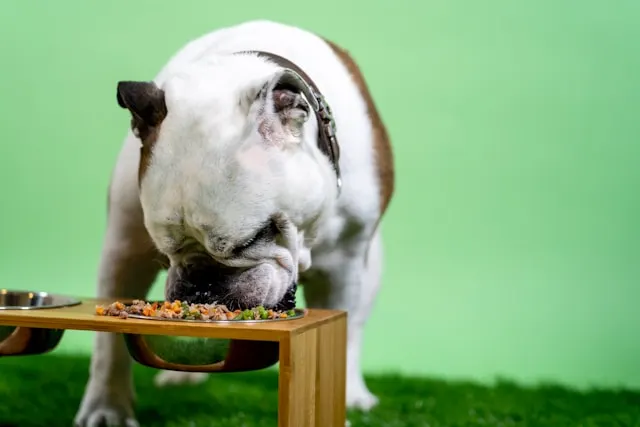
You fill the bowl. Your dog sniffs it, looks up at you, and walks away. Twenty minutes later the kibble is still sitting there, going stale. Finding the best dog food for picky eaters feels impossible when every bag you buy gets the same cold shoulder. The good news: most fussy dogs aren’t broken — they’re responding to something you can actually fix.
Quick Answer
The best dog food for picky eaters combines strong aroma, higher moisture, and a single novel protein source, served on a consistent schedule. Warm, wet, or freshly opened food smells stronger and triggers appetite far better than dry kibble left sitting out. This approach helps healthy adult dogs who refuse meals out of habit, boredom, or texture preference rather than illness.
TL;DR: Picky eating is usually a habit problem, not a food problem. Fix the feeding routine first — scheduled meals, no free-feeding, minimal table scraps — then upgrade to a high-moisture, high-aroma food and rule out dental or digestive causes with your vet.
Key Takeaways
- Rule out medical causes before assuming your dog is simply fussy — sudden pickiness deserves a vet visit.
- Feed twice daily on a fixed schedule and remove uneaten food after 20 minutes.
- Warming food to body temperature dramatically boosts aroma and acceptance.
- Toppers and treats given during refusals actively train the pickiness you’re trying to fix.
- Slow transitions over 7–10 days prevent the stomach upset that creates new food aversions.
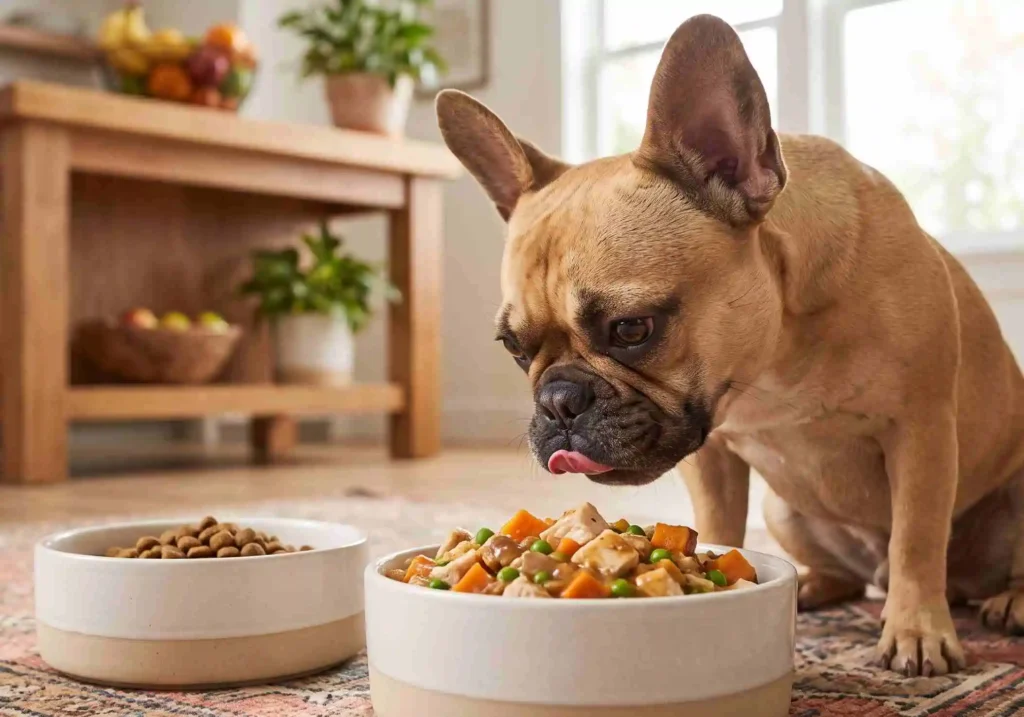
Table of Contents
Why Picky Eating Matters More Than You Think
A skipped meal here and there won’t hurt a healthy adult dog. Consistent under-eating is a different story.
Dogs that chronically eat too little lose muscle mass before they lose visible weight. Their coats dull. Energy drops. Immune function suffers over months, not days. Puppies and seniors face steeper risks because they have smaller reserves to draw from.
There’s also the human cost. Owners of fussy dogs often spiral into a cycle of buying expensive foods, adding richer toppers, and hand-feeding. That escalation teaches the dog that refusing food produces something better. The pickiness deepens.
The other risk is masking. Selective appetite is one of the earliest signs of dental pain, nausea, kidney disease, and gastrointestinal issues. Writing it off as personality can delay a diagnosis by weeks.
What’s Actually Happening: The Anatomy of Appetite
Dogs experience food very differently than we do. They have roughly 1,700 taste buds compared to our 9,000. Taste barely drives their decisions.
Smell does. A dog’s olfactory system is thousands of times more sensitive than ours. When your dog approaches a bowl, aroma decides almost everything before the first bite.
This explains why the same food gets rejected on day four but eaten eagerly on day one. Kibble loses volatile aroma compounds as the bag sits open and oxidizes. To your nose, nothing changed. To your dog, the food went flat.
Temperature matters for the same reason. Cold food from the fridge releases far fewer scent molecules than food at body temperature. Moisture amplifies this further, which is why wet food and rehydrated kibble consistently outperform dry.
Texture is the third factor. Some dogs develop strong preferences for pâté over chunks, or crunchy over soft. These preferences often trace back to puppyhood exposure — dogs fed a single texture for months become less flexible as adults.
Finally, there’s learning. Dogs are excellent at pattern recognition. If refusing dinner has ever produced chicken, cheese, or a hand-fed meal, your dog has learned a highly effective strategy.
Common Mistakes (and Fixes)
Leaving food down all day. Free-feeding removes hunger as a motivator entirely. Your dog grazes, never gets properly hungry, and never sees the bowl as urgent.
The fix: Put food down for 20 minutes, then remove it. Offer nothing until the next scheduled meal.
Switching foods every time your dog hesitates. Constant switching teaches your dog that waiting produces novelty, and it wrecks digestion.
The fix: Commit to one food for at least three weeks before judging it.
Adding toppers during a refusal. Sprinkling cheese on rejected kibble is the single fastest way to create a permanent picky eater.
The fix: If you use toppers, mix them in before the bowl goes down — never as a response to refusal.
Too many treats and table scraps. Treats should stay under 10% of daily calories. Most fussy dogs are running closer to 30%.
The fix: Track everything your dog eats for three days. The number usually surprises people.
Transitioning food too fast. An abrupt switch causes nausea, and dogs associate nausea with whatever they ate last. You’ve just created an aversion to the new food.
The fix: Blend old and new over 7–10 days, increasing the new food gradually.
Feeding in a stressful spot. A bowl next to a noisy washing machine or a competitive housemate suppresses appetite.
The fix: Feed in a quiet, low-traffic corner, and separate multi-dog households at mealtime.
Ignoring the mouth. Fractured teeth and gum disease make chewing genuinely painful, and hard kibble becomes the enemy.
The fix: Lift the lip and look. Red gums, tartar buildup, or bad breath warrant a dental exam.
Choosing the Right Food for a Fussy Dog
Once the routine is fixed, the food itself matters. Here’s what to prioritize.
Moisture content. Wet or fresh food typically runs 70–75% moisture versus 10% for kibble. That water carries aroma directly to your dog’s nose. If budget rules out full wet feeding, using wet food as a mix-in works nearly as well.
Single, named protein. Foods listing “chicken” beat foods listing “meat by-product meal” for both palatability and allergy tracking. A novel protein like duck, rabbit, or fish often reignites interest in dogs bored with chicken and beef.
Fat content. Fat carries flavor. Slightly higher-fat formulas are usually more appealing, though dogs prone to pancreatitis need vet guidance here.
Smaller bag sizes. Buying a 40-pound bag saves money on paper but guarantees stale food by week five. Smaller bags, sealed tight, stay aromatic.
AAFCO statement. Check the label for a nutritional adequacy statement. According to the American Kennel Club, this confirms the food is complete and balanced for your dog’s life stage.
Dogs with genuine sensitivities are a separate category. If refusal comes with itching, ear infections, or loose stools, a limited-ingredient approach designed for dogs with food allergies may be the real answer rather than a palatability problem.
When the Bowl Itself Is the Problem
Here’s an easy thing to miss: some dogs eat poorly because eating is uncomfortable or unrewarding, not because the food tastes wrong.
Dogs that inhale their food, gag, and then walk away have often learned to associate mealtime with discomfort. The opposite type — dogs who lose interest halfway through — frequently do better when eating becomes a small mental challenge instead of a chore.
A slow feeder bowl addresses both. The raised ridges force smaller mouthfuls, which reduces gulping and gagging, and the mild puzzle element keeps disengaged dogs working through a full portion.
The Outward Hound Fun Feeder Slo Bowl is the version most owners land on. Its 4-cup capacity suits medium to large dogs, the non-slip base stops the bowl sliding across tile while your dog noses around it, and the maze pattern is challenging without being frustrating. Owners commonly report meals stretching from thirty seconds to several minutes, which alone improves digestion. The honest limitation: the deeper grooves need a brush to clean properly, and short-muzzled breeds like Pugs and French Bulldogs sometimes struggle with the tighter channels.
CHECK PRICE ON AMAZON: https://amzn.to/40buzas
For smaller dogs or those who need a gentler design, the JASGOOD Slow Feeder Dog Bowl uses a wider, shallower maze that’s easier to navigate. It’s aimed at preventing gulping, bloat risk, and choking, and the simpler pattern suits dogs who give up on complex mazes. It’s also noticeably easier to wash. The trade-off is that it slows fast eaters less dramatically than tighter designs — a determined gulper will still finish quickly.
CHECK PRICE ON AMAZON: https://amzn.to/4bSghCM
If you want a deeper breakdown of designs and sizing, our full guide to the slow feeder dog bowl walks through the options by breed and eating style.
When Pickiness Is Really a Gut Problem
Some dogs refuse food because their digestion is unsettled. Soft stools, occasional vomiting, gurgling stomachs, and gas often accompany the pickiness — and dogs quickly learn to avoid food that makes them feel unwell afterward.
Gut microbiome balance plays a real role in appetite regulation. Dogs recovering from antibiotics, dietary changes, or stress commonly show reduced interest in food while their digestive system resettles.
Purina Pro Plan Veterinary Supplements FortiFlora is the probiotic most commonly reached for in this situation. It’s a single-strain probiotic in palatable powder sachets that sprinkle straight over food. Two things make it useful for picky dogs specifically: it supports normal stool quality and gut health, and the powder itself is highly palatable — many owners find it doubles as an appetite trigger. It suits dogs coming off antibiotics, dogs with intermittent loose stools, or dogs in stressful transitions. The limitation: it’s noticeably more expensive per day than multi-strain alternatives, and it won’t fix pickiness that stems from behavior rather than digestion.
CHECK PRICE ON AMAZON: https://amzn.to/3ZySvV4
Persistent digestive symptoms need investigation rather than supplementation. If your dog is throwing up yellow bile or having recurring episodes of diarrhea, that’s a vet conversation, not a food swap.
Step-by-Step: Reset Your Picky Eater in 14 Days
- Book a vet check first. Rule out dental disease, nausea, and underlying illness before changing anything. This step is non-negotiable if pickiness appeared suddenly.
- Calculate the correct portion. Use the feeding guide on the bag as a starting point, adjusted for your dog’s activity level. Many “picky” dogs are simply being overfed.
- Cut treats to under 10% of daily calories. Count everything — training treats, chews, scraps, that bit of toast.
- Set two fixed mealtimes. Same times daily. Consistency builds a predictable hunger rhythm within about four days.
- Apply the 20-minute rule. Bowl down, timer on. After 20 minutes, pick it up regardless of how much is left. Offer nothing until the next meal.
- Boost the aroma. Add two tablespoons of warm water to kibble, or microwave wet food for five seconds. Body temperature is the target — never hot.
- Feed in a calm location. Quiet corner, no foot traffic, other dogs separated.
- Hold your nerve for three days. A healthy adult dog will not starve itself. Most fussy dogs capitulate by meal four or five. Do not cave with toppers.
- Introduce the new food gradually. Days 1–3: 25% new. Days 4–6: 50%. Days 7–9: 75%. Day 10: 100%.
- Track intake and stool quality. A simple note on your phone reveals patterns you’ll otherwise miss.
- Add mealtime enrichment. Feed part of the portion through a slow feeder or interactive puzzle toy to make eating engaging.
- Reassess at two weeks. Improved intake means stay the course. No change means return to your vet.
Troubleshooting: If This, Then That
- If your dog eats treats eagerly but refuses meals → the issue is behavioral. Cut treats hard and enforce the 20-minute rule.
- If your dog eats only when hand-fed → put the same food in the bowl and sit nearby without touching it. Fade your involvement over a week.
- If your dog eats for a few days then quits → the food is likely going stale. Buy smaller bags and store them sealed in the original packaging.
- If your dog picks around the kibble to eat only the topper → mix the topper thoroughly rather than layering it on top.
- If your dog refuses food but drinks normally and seems bright → give it 48 hours with the routine fixes before escalating.
- If your dog refuses food and seems lethargic or is shaking → call your vet the same day.
- If your dog drops food while chewing or chews on one side → suspect dental pain and book an exam.
- If your senior dog has gradually lost interest over months → age-related changes in smell and taste are common; a food formulated for senior dogs with stronger aroma often helps.
When to See a Professional
Some situations need a veterinarian, not a new bag of food.
Call your vet if your dog refuses all food for more than 24 hours, or refuses food for 12 hours alongside vomiting, diarrhea, or lethargy. Puppies under six months need faster attention — 12 hours without eating warrants a call, because their blood sugar drops quickly.
Other red flags: noticeable weight loss, increased drinking or urination, bad breath with drooling, difficulty swallowing, pawing at the mouth, or a previously enthusiastic eater becoming selective within days.
Sudden changes matter far more than lifelong fussiness. A dog who has always been particular is a different case than one who stopped eating last Tuesday.
Expert Perspective
Veterinarians consistently emphasize that appetite is a vital sign, not a personality quirk. The American Veterinary Medical Association advises owners to evaluate pet food based on complete and balanced nutrition for the animal’s life stage, and to involve a veterinarian in dietary decisions — particularly when appetite changes are involved. That guidance exists because selective eating so often turns out to be an early symptom rather than a preference.
The behavioral side is equally well established. Guidance from the American Kennel Club stresses structured feeding schedules and portion control over constant food switching. Dogs are quick learners, and the pattern of refusal followed by an upgraded meal is reinforced in just a handful of repetitions. Most cases resolve when owners restore structure and stop negotiating at the bowl. The information here is general education and does not replace an examination and diagnosis from your own veterinarian, who knows your dog’s history.
Frequently Asked Questions
How long can a dog safely go without eating?
A healthy adult dog can typically manage 24–48 hours without food if drinking normally. Puppies, seniors, and dogs with health conditions need veterinary attention much sooner — within about 12 hours.
Will my picky dog eventually eat if I just wait?
Almost always, yes. Healthy adult dogs don’t starve themselves. Most fussy eaters accept their food by the fourth or fifth missed meal, provided no alternatives appear in between.
Is wet food better than dry for picky eaters?
Generally yes. Wet food’s high moisture content releases far more aroma, which is what actually drives a dog’s interest. Mixing wet into dry captures much of the benefit at lower cost.
Should I add human food to make meals more appealing?
It’s risky. Table scraps unbalance the diet, add calories, and teach your dog to hold out for better options. If you want a topper, use a small amount of the same protein, mixed in before serving.
Can I mix two dog foods together?
Yes, if both are complete and balanced for your dog’s life stage. Introduce the combination gradually and watch stool quality for the first week.
Does warming dog food really help?
It does. Warming to roughly body temperature releases volatile aroma compounds that cold food holds onto. Five seconds in the microwave or a splash of warm water is enough — always test the temperature first.
Why did my dog suddenly become picky?
Sudden changes usually have a cause: dental pain, nausea, medication side effects, stress, or a stale bag of food. Abrupt pickiness in a previously good eater deserves a vet check.
How many treats are too many?
Treats should stay under 10% of daily calories. For a 30-pound dog, that’s roughly 70–90 calories — far less than most owners assume.
Do slow feeder bowls help picky eaters?
They can. Slowing the meal reduces gulping and gagging in fast eaters, and the mild puzzle element engages dogs who lose interest partway through a portion.
Is picky eating more common in small breeds?
It appears more often in small breeds, largely because owners notice smaller portion changes and are quicker to offer alternatives. The underlying behavior pattern is the same across sizes.
Bringing It All Together
Finding the best dog food for picky eaters is less about the perfect brand and more about the system around the bowl. Rule out medical causes first, because a sore tooth or an unsettled stomach explains far more refusals than taste ever will. Then rebuild the routine: fixed mealtimes, the 20-minute rule, treats under control, and no negotiating when your dog looks up at you hopefully. Once structure is in place, choose a food with real moisture, a named protein, and enough aroma to actually reach your dog’s nose. Warm it slightly, serve it somewhere quiet, and give the new approach a full three weeks before judging it. Start tonight with one change — set two fixed mealtimes and pick the bowl up after twenty minutes. That single shift resolves more picky eating than any bag on the shelf.