It’s 2 p.m. and your eight-week-old is flat on the kitchen tile, paws twitching, dead to the world. An hour ago she was a tornado. New owners ask me the same question constantly: how long do puppies sleep, and is this much snoozing actually normal? The short answer is yes, and the longer answer will change how you build your whole day.
Quick Answer
Most puppies sleep 18 to 20 hours a day, spread across dozens of short naps rather than one long stretch. Newborns can hit 22 hours, while puppies nearing six months settle toward 14 to 16 hours. This sleep drives brain development, immune function, and physical growth, so protecting it matters as much as feeding or training.
TL;DR: Expect 18–20 hours of daily sleep for a young puppy, dropping gradually toward adult levels of 12–14 hours by around one year. If your puppy sleeps far less and seems frantic, the problem is usually overstimulation, not a medical issue.
Key Takeaways
- Puppies under 12 weeks typically sleep 18–20 hours daily, in naps of 30 minutes to 2 hours.
- Overtired puppies act wilder, not calmer — biting and zoomies are classic sleep-deprivation signs.
- Aim for roughly one hour of enforced downtime after every one to two hours of activity.
- A dark, quiet, appropriately sized crate is the single most effective sleep tool you own.
- Sudden lethargy, collapse, or sleeping through meals is different from normal puppy sleepiness and warrants a vet call.
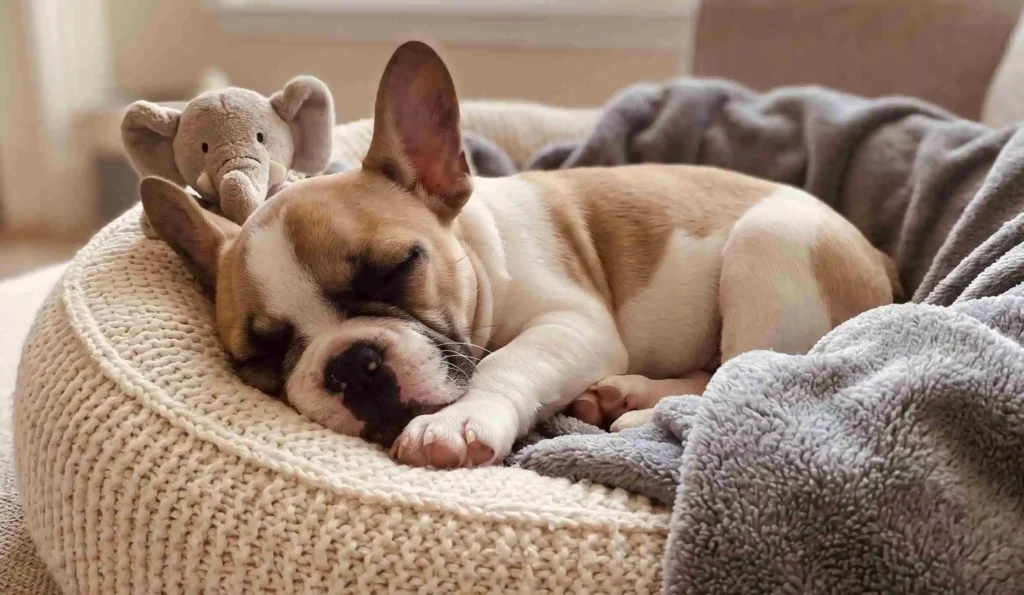
Why Puppy Sleep Matters More Than You Think
Sleep isn’t downtime for a growing dog. It’s when the real work happens.
During deep sleep, a puppy’s body releases the majority of its growth hormone. Bones lengthen. Muscle repairs. The immune system builds the defenses that carry your puppy through those vulnerable first months before their vaccine series finishes.
There’s a mental side too. Puppies consolidate learning during sleep. That means the sit you practiced this morning gets filed away properly during this afternoon’s nap. Skip the nap, and the training often doesn’t stick.
The behavioral consequences show up fastest. A sleep-deprived puppy has no impulse control. Nipping gets harder. Recall falls apart. Many owners who think they have a bad puppy actually have an exhausted one. If your puppy is biting relentlessly, reviewing your approach to puppy mouthing alongside their nap schedule usually solves more than training drills alone.
How Much Sleep by Age: The Real Numbers
Sleep needs shift steadily as puppies mature. Here’s what to expect.
Newborn to 3 Weeks
Roughly 20 to 22 hours daily. At this stage puppies eat and sleep, full stop. Their eyes open around two weeks, but wakefulness stays minimal.
4 to 12 Weeks
About 18 to 20 hours. This is when most owners bring a puppy home, and it’s the phase that surprises people. Your puppy will be intensely active for 45 to 90 minutes, then crash hard.
3 to 6 Months
Around 16 to 18 hours. Teething hits during this window and can fragment sleep. Wake periods stretch to two hours or so.
6 to 12 Months
Roughly 14 to 16 hours. Your puppy starts consolidating night sleep and taking fewer, longer daytime naps.
Adult Dogs
Most adults settle at 12 to 14 hours, with large breeds and working-line dogs at either end. According to the American Kennel Club, sleep needs vary meaningfully by breed and individual temperament.
How Puppy Sleep Actually Works
Dogs cycle through sleep differently than we do. A human sleep cycle runs about 90 minutes. A dog’s runs closer to 20.
That short cycle explains the polyphasic pattern — lots of naps instead of one block. It also means puppies reach REM sleep quickly, which is why you’ll see twitching paws and soft yips within minutes of them dropping off. That’s normal and healthy. Dogs actually spend a smaller proportion of time in REM than humans do, so they compensate with more total sleep.
Puppies also lack the mature circadian rhythm adult dogs have. Their internal clock is still calibrating, which is why a ten-week-old may be wide awake at 3 a.m. with no apparent regard for your alarm. This resolves with age and consistent routine.
Common Mistakes (and Fixes)
Mistake: Assuming a wired puppy needs more exercise. The fix: Try a nap first. Overtired puppies look hyperactive. Crate them for 45 minutes before adding another walk.
Mistake: Letting the puppy nap wherever they drop. The fix: Guide naps to a consistent spot. Random napping in the middle of household chaos produces shallow, low-quality sleep.
Mistake: Waking a sleeping puppy to play. The fix: Let them sleep. Interrupted sleep cycles leave puppies irritable and slow to learn.
Mistake: Feeding a large meal right before bedtime. The fix: Finish dinner two to three hours before lights out, with a final potty break just before.
Mistake: Responding to every nighttime whimper. The fix: Distinguish potty whining from protest whining. Ignoring genuine bathroom needs backfires badly, but rewarding boredom whining creates a habit.
Mistake: Using a crate that’s far too large. The fix: Size the crate so your puppy can stand, turn, and lie down — nothing more. Divider panels let one crate grow with the dog.
Mistake: Expecting a settled routine in week one. The fix: Give it three to four weeks. Most puppies sleep through the night reliably somewhere between 12 and 16 weeks.
Building a Sleep Setup That Actually Works
Once you accept that puppies need 18-plus hours, the practical question becomes where and how. Two tools do most of the heavy lifting here.
The first problem is containment. A puppy loose in a room will not nap — they’ll patrol, chew, and fight sleep until they collapse from exhaustion. A properly sized crate solves this by removing the option to wander and by signaling “this is rest time” through simple repetition.
The MidWest Homes for Pets 24-Inch iCrate is a reasonable starting point for small and medium breeds. It folds flat for travel, the leak-proof tray survives accidents during potty training, and the included divider panel means you can shrink the interior now and expand it as your puppy grows — which matters, because an oversized crate encourages puppies to soil one end and sleep in the other. The honest limitation: wire crates are noisy. Rattling latches and a metal tray can wake a light-sleeping puppy, and some owners end up padding the base to quiet it down.
CHECK PRICE ON AMAZON: https://amzn.to/4ripwkq
The second problem is emotional. Your puppy just left a litter where they slept in a warm pile of siblings. Sleeping alone is genuinely distressing at first, and that distress is the root of most crate protest.
The Original Snuggle Puppy Heartbeat Toy addresses this directly. It contains a battery-powered pulsing unit that mimics a littermate’s heartbeat, plus a heat pack for warmth. It’s best suited to puppies in their first eight to twelve weeks at home, especially those crying hard during the first few nights. Many owners report a noticeable drop in nighttime whining within two or three nights. The limitation worth knowing: it’s a plush toy, and determined chewers will eventually destroy it, so supervise the first few uses. If crate crying is your main battle, our full guide to settling a puppy who whines in the crate pairs well with this.
CHECK PRICE ON AMAZON: https://amzn.to/4kCZCoX
Once your puppy is past four months and sleeping in longer blocks, joint support becomes the priority — particularly for large breeds. A supportive surface distributes weight and keeps growing joints from pressing into hard flooring. The PetFusion Ultimate Dog Bed uses solid memory foam rather than shredded fill, so it doesn’t flatten into a pancake after a month. The waterproof liner underneath the cover is the feature that justifies it for puppy owners, since accidents don’t reach the foam. Its drawback is price — it costs considerably more than a basic pillow bed, and for a puppy still teething, that’s a real gamble.
CHECK PRICE ON AMAZON: https://amzn.to/46TYkQO
Step-by-Step: Building Your Puppy’s Daily Sleep Schedule
- Set a fixed wake time. Get your puppy up at roughly the same hour daily. Consistency trains the circadian rhythm faster than anything else.
- Follow the 1:1 rule. After one to two hours awake, put your puppy down for a nap of similar length. Don’t wait for signs of tiredness.
- Make naps non-negotiable. Use the crate or a pen. Enforced downtime is a skill puppies learn, not an instinct.
- Dim the environment. Cover part of the crate with a light blanket. Darkness cues melatonin release.
- Schedule the last meal early. Aim for two to three hours before bed to reduce overnight potty needs.
- Add a wind-down ritual. Ten minutes of quiet chewing or gentle handling before the final crate entry. Same order, every night.
- Do a final potty break. Keep it boring — no play, no talking. Straight out, straight back.
- Handle night wakings calmly. Silent trip outside, no praise, no games, straight back to the crate.
- Track the pattern for a week. Note wake times, nap lengths, and night wakings. Patterns emerge fast and tell you what to adjust.
Troubleshooting: If This, Then That
- If your puppy gets bitey and frantic mid-afternoon → they’re overtired. Crate them for a nap instead of adding stimulation.
- If your puppy wakes at 4 a.m. every night → shift the last meal and potty break 30 minutes later for a week.
- If your puppy sleeps all day but is restless at night → increase daytime mental engagement with an interactive puzzle toy or enrichment session, not more physical exercise.
- If your puppy refuses to settle in the crate at all → back up and rebuild the association slowly using a structured crate training process.
- If night sleep worsened suddenly around four months → suspect teething discomfort. Frozen chews before bed often help.
- If your puppy pants heavily while trying to sleep → check room temperature first, then read up on why dogs pant at night.
- If your puppy sleeps deeply but is groggy and slow when awake → this is a vet conversation, not a schedule fix.
When to Call Your Veterinarian
Normal puppy sleepiness has a clear rhythm: hard play, hard sleep, hard play again. Deviations from that rhythm are what deserve attention.
Contact your vet if your puppy sleeps through meals, is difficult to rouse, or seems disoriented on waking. Sudden lethargy paired with vomiting, diarrhea, pale gums, or refusal to drink can signal parvovirus, hypoglycemia, or infection — all of which move quickly in young dogs.
Also worth a call: loud snoring or visible struggle to breathe during sleep, especially in flat-faced breeds. And if a puppy over five months still can’t manage four consecutive hours overnight, ask about a urinary tract infection.
Small-breed puppies are particularly vulnerable to blood sugar crashes. Trembling or wobbliness after a long sleep needs same-day attention.
Expert Perspective
Veterinarians consistently emphasize that sleep is a developmental requirement in puppies, not a luxury. The American Veterinary Medical Association’s guidance on selecting a pet underscores how much structured routine matters during a dog’s first year, and sleep is the backbone of that structure. Growth hormone secretion peaks during deep sleep, which is why chronic sleep disruption in puppies is associated with slower physical development and poorer behavioral outcomes.
The AKC similarly notes that puppies process and consolidate new information while sleeping. From a practical standpoint, this reframes napping as part of your training program rather than an interruption to it. The owners who see the fastest behavioral progress are usually the ones enforcing rest most rigorously. Please treat this article as general education — your veterinarian is the right person to assess your individual puppy, and nothing here replaces a hands-on exam.
Frequently Asked Questions
How long do puppies sleep at 8 weeks old? About 18 to 20 hours daily, split into naps of 30 minutes to two hours. Expect roughly 45 to 90 minutes of activity between naps.
Is it normal for my puppy to sleep 20 hours a day? Yes, for puppies under 12 weeks. What matters is behavior while awake. An alert, playful, eating puppy who sleeps 20 hours is healthy.
When will my puppy sleep through the night? Most puppies manage six to eight consecutive hours between 12 and 16 weeks. Bladder capacity is usually the limiting factor, not willingness.
Should I wake my puppy to go potty at night? Under 12 weeks, yes — one scheduled break prevents accidents and builds the habit. After that, let them sleep and respond only if they wake.
Why does my puppy twitch and whimper while sleeping? That’s REM sleep, and it’s completely normal. Dogs enter REM within minutes. Don’t wake them; interrupted cycles leave puppies cranky.
Can a puppy sleep too much? Excessive sleep alone is rarely the issue. Concern is warranted when sleepiness comes with lethargy while awake, appetite loss, or difficulty rousing.
How many naps should a puppy take per day? Young puppies take six to twelve naps daily. Rather than counting naps, follow the pattern of one to two hours awake, then rest.
Does crate training improve puppy sleep? Yes, significantly. A crate removes the option to patrol and creates a consistent sleep cue. Most puppies settle faster in a crate than loose.
Do puppies sleep less when teething? Often, yes. Between three and six months, gum discomfort fragments sleep. Frozen chew toys before bed usually ease this considerably.
Should my puppy sleep in my bedroom? Placing the crate in your bedroom for the first few weeks typically reduces crying. You can gradually relocate it once your puppy settles reliably.
The Bottom Line
So, how long do puppies sleep? Far more than most new owners expect — 18 to 20 hours a day for young puppies, tapering slowly toward adult levels over the first year. That sleep is building bone, muscle, immunity, and the behavioral self-control you’re working so hard to teach. Treat naps as part of your training plan, not a break from it. Set up a properly sized crate, protect the schedule, and give it three or four weeks before judging progress. Start tonight with one simple change: put your puppy down for an enforced nap after every hour of play, and watch how much calmer tomorrow feels.