You just brought your puppy home, and the excitement is through the roof. But somewhere between the belly rubs and the potty accidents, a question hits you: “When does my puppy need shots?” A solid puppy vaccination schedule is one of the most important things you’ll manage in those first months. Get it right, and you’re giving your pup the best possible start. Get it wrong, and you could leave your dog exposed to diseases that are entirely preventable.
Quick Answer: What Is a Puppy Vaccination Schedule?
A puppy vaccination schedule is a vet-recommended timeline of shots given between 6 and 16 weeks of age, with boosters continuing through the first year. Core vaccines protect against distemper, parvovirus, adenovirus, and rabies. This schedule matters for every puppy regardless of breed, size, or lifestyle because these diseases can be fatal and spread quickly.
TL;DR: Puppies need a series of core vaccines starting at 6–8 weeks and finishing around 16 weeks, followed by a rabies shot and one-year boosters. Sticking to the timeline is critical because gaps leave your puppy vulnerable.
Key Takeaways
- Start vaccines at 6–8 weeks. Your puppy’s maternal antibodies begin to fade, and vaccines need to fill that gap.
- Core vaccines are non-negotiable. Distemper, parvo, adenovirus, and rabies protect against deadly diseases.
- Boosters every 3–4 weeks until 16 weeks. One shot alone isn’t enough. The series builds full immunity.
- Rabies is legally required. Most states mandate it between 12–16 weeks. Missing it can cause legal and health problems.
- Keep a written vaccine record. You’ll need it for boarding, grooming, dog parks, and travel.
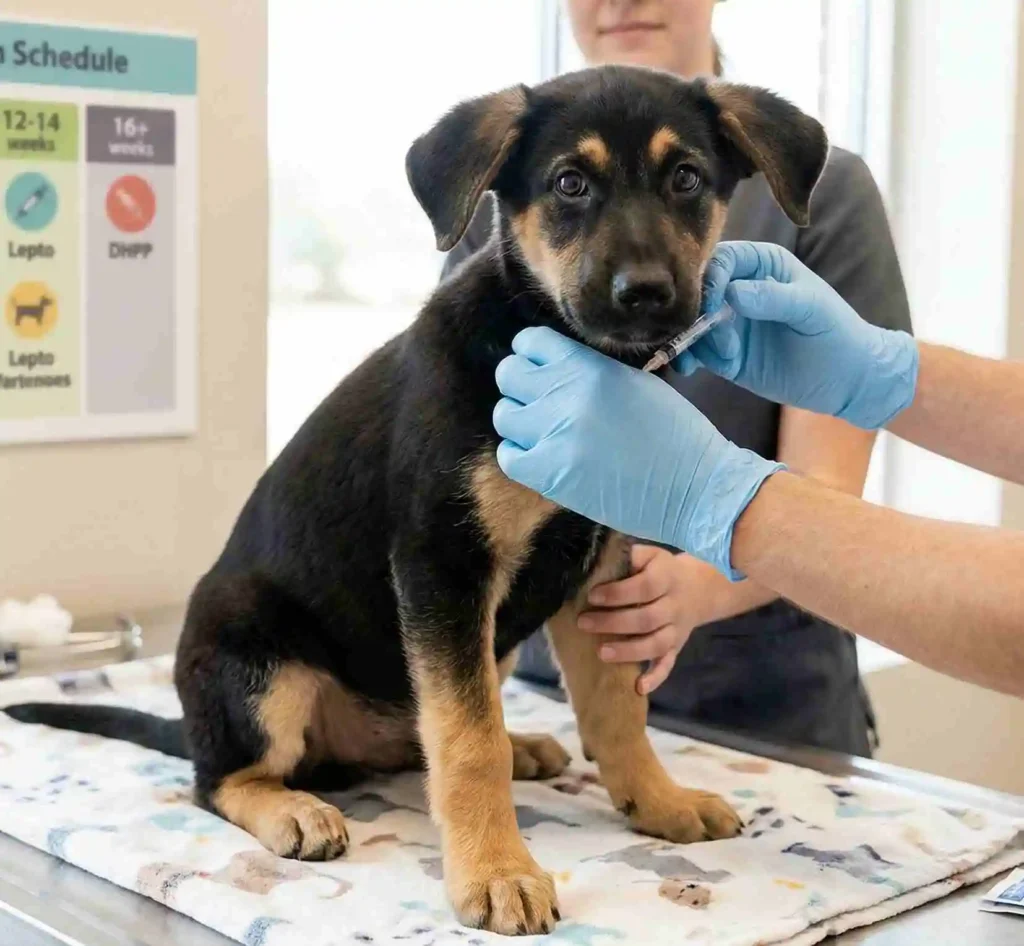
Table of Contents
Why the Puppy Vaccination Schedule Matters More Than You Think
Puppies are born with some protection passed down from their mother’s milk. That maternal immunity is a temporary shield, and it starts fading as early as six weeks of age. Without vaccines to take over, your puppy is essentially walking around without an immune defense against some of the deadliest canine diseases on the planet.
Parvovirus alone kills roughly 80% of untreated puppies. Distemper attacks the respiratory, gastrointestinal, and nervous systems all at once. These aren’t rare conditions tucked away in textbooks. They’re active in dog parks, sidewalks, and even your backyard soil. According to the American Veterinary Medical Association, vaccinating your puppy is the single most effective way to prevent these life-threatening infections.
The good news? Following a simple, consistent schedule makes all of this manageable. You don’t need a veterinary degree. You just need a calendar and a reliable vet.
How Puppy Vaccines Actually Work
Think of vaccines as a training exercise for your puppy’s immune system. Each shot introduces a tiny, harmless piece of a virus or bacteria. The puppy’s body recognizes it as a threat, fights it off, and remembers it for later. If the real disease ever shows up, the immune system already knows exactly how to respond.
Here’s why puppies need multiple rounds instead of just one big shot. Maternal antibodies, the protection from mom, can actually interfere with vaccines. If those antibodies are still strong when you vaccinate, they may neutralize the vaccine before it can do its job. Since there’s no practical way to know exactly when maternal antibodies drop for each individual puppy, vets give a series of shots spaced 3–4 weeks apart. This staggered approach ensures that at least one dose catches the puppy at the right window.
Core vaccines target diseases that are widespread, highly contagious, or extremely dangerous. Non-core vaccines, like those for Bordetella or Lyme disease, depend on your puppy’s environment and lifestyle. Your vet will help decide which non-core shots make sense.
If your puppy seems stressed or anxious during vet visits, having a comfort item from home can help. Some owners find that a calming product goes a long way in keeping nervous pups relaxed during those first appointments.
The Complete Puppy Vaccination Timeline
Here’s the standard puppy vaccination schedule recommended by veterinary professionals. Your vet may adjust slightly based on your puppy’s health, breed, or risk factors.
6–8 Weeks: First Round
- Distemper
- Parvovirus
- Adenovirus (Hepatitis)
- Often given as a combination shot called DHPP or DA2PP
This is your starting line. Most puppies receive their first shots from the breeder or shelter. Always ask for paperwork to confirm what was given and when.
10–12 Weeks: Second Round
- DHPP booster
- Leptospirosis (if recommended by your vet)
- Bordetella (kennel cough) — especially if your puppy will be around other dogs
- Canine influenza (lifestyle-dependent)
This visit is also a good time to discuss your puppy’s overall health. If you notice your puppy coughing between appointments, understanding the common causes of coughing in dogs can help you decide whether a call to the vet is needed.
14–16 Weeks: Third Round and Rabies
- Final DHPP booster
- Rabies (legally required in most states; typically given at 12–16 weeks)
- Lyme disease vaccine (if you live in a tick-heavy area)
- Leptospirosis booster
The rabies vaccine is the big one here. It’s the only vaccine required by law across the United States. According to the AKC’s vaccination guidelines, your puppy’s rabies vaccination must be administered by a licensed veterinarian to be legally valid.
12–16 Months: One-Year Boosters
- DHPP booster
- Rabies booster (depending on state law, this may cover 1 or 3 years)
- Any non-core vaccine boosters as needed
After this round, most adult dogs move to a schedule of boosters every 1–3 years. Your vet will set the timeline based on your dog’s risk level and local regulations.
Common Mistakes Owners Make With Puppy Shots (and How to Fix Them)
Even well-meaning owners slip up. Here are the most frequent vaccination mistakes and how to avoid them.
- Starting too late. Some owners wait until 12 weeks to begin. By then, maternal immunity may have already faded, leaving weeks of zero protection. The fix: schedule the first vet visit within days of bringing your puppy home.
- Skipping a booster because the puppy “seems fine.” Vaccines work as a series. Missing one round can mean starting over. The fix: set phone reminders for every appointment and treat them like non-negotiable commitments.
- Taking puppies to dog parks before the series is complete. Parvo can survive in soil for over a year. One trip to a contaminated park can be devastating. The fix: socialize your puppy in controlled settings with vaccinated dogs only until two weeks after the final booster.
- Confusing “socialization” with “exposure to random dogs.” Your puppy absolutely needs socialization, but not at the cost of disease exposure. The fix: carry your puppy in public spaces, invite vaccinated friends’ dogs over, and enroll in puppy training classes that require proof of vaccination.
- Losing the vaccine record. Without documentation, boarding facilities and groomers may refuse your dog. The fix: photograph every vaccine certificate immediately and store digital copies in your phone and email.
- Assuming indoor puppies don’t need vaccines. Parvo can be tracked inside on shoes. Distemper can travel through the air. The fix: vaccinate regardless of whether your puppy spends time outdoors.
Supporting Your Puppy’s Immune System During Vaccination
Vaccines do the heavy lifting, but your puppy’s overall health plays a supporting role. A strong immune system responds better to vaccination, which means faster, more reliable protection.
Nutrition is the foundation. Feed a high-quality puppy food that meets AAFCO guidelines for growth. Avoid switching foods frequently during the vaccination period, as digestive stress can weaken the immune response. If your pup occasionally has stomach trouble, a daily probiotic can help keep things stable.
Purina Pro Plan Veterinary Supplements FortiFlora is one of the most widely recommended probiotics by veterinarians. It’s formulated specifically to support digestive health in dogs and comes in easy-to-use powder packets you sprinkle on food. It’s especially helpful during the vaccination period when puppies may experience mild digestive upset as a side effect of shots. The one downside is that it’s a single-strain probiotic, so dogs with more complex gut issues may need a broader formula. For puppies going through their vaccine series, though, it hits the mark.
CHECK PRICE ON AMAZON: https://amzn.to/3ZySvV4
A daily multivitamin can also fill nutritional gaps, especially for picky eaters or puppies on home-prepared diets. Googipet Premium Dog Multivitamin Chewable covers a wide base. It includes Vitamin C for immune support, probiotics for gut health, and glucosamine that’ll benefit growing joints down the road. Owners love that it works for puppies and senior dogs alike, making it a long-term investment. The chicken flavor goes over well with most puppies, though some extremely picky eaters may need it crumbled into wet food. It’s a solid all-rounder for owners who want one supplement instead of three.
CHECK PRICE ON AMAZON: https://amzn.to/3ZzV6OD
Step-by-Step: How to Stay on Track With Your Puppy’s Vaccines
- Get records from the breeder or shelter. Before your first vet visit, know exactly which vaccines your puppy has already received and when. No guessing.
- Schedule the full series upfront. At your puppy’s first appointment, ask your vet to map out every visit through the 16-week mark. Book all appointments before you leave the clinic.
- Set reminders on your phone. Create calendar alerts for three days before each appointment. This gives you enough time to reschedule if something comes up.
- Keep your puppy comfortable during visits. Bring treats, a favorite toy, or a familiar blanket. Positive associations with the vet make future visits far less stressful. If your puppy is going through a heavy teething phase, bringing along a chew toy helps them stay distracted and calm in the waiting room.
- Ask about side effects at every visit. Your vet should explain what’s normal (mild lethargy, slight swelling at the injection site) and what warrants an emergency call (facial swelling, difficulty breathing, persistent vomiting).
- Document everything. Keep a physical folder and a digital backup of all vaccine certificates. You’ll need these for grooming, boarding, doggy daycare, and travel.
- Complete the one-year boosters. Many owners celebrate finishing the puppy series and then forget about the 12–16 month boosters. Mark it on your calendar now.
Troubleshooting: What If Something Goes Off Schedule?
- If you miss a booster by a few days: Call your vet. In most cases, a delay of a week or two won’t require restarting the series. Your vet may adjust the remaining schedule.
- If you adopted a dog with unknown vaccine history: Your vet will likely restart the full puppy series regardless of the dog’s age. It’s safer to over-vaccinate than to assume protection exists.
- If your puppy vomits after a vaccine: Mild nausea is common and usually resolves within 24 hours. Withhold food for a couple of hours, then offer a small bland meal. If vomiting continues beyond a day, contact your vet. Understanding what causes dogs to throw up can help you tell the difference between a normal reaction and something that needs attention.
- If your puppy develops a lump at the injection site: Small, firm lumps are normal and typically disappear within two weeks. If the lump grows, becomes painful, or hasn’t resolved after three weeks, schedule a follow-up.
- If you can’t afford the full series at once: Ask your vet about payment plans. Many low-cost clinics and animal shelters offer vaccination packages at reduced prices. Skipping vaccines entirely is never the answer.
- If your puppy has a severe allergic reaction: Signs include facial swelling, hives, difficulty breathing, or collapse. This is a veterinary emergency. Drive to the nearest clinic immediately. Severe reactions are rare but require fast treatment.
When to See a Veterinarian Immediately
Most vaccine side effects are mild and resolve on their own. But some signs require urgent professional attention.
Contact your vet or an emergency animal hospital right away if your puppy shows any of the following within hours or days of vaccination: facial swelling or puffiness around the eyes, persistent vomiting or diarrhea lasting more than 24 hours, difficulty breathing or excessive panting, collapse or extreme lethargy where the puppy won’t respond to you, or hives spreading across the body.
Also see a vet if your unvaccinated or partially vaccinated puppy develops sudden bloody diarrhea, refuses to eat for more than a day, or shows signs of neurological problems like seizures or difficulty walking. These could be signs of the very diseases vaccines are designed to prevent.
Expert Veterinary Insight
Veterinarians universally agree that core vaccinations are the single most impactful preventive health measure for puppies. The American Animal Hospital Association (AAHA) publishes detailed canine vaccination guidelines that most veterinary practices follow. These guidelines emphasize that the puppy series should be completed no earlier than 16 weeks of age, because finishing too early risks leaving the puppy without full protection.
The AVMA further notes that vaccine protocols should be tailored to the individual animal, taking into account geographic location, lifestyle, and exposure risk. For instance, a puppy living in a rural area with heavy tick populations may need Lyme disease vaccination, while an urban apartment puppy may not. The key takeaway from veterinary experts: core vaccines are universal, non-core vaccines are customized, and no puppy should skip the series entirely. Always discuss your puppy’s specific needs with your veterinarian rather than relying on one-size-fits-all advice.
Frequently Asked Questions
How many shots does a puppy need before going outside?
Puppies need at least two rounds of the DHPP vaccine before limited outdoor exposure. Full protection comes two weeks after the final booster, typically around 18 weeks of age.
What happens if I miss a puppy vaccine appointment?
A short delay usually doesn’t require restarting the series. Call your vet to reschedule as soon as possible. Longer gaps may mean adding an extra booster.
Are puppy vaccines safe?
Yes. Side effects are usually mild and temporary. Serious reactions are extremely rare. The risk of skipping vaccines far outweighs the small chance of side effects.
How much does a full puppy vaccination schedule cost?
Expect to pay between $75 and $200 per visit, depending on your location and which vaccines are given. The full series typically costs $300–$600 total.
Can I vaccinate my puppy at home?
Some non-core vaccines are available for home use, but rabies must be given by a licensed vet. Home vaccination also means no official record, which many facilities require.
Do small breed puppies need the same vaccines as large breeds?
Yes. Core vaccines are the same regardless of size. The dosage is identical because vaccine efficacy doesn’t depend on weight the way medications do.
What is a titer test, and can it replace vaccines?
A titer test measures antibody levels in the blood. It can help determine if an adult dog still has immunity, but it’s not a reliable substitute for completing the initial puppy series.
When can my puppy be around other dogs safely?
Two weeks after the final booster in the puppy series, usually around 18 weeks. Before that, limit contact to known vaccinated dogs in clean environments.
Does my puppy need the Bordetella (kennel cough) vaccine?
If your puppy will attend daycare, boarding, grooming, or group training, most facilities require it. Talk to your vet about whether the kennel cough vaccine makes sense for your pup’s lifestyle.
Can older puppies or adult dogs start the vaccine series late?
Absolutely. Dogs of any age can begin. Your vet will adjust the schedule, often compressing the series into fewer visits spaced closer together.
Your Puppy’s Healthiest Chapter Starts Now
Following a complete puppy vaccination schedule isn’t just a checklist item. It’s one of the most meaningful things you’ll do as a new dog owner. Every shot you stay on top of is a layer of protection against diseases that no amount of love alone can prevent. The process is straightforward: start early, stick to the timeline, keep your records organized, and lean on your vet whenever questions come up.
Your puppy is counting on you to make smart choices during these first critical months. The effort you put in now pays off with years of health, energy, and adventures together. If you haven’t scheduled that first vet appointment yet, pick up the phone today. And if your puppy is already partway through the series, double-check your calendar to make sure the next booster is locked in. Your future self, and your dog, will thank you.
This article provides general informational guidance about puppy vaccination. It is not a substitute for professional veterinary advice, diagnosis, or treatment. Always consult your veterinarian for recommendations specific to your puppy’s health needs.