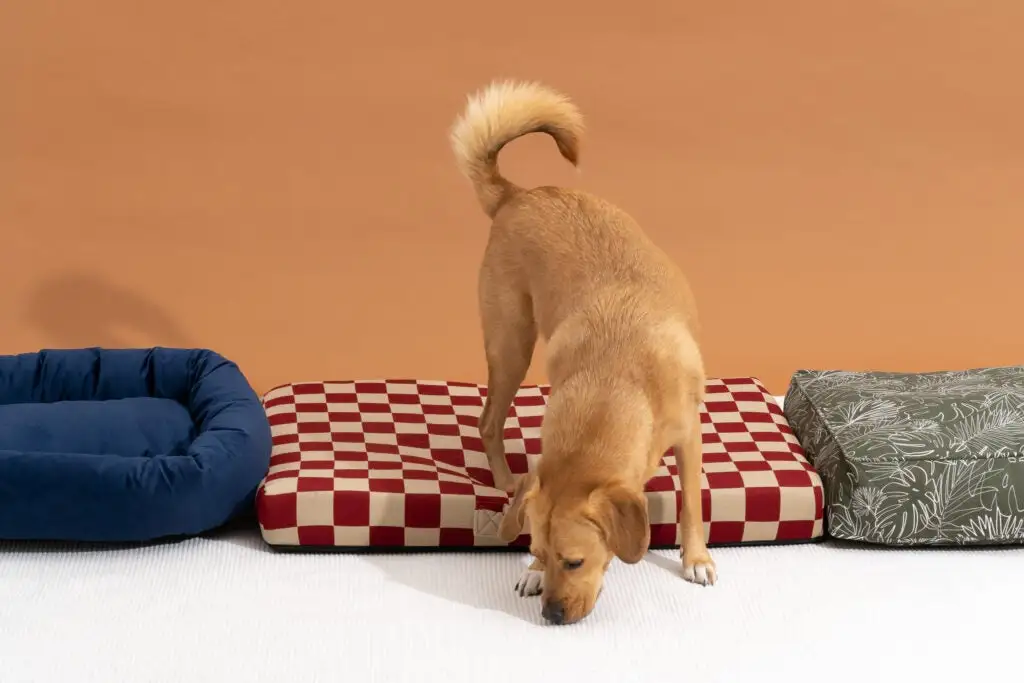
You bought what looked like a perfectly good dog bed. Six months later, it’s pancake-flat, the cover smells funky, and your dog has quietly relocated to your couch. Sound familiar? Choosing the right dog bed isn’t just about giving your pup a soft place to crash. It’s about joint health, quality sleep, temperature regulation, and long-term comfort. The wrong bed can actually make aches worse, disrupt sleep, and leave your dog restless at night.
Quick Answer: The best dog bed matches your dog’s size, sleep style, age, and health needs. Orthopedic memory foam beds suit senior dogs and large breeds prone to joint issues, while bolster beds work well for dogs that love to curl up. The right bed improves sleep quality, eases pressure on joints, and gives your dog a safe, cozy spot they’ll actually use.
TL;DR: Measure your dog lying down, pick a bed type based on how they sleep, choose memory foam if they’re older or large, and replace the bed when it stops bouncing back. A good dog bed is one of the simplest upgrades you can make for your pet’s health.
Key Takeaways
- Size matters more than you think. Measure your dog nose-to-tail while lying down, then add 6–12 inches. A cramped bed gets ignored.
- Orthopedic foam helps joints. Dogs over 40 lbs or older than 7 benefit from memory foam that distributes weight evenly.
- Sleep position determines bed shape. Curlers need bolster beds, sprawlers need flat mats, and side-sleepers need wide, cushioned surfaces.
- Washable covers are non-negotiable. A removable, machine-washable cover saves you from odor, allergens, and bacteria buildup.
- Replace beds that don’t bounce back. If the foam stays compressed when your dog stands up, it’s time for a new one.
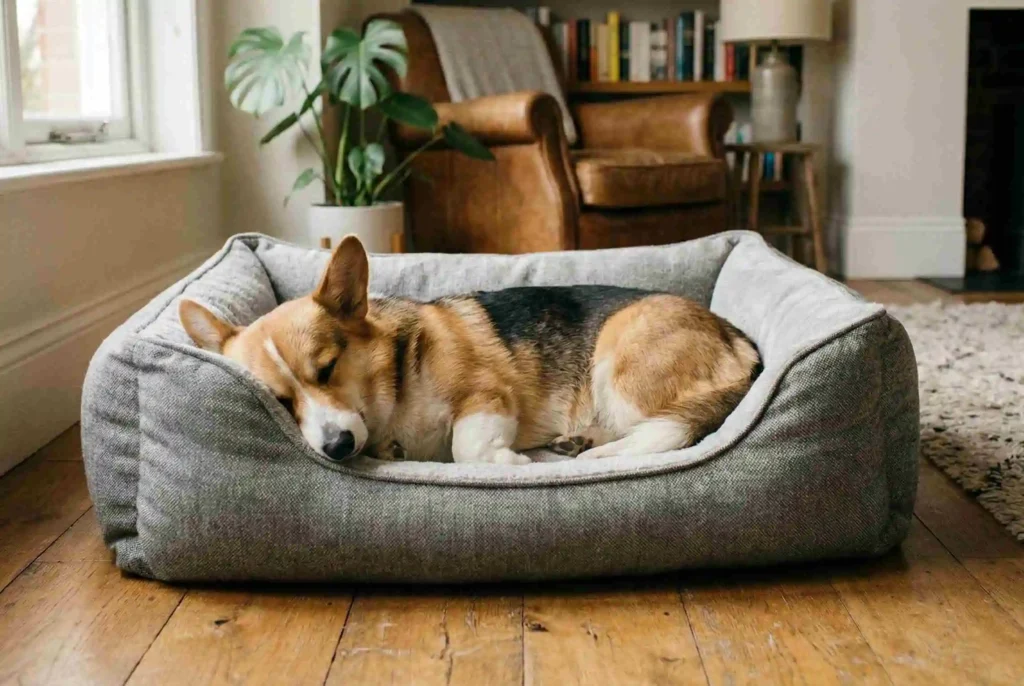
Table of Contents
Choosing the Right Bed Support for Your Dog
Matching a bed to your dog comes down to their sleep posture and joint condition. Dogs that love curling into tight balls thrive in bolster beds with soft, supportive walls that trap body heat and create a cozy nest. Sprawlers and older dogs need thick, open-plan orthopedic memory foam that won’t bottom out under their weight. Cheap polyfill flattens fast, leaving your dog sleeping on hard flooring. A high-density foam base cushions aching elbows, hips, and shoulders so your dog wakes up limber and ready to move.
Why Choosing the Right Dog Bed Matters More Than You Think
A dog bed isn’t furniture — it’s a health tool. Dogs spend 12 to 14 hours a day sleeping or resting, and puppies log even more. That means the surface under your dog’s body affects their joints, spine, and muscle recovery for half of every single day.
Veterinarians recommend supportive bedding especially for large breeds and seniors. Hard floors or thin pads put pressure on elbows, hips, and shoulders, which can worsen arthritis and create calluses over time. According to the American Kennel Club, providing a proper bed helps regulate body temperature, reduces anxiety, and gives dogs a sense of security.
If your dog has been limping or showing signs of joint discomfort, their sleeping surface might be part of the problem. A quality dog bed won’t fix a torn ligament, but it can ease daily wear on aging joints and help your pup wake up less stiff.
And here’s the thing most owners overlook: dogs that don’t have a comfortable bed often end up on your furniture. That’s not a behavioral issue — it’s your dog self-selecting the softest spot in the house.
How Dog Beds Actually Work (The Anatomy of a Good Bed)
Not all dog beds are created equal. Understanding what’s inside helps you skip the duds.
Foam types are the biggest differentiator. Standard polyester fill compresses fast and offers almost no support after a few months. Memory foam, on the other hand, contours to your dog’s body and distributes weight across a wider surface. This reduces pressure points on hips, elbows, and shoulders. High-density memory foam (at least 4 lbs per cubic foot) holds up much longer than low-density alternatives.
Bolster walls give dogs something to lean against or rest their heads on. Dogs that curl up when they sleep tend to prefer bolster-style beds because the raised edges mimic the feeling of a nest. Sprawling sleepers, though, will feel boxed in.
The cover layer matters more than most buyers realize. Look for tightly woven, water-resistant fabric that’s still breathable. A waterproof liner beneath the cover protects the foam from accidents, drool, and spills without making the bed feel like a plastic sheet.
The base should be non-slip. A bed that slides across hardwood every time your dog jumps on it won’t feel safe or stable. Rubber-dot bottoms or anti-skid fabric solve this easily.
If you have a low-energy or laid-back breed, they’ll spend even more time in their bed, so investing in solid construction pays off quickly.
Common Dog Bed Mistakes (And How to Fix Them)
Most dog bed disappointments come down to the same handful of mistakes. Here’s what to watch for.
- Buying based on cuteness instead of function. That Instagram-worthy bed might use cheap fill that flattens in weeks. The fix: always check the foam density and read reviews about long-term durability before you buy.
- Choosing the wrong size. A bed that looks big enough in the store can feel cramped when your dog actually stretches out. The fix: measure your dog lying on their side from nose to tail tip. Add at least 6 inches to each dimension.
- Skipping the washable cover. Dog beds collect dander, dirt, drool, and bacteria. A bed without a removable cover becomes a hygiene problem fast. The fix: only buy beds with zippered, machine-washable covers.
- Ignoring your dog’s age and health. A thin pillow bed might work for a healthy two-year-old, but it’s a terrible choice for a senior dog with hip dysplasia. The fix: choose orthopedic foam for any dog over seven, any large breed, or any dog with joint concerns.
- Placing the bed in the wrong spot. Dogs like to rest where they can see the family but aren’t in the way. A bed shoved into a dark hallway corner won’t get used. The fix: put the bed in a quiet corner of a room your dog already hangs out in — near your desk, the living room, or your bedroom.
- Not replacing the bed when it wears out. Foam loses its density over time. If you press your hand into the bed and it doesn’t spring back within a few seconds, the support is gone. The fix: plan to replace standard beds every 1–2 years, and high-quality orthopedic beds every 3–4 years.
Picking the Right Bed for Joint Support and Deep Sleep
For dogs dealing with stiffness, arthritis, or just the natural wear of aging, an orthopedic bed can be genuinely life-changing. The key is finding one where the foam actually does its job over time, not just the first week.
PetFusion Ultimate Dog Bed is a solid pick for owners who want orthopedic support without the clinical look. It uses 4-inch memory foam that holds its shape well, even for larger breeds. The cover is made from breathable 35% cotton with a water-resistant inner liner, so accidents don’t ruin the foam underneath. It comes in multiple sizes and colors, and the cover zips off for easy machine washing. One honest note: it’s pricier than basic beds, so it’s best suited for owners who want a buy-it-once option rather than the cheapest thing on the shelf. Ideal for senior dogs, large breeds, and any pup with joint issues.
CHECK PRICE ON AMAZON: https://amzn.to/46TYkQO
If your dog also takes a joint supplement, pairing it with a supportive bed creates a two-pronged approach to comfort. Many veterinarians recommend combining proper bedding with glucosamine-based supplements for dogs showing early signs of stiffness.
Wuffes Advanced Dog Hip and Joint Supplement works well alongside a good bed. It combines glucosamine, chondroitin, omega-3, MSM, and green-lipped mussel in a pork-flavored chew that most dogs eat willingly. It’s designed for small and medium breeds and targets joint flexibility and cartilage health. One drawback is that it only comes in a 60-count size, which means monthly reorders for consistent use. Still, it’s a practical daily addition for dogs that are slowing down.
CHECK PRICE ON AMAZON: https://amzn.to/4aRkWUs
Keeping Your Dog Cool While They Sleep
Overheating is a real issue, especially for thick-coated breeds and dogs that sleep in warm rooms. If your dog moves off their bed to lie on tile or hardwood, they’re probably too hot.
A cooling mat can layer right on top of an existing dog bed or sit on the floor as a standalone option. For a deeper look at how cooling mats work and which ones hold up best, check out our complete cooling mat guide.
The Green Pet Shop Cool Pet Pad uses pressure-activated gel that cools without water, electricity, or refrigeration. Your dog lies on it, and the gel absorbs body heat. It recharges itself when your dog steps off. It works well for dogs between 46 and 80 lbs and stays effective for several hours at a time. The limitation is that it doesn’t stay cool indefinitely during long naps in very hot environments, so it’s best in air-conditioned or moderate-temperature rooms. Great for bulldogs, retrievers, huskies, and any breed that runs warm.
CHECK PRICE ON AMAZON: https://amzn.to/3OjsqH5
Step-by-Step: How to Choose and Set Up the Perfect Dog Bed
- Watch your dog sleep for a few days. Do they curl up tight, stretch out on their side, or sleep flat on their belly? This tells you whether to get a bolster bed, flat mat, or wide cushion.
- Measure your dog. Have them lie in their natural sleep position on the floor. Measure from the tip of the nose to the base of the tail. Add 6–12 inches for the bed length. Measure shoulder width too.
- Pick the right type. Bolster beds for curlers. Flat orthopedic mats for sprawlers. Elevated cot-style beds for dogs in warm climates or dogs that overheat. Nest-style beds for small dogs that like to burrow.
- Check the foam. Look for memory foam or high-density polyurethane foam at least 3–4 inches thick. Avoid beds stuffed with loose polyfill only, as these compress quickly.
- Confirm the cover is washable. Unzip it, check the care tag, and make sure it fits back on easily. You’ll be washing it every 2–4 weeks.
- Place the bed thoughtfully. Choose a draft-free area away from direct sunlight and high-traffic walkways. Near your living area is ideal since dogs like being close to their people.
- Introduce the bed properly. Place a worn t-shirt or blanket with your scent on it. Toss a few treats on the bed. Don’t force your dog onto it — let them explore at their own pace.
- Monitor and adjust. If your dog avoids the bed, try a different location first. If they still won’t use it, the bed type might not match their sleep style.
Troubleshooting: When the Dog Bed Isn’t Working
- If your dog ignores the bed entirely, try moving it to where they naturally nap. Dogs are creatures of habit and may just prefer a different spot.
- If your dog chews the bed, they may be bored, teething, or anxious. Address the root cause with calming products or enrichment toys before replacing the bed.
- If the bed smells bad after washing, the foam may be retaining moisture. Air-dry the foam completely in sunlight before re-covering. If the smell persists, the foam may need replacing.
- If the bed goes flat within a few weeks, the foam quality is too low. Upgrade to a bed with at least 4-inch, high-density memory foam.
- If your dog sleeps half on and half off the bed, the bed is too small. Size up and re-measure.
- If your senior dog struggles to get onto the bed, switch to a low-profile design with no raised bolsters. Some orthopedic mats sit just 3–4 inches off the ground for easy step-on access.
When to Talk to Your Vet About Sleep Problems
Most dog bed issues are comfort problems, not medical ones. But sometimes, restless sleeping signals something bigger.
See your vet if your dog suddenly refuses to lie down, yelps when settling into a resting position, or seems unable to get comfortable no matter what bed you try. These can be signs of spinal pain, hip dysplasia, or internal discomfort. Dogs that pace at night, pant heavily while resting, or wake frequently may also have anxiety-related issues that go beyond what a new bed can solve.
According to the American Veterinary Medical Association, pain management in aging dogs often involves a combination of supportive environments — including proper bedding — and veterinary-guided treatment.
If your dog is showing signs of joint trouble or has been recently diagnosed with arthritis, ask your vet specifically about bedding recommendations. Many clinics now include sleep surface advice as part of a joint-care plan.
What Veterinary Experts Say About Dog Beds
Veterinarians consistently emphasize that sleep quality affects a dog’s overall health just as much as diet and exercise. Orthopedic support is especially important for breeds genetically prone to hip and elbow dysplasia, such as German Shepherds, Labrador Retrievers, and Golden Retrievers. Supportive bedding helps distribute body weight and reduces localized pressure on joints that are already vulnerable.
Beyond joint health, proper bedding plays a role in managing anxiety. Dogs that have a consistent, comfortable resting spot tend to show fewer stress-related behaviors like pacing, excessive licking, and nighttime restlessness. The AKC notes that a dedicated bed gives dogs a sense of “den-like” security, which aligns with their natural instinct to seek enclosed, safe sleeping areas. For multi-dog households, individual beds also help reduce resource competition and promote calmer dynamics.
Frequently Asked Questions
What type of dog bed is best for large breeds?
Orthopedic memory foam beds with at least 4 inches of high-density foam work best. They distribute weight evenly and prevent pressure sores on hips and elbows.
How often should I wash my dog’s bed?
Wash the cover every 2 to 4 weeks. If your dog has allergies or skin issues, wash it weekly. Air out the foam monthly to prevent moisture and odor buildup.
Do dogs really need a bed, or is the floor fine?
Hard floors put pressure on joints and provide no insulation. While healthy young dogs may tolerate floors temporarily, a bed improves sleep quality and joint health for all ages.
What’s the best dog bed for a puppy?
Start with an affordable, washable bed since puppies may chew or have accidents. Avoid expensive orthopedic beds until your puppy reaches adult size and the chewing phase passes.
How do I know if my dog’s bed is too small?
If any part of your dog hangs off the edge during sleep, the bed is too small. Your dog should be able to lie fully stretched without touching the sides.
Can a dog bed help with arthritis?
Yes. Memory foam beds reduce pressure on inflamed joints and make it easier for arthritic dogs to get comfortable. Veterinarians frequently recommend orthopedic beds as part of an arthritis management plan.
Why does my dog scratch the bed before lying down?
This is a normal nesting instinct. Dogs scratch and circle to create a comfortable spot, just like their ancestors did in the wild. It’s nothing to worry about.
Should I get a heated bed for my senior dog?
Heated beds can soothe stiff joints in cold weather. Choose one with an auto-shutoff feature and low-voltage heating to prevent overheating or burns.
How long do dog beds last?
Standard beds last 1 to 2 years. High-quality orthopedic beds last 3 to 5 years with proper care. Replace any bed that no longer springs back when pressed.
Is an elevated bed better than a traditional one?
Elevated beds improve airflow and are great for warm climates. However, they lack the cushioning senior dogs need. For older dogs, a foam bed placed on a slightly raised platform offers the best of both.
Give Your Dog the Sleep They Deserve
Choosing the right dog bed comes down to knowing your dog: their size, their sleep habits, their age, and their health. It doesn’t have to be complicated or expensive, but it does need to be intentional. A flat, worn-out cushion isn’t doing your pup any favors. A well-fitted, supportive bed can ease joint pain, improve sleep, and give your dog a space that’s truly theirs. Start by measuring your dog tonight and matching their sleep style to the right bed type. If you want to compare the top-rated options side by side, our complete best dog beds roundup breaks everything down by breed size, budget, and sleep style. Your dog spends half their life resting — make sure they’re doing it right.