You let your dog out for a normal morning potty break. Then you spot it — a pink puddle on the snow, or rust-colored drops on the tile. Seeing a dog peeing blood is one of those moments that turns a quiet morning into a panic. Take a breath. Most causes are treatable, but almost none of them should be ignored.
Quick Answer
Blood in a dog’s urine, called hematuria, most often points to a urinary tract infection, bladder stones, or inflammation of the bladder wall. It is a symptom, not a disease, so the underlying cause must be diagnosed by a veterinarian through a urinalysis. Any dog owner who spots pink, red, or brown urine should book a same-day or next-day vet appointment.
TL;DR: Bloody urine in dogs usually means a UTI, stones, or bladder inflammation, though trauma, prostate issues, and toxins can also cause it. Straining without producing urine is a true emergency. Collect a fresh urine sample, call your vet, and skip the home remedies.
Key Takeaways
- Pink, red, orange, or brown urine all count as blood — color intensity does not predict severity.
- A male dog straining and passing nothing may have a urethral blockage. Go to an emergency vet immediately.
- Bring a fresh urine sample in a clean container; it saves time and often money.
- Never give human painkillers like ibuprofen. They worsen kidney and bladder damage.
- Most cases resolve well with antibiotics, diet changes, or minor procedures when caught early.
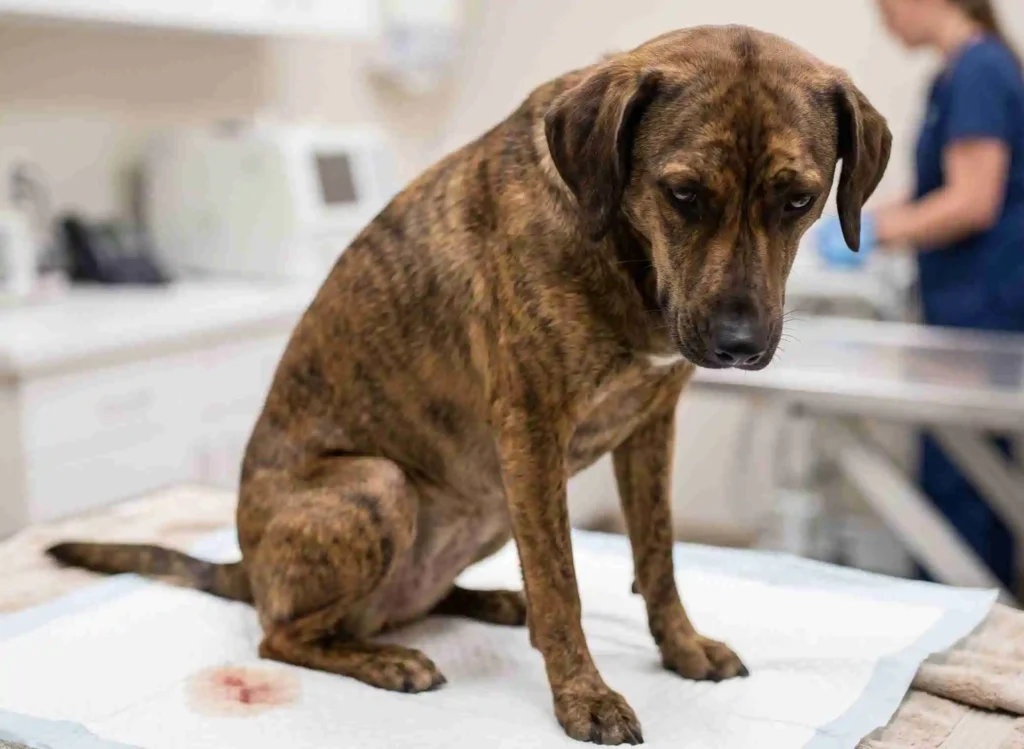
Table of Contents
Why Blood in Dog Urine Matters
Urine should be pale yellow to amber. Blood means something in the urinary tract is irritated, infected, obstructed, or bleeding. Left alone, a simple bladder infection can climb toward the kidneys. That turns a minor problem into a serious one within days.
There is also the pain factor. Dogs with cystitis feel a constant burning urge to urinate. Many hide it well. Your dog may still wag, eat, and play while genuinely hurting.
The most dangerous scenario involves obstruction. A stone lodged in the urethra stops urine from leaving the body. Toxins build in the bloodstream fast. Male dogs face higher risk because their urethra is longer and narrower.
Bloody urine can also signal issues far from the bladder. Clotting disorders, tick-borne illness, and rat poison ingestion all show up this way. That is why guessing at home rarely works.
How the Urinary System Actually Works
Think of it as a simple plumbing loop. Kidneys filter waste from blood and produce urine. Ureters carry urine to the bladder, a muscular storage bag. The urethra empties the bladder to the outside world.
Blood can enter at any point along that path. Where it enters often shapes the pattern you see.
Blood at the start of urination usually points to the urethra, prostate, or genital area. Blood throughout the whole stream typically means the bladder or kidneys. Blood at the very end often suggests bladder wall irritation, since the bladder squeezes hardest as it empties.
Female dogs get UTIs more often because their urethra is short and wide. Bacteria travel upward easily. Male dogs get fewer infections but face more blockages.
Diet and hydration matter too. Concentrated urine lets minerals crystallize into stones. Those stones scrape the bladder lining and cause bleeding.
The Most Common Causes of a Dog Peeing Blood
Urinary tract infection. Bacteria irritate the bladder lining. Expect frequent squatting, small volumes, and licking at the genitals. Antibiotics usually clear it in one to two weeks.
Bladder stones. Struvite and calcium oxalate stones are the usual suspects. Some dissolve with prescription diets. Others need surgery.
Sterile cystitis. Inflammation without infection, sometimes stress-linked. Frustrating to diagnose, but manageable.
Prostate problems. Common in unneutered older males. Blood may drip even when the dog is not urinating.
Trauma. A hard fall or car bump can bruise the bladder or kidneys.
Toxins. Rat poison blocks clotting and causes bleeding in urine and stool. This is an emergency. Some poisonings also trigger sudden diarrhea alongside other symptoms.
Cancer. Transitional cell carcinoma affects older dogs and mimics a stubborn UTI that never resolves.
Tick-borne disease. Ehrlichiosis and related illnesses can lower platelet counts and cause bleeding.
Female dogs in heat sometimes leave bloody drops that owners mistake for hematuria. That blood comes from the vulva, not the bladder. If you notice unexplained bleeding along with other symptoms like shaking or trembling, mention every detail to your vet.
Common Mistakes Owners Make (and Fixes)
- Waiting to see if it clears up on its own. Bacterial infections rarely resolve alone, and delay lets them reach the kidneys. The fix: Call your vet the same day you notice blood.
- Withholding water to reduce accidents. This concentrates urine and worsens irritation and stone formation. The fix: Offer more fresh water, not less. Add a second bowl.
- Giving leftover antibiotics from a previous illness. Wrong drug, wrong dose, and it invalidates the urine culture. The fix: Save the sample, skip the pills, let the lab guide treatment.
- Reaching for human pain medication. Ibuprofen and naproxen cause kidney failure and stomach ulcers in dogs. The fix: Only give medication your vet prescribes.
- Assuming it must be a UTI. Many owners self-diagnose and stop investigating. Stones and tumors hide behind identical symptoms. The fix: Insist on a urinalysis, and ask about imaging if symptoms return.
- Scolding a house-trained dog for accidents. Dogs with cystitis physically cannot hold it. Punishment adds stress and can worsen sterile cystitis. The fix: Increase potty breaks and treat the medical cause.
- Cleaning up the evidence before the appointment. Photos and samples help enormously. The fix: Snap a picture of the urine on a light surface before wiping.
Practical Tools That Help During Recovery
Once your vet identifies the cause, most of the work shifts to home care. Two problems come up repeatedly during that stretch: dogs who inhale their prescription food too fast, and dogs whose stress makes bladder inflammation worse.
Fast eating matters more than it sounds here. Many urinary diets work by changing urine pH and encouraging water intake. Gulped meals mean less chewing, less saliva, and a dog who finishes in twenty seconds and begs for more. Slowing the meal down helps the food do its job and reduces the bloat risk that comes with rapid eating.
The JASGOOD Slow Feeder Dog Bowl uses a maze-style ridge pattern that forces your dog to work around obstacles for each bite. It suits medium and large dogs on prescription or wet-topped diets, and the raised design turns a thirty-second meal into a five-minute one. That pacing also makes portioned therapeutic food feel more satisfying, which cuts down on post-meal begging. The honest limitation: dogs with short, flat faces sometimes struggle to reach food in the deeper channels, so brachycephalic breeds may need a shallower design instead. It also takes more scrubbing than a plain bowl.
CHECK PRICE ON AMAZON: https://amzn.to/4bSghCM
Stress is the second piece, especially for dogs diagnosed with sterile cystitis. Veterinary researchers have linked bladder inflammation to anxiety in both cats and dogs. A dog who is pacing, panting, or unsettled during recovery often needs calming support alongside medication. If your dog shows broader nervous behaviors, our guide to dog anxiety covers the behavioral side in depth.
Only Natural Pet Natural Hemp Soft Chew Bites combine L-theanine, chamomile, and lemon balm, ingredients commonly used to take the edge off situational stress. They fit dogs who get anxious during vet visits, medication routines, or crate rest after a procedure. The soft texture makes them easy to hide alongside prescribed pills. The realistic limitation: calming chews are supportive, not sedative. A dog with severe separation anxiety will need training and possibly prescription support, not a chew alone. Always clear supplements with your vet first, since some ingredients interact with medications.
CHECK PRICE ON AMAZON: https://amzn.to/40aUrmL
Step-by-Step: What to Do Right Now
- Confirm it is urine. Blood in stool looks different and points elsewhere. Our guide on dog pooping blood covers that scenario separately.
- Check for straining. Watch your dog squat or lift. If they strain repeatedly and produce nothing, stop reading and go to an emergency vet now.
- Photograph the urine. Use a light-colored surface or a white paper towel. Color and consistency help your vet.
- Collect a fresh sample. Slide a clean, dry container under the stream mid-flow. A shallow ladle or disposable tray works well. Refrigerate it and get it to the clinic within four hours.
- Write down a symptom timeline. Note when it started, how often your dog urinates, appetite changes, water intake, and any recent trauma or new medications.
- Offer plenty of fresh water. Hydration dilutes urine and eases irritation. Never restrict it.
- Call your veterinarian. Describe the color, the straining, and any lethargy. Ask whether they want the dog seen today.
- Skip all home remedies. Cranberry supplements, apple cider vinegar, and leftover medication delay real treatment.
- Complete the full prescription. Stopping antibiotics early breeds resistant infections. Finish the course even after symptoms fade.
- Book the recheck. A follow-up urinalysis confirms the infection actually cleared. Many owners skip this and end up back at square one.
Troubleshooting: If This, Then That
- If your dog strains and produces no urine → Emergency vet immediately. Suspected blockage.
- If urine is dark brown or cola-colored → Same-day vet. This may indicate muscle breakdown or red blood cell destruction, not just bladder blood.
- If your dog is also vomiting or lethargic → Same-day vet. Kidney involvement is possible, especially if you also notice vomiting of white foam.
- If your unspayed female is bleeding but urinating normally → Likely a heat cycle. Still worth a call to confirm.
- If symptoms return two weeks after antibiotics → Ask for a urine culture and imaging. Stones or resistant bacteria are likely.
- If your dog ate rodent bait recently → Emergency vet, even if they seem fine. Bring the packaging.
- If accidents happen indoors overnight only → Mention it specifically. Nighttime incontinence has its own causes and treatments.
- If your senior dog has recurring bloody urine → Push for an ultrasound. Bladder tumors need early detection.
When to See a Professional
Every case of blood in urine deserves a veterinary opinion. Some cases cannot wait.
Go to an emergency clinic if your dog is straining without producing urine, collapsing, vomiting repeatedly, or showing a swollen, painful belly. Pale gums signal significant blood loss. A dog who has not urinated in twelve hours needs immediate care.
Book a same-day appointment for lethargy alongside bloody urine, fever, or a known toxin exposure. For a dog who seems bright, eating well, and only shows mild pink tinting, a next-day appointment is usually acceptable.
This article offers general educational information. It is not a veterinary diagnosis. Your veterinarian is the only person who can examine your dog and interpret lab results properly.
Expert Perspective
Veterinarians consistently emphasize that hematuria is a symptom requiring investigation, not a standalone diagnosis. The American Kennel Club notes that blood in a dog’s urine warrants prompt veterinary evaluation, since the causes range from easily treated infections to conditions needing surgery. A urinalysis remains the essential first step, often paired with a culture to identify the exact bacteria and the right antibiotic.
The American Veterinary Medical Association highlights that urinary problems in dogs and cats can escalate quickly, particularly when obstruction is involved. Veterinarians recommend against home treatment attempts, since delaying diagnosis allows infections to ascend to the kidneys and lets stones grow larger. Peer-reviewed veterinary literature on canine urolithiasis also supports dietary management as a first-line approach for certain stone types, though the specific diet depends entirely on stone composition. That composition can only be determined through analysis, which is another reason guesswork fails.
Frequently Asked Questions
Is blood in dog urine always an emergency? Not always, but it always needs veterinary attention. It becomes a true emergency when your dog strains without producing urine, collapses, vomits repeatedly, or has pale gums. Those signs suggest blockage or major blood loss.
Can a dog UTI clear up without antibiotics? Rarely. Bacterial infections in the bladder typically persist and may spread upward to the kidneys. Antibiotics chosen from a urine culture are the standard treatment. Home remedies do not reliably eliminate bacteria.
Why is my dog peeing blood but acting normal? Dogs mask discomfort well. A bright, hungry dog can still have a bladder infection, early-stage stones, or prostate inflammation. Normal behavior is reassuring, but it does not rule out a problem that needs treatment.
What color is dog urine with blood in it? It ranges from faint pink to bright red to rust brown. Dark cola-colored urine may indicate muscle breakdown or red blood cell destruction rather than bladder bleeding. Any abnormal color deserves a vet call.
Can stress cause blood in dog urine? Stress is linked to sterile cystitis, an inflammation of the bladder without bacterial infection. It is better documented in cats but does occur in dogs. Stress management supports recovery but does not replace veterinary diagnosis.
How much does it cost to treat a dog peeing blood? Costs vary widely by region and cause. A basic exam with urinalysis is relatively modest. Imaging, cultures, and surgery for stones cost significantly more. Ask your clinic for an estimate before proceeding.
Can food cause bloody urine in dogs? Diet does not directly cause bleeding, but it influences urine pH and mineral concentration, which affects stone formation. Certain stones respond to prescription diets. Beets and food dyes can also tint urine without any bleeding.
Should I collect a urine sample before the vet visit? Yes, if you can do it safely. A fresh mid-stream sample in a clean container, refrigerated and delivered within four hours, speeds up diagnosis. If collection proves difficult, your vet can obtain one at the clinic.
Is bloody urine different from bloody discharge in female dogs? Yes. An unspayed female in heat produces bloody vulvar discharge unrelated to the bladder. Watch whether blood appears only during urination or continuously. Describe the pattern to your vet.
How long does recovery take after treatment starts? Simple UTIs often improve within two to three days of starting antibiotics, though the full course usually runs ten to fourteen days. Stones and tumors take longer and may need procedures. Always attend the recheck appointment.
Final Thoughts
Finding your dog peeing blood is alarming, but it is also actionable. The color tells you something is wrong; the vet tells you what. Most causes — infections, stones, inflammation — respond well to treatment when caught early. The dangerous outcomes almost always involve delay. Watch closely for straining without urine production, since that single sign turns a manageable problem into an emergency. Collect a sample, photograph the evidence, and call your veterinarian today rather than tomorrow. Your dog cannot tell you it burns, so the puddle on the floor is doing the talking instead.