You step outside on a Saturday morning, coffee in hand, only to find your backyard looking like a construction site. Craters everywhere. Dirt flung across the patio. And your dog? Sitting in the middle of it all, tail wagging, completely proud of the mess. If you’re wondering how to stop a dog from digging, you’re definitely not alone — and the good news is that this behavior is fixable once you understand what’s driving it.
Quick Answer
Digging is a natural canine instinct, but excessive digging usually signals boredom, anxiety, temperature discomfort, or prey drive. The most effective way to stop it is to identify the root cause and then redirect the behavior with exercise, mental enrichment, designated dig zones, and environmental changes. Most dogs respond well within two to four weeks of consistent training.
TL;DR: Dogs dig for a reason — not to annoy you. Figure out the “why” (boredom, anxiety, heat, hunting instinct), then give your dog a better outlet. Combine more physical exercise, puzzle toys, and training corrections for lasting results.
Key Takeaways
- Digging is instinctive, not spiteful. Punishing your dog after the fact won’t work and can make things worse.
- Boredom and under-stimulation are the number one causes of destructive digging in pet dogs.
- A designated “dig zone” can satisfy your dog’s natural urge without ruining your yard.
- Anxiety-driven digging requires a different approach than boredom digging — calming aids and routine changes often help.
- Dogs that dig near fences, foundations, or in hot weather may need environmental adjustments rather than behavior training alone.
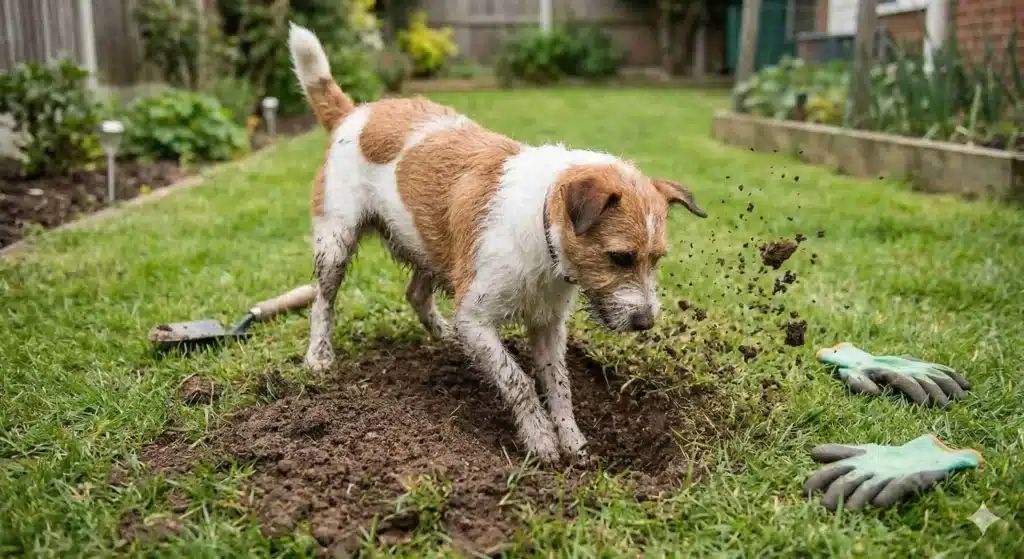
Table of Contents
Why Stopping Your Dog from Digging Matters
A few shallow holes might seem harmless. But left unchecked, digging can escalate into real problems for both your dog and your property.
Broken nails, cracked paw pads, and cuts from sharp rocks or buried debris are common injuries in habitual diggers. Dogs that dig near fences risk escaping into traffic or getting lost. According to the AKC, escape-related digging is especially dangerous because dogs often bolt into unfamiliar territory with no sense of direction home.
Your landscaping takes a hit too. Exposed root systems, damaged irrigation lines, and destroyed garden beds add up fast. And if your dog digs along your home’s foundation, structural concerns can follow.
The behavioral side matters just as much. Digging that stems from anxiety or chronic boredom signals that your dog’s emotional needs aren’t being met. Addressing the digging means addressing your dog’s overall quality of life — and that’s always worth the effort.
Why Dogs Dig: Understanding the Root Causes
Before you can stop a dog from digging, you need to understand why they do it. Dogs don’t dig randomly. Every hole has a motivation behind it, and the cause shapes the solution.
Boredom and excess energy. This is the most common reason, especially in young dogs and high-energy breeds like Labrador Retrievers, Terriers, and Huskies. A dog that doesn’t get enough physical exercise or mental stimulation will invent entertainment — and the backyard becomes a playground. If your dog is also displaying other common behavior problems, boredom is very likely the driver.
Anxiety and stress. Dogs with separation anxiety often dig near doors, gates, or fences as an attempt to escape and find their owner. Noise phobias from thunderstorms or fireworks can also trigger frantic digging. If your dog shows signs of generalized anxiety, the digging may be one symptom of a bigger picture.
Temperature regulation. On hot days, dogs dig shallow pits in shaded areas to lie in the cooler earth beneath the surface. This is completely instinctive and common in breeds with thick double coats. Providing a quality cooling mat can often eliminate this type of digging entirely.
Prey drive and hunting instinct. Terrier breeds especially will dig obsessively when they detect moles, voles, or insects underground. This type of digging tends to be focused in one area and very intense.
Attention-seeking. Some dogs learn that digging gets a big reaction from their owners — even negative attention counts. If you’ve ever rushed outside yelling “No!” while your dog digs, you may have unintentionally reinforced the behavior.
Burying behavior. Some dogs instinctively bury toys, bones, and food for later retrieval. This is hardwired survival behavior passed down from wild ancestors.
Common Mistakes Dog Owners Make (and How to Fix Them)
- Punishing your dog after the fact. If you find a hole hours later and scold your dog, they won’t connect the punishment to the digging. Dogs live in the present. The fix: Only redirect digging behavior in the moment it happens.
- Filling holes with unpleasant substances. Some owners fill holes with cayenne pepper, citrus peels, or their dog’s own feces. These methods are unreliable and can cause irritation or even injury. The fix: Use physical barriers or redirect to a dig zone instead.
- Assuming the dog will “grow out of it.” Without intervention, most digging habits get worse, not better. The fix: Start training and enrichment immediately, regardless of your dog’s age.
- Not providing enough exercise. A tired dog is a well-behaved dog. Many owners underestimate how much physical activity their breed actually requires. The fix: Add at least 20 to 30 extra minutes of vigorous exercise daily and see if the digging decreases.
- Leaving the dog alone in the yard for hours. Unsupervised backyard time is where most digging habits develop. The fix: Limit solo yard time and supervise outdoor sessions until the behavior improves.
- Blocking access to the yard entirely. This doesn’t solve the underlying need — it just removes the opportunity. The fix: Address the root cause while managing access.
Smart Solutions That Redirect the Digging Instinct
One of the most effective long-term strategies is channeling your dog’s digging urge rather than fighting it. A designated dig zone — a sandbox or specific garden patch filled with loose soil — gives your dog a legal outlet. Bury treats or toys in the zone to make it more appealing than the rest of the yard.
But for dogs that dig out of boredom, physical outlets alone aren’t always enough. Mental enrichment is just as important. Dogs need their brains worked as much as their bodies, and interactive puzzle toys are one of the most reliable ways to drain mental energy.
Outward Hound by Nina Ottosson Dog Hide N’ Slide is a smart choice for diggers who need a brain workout. This Level 2 intermediate puzzle requires your dog to slide, flip, and lift compartments to find hidden treats. It’s ideal for dogs that dig because they’re understimulated — the problem-solving challenge keeps them focused and mentally tired. One honest limitation: very determined chewers may try to destroy it rather than solve it, so supervise the first few sessions. For most dogs, though, 15 minutes with this puzzle replaces a lot of yard destruction.
CHECK PRICE ON AMAZON: https://amzn.to/4kDzKti
For dogs that dig due to stress or anxiety, calming support can make a significant difference alongside training.
Only Natural Pet Natural Hemp Soft Chew Bites contain L-Theanine, chamomile, and lemon balm — ingredients that promote relaxation without heavy sedation. These chews work best for dogs whose digging is triggered by separation anxiety, noise phobias, or general nervousness. They’re easy to dose daily and most dogs take them willingly. The limitation is that calming chews alone won’t solve deep-rooted anxiety — they work best as part of a broader approach that includes proven calming strategies and training.
CHECK PRICE ON AMAZON: https://amzn.to/40aUrmL
If your dog digs specifically to cool down on hot days, solving the comfort issue often stops the behavior immediately.
The Green Pet Shop Cool Pet Pad uses pressure-activated, non-toxic gel that cools without electricity or water. It’s ideal for dogs that dig shallow pits in shaded areas during warm months. The pad recharges itself after 15 to 20 minutes of non-use, and the large size fits dogs between 46 and 80 pounds comfortably. One consideration: very heavy chewers may puncture the gel surface, so pair it with supervision if your dog mouths objects aggressively.
CHECK PRICE ON AMAZON: https://amzn.to/3OjsqH5
Step-by-Step: How to Stop a Dog from Digging
Follow these steps in order for the best results. Consistency is everything — most dogs show real improvement within two to four weeks.
- Identify the trigger. Spend a few days observing when, where, and under what conditions your dog digs. Near the fence? After you leave? Only on hot afternoons? This tells you the “why.”
- Increase daily exercise. Add at least 30 minutes of vigorous activity to your dog’s routine. Fetch, swimming, jogging, or structured play all count. A tired dog has less energy for unwanted digging.
- Add mental enrichment. Rotate puzzle toys, practice obedience commands, or try scent games where you hide treats around the yard. Aim for 15 to 20 minutes of brain work daily.
- Create a designated dig zone. Pick a shady corner and fill it with loose sand or soil. Bury a few treats or favorite toys a couple of inches deep. Praise your dog enthusiastically every time they dig in the right spot.
- Redirect in the moment. When you catch your dog digging in a forbidden area, calmly interrupt with a firm “leave it” and guide them to the dig zone. Reward them the instant they dig there instead.
- Remove prey attractants. If critters are the problem, address the pest issue first. Humane mole or vole deterrents can reduce the scent triggers that drive obsessive digging.
- Manage the environment. For dogs that dig along fences to escape, bury chicken wire flat at the base of the fence or place large rocks along the fence line. This makes digging physically unrewarding.
- Reduce unsupervised yard time. Until the behavior improves, don’t leave your dog alone in the yard for extended periods. Supervised outdoor time lets you redirect digging before it becomes a habit loop.
- Stay patient and consistent. Behavior change takes time. Reward good choices, redirect bad ones, and never punish after the fact. Dogs learn through repetition and positive association.
Troubleshooting: Quick Fixes for Specific Situations
- If your dog only digs when you leave: This points to separation anxiety. Gradually build alone-time tolerance with short departures and enrichment toys that keep them occupied.
- If digging happens along the fence line: Your dog likely wants to escape or investigate something on the other side. Bury hardware cloth horizontally along the base and block visual access if possible.
- If the digging is always in the garden: Your dog may be attracted to fertilizers, compost, or the loose soil texture. Block garden access with low fencing and provide a similar digging surface elsewhere.
- If your dog digs indoors (carpets, couch cushions): This is almost always anxiety or nesting behavior. Rule out medical issues with a vet visit and increase calming routines.
- If nothing seems to work after four weeks: Consult a certified dog behaviorist. Persistent digging that doesn’t respond to enrichment, exercise, and training modifications may have a medical or deep behavioral root.
When to See a Professional
Most digging is manageable at home, but certain patterns warrant professional help.
See your veterinarian if your dog’s digging is accompanied by excessive panting, pacing, whining, or destructive behavior indoors. These may indicate clinical anxiety that benefits from behavioral medication in addition to training.
Consult a certified professional dog trainer (CPDT-KA) or a veterinary behaviorist if digging persists despite consistent enrichment and training for more than six weeks. Compulsive digging — repetitive, trance-like, and difficult to interrupt — may require specialized behavior modification.
According to the AVMA, repetitive behaviors in dogs can sometimes reflect underlying neurological or anxiety disorders that need clinical assessment.
If your dog has injured themselves while digging — torn nails, bleeding paws, or cuts — treat the wound first and then reassess your management strategy to prevent recurrence.
Expert Opinion
Veterinarians and animal behaviorists agree that digging is one of the most natural behaviors a dog can display. The goal should never be to eliminate the instinct entirely but rather to channel it appropriately. According to published veterinary behavior guidelines, the combination of increased physical exercise, mental enrichment, and positive redirection produces the best long-term outcomes for habitual diggers.
The critical mistake most owners make is treating digging as a discipline issue. It’s not. It’s a communication issue — your dog is telling you something through the behavior, whether that’s “I’m bored,” “I’m stressed,” or “I’m too hot.” Listening to that message and responding with the right environmental and behavioral changes is what actually stops the digging for good. As always, the guidance in this article is general information and should not replace a consultation with your veterinarian for persistent or severe cases.
Frequently Asked Questions
Why does my dog dig holes and lie in them?
Dogs dig cooling pits to escape heat. The earth below the surface is cooler than the top layer. Providing shade and a cooling pad usually stops this behavior quickly.
Will vinegar stop a dog from digging?
Vinegar spray may temporarily deter digging in a specific spot, but it doesn’t address the root cause. Rain washes it away quickly, and most dogs simply move to a new location.
Do certain breeds dig more than others?
Yes. Terriers, Dachshunds, Huskies, and Beagles are genetically predisposed to dig. Terrier breeds were specifically bred to dig after burrowing prey, making the instinct especially strong.
Can I use chicken wire to stop digging?
Laying chicken wire flat just below the soil surface in problem areas works well. Dogs dislike the feeling on their paws. Just make sure the edges are tucked and smooth to prevent injuries.
Is my dog digging because of anxiety?
Possibly. If the digging happens near exits, starts when you leave, or is accompanied by pacing and whining, separation anxiety may be the cause. A full anxiety evaluation helps determine the best approach.
How much exercise does a digging dog need?
Most habitual diggers benefit from at least 60 to 90 minutes of combined physical and mental activity daily. High-energy breeds often need even more.
Should I punish my dog for digging?
No. Punishment after the fact creates confusion and fear without stopping the behavior. Catching the dog in the act and calmly redirecting to an approved area is far more effective.
Can a sandbox replace yard digging?
Absolutely. A sandbox or designated dig zone filled with loose soil gives your dog a legal outlet. Bury treats inside to make it the most rewarding spot in the yard.
Will getting a second dog stop the digging?
Not necessarily. A companion may reduce boredom-driven digging, but two bored dogs can also dig together. Address the root cause before adding a second pet.
When should I call a vet about my dog’s digging?
Call your vet if digging is compulsive, causes self-injury, or accompanies other behavioral changes like appetite loss, aggression, or extreme anxiety.
Conclusion
Learning how to stop a dog from digging starts with one simple shift: seeing the behavior as communication, not defiance. Your dog is telling you something — whether it’s a need for more exercise, relief from anxiety, or just a cooler place to lie down on a hot afternoon.
The strategies in this guide work because they address the root cause, not just the symptom. More exercise, better mental enrichment, a designated dig zone, and the right environmental adjustments can transform a chronic digger into a content, well-behaved dog. Pair those changes with patience and consistency, and you’ll see results faster than you’d expect.
Start today. Pick the one cause that most closely matches your dog’s digging pattern, and tackle it with the matching solution from this guide. Your yard — and your dog — will thank you for it.