You walk into a dog park and your eyes lock on a massive Great Dane lounging in the shade while a toddler uses him as a pillow. There’s just something magnetic about big dog breeds. They fill your home with warmth, loyalty, and yes, a whole lot of drool. But living with a large breed is more than just buying a bigger bed. It takes real knowledge to keep these gentle giants happy and healthy.
Quick Answer
Big dog breeds are generally classified as dogs weighing 50 pounds or more at full maturity. They include popular breeds like the Labrador Retriever, German Shepherd, Golden Retriever, Great Dane, and Bernese Mountain Dog. These breeds make wonderful family companions, but they require more space, a larger food budget, and careful attention to joint health compared to smaller dogs.
TL;DR: Big dog breeds are loyal, loving, and impressive companions that need proper nutrition, joint support, consistent training from puppyhood, and regular vet checkups. Choosing the right large breed for your lifestyle is the single most important decision you’ll make.
Key Takeaways
- Big dog breeds typically weigh between 50 and 200 pounds and have shorter lifespans (8–12 years) than small breeds, making every year count.
- Joint health is the number one concern for large dogs. Start preventive care early with proper nutrition and supplements.
- Training must begin in puppyhood. A 100-pound untrained dog is a safety risk, not just an inconvenience.
- Large breeds eat 3–5 cups of food per day on average, costing $80–$150+ per month in quality kibble alone.
- Matching a breed’s energy level to your lifestyle prevents behavioral problems, rehoming, and heartbreak.
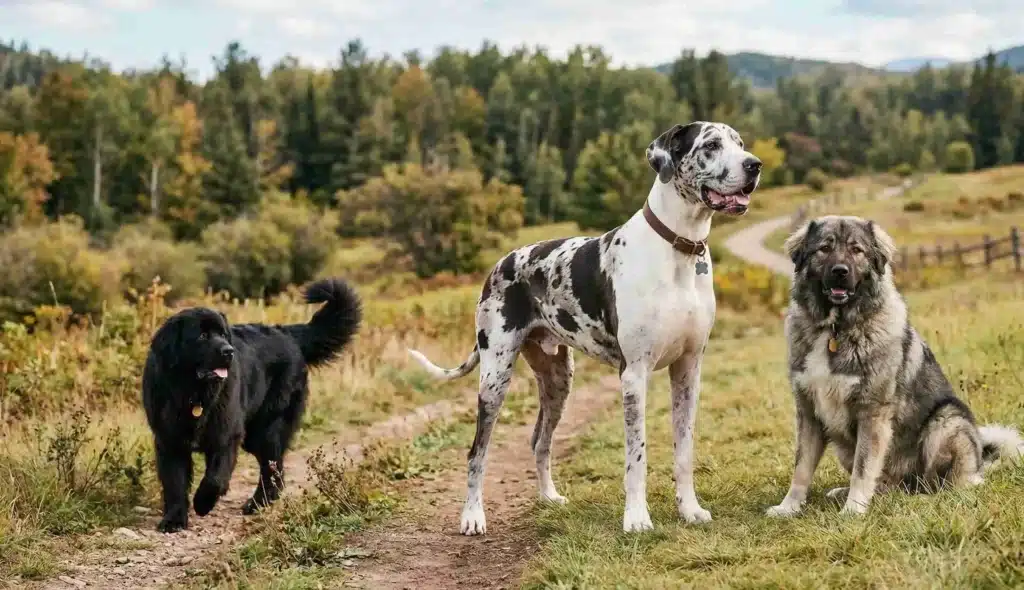
Table of Contents
Why Big Dog Breeds Matter More Than You Think
Choosing a big dog breed isn’t just a preference. It’s a lifestyle commitment that affects your daily routine, your budget, and your living space for the next decade.
Large breeds are prone to specific health issues that smaller dogs rarely face. Hip dysplasia, elbow dysplasia, bloat (gastric dilatation-volvulus), and cruciate ligament tears are significantly more common in dogs over 50 pounds. According to the AKC, giant breeds like Great Danes and Saint Bernards have average lifespans of just 7–10 years, which makes preventive health care even more critical.
The financial commitment is real, too. Veterinarians estimate that large breed owners spend 30–50% more on food, medications, and veterinary care compared to owners of small dogs. Surgeries like ACL repair or hip replacement can run $3,000–$7,000 per joint.
None of this should scare you away. It should prepare you. Big dogs give back tenfold in loyalty, protection, and companionship. You just need to go in with your eyes open.
Big Dog Breeds: Understanding the Basics
Not all big dog breeds are built the same. Understanding the categories helps you pick a breed that actually fits your life.
Large breeds weigh 50–90 pounds. Think Labrador Retrievers, Golden Retrievers, German Shepherds, and Boxers. These are the most common family dogs in this category and they balance size with manageability.
Giant breeds tip the scales at 90 pounds and above. This group includes Great Danes, Mastiffs, Saint Bernards, Newfoundlands, and Irish Wolfhounds. They need more space, more food, and more careful joint management.
Growth rate matters, too. Large breed puppies grow rapidly during their first 12–18 months. Feeding a large breed puppy formula (not standard puppy food) is critical because excess calcium and calories can cause skeletal problems. The AKC recommends large breed-specific puppy food until at least 12 months of age for breeds over 50 pounds, and up to 24 months for giant breeds.
Temperament varies widely across big dog breeds. A Border Collie has entirely different exercise needs than a Basset Hound, even though both are considered large. Energy level, trainability, and independence should all factor into your decision.
If you’re specifically looking for a large companion that won’t leave fur everywhere, there are several big dogs that don’t shed worth exploring.
The 15 Most Popular Big Dog Breeds (At a Glance)
Here’s a snapshot of the most beloved large and giant breeds, grouped by what they do best.
Best for Families: Labrador Retriever (55–80 lbs), Golden Retriever (55–75 lbs), Bernese Mountain Dog (70–115 lbs), Newfoundland (100–150 lbs). These breeds are patient, gentle, and naturally good with children.
Best for Active Owners: German Shepherd (50–90 lbs), Siberian Husky (35–60 lbs), Rhodesian Ridgeback (70–85 lbs), Belgian Malinois (40–80 lbs). High energy, high drive, and happiest with a job to do.
Best for First-Time Big Dog Owners: Labrador Retriever, Golden Retriever, Standard Poodle (40–70 lbs). Forgiving of training mistakes, eager to please, and adaptable.
Best Guard Dogs: German Shepherd, Rottweiler (80–135 lbs), Doberman Pinscher (60–100 lbs), Great Dane (110–175 lbs). Naturally protective without excessive aggression when properly socialized.
Best Gentle Giants: Great Dane, Saint Bernard (120–180 lbs), Mastiff (120–230 lbs), Irish Wolfhound (105–120 lbs). Surprisingly calm and affectionate despite their intimidating size.
If you love that wolf-like appearance, breeds like the Alaskan Malamute and Czechoslovakian Wolfdog make stunning companions. You can learn more about dogs that look like wolves and what owning one really involves.
Common Mistakes Big Dog Owners Make (and Fixes)
- Feeding adult food to large breed puppies. Large breed puppy formulas control calcium and phosphorus ratios to protect developing joints. The fix: Switch to a large breed puppy food from day one and keep them on it until your vet says otherwise.
- Skipping early training because the puppy is “still small.” A 15-pound puppy that jumps on guests becomes a 90-pound dog that knocks people over. The fix: Start basic obedience the week you bring your puppy home, and address common puppy behavior problems before they become habits.
- Over-exercising puppies before their growth plates close. Forced running, jumping off furniture, and long hikes can permanently damage growing joints. The fix: Follow the “5-minute rule” — 5 minutes of structured exercise per month of age, twice daily.
- Ignoring early signs of joint stiffness. Owners often dismiss a slight limp or reluctance to climb stairs as “laziness.” The fix: Any change in gait or activity level warrants a vet visit. Early intervention saves joints and money.
- Feeding from elevated bowls to “prevent bloat.” Research actually shows elevated feeders may increase bloat risk in large breeds. The fix: Feed from a ground-level bowl and consider a slow feeder to reduce gulping.
- Assuming all big dogs need a huge yard. Great Danes are famously good apartment dogs because they’re low energy indoors. The fix: Match the breed’s exercise needs to your lifestyle, not your square footage.
Big dog breeds that gulp their food are at higher risk for bloat, a life-threatening condition. Slowing down mealtimes is one of the simplest preventive steps you can take.
JASGOOD Slow Feeder Dog Bowl is designed specifically for large and medium dogs that inhale their meals. The anti-gulping ridges force your dog to eat around obstacles, naturally slowing them down by up to 10 times. It’s sturdy, easy to clean, and wide enough for big breed muzzles. The one limitation is that extremely aggressive chewers may damage the ridges over time, so it works best for dogs that eat enthusiastically but don’t destroy their bowls.
CHECK PRICE ON AMAZON: https://amzn.to/4bSghCM
Caring for Your Big Dog Breed: Step-by-Step
- Choose the right breed for your lifestyle. Research energy levels, grooming needs, and health predispositions before falling in love with a face. Be honest about your activity level and living situation.
- Puppy-proof your home for a large breed. This means securing trash cans (large dogs can open them), moving breakable items to higher shelves, and gating off stairs for puppies under 4 months.
- Start training immediately. Teach “sit,” “stay,” “down,” and leash manners before your puppy hits 20 pounds. Positive reinforcement works best for large breeds. Consistency matters more than duration — three 5-minute sessions beat one 30-minute session.
- Feed a large breed-specific diet. Look for formulas that list meat as the first ingredient, contain controlled calcium levels (0.7–1.2% for puppies), and include omega-3 fatty acids for joint and coat health. Incorporating superfoods into your dog’s diet can boost overall nutrition naturally.
- Establish a joint health routine early. Begin glucosamine or omega-3 supplements by age 1–2 for giant breeds, or whenever your vet recommends. Keep your dog at a healthy weight — every extra pound puts 4 extra pounds of pressure on each joint.
- Schedule regular vet checkups. Large breeds should see a vet twice yearly after age 5. Request hip and elbow evaluations, cardiac screening (especially for Dobermans, Boxers, and Great Danes), and thyroid panels.
- Exercise appropriately for the breed and age. Adult Labrador Retrievers need 60–90 minutes of daily activity. Adult Great Danes need just 30–45 minutes. Swimming is one of the best low-impact exercises for large breeds with joint concerns.
- Invest in proper gear. Large breeds need heavy-duty leashes, appropriately sized crates, and supportive bedding. Skimping on equipment leads to breakage, escapes, and discomfort.
Joint health is the single biggest long-term concern for big dog breeds. Starting a quality supplement early can make a measurable difference in your dog’s mobility and comfort as they age.
Wuffes Advanced Dog Hip and Joint Supplement combines glucosamine, chondroitin, MSM, omega-3, and green-lipped mussel in one chew. It’s formulated for small and medium breeds but works as a daily maintenance dose alongside your large breed’s primary joint protocol. Owners report visible improvement in stiffness within 3–6 weeks. The main drawback is that giant breeds over 90 pounds may need a higher-dosed option, so check with your vet on dosing.
CHECK PRICE ON AMAZON: https://amzn.to/4aRkWUs
Troubleshooting Common Big Dog Breed Issues
- If your big dog pulls on the leash: Switch to a front-clip harness and practice “stop and redirect” — when your dog pulls, stop moving, wait for slack, then proceed. Check out the best leashes for dogs that pull for gear that actually helps.
- If your large breed puppy is growing too fast: Consult your vet about switching to an adult large breed food earlier. Rapid growth doesn’t mean healthy growth.
- If your dog refuses to eat from a slow feeder: Start by placing a few high-value treats in the bowl alongside regular food. Most dogs adapt within 3–5 days.
- If your big dog has trouble getting into the car: Use a ramp rated for your dog’s weight. Jumping in and out of vehicles is a leading cause of joint injuries in large breeds.
- If your dog seems stiff after rest but “warms up” quickly: This is often the first sign of arthritis or joint degeneration. Don’t wait for it to worsen. Schedule a vet evaluation.
- If your large dog shows anxiety or restlessness: Big dogs can develop separation anxiety or situational stress just like small breeds. Explore proven calming products for dogs to find safe, effective options.
When to See a Veterinarian
Some signs in big dog breeds require immediate professional attention.
See your vet right away if your dog shows sudden lameness or inability to bear weight on a limb. Abdominal bloating, unproductive retching, or restlessness can signal bloat, which is a life-threatening emergency that requires surgery within hours. Rapid weight gain or loss without dietary changes may indicate thyroid issues or internal disease. Persistent limping that lasts more than 48 hours, even if mild, should be evaluated. Difficulty breathing, excessive panting at rest, or fainting episodes need urgent cardiac evaluation, especially in breeds predisposed to dilated cardiomyopathy.
Any big dog over age 7 should have comprehensive bloodwork and imaging done annually. Catching problems early in large breeds often means the difference between management and crisis.
What Veterinary Experts Say About Big Dog Breeds
Veterinarians consistently emphasize that the biggest mistake large breed owners make is treating joint health as reactive instead of proactive. By the time a big dog is visibly limping, significant cartilage damage has often already occurred. Starting joint-supportive nutrition, maintaining lean body condition, and avoiding high-impact exercise during growth phases are the three pillars of keeping a large breed mobile and comfortable into their senior years.
According to the American Veterinary Medical Association (AVMA), large and giant breed dogs benefit from breed-specific preventive care protocols that differ meaningfully from those used for small breeds. This includes adjusted vaccination schedules, different anesthesia protocols, and more frequent orthopedic screening. Choosing a veterinarian experienced with large breeds is one of the best investments you can make.
Large breed dogs also benefit from sleeping on supportive surfaces. Thin beds and hard floors accelerate joint wear, especially for breeds already predisposed to hip and elbow dysplasia.
PetFusion Ultimate Dog Bed features orthopedic memory foam with a waterproof liner, making it ideal for big dog breeds that need real joint support. The medium firmness cradles heavy frames without bottoming out, and the removable cotton cover is machine washable. It comes in multiple sizes, including options for dogs up to 100+ pounds. The honest limitation is the price point — it’s a premium bed — but for a large breed’s long-term comfort and joint health, the investment pays for itself.
CHECK PRICE ON AMAZON: https://amzn.to/46TYkQO
Frequently Asked Questions About Big Dog Breeds
What is the best big dog breed for families with kids?
Labrador Retrievers and Golden Retrievers consistently rank as the top family-friendly large breeds. They’re patient, gentle, and trainable. Newfoundlands are also excellent with children due to their calm, protective nature.
How long do big dog breeds live?
Most large breeds live 8–12 years. Giant breeds like Great Danes and Mastiffs average 7–10 years. Proper nutrition, preventive care, and healthy weight management can help maximize lifespan.
Are big dog breeds good for apartments?
Some are. Great Danes, Greyhounds, and Basset Hounds are surprisingly well-suited to apartment living due to their low indoor energy levels. The key is meeting their daily exercise needs outside.
How much does it cost to own a big dog per year?
Expect $1,500–$3,000 annually for a large breed, covering food, vet care, preventive supplements, grooming, and supplies. Giant breeds or dogs with health issues may cost significantly more.
Do big dog breeds need special food?
Yes. Large and giant breed puppies need formulas with controlled calcium and calorie levels. Adults benefit from foods with joint-supporting ingredients like glucosamine and omega-3 fatty acids.
What is bloat and which big dog breeds are at risk?
Bloat (GDV) is a life-threatening condition where the stomach fills with gas and twists. Deep-chested breeds like Great Danes, German Shepherds, Standard Poodles, and Weimaraners are most at risk. Using slow feeders and avoiding exercise right after meals can help reduce risk.
Are big dogs harder to train than small dogs?
Not inherently. Most large breeds, especially retrievers and shepherds, are highly trainable. The challenge is that training mistakes are harder to manage at 80+ pounds, so starting early and staying consistent is critical.
What are the calmest big dog breeds?
Great Danes, Basset Hounds, Mastiffs, and Bernese Mountain Dogs are known for their relaxed temperaments. If you prefer a laid-back companion, check out our guide to lazy dog breeds for more options.
How do I keep my big dog’s joints healthy?
Maintain a healthy weight, provide joint supplements (glucosamine, omega-3), avoid high-impact exercise during puppyhood, use supportive bedding, and schedule regular vet checkups. Prevention is far more effective and affordable than treatment.
Can big dogs travel safely in cars?
Absolutely, but they need proper restraints. A crash-tested harness or travel crate is essential for safety. Unrestrained large dogs become dangerous projectiles in a collision.
Your Big Dog Journey Starts Here
Big dog breeds bring an unmatched combination of loyalty, presence, and heart into your life. They lean against your legs when you’re sad, they light up the room when you come home, and yes, they hog the entire couch. The key to a great experience is preparation. Choose a breed that matches your energy, budget, and living situation. Start training and joint care from day one. Feed the right food, schedule regular vet visits, and invest in quality gear that supports their size. Your gentle giant deserves nothing less. Start with one small step today — whether that’s researching breeds, booking a vet consultation, or picking up a joint supplement — and build from there. The reward is a decade of the deepest companionship you’ll ever know.