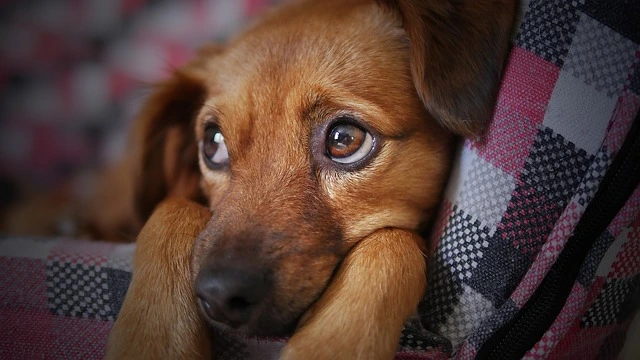
You brought your puppy home three days ago. The first night was magical. The second morning, less so — because you woke up to a puddle on the rug, a suspicious spot near the couch, and a puppy who looked absolutely delighted with herself. Sound familiar? Learning how to potty train a puppy is the first real challenge every new dog owner faces, and it’s completely normal to feel a little overwhelmed.
The good news? With the right approach, most puppies get the idea faster than you’d expect.
Quick Answer: How to Potty Train a Puppy ?
Potty training a puppy means teaching her to eliminate outdoors (or in a designated indoor spot) by using a consistent schedule, positive reinforcement, and close supervision. The process works by predicting when your puppy needs to go, taking her to the correct spot every time, and rewarding the right behavior immediately. It helps new dog owners build reliable house manners and prevents the frustration of constant indoor accidents.
TL;DR: Take your puppy outside frequently — especially after meals, naps, and play — reward every outdoor success with praise and treats, and never punish accidents. Consistency beats intensity every time.
Key Takeaways
- Puppies need to go outside every 1–2 hours during the day, plus after every meal, nap, and play session.
- A crate is one of the most effective potty training tools — dogs naturally avoid soiling their sleeping space.
- Accidents are not disobedience. They are information about your schedule gaps.
- Most puppies show real reliability between 4 and 6 months old, though the timeline varies by breed and individual dog.
- Punishment after the fact does nothing — your puppy has already forgotten. Redirect, clean up, and move on.
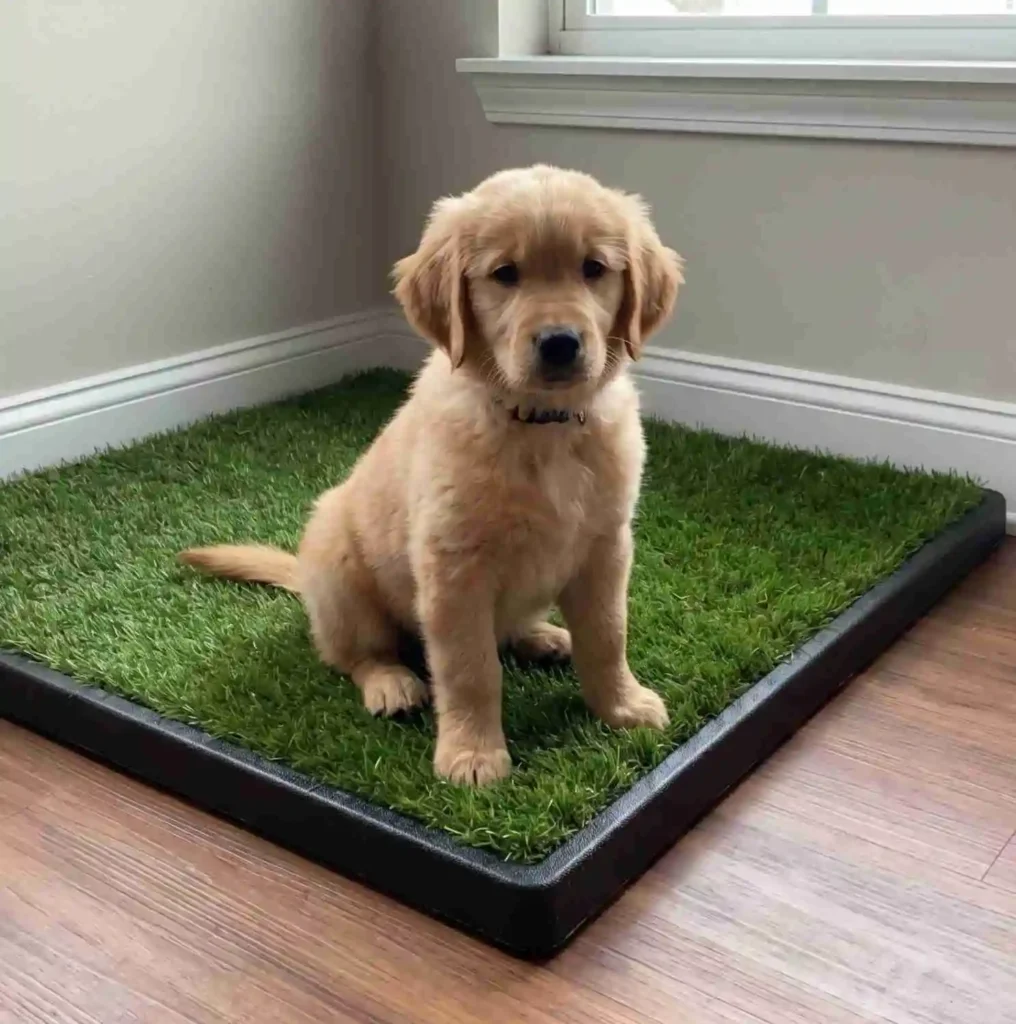
Table of Contents
Why Potty Training Actually Matters
This isn’t just about keeping your floors clean. A puppy who isn’t potty trained lives with a constant low-level stress — she doesn’t understand the rules, can’t communicate her needs, and risks being scolded for something she doesn’t yet grasp. That’s hard on both of you.
From a health angle, puppies who regularly hold their bladder longer than they’re physically able to can develop urinary tract issues. Conversely, puppies given free roam too soon often develop a habit of eliminating indoors that becomes increasingly difficult to reverse as they grow. Getting the foundation right early protects your dog’s wellbeing and your sanity.
How a Puppy’s Bladder Actually Works
Here’s the physiological reality: a young puppy simply cannot hold her bladder for long. A rough rule of thumb is that puppies can hold it for about one hour per month of age. So an 8-week-old puppy? Roughly two hours, max — and often less during active play or excitement.
The sphincter muscles that control bladder function aren’t fully developed until around 4–6 months old. That’s not stubbornness. That’s anatomy. Understanding this prevents a lot of frustration. You’re not fighting bad behavior — you’re working with physical development. When you combine that with the fact that puppies don’t yet have the cognitive wiring to connect “I need to go” with “I should walk to the door,” you see why a structured schedule from your end does all the heavy lifting early on.
The good news is that as your puppy’s bladder grows and her brain matures, the job gets significantly easier — especially if you’ve been consistent from the start.
How Long Does It Take to Potty Train a Puppy?
This is the question every new owner asks, and the honest answer is: it depends. How long it takes to potty train a puppy ranges from a few weeks to several months, depending on the breed, the consistency of training, and the individual dog.
Smaller breeds often take longer because they have smaller bladders and higher metabolisms — meaning they need to go more frequently. Toy breeds like Chihuahuas and Dachshunds can take up to 6 months or more to be reliably trained. Larger, highly food-motivated breeds like Labrador Retrievers often catch on in 4–8 weeks with consistent effort.
Most owners see a clear turning point somewhere between 12 and 16 weeks when the puppy begins to signal (circling, sniffing, heading toward the door) before needing to go. That’s a milestone worth celebrating. Full reliability — meaning very rare accidents, even in new environments — usually arrives around the 4–6 month mark.
Common Mistakes (and Fixes)
These are the errors that drag out training by weeks — sometimes months.
- Giving too much freedom too soon. The fix: Keep your puppy on a leash indoors or in a small gated area until she has at least two consistent accident-free weeks.
- Waiting too long between trips outside. The fix: Set a timer on your phone. During the day, go out every 60–90 minutes minimum for puppies under 12 weeks.
- Punishing accidents after the fact. The fix: If you didn’t catch it happening, clean it up silently with an enzymatic cleaner and recalibrate your schedule. Scolding a puppy for something that happened 30 seconds ago creates anxiety, not learning.
- Skipping the reward. The fix: Bring high-value treats outside. The reward must come within 2–3 seconds of elimination — not after you walk back inside.
- Inconsistent spot selection. The fix: Take your puppy to the exact same patch of grass or sidewalk spot every single time. The smell of previous eliminations is a powerful cue.
- Ignoring nighttime strategy. The fix: Limit water intake 1–2 hours before bed, take your puppy out right before sleep, and set an alarm to take her out once in the night if she’s under 12 weeks.
- Expecting overnight success. The fix: Track your puppy’s schedule in a simple notes app — patterns emerge fast, and you’ll start anticipating needs before accidents happen.
Setting Up Your Potty Training Station: Tools That Help
Two items make a genuine difference in potty training success, especially in the early weeks.
Puppy Pads for Indoor Backup
Indoor puppy pads aren’t a crutch — they’re a strategic tool for apartment dwellers, bad-weather days, and overnight periods when getting outside quickly isn’t realistic. The key is using them in one fixed location only, so your puppy develops a clear indoor-only zone that never competes with the rest of your home.
The Amazon Basics Dog and Puppy Pee Pads are a practical, no-frills choice for this. Each pad is 22×22 inches with five-layer construction and a quick-dry surface that pulls moisture away from the top layer immediately — useful when you’re trying to keep paws clean and prevent tracking. The adhesive corner tabs keep the pad in place even when your puppy tries to shred it (and she will try). They’re available in bulk packs of 100, which matters during the peak accident phase of early training. One honest limitation: like any pad, they do need consistent repositioning toward the door as your puppy progresses, so she doesn’t become over-reliant on the indoor option.
CHECK PRICE ON AMAZON: https://amzn.to/4asfPKx
A Crate for Overnight and Unsupervised Periods
The crate is arguably the single most powerful potty training tool available. Dogs have a natural instinct to avoid soiling the space where they sleep. A properly sized crate — just large enough for your puppy to stand, turn around, and lie down — leverages that instinct to extend the time between necessary outdoor trips, especially at night.
The MidWest Homes for Pets 24-Inch iCrate Folding Dog Crate is a well-regarded option for small breeds, built with a divider panel that lets you shrink the interior as needed (critical — too much space defeats the purpose). It has a leak-proof tray at the bottom, double-door access, and secure latches that hold up against determined escape artists. It folds flat for portability. One thing to be aware of: the 24-inch size is best for small breeds under roughly 25 lbs at adult size — measure your pup before ordering, or opt for the larger size if you have a medium breed. If you’re working through the full crate training process, our detailed guide on crate training a puppy walks you through every stage.
CHECK PRICE ON AMAZON: https://amzn.to/4ripwkq
Step-by-Step: How to Potty Train a Puppy (The Full System)
Follow this sequence from day one, and you’ll be building the habit correctly from the start.
Step 1: Establish a Fixed Schedule
Write it down. Literally. Your puppy goes outside at the same times every day: first thing in the morning (immediately — carry her if needed), after every meal, after every nap, after every play session, and last thing before bed. For puppies under 12 weeks, add a trip every 60–90 minutes during waking hours.
Step 2: Pick One Outdoor Spot
Choose a patch of grass or pavement close to your door. Take your puppy to that exact spot every single time. The residual scent acts as a prompt — many puppies begin eliminating faster once they smell that they’ve done it there before.
Step 3: Use a Cue Word
As soon as your puppy starts to eliminate, say your cue word quietly — “go potty,” “outside,” whatever you choose. Say it calmly once. Over time, your puppy will associate the word with the action, which becomes useful when you’re traveling or need her to go quickly.
Step 4: Reward Immediately and Enthusiastically
The moment she finishes — not when you get back inside — give a small, high-value treat and verbal praise (“Yes! Good girl!”). The timing is everything. Delayed rewards teach nothing. If you’re still working on getting your puppy to enjoy outdoor time, our guide on leash training a puppy can help make outdoor trips smoother from the start.
Step 5: Supervise Actively Indoors
When your puppy is inside and not in her crate, keep her within sight at all times. Tether her to you with a leash if needed. Watch for pre-elimination signals: sniffing the ground in circles, squatting, heading to a corner or behind furniture.
Step 6: Interrupt and Redirect, Never Punish
If you catch your puppy mid-accident, make a neutral sound (not a shout — just a “Ah!”) to interrupt, then immediately carry or guide her to the outdoor spot. If she finishes outside even a little, reward it. If she’s already done, clean up with an enzymatic cleaner without drama.
Step 7: Extend Freedom Gradually
Once your puppy has gone two full weeks without an indoor accident while supervised, you can begin to expand her indoor access slightly — one room at a time. Each expansion requires the same watchful eye. Rushing this step is the most common reason training regresses.
Troubleshooting: If/Then Solutions
If your puppy goes inside immediately after coming back from outside: → She may have been distracted and didn’t fully empty. Next time, wait longer outside — up to 10 minutes — and walk around to keep her moving.
If your puppy goes in her crate: → The crate may be too large (giving her a “bathroom corner”), or she may have been left too long. Reduce space or shorten crate time.
If accidents happen only at night: → Limit water 2 hours before bedtime. Add a mid-night trip outside for puppies under 14 weeks.
If your puppy suddenly regresses after weeks of success: → Rule out a UTI (urinary tract infection) with your vet. Stress changes (new home, new pet, schedule shifts) also cause temporary regression.
If your puppy seems to have no signal behavior: → Start conditioning a door bell or bell rope near the exit — many owners successfully teach their dog to ring it when they need to go out. It sounds ambitious, but most puppies pick this up in 1–2 weeks.
If progress feels nonexistent after 8+ weeks: → Check whether everyone in the household is using the same schedule, same spot, and same reward system. Inconsistency between family members is the most overlooked cause of slow progress.
When to See a Professional
Potty training difficulties are usually a training and consistency issue — but sometimes they’re medical. See your vet promptly if:
- Your puppy urinates with unusual frequency, strains to go, or cries during elimination
- There’s blood in the urine or stool
- Your puppy who was previously reliable has sudden, complete regression with no environmental explanation
- Your puppy appears to have no bladder awareness at all past 5 months old
A urinary tract infection, bladder stones, or a congenital issue can all mimic training resistance. Rule these out before assuming the problem is behavioral. Before your first outdoor potty trips, make sure you’re also up to date on when puppies can safely go outside — your vet’s vaccination schedule matters here.
Expert Opinion
Veterinary guidance consistently emphasizes that patience and timing are the two variables that matter most in potty training. The American Kennel Club (AKC) recommends beginning potty training as early as 12 to 16 weeks of age, as this is when puppies develop enough bladder and bowel control to begin learning. The AKC also notes that puppies adopted after 12 weeks — particularly those from pet stores or situations where they were kept in small enclosures — may take longer because they’ve already learned to eliminate in their living space, overriding their natural instinct.
Positive reinforcement, not punishment, is the universal professional recommendation. Veterinarians emphasize that punishment-based approaches create fear and anxiety around the act of elimination, which can lead to puppies learning to hide where they go rather than learning to go outside. Rewarding the correct behavior builds a reliable, stress-free habit. This approach aligns with the broader framework recommended by the American Veterinary Medical Association (AVMA) for humane, science-backed animal training.
Many owners also find that managing other early puppy behaviors in parallel — like what to do when your puppy won’t stop biting — creates a more structured overall routine that indirectly supports potty training success.
Frequently Asked Questions
How long does it take to potty train a puppy? Most puppies show significant improvement between 4 and 8 weeks of consistent training. Full reliability — rare accidents even in new settings — typically arrives around 4 to 6 months of age.
At what age should a puppy be fully potty trained? Most puppies are reliably trained between 4 and 6 months old. Some smaller breeds may take up to 12 months. If your puppy is past 6 months and still struggling, consult your vet to rule out a medical cause.
How often should I take my puppy outside to potty? Every 1–2 hours during the day for puppies under 12 weeks. Always immediately after meals, naps, play, and first thing in the morning and last thing at night.
Should I use puppy pads or go straight outside? Either approach works. Puppy pads are practical for apartment living or bad-weather days. If you choose pads, use a single fixed location and gradually transition to outdoor training as your puppy grows.
What do I do when my puppy has an accident inside? Don’t punish after the fact — your puppy won’t make the connection. Clean thoroughly with an enzymatic cleaner, assess whether your schedule needs adjustment, and move on.
Is crate training necessary for potty training? It’s not mandatory, but it’s highly effective. A properly sized crate leverages your puppy’s natural instinct to avoid soiling her sleeping area, which significantly speeds up the process.
Why does my puppy go inside right after coming back in? She was probably distracted outside and didn’t fully empty. Extend outdoor time, walk around to keep her active, and wait until she eliminates before coming back in.
Can I potty train a puppy in an apartment? Absolutely. Puppy pads near the door plus frequent trips to a consistent outdoor spot work well. Many apartment owners use a combination approach during early training. Understanding common puppy behavior issues — including indoor marking — helps apartment owners manage the process more effectively.
What’s the fastest way to potty train a puppy? Consistency beats intensity every time. The fastest results come from a tight schedule, immediate rewards, zero punishment, close supervision, and a crate for unsupervised periods. No shortcut replaces the basics.
Why is my puppy suddenly having accidents after weeks of no problems? Regression can be caused by stress (new pet, new environment, schedule changes), a UTI, or simply expanded freedom given too quickly. Tighten up supervision, revisit the schedule, and see your vet if the regression is sudden and unexplained.
Conclusion: How to Potty Train a Puppy — Your Next Step
Learning how to potty train a puppy comes down to three things: a predictable schedule, immediate rewards, and a calm response to accidents. That’s it. The elaborate routines, the frustrated scolding, the middle-of-the-night Googling — most of that disappears when you nail those three fundamentals.
Remember that your puppy is working with an immature bladder, limited cognitive connections, and zero prior experience with human household rules. She’s not being difficult. She’s just new. Your consistency is the entire system — and the more predictable you are, the faster she learns.
Start today with a written schedule. Set your phone alarm. Bring treats outside. And the next time she goes in exactly the right spot, make it the biggest celebration of her day. That joyful moment of connection — that’s how potty training actually works. For deeper work on building good habits from the ground up, our complete guide on crate training a puppy step by step is the natural next read.
Disclaimer: The health and training guidance in this article is for general informational purposes only and does not constitute veterinary or professional behavioral advice. Always consult a licensed veterinarian for concerns about your puppy’s health.