Picture this: It’s 3 AM, and you hear whimpering from across the room. Your new puppy is confused, anxious, and testing every boundary. You’re exhausted, second-guessing everything, wondering if bringing home this furry bundle was a mistake. Here’s the truth—crate training a puppy isn’t about locking them away. It’s about giving your pup a den of their own, a sanctuary where they feel secure, and giving yourself the sanity-saving structure both of you desperately need.
Quick Answer
Crate training a puppy is the process of teaching your dog to view their crate as a safe, comfortable den rather than a cage. The primary benefit is housetraining success—puppies naturally avoid soiling their sleeping area. It immediately helps owners prevent destructive behavior, provide safe transportation, and establish healthy boundaries.
TL;DR: Start with 5-minute positive sessions, never force entry, and gradually increase crate time to match your puppy’s age in months plus one (e.g., 3-month-old = 4 hours max). Feed meals inside, use high-value treats, and ignore whining unless it signals a bathroom emergency.
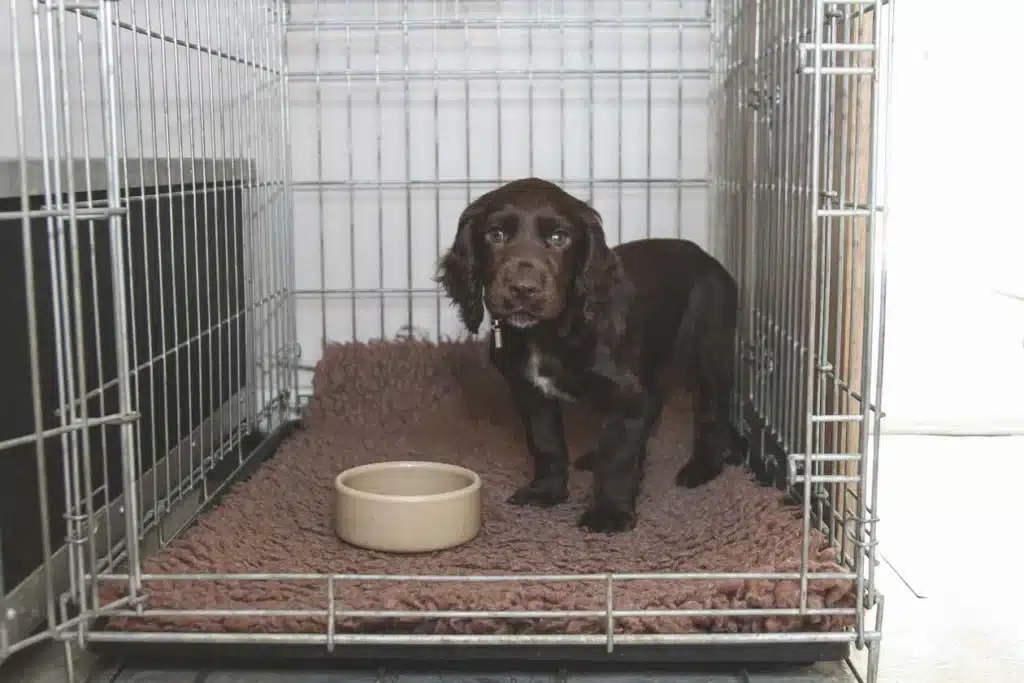
Table of Contents
Why Crate Training Matters
Your puppy’s ancestors denned in caves and burrows. This instinct doesn’t disappear just because we’ve moved them into our homes with memory foam beds and climate control. Crate training taps into this natural denning behavior, but the benefits extend far beyond instinct.
Housetrained puppies emerge 3–4 weeks faster with consistent crate use. The American Kennel Club confirms that dogs have an innate desire to keep their sleeping quarters clean, making the crate your most powerful housetraining ally. Beyond potty training, crates prevent the $500+ in property damage the average unsupervised puppy causes in their first year—chewed baseboards, destroyed shoes, shredded furniture.
But here’s what matters more than your belongings: safety. A crated puppy can’t chew electrical cords, ingest toxic houseplants, or swallow foreign objects requiring emergency surgery. Veterinary behaviorists report that properly crate-trained dogs experience significantly less separation anxiety because they have a predictable, secure space when alone.
The comfort factor runs both ways. You’ll sleep through the night knowing your puppy is safe. You can leave for a grocery run without returning to chaos. And when that inevitable vet visit or boarding situation arrives, your dog won’t panic in an enclosed space—they’ll have the coping skills already built in.
How Crate Training Works
The magic of crate training lies in rewiring your puppy’s emotional response to confinement. Dogs learn through association—pair the crate with positive experiences, and it becomes a retreat. Pair it with punishment or isolation, and you’ve created a prison that breeds anxiety.
Start by selecting a crate size where your puppy can stand fully, turn around comfortably, and lie down with legs extended. Not bigger. Excess space defeats housetraining because puppies will designate one end as a bathroom. For growing breeds, invest in a crate with a divider panel you can adjust as they grow, or plan to upgrade every few months.
Place the crate in a household hub during the day—kitchen, living room, wherever your family congregates. Puppies are social animals; isolation triggers distress. At night, move the crate to your bedroom. Hearing your breathing and movements provides comfort, and you’ll hear when they need a midnight bathroom break.
The training itself follows a simple escalation: First, let your puppy explore with the door open. Toss treats inside. Feed meals in the crate with the door ajar. Once they enter willingly, close the door for 30 seconds while you’re present. Gradually extend the duration. Then practice stepping out of sight for brief moments. Build up to leaving the house for short errands.
Timing matters enormously. Puppies need bathroom breaks every 1–2 hours during waking hours, immediately after meals, and after play sessions. Once your puppy masters crate training, leash training becomes your next essential skill for safe outdoor bathroom breaks. The formula for maximum crate duration is simple: your puppy’s age in months, plus one hour. A 3-month-old puppy shouldn’t stay crated longer than 4 hours except overnight.
Top Product Recommendations
1. MidWest Homes for Pets Ultima Pro Double Door Dog Crate
Best for: Medium to large breed puppies (Labs, Golden Retrievers, German Shepherds)
This professional-grade crate solves the growth problem with an adjustable divider panel. The double-door design offers placement flexibility—side entry for tight spaces, front entry for open rooms. The Ultima Pro features rounded corners that prevent injury during enthusiastic entries and a slide-bolt latch system puppies can’t accidentally nose open.
The powder-coated steel construction withstands determined chewing while the 1.5-inch wire spacing prevents paws from getting stuck. At 42 inches long, it accommodates dogs up to 90 pounds at full size. The divider lets you start with a puppy-sized space and expand as they grow, eliminating the need for multiple crate purchases.
One limitation: The pan is ABS plastic rather than metal, so power chewers may damage it. The metal construction also makes this heavier than soft-sided alternatives—not ideal if you need frequent portability.
2. Diggs Revol Collapsible Dog Crate
Best for: Design-conscious owners and frequent travelers (all puppy sizes with appropriate sizing)
The Revol reinvents the wire crate with a sleek, modern aesthetic that doesn’t scream “dog kennel” in your living room. The steel tube frame and diamond-plate door collapse to 6 inches flat in under 60 seconds without tools—game-changing for apartment dwellers or anyone who transports their crate regularly.
Front and top doors provide easy access, and the elevated design with a slide-out tray makes cleanup effortless. The patent-pending locking system is genuinely escape-proof; we’ve never seen a dog defeat it. Diggs includes a divider panel, cushion, and even a travel bag, making this a complete system rather than just a crate.
The honest limitation is price—this costs 2–3 times more than traditional wire crates. The plastic floor won’t withstand aggressive chewing as well as metal alternatives.
3. Petmate Sky Kennel Pet Carrier
Best for: Airline travel and anxious puppies preferring den-like enclosures (small to medium breeds)
IATA-approved for airline cargo, the Sky Kennel provides a completely enclosed environment that reduces visual stimulation—critical for anxious puppies. The heavy-duty plastic construction won’t pinch paws or snag collars like wire alternatives, and the solid walls prevent items from being pulled into the crate.
Ventilation comes from three sides with wire-reinforced openings. The steel wire door locks with a secure vault latch and includes tie-down holes for vehicle safety. The top and bottom pieces bolt together firmly but separate for compact storage.
The enclosed design that benefits anxious dogs becomes a drawback for ventilation in hot climates—not suitable for outdoor use in summer. The plastic also makes this bulkier than collapsible wire crates when transporting.
PetMate Sky kennel Pet Carrier
Breed and Weight Sizing Guide
Small breeds (up to 25 lbs): Chihuahuas, Yorkies, Pugs, French Bulldogs
- Crate size: 24″ length
- Example weight ranges: Chihuahua (6 lbs), Yorkie (7 lbs), Pug (18 lbs), French Bulldog (25 lbs)
Medium breeds (26–50 lbs): Cocker Spaniels, Border Collies, Bulldogs, Beagles
- Crate size: 30″ length
- Example weight ranges: Cocker Spaniel (30 lbs), Border Collie (40 lbs), Bulldog (50 lbs)
Large breeds (51–90 lbs): Labrador Retrievers, Golden Retrievers, German Shepherds, Boxers
- Crate size: 36″–42″ length
- Example weight ranges: Lab (70 lbs), Golden (70 lbs), German Shepherd (80 lbs), Boxer (70 lbs)
Extra-large breeds (90+ lbs): Great Danes, Mastiffs, Saint Bernards, Rottweilers
- Crate size: 48″ length
- Example weight ranges: Great Dane (140 lbs), Mastiff (200 lbs), Saint Bernard (180 lbs)
Measure your puppy standing at full height and from nose to tail base. Add 4 inches to each measurement for ideal crate dimensions. When in doubt, size up—you can always use a divider to reduce space temporarily.
Common Mistakes (and Fixes)
Using the crate for punishment. Sending your puppy to their crate as a “time-out” poisons the association. The fix: Only crate during calm moments or when offering something positive like meals or puzzle toys. Never use the crate in anger or immediately after your puppy has done something wrong.
Ignoring distress signals. Not all whining is manipulation. Puppies vocalize when they need to eliminate, feel genuinely frightened, or experience discomfort. The fix: Learn your puppy’s distress vocabulary. Urgent, escalating whining 30 minutes after crating likely signals a bathroom need. Take them out calmly, allow a brief potty break with zero play or interaction, then return them to the crate. Attention-seeking whining (starting the moment you leave, inconsistent, accompanied by pauses to see if you’re responding) should be ignored completely.
Crating too long, too soon. Jumping to 8-hour workdays in week one guarantees accidents, anxiety, and regression. The fix: Start with 5–10 minute sessions multiple times daily. Gradually extend duration over 2–3 weeks. Hire a dog walker or arrange midday breaks if your work schedule demands longer absences.
Placing the crate in isolation. A puppy crated in a basement or garage feels abandoned, triggering panic. The fix: Keep the crate in high-traffic areas during the day. Your puppy should see, hear, and smell family activity. At night, the crate belongs in your bedroom within sight of your bed.
Removing too quickly after whining stops. Opening the door the second your puppy quiets teaches them that whining eventually works. The fix: Wait 10–15 seconds of silence before opening the door. Reward calm behavior, not the end of complaining.
Forgetting to exercise before crating. A puppy with pent-up energy views the crate as torture. The fix: Burn energy with 10–15 minutes of active play before crating. A tired puppy settles easily; a bored puppy rebels.
Using crate bedding before housetrained. Soft bedding absorbs accidents, masking the mess and allowing your puppy to sleep comfortably in their own urine. The fix: Keep the crate bare until your puppy is consistently accident-free for 2+ weeks. Then introduce a thin, washable mat before graduating to cushions.
Troubleshooting (If/Then)
If your puppy refuses to enter voluntarily, then scatter high-value treats (small pieces of chicken, cheese, hot dog) deeper into the crate. Toss one near the entrance, one in the middle, and one at the back. Let them enter and exit freely without closing the door. Repeat this exercise 5–7 times daily for several days before attempting door closure.
If whining continues past 5 minutes, then check the time since their last bathroom break. For comprehensive strategies on managing persistent crate vocalization, see our complete guide to puppy whining in crate. If it’s been under an hour since they eliminated, this is likely attention-seeking behavior—ignore it completely. Don’t make eye contact, speak, or approach the crate. The moment they pause for 10+ seconds, mark that quiet moment with calm praise. If they’ve been crated longer than age-appropriate maximums, take them directly outside for a bathroom break with zero interaction or play.
If your puppy eliminates in the crate repeatedly, then your crate is too large, creating a bathroom zone separate from the sleeping area. Install a divider panel to reduce space to just standing/turning/lying down room. Also review your feeding schedule—meals should occur 3–4 times daily for young puppies, with crating immediately after they eliminate post-meal, not before.
If your puppy escapes or damages the crate, then you’re dealing with either under-exercise or genuine separation anxiety. Increase pre-crate exercise to 20–30 minutes of vigorous play. Provide a frozen Kong stuffed with wet food or peanut butter to occupy the first 20–30 minutes of crate time. If destruction continues despite adequate exercise and mental stimulation, consult a veterinary behaviorist—this exceeds normal puppy behavior.
If nighttime crying persists beyond week one, then move the crate closer to your bed (within arm’s reach). Place a hand on the crate without speaking when whining starts. Your presence alone often settles anxious puppies. Set an alarm for a preemptive bathroom break 4 hours after crating rather than waiting for your puppy to wake you—this prevents learned crying for nighttime exits.
If your puppy only tolerates the crate when exhausted, then you’ve moved too fast. Return to step one with door-open exploration sessions. Rebuild the positive association by feeding all meals inside the crate for a full week with the door open. Only after your puppy enters eagerly for meals should you attempt brief door closures.
If your adult dog suddenly refuses the crate after successful training, then investigate for medical issues first. Urinary tract infections, gastrointestinal upset, or arthritis can make crating uncomfortable. Rule out health problems with your veterinarian before addressing behavior.
When to See a Professional
Seek immediate veterinary consultation if your puppy shows these red flags:
- Self-injury attempts: Broken teeth, bloodied paws or nose, torn nails from frantic escape efforts
- Panic responses: Excessive drooling, vomiting, diarrhea, or urination within minutes of crating despite recent bathroom breaks
- Complete food refusal: Won’t eat meals or treats inside the crate even with the door open after 5+ days of training
- Regression after success: A previously crate-trained puppy suddenly develops intense distress responses
- Persistent vocalization: Non-stop crying, barking, or howling for 30+ minutes despite proper pre-crate exercise and bathroom breaks
These symptoms exceed normal adjustment difficulties and may indicate separation anxiety, past trauma, or medical conditions requiring professional intervention. Before beginning crate training, ensure your puppy is up to date on their vaccination schedule, especially if you’re planning outdoor bathroom breaks during training sessions. A certified veterinary behaviorist or certified professional dog trainer with anxiety specialization can assess whether medication, behavior modification protocols, or alternative management strategies are necessary.
Frequently Asked Questions
Should I cover my puppy’s crate at night?
Covering three sides with a breathable blanket creates a den-like atmosphere that helps anxious puppies settle. Leave the front uncovered for ventilation and visibility. Some puppies prefer uncovered crates—watch your dog’s response and adjust accordingly.
Can I crate train an older puppy or adult dog?
Absolutely. Adult dogs often train faster than puppies because of better bladder control and attention spans. Follow the same gradual introduction process, though dogs with previous negative crate experiences may need extra time rebuilding positive associations.
How do I know if my puppy actually needs to eliminate or is just complaining?
Track patterns. If your puppy consistently whines 15–20 minutes after crating and immediately eliminates when released, they’re signaling genuine need. If whining starts instantly, stops and starts unpredictably, or occurs without elimination when released, it’s attention-seeking behavior.
Should I put water in the crate?
Not during sleep hours or extended daytime crating for young puppies. Water intake triggers bathroom needs, setting up your puppy for accidents. Offer water before crating and immediately upon release. For crating longer than 4 hours in hot weather, use a no-spill water bowl attached to the crate door.
My puppy falls asleep outside the crate but wakes screaming when moved inside. Help?
Don’t transfer sleeping puppies into crates. This teaches them the crate appears unpredictably during unconsciousness, triggering anxiety. Always crate your puppy while they’re awake and aware of the transition. If they fall asleep outside the crate, let them wake naturally before crating for the next session.
What if my puppy never stops hating the crate?
True crate intolerance is rare but real. After 6–8 weeks of proper training with zero improvement and medical issues ruled out, consider alternatives like puppy-proofed room confinement with baby gates. Some dogs genuinely can’t tolerate enclosed spaces despite perfect training execution.
Can siblings share a crate?
Never. Each dog needs their own crate sized appropriately for their adult dimensions. Shared crates prevent proper housetraining, increase resource guarding risks, and eliminate the individual safe space each dog requires.
Conclusion
Crate training a puppy transforms chaos into structure, anxiety into security, and sleepless nights into peaceful rest. You’re not confining your dog—you’re gifting them a sanctuary that taps into their deepest denning instincts. The puppy who whimpers at 3 AM tonight becomes the confident dog sleeping peacefully in their crate six months from now.
Start tonight with one simple step: place a few treats inside the crate and let your puppy explore. No doors, no pressure, just positive association. Tomorrow, feed one meal inside. Next week, close the door for 30 seconds. Small consistent actions compound into lasting success. Your puppy is counting on you to provide the security and boundaries they can’t establish themselves—and the crate is your most powerful tool to deliver both.