You finally sit down on the couch, and your friend’s fluffy golden retriever jumps up to say hello. Within minutes your eyes are watering, your nose is running, and you’re wondering — again — if owning a dog is even possible for you. The good news? It absolutely is. The best hypoallergenic dogs produce far less of the allergens that trigger sneezing, itching, and watery eyes. You don’t have to choose between your health and a four-legged companion.
What Are Hypoallergenic Dogs, Exactly?
Hypoallergenic dogs are breeds that shed very little fur and produce lower amounts of the protein Can f 1, found in dog dander, saliva, and urine — the real culprit behind most pet allergies. No dog is 100% allergen-free, but certain breeds make living with allergies dramatically more manageable.
The American Kennel Club (AKC) recognizes several breeds as notably better suited for allergy sufferers. These dogs typically have single-layer coats, curly or wiry hair that traps loose strands, or they simply shed very little compared to double-coated breeds.
Quick Answer
The best hypoallergenic dogs include Poodles, Bichon Frises, Portuguese Water Dogs, and Malteses — all of which shed minimally and produce lower allergen levels. These breeds are ideal for allergy-prone households, apartment dwellers, and families with sensitive immune systems. Choosing a hypoallergenic breed significantly reduces sneezing, skin reactions, and airborne dander in your home.
TL;DR: No dog is fully allergen-free, but low-shedding breeds with single or curly coats cause far fewer reactions. Match your pick to your lifestyle — size, energy, and grooming needs all vary widely across this list.
Key Takeaways
- “Hypoallergenic” means lower allergen production, not zero — manage expectations.
- The main allergen is Can f 1 protein in dander, saliva, and urine — not just fur.
- Regular grooming and bathing dramatically reduces allergen buildup even in low-shedding breeds.
- Curly-coated and single-coat breeds tend to be the safest choices for allergy sufferers.
- Spend time with any breed before adopting — individual dogs vary in allergen levels.
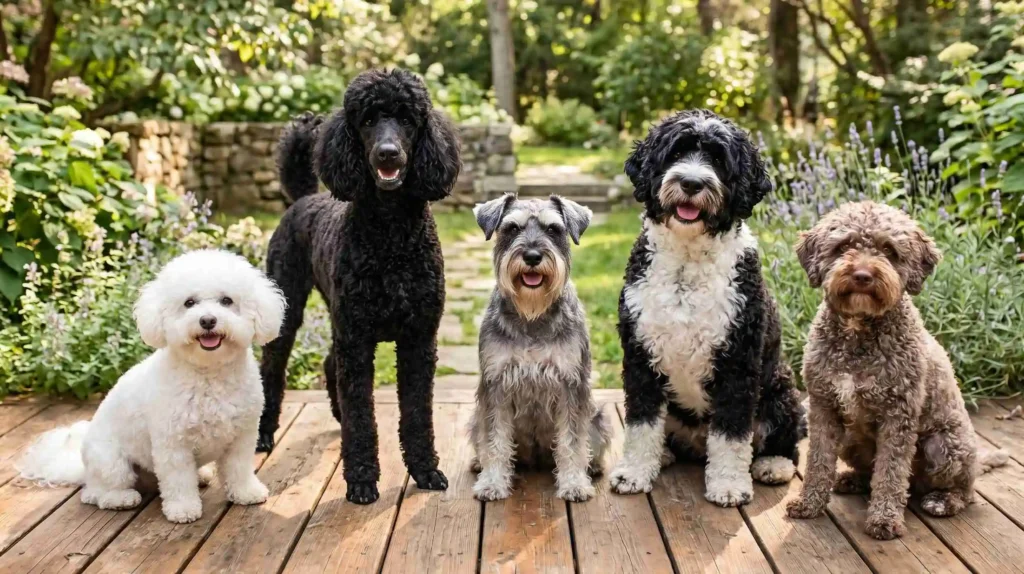
Table of Contents
Why Breed Choice Matters for Allergy Sufferers
Allergies are the second most common reason people surrender dogs to shelters. That’s a heartbreaking statistic, and it’s largely preventable. Choosing the right breed upfront can be the difference between a happy 15-year relationship and a miserable few months.
Research published in veterinary immunology journals confirms that different dogs — even within the same breed — produce varying levels of Can f 1. But breeds with curly coats trap loose hair and dander closer to the skin rather than releasing it into the air. Frequent grooming catches that trapped hair before it becomes airborne.
Beyond sneezing, untreated dog allergies can worsen asthma symptoms, cause chronic eczema flare-ups, and disrupt sleep. Choosing a hypoallergenic breed isn’t vanity — it’s a genuine health decision. If you’re also dealing with seasonal environmental allergies, the right dog breed makes your day-to-day life noticeably calmer.
The Science Behind Shedding and Allergens
Most people assume dog fur is the problem. It’s not — not exactly. Fur is the carrier. When dogs shed heavily, loose hairs carry dander (dried skin flakes containing Can f 1) through the air and onto every surface in your home. It lands on your pillow, your couch, and your sweater.
Curly and wavy coats work differently. The tight spiral or wave pattern holds shed hairs within the coat instead of releasing them. That’s why a Poodle’s coat feels almost like a lint trap — all those loose strands stay locked until you brush them out. This physical mechanism is the primary reason Poodle mixes dominate the hypoallergenic dog world.
Single-layer coats (no undercoat) also shed less because there’s no secondary layer of dense, soft fur constantly cycling through a seasonal molt. Breeds like the Maltese and Yorkshire Terrier have hair that grows more like human hair — slowly and continuously, without the dramatic seasonal blowouts that leave golden retriever fur in your morning coffee.
12 Best Hypoallergenic Dogs (Ranked by Popularity and Versatility)
1. Poodle (Toy, Miniature, and Standard)
The Poodle is the gold standard of hypoallergenic dogs, and for good reason. Their dense, curly single-layer coat traps shed hair and dander so effectively that they’re used as the base for dozens of popular crossbreeds. Poodles come in three sizes — from the compact 4-pound Toy to the athletic 70-pound Standard — so they fit virtually any living situation.
They’re also exceptionally intelligent. Poodles consistently rank among the top three smartest dog breeds, making training a genuine pleasure. They thrive on human connection and mental stimulation. The one trade-off: that glorious non-shedding coat grows continuously, so professional grooming every 6–8 weeks is non-negotiable.
Best for: Families, singles, apartment dwellers (Toy/Mini), active households (Standard)
2. Bichon Frise
Picture a small cloud with a cheerful face — that’s the Bichon Frise. Their double coat might sound alarming, but it’s uniquely structured: the soft undercoat and silkier outer coat trap shed fur internally rather than releasing it outward. According to the AKC, Bichons are among the most consistently low-allergen small breeds.
They’re playful, affectionate, and surprisingly sturdy for their size. They adapt well to apartments and homes alike, and they adore children. Daily brushing prevents matting, and monthly professional grooming keeps their signature fluffy look intact. If you’re searching for dogs that stay small forever without sacrificing personality, the Bichon Frise should top your list.
Best for: Apartment living, families with kids, first-time dog owners
3. Portuguese Water Dog
Made famous by the Obama family’s White House dogs, the Portuguese Water Dog is a medium-sized, athletic, and highly intelligent breed with a wavy or curly coat that sheds minimally. Originally bred to work alongside fishermen on the coast of Portugal, these dogs love water, exercise, and being part of the action.
Their coat comes in two textures — wavy or curly — but both are single-layer and low-shedding. They need plenty of daily exercise; a quick walk around the block won’t satisfy them. But if you’re an active person who wants an adventurous, hypoallergenic companion, this breed is hard to beat.
Best for: Active families, outdoor enthusiasts, experienced dog owners
4. Maltese
One of the oldest toy breeds in existence, the Maltese has a floor-length white coat that looks like it should shed constantly — but it barely does. Their silky, single-layer coat lacks an undercoat entirely, which means minimal dander release. They’re feather-light (usually under 7 pounds) and fiercely devoted to their humans.
Malteses can be a little strong-willed, but they respond beautifully to positive reinforcement training. They require daily brushing to prevent tangles and regular baths to keep that white coat bright. Their small size makes them ideal for anyone living in a flat or a house with limited outdoor space.
Best for: Singles, retirees, apartment dwellers, lap-dog lovers
5. Yorkshire Terrier
The Yorkshire Terrier’s coat is one of the most unusual in the dog world — it’s technically hair, not fur. It grows continuously, like human hair, without a dense undercoat. This means Yorkies shed almost nothing, and the dander that does shed stays mostly in the coat rather than floating through your home.
They’re bold, curious, and occasionally opinionated, which is endearing if you appreciate a dog with personality. Despite their small size, they have genuine terrier grit and love a good game or a brisk walk. Regular brushing and periodic trims keep the coat healthy and tangle-free.
Best for: City dwellers, people who want a small dog with a big personality
6. Schnauzer (Miniature, Standard, and Giant)
Schnauzers have a double coat, but don’t let that put you off. Their outer coat is wiry and hard-textured, which means it holds onto shed fur rather than releasing it into the environment. Regular hand-stripping or clipping keeps allergen levels low. Miniature Schnauzers are particularly popular among allergy sufferers because of their compact size and consistently low-shedding nature.
They’re alert, friendly, and surprisingly easy to train. Schnauzers tend to bond strongly with one or two people and can be protective of their families. If you’re looking for a breed that doubles as a watchdog, they tick that box naturally.
Best for: Families who want a hypoallergenic watchdog; size-flexible (Mini to Giant)
7. Soft Coated Wheaten Terrier
The Wheaten Terrier has a soft, silky single-layer coat that flows rather than sheds. It’s one of the most tactilely satisfying coats in dogdom — smooth and almost human-hair-like — and it produces very little airborne dander. Wheatens are energetic, playful, and deeply affectionate, with a distinctive “Wheaten greeting” involving full-body joy when you walk through the door.
They need regular brushing (daily during growth spurts) and professional grooming every 6–8 weeks. They can be stubborn, which makes early obedience training essential. But once they’re trained, they’re loyal, lively companions who are excellent with children.
Best for: Active families, experienced dog owners who want a medium-sized hypoallergenic breed
8. Chinese Crested
The Chinese Crested exists in two varieties: the Hairless (with fur only on the head, feet, and tail) and the Powderpuff (fully coated). The Hairless variety is about as hypoallergenic as a dog gets — no coat means no fur, no dander trapped in fur, and minimal shedding. The trade-off is that their exposed skin needs regular moisturizing and sun protection.
Powderpuffs have a fine, silky double coat that sheds very little. Both varieties are affectionate, playful, and surprisingly athletic. They’re loyal to their primary person to an almost velcro-like degree. If you find conventional dogs trigger your allergies regardless of breed, the Hairless Chinese Crested is worth serious consideration.
Best for: Severe allergy sufferers, people who want a truly unique breed
9. Shih Tzu
The Shih Tzu was bred as a companion dog for Chinese royalty, and their luxurious double coat is one of the defining features of the breed. But here’s the twist: that coat grows slowly, sheds minimally, and captures loose hair within the layers rather than broadcasting it into the air. Their allergen output is notably lower than most double-coated breeds.
Shih Tzus are calm, gentle, and deeply loyal. They’re happy in apartments and tend to get along beautifully with children and other pets. Their faces are flat (brachycephalic), which means you’ll want to watch for breathing issues in very hot weather. Daily brushing and regular professional grooming are musts to keep matting at bay.
Best for: Families, retirees, multi-pet households
10. Havanese
Cuba’s national dog, the Havanese is a cheerful, sociable breed with a long, silky, double-layer coat that sheds very little. They’re energetic enough to enjoy play sessions but calm enough to relax on the couch for hours. The Havanese is also remarkably trainable — they’ve been used as therapy dogs and even circus performers because they learn so quickly.
Their coat grows long and can be kept natural or trimmed into a shorter “puppy cut” for easier maintenance. Either way, shedding is minimal and allergy reactions are typically low. Many owners of Havanese dogs with moderate allergies report managing comfortably without additional medication.
Best for: Apartment dwellers, families with children, therapy dog candidates
11. Lagotto Romagnolo
Lesser-known outside Europe but gaining serious traction in allergy-conscious households, the Lagotto Romagnolo (Italian water dog) has a thick, curly, woolly coat that — like a Poodle’s — traps shed fur and dander internally. Originally bred to hunt truffles in northern Italy, they are intelligent, eager to please, and gentle by nature.
Their energy level is moderate; they enjoy a good run or training session but don’t demand constant activity. Grooming needs are real — that curly coat mats if neglected — but their allergen profile is genuinely low. If you want a hypoallergenic breed that isn’t a Poodle mix, the Lagotto is one of the best alternatives.
Best for: Families, dog sport enthusiasts, allergy sufferers who want a pure breed
12. Basenji
The Basenji earns the final spot for a unique reason: they groom themselves like cats and shed minimally year-round. Their short, fine coat produces very little dander, and their quiet nature (they don’t bark — they yodel) makes them ideal for apartment living. They’re independent, curious, and athletic, with a strong prey drive that requires a securely fenced yard.
Basenjis are not the easiest dogs to train — their cat-like independence means they’ll follow commands when they feel like it. But for the right owner, they’re absolutely fascinating. Their allergen output is among the lowest of any short-haired breed, making them a smart pick for people who want a low-maintenance hypoallergenic dog.
Best for: Experienced dog owners, active individuals, allergy sufferers who prefer short-coated breeds
Skin and Coat Health: Why It Matters for Allergen Control
Even the most hypoallergenic breed will produce more dander if their skin is dry, irritated, or unhealthy. Skin inflammation, hot spots, and yeast overgrowth all increase the amount of flaking skin — which means more Can f 1 in your environment. Keeping your dog’s coat and skin in top condition directly reduces your allergy burden.
Diet plays a massive role here. Dogs fed diets rich in omega-3 fatty acids tend to have more supple skin, less flaking, and shinier coats. According to the AVMA, nutritional deficiencies are one of the leading contributors to poor skin and coat condition. If you’re already supporting a hypoallergenic breed, backing it up with the right nutrition is a smart next step. Choosing the best dog food for itchy skin can make a significant difference in how much dander your dog produces.
A high-quality omega-3 supplement bridges nutritional gaps between meals. Zesty Paws Wild Alaskan Omega-3 Blend is formulated with both pollock and salmon oil, delivering a potent mix of EPA and DHA that directly supports skin barrier function. It’s ideal for low-shedding breeds where skin health is paramount — healthy skin means fewer flakes, less dander, and fewer reactions for the humans sharing the home. It comes in a 32oz liquid bottle that mixes easily into food. The main limitation is that some picky eaters notice the fishy scent, though most dogs take to it enthusiastically.
CHECK PRICE ON AMAZON: https://amzn.to/4akcAVn
Common Mistakes Allergy-Sufferers Make When Choosing a Dog
- Choosing based on looks alone. The fix: research the breed’s coat type and shedding profile before falling in love with a face.
- Assuming “hypoallergenic” means “allergy-free.” The fix: spend at least two hours with the specific dog before committing to adoption — individual variation is real.
- Skipping regular grooming. The fix: maintain a strict grooming schedule; even hypoallergenic coats accumulate trapped dander over time.
- Bathing too infrequently. The fix: bathe your dog every 2–4 weeks with a gentle, skin-safe shampoo to wash away surface allergens.
- Neglecting the home environment. The fix: use HEPA air filters, wash bedding weekly, and vacuum with a HEPA-equipped vacuum to control ambient allergen levels.
- Choosing an energetic breed for a sedentary lifestyle. The fix: match the breed’s exercise needs to your actual daily routine — a bored Portuguese Water Dog is not a hypoallergenic dog, it’s a chaotic one.
- Ignoring nutrition’s role in dander production. The fix: feed a diet rich in omega-3s and consider dog supplements to support skin and coat health from the inside out.
Grooming a Hypoallergenic Dog: What You Actually Need to Do
Grooming a low-shedding breed is not easier than grooming a heavy shedder — it’s just different. Non-shedding coats grow continuously and mat if neglected. Here’s a practical routine for keeping allergen levels low:
Step 1: Brush three to five times per week. This removes loose, trapped hair before it can accumulate. For curly coats like Poodles and Bichons, use a slicker brush followed by a metal comb. For silky coats like Maltese and Yorkies, a soft pin brush works best.
Step 2: Bathe every two to four weeks. Use a gentle, pH-balanced dog shampoo. If your dog has sensitive skin or occasional itching — common even in hypoallergenic breeds — a chlorhexidine-based medicated shampoo helps maintain healthy skin flora while removing allergen-laden residue.
Pet Honesty Chlorhexidine Dog Shampoo is a solid choice for hypoallergenic breeds prone to seasonal itching or minor skin sensitivity. The Pet Honesty Chlorhexidine Shampoo uses an antiseptic formula that clears surface bacteria and yeast without stripping the skin of its natural oils. It’s particularly useful for dogs with skin folds (like Shih Tzus) or anyone prone to hot spots. At 16oz, it’s a decent size for monthly use. One mild limitation: the scent is medicinal rather than perfumed, but that’s a fair trade for the skin-health benefit.
CHECK PRICE ON AMAZON: https://amzn.to/4axh7CF
Step 3: Trim the coat every 6–8 weeks. Most hypoallergenic breeds require professional grooming or at-home clipping to prevent the coat from growing too long, matting, and trapping more allergens. For owners who want to manage between professional appointments, a reliable set of cordless clippers makes this straightforward.
oneisall Dog Clippers are a strong pick for home grooming of thick or continuously-growing coats. The oneisall Dog Clippers are rechargeable, cordless, and designed specifically for heavy coats, with stainless steel blades that cut cleanly without snagging. They run quietly, which is important for dogs that get anxious around grooming tools. Waterproof and easy to clean. The main caveat: they’re better for maintenance trims between professional visits than for full sculpted cuts on breeds like Poodles.
CHECK PRICE ON AMAZON: https://amzn.to/40agbz9
Step 4: Clean ears and facial folds regularly. Low-shedding breeds with curly coats (Poodles, Portuguese Water Dogs) have hair that grows inside the ear canal, which can trap moisture and cause infections. A gentle ear cleaner applied every 2–3 weeks keeps this in check.
Step 5: Vacuum and air-filter the home frequently. Your grooming routine reduces what the dog carries. HEPA filtration reduces what’s already in the air. Both matter.
Hypoallergenic Dog Crossbreeds Worth Considering
The explosion of designer doodle breeds isn’t just a trend — it’s largely driven by the Poodle’s non-shedding coat being crossed with popular family breeds. Common hypoallergenic crosses include:
- Goldendoodle / Labradoodle — Poodle crossed with Golden or Labrador Retriever; energy and friendliness of a retriever, low-shedding Poodle coat.
- Mini Goldendoodle — Compact version ideal for apartment living, inheriting the same low-allergen qualities.
- Cavapoo — Cavalier King Charles Spaniel × Poodle; calm, gentle, and particularly good for families with young children.
- Maltipoo — Maltese × Poodle; tiny, affectionate, and one of the lowest-shedding crossbreeds available.
Note that crossbreeds aren’t guaranteed to inherit the low-shedding trait. A Labradoodle can range from barely shedding to shedding nearly as much as a Lab. When adopting or buying a doodle, ask about the parent dogs’ coats and look at the specific puppy’s coat texture — curlier almost always means less shedding.
If you prefer larger companions, our guide to big dogs that don’t shed covers the best large hypoallergenic breeds in detail.
Step-by-Step Guide: Choosing the Right Hypoallergenic Dog for Your Home
- Assess your allergy severity. Mild sneezing? Almost any breed on this list will work. Severe reactions involving asthma? Prioritize hairless breeds (Chinese Crested) or the curliest-coated options (Poodle, Lagotto).
- Match energy level to your lifestyle. Portuguese Water Dogs and Wheaten Terriers need real daily exercise. Malteses and Bichons are happy with shorter walks and indoor play.
- Consider your living space. Standard Poodles and Giant Schnauzers need room to move. Toy Poodles, Malteses, and Bichons thrive in flats.
- Factor in grooming commitment. Every non-shedding breed requires regular brushing and periodic professional grooming. Budget £50–£100 per grooming session depending on size.
- Research best dog food for allergies to support your dog’s skin health from day one.
- Spend time with the breed before adopting. Visit a reputable breeder or rescue and ask to spend at least an hour with the dog in an enclosed space. Note any allergic response.
- Prepare your home. Install HEPA air filters in main living areas, set up a regular vacuuming schedule, and designate dog-free sleeping zones if your reactions are moderate or severe.
Troubleshooting: When Hypoallergenic Isn’t Enough
- If you’re still sneezing daily: Check whether the reaction is triggered by dander, saliva, or urine — all three contain Can f 1. Wash your dog’s bedding twice weekly and avoid face licks.
- If your dog’s skin looks dry or flaky: Review the diet. A fish oil supplement supports the skin barrier significantly.
- If grooming sessions trigger reactions: Wear a mask and gloves during baths and brushing, or ask a non-allergic family member to handle grooming.
- If certain rooms are worse than others: HEPA filtration is most critical in the bedroom — keep dogs out of this room entirely if symptoms are severe.
- If symptoms worsen seasonally: Pollen hitches rides on dog fur during outdoor walks. Wipe your dog down with a damp cloth after walks during high-pollen periods.
- If a hairless breed isn’t practical: The Basenji and Schnauzer are the next-lowest allergen producers among shorthaired/wiry-coated breeds.
When to See a Professional
Choosing a hypoallergenic breed reduces allergen exposure but doesn’t eliminate it. See your doctor or allergist if:
- You experience asthma attacks or significant breathing difficulty around any dog
- Skin reactions (hives, eczema flares) persist despite choosing a low-shedding breed
- Your symptoms worsen over time rather than improving after the initial adjustment period
- You notice the dog developing skin issues — excessive scratching, hair loss, or hot spots — as this increases dander production significantly
Your vet is your dog’s best resource for managing coat and skin health. Annual check-ups catch nutritional deficiencies and skin conditions early. If you notice unusual dog hair loss or persistent coat issues in your hypoallergenic dog, veterinary assessment is important.
Expert Opinion
Veterinarians and allergists agree on one key point: the term “hypoallergenic” describes a spectrum, not a category. According to the AVMA, pet allergies are triggered primarily by the Can f 1 protein found in skin cells, saliva, and urine — not fur itself. Fur acts as a vehicle for dander distribution, which is why lower-shedding breeds consistently produce fewer reactions.
The AKC recommends that allergy sufferers prioritize breeds with non-shedding or very low-shedding coats and invest in consistent grooming and home hygiene practices rather than relying on breed choice alone. Combining a genuinely low-allergen breed with regular bathing, HEPA filtration, and omega-3 dietary support creates a layered approach that most allergy sufferers find highly effective. This guidance is general information and is not a substitute for consultation with your own doctor or veterinarian.
FAQs
Is any dog truly 100% hypoallergenic? No dog is completely allergen-free. All dogs produce Can f 1 protein in their skin, saliva, and urine. “Hypoallergenic” means a breed produces significantly lower levels — not zero — making it more manageable for allergy sufferers.
What is the single best hypoallergenic dog for families with children? The Bichon Frise and Havanese consistently rank as top family picks. Both are gentle with children, low-shedding, and adaptable to family life. For larger families needing a bigger dog, the Standard Poodle is an excellent choice.
Do Poodle mixes always inherit the hypoallergenic coat? Not always. Coat inheritance in crossbreeds depends on which parent’s genes are expressed. A curlier-coated doodle typically sheds less; a wavy or straight-coated doodle may shed more. There’s no guarantee without seeing the puppy’s coat at around 8 weeks.
How often should I bathe a hypoallergenic dog to reduce allergens? Most veterinarians recommend bathing every two to four weeks. More frequent bathing can dry out the skin and actually increase dander production. Use a gentle, pH-balanced shampoo.
Are short-haired dogs more hypoallergenic than long-haired ones? Not necessarily. Coat length matters less than shedding frequency. A long-haired Maltese sheds less than a short-haired Labrador Retriever. The key is how much loose hair — and attached dander — enters the environment.
Can you be allergic to a hypoallergenic dog? Yes. Even the lowest-allergen breeds produce some Can f 1. People with severe allergies may still react, especially to saliva contact. An allergist test and a trial visit with the dog are both highly recommended before adoption.
What’s the easiest hypoallergenic dog to groom? The Basenji requires almost no grooming — they self-groom like cats. For small breeds, the Yorkshire Terrier with a short “puppy cut” trim needs minimal maintenance. Bichons and Poodles require the most regular grooming commitment.
Are hypoallergenic dogs more expensive? Generally, yes. Low-shedding breeds and doodle crosses are in high demand, which drives up breeder prices. However, adoption fees at rescues are typically far lower. Many hypoallergenic breeds are available through breed-specific rescue organizations.
Does diet affect how many allergens a dog produces? Yes, significantly. Dogs with omega-3-rich diets tend to have healthier skin with less dryness and flaking, which directly reduces dander output. Choosing the right nutrition is one of the most underrated strategies for allergen control.
Are hypoallergenic dogs good for seniors or people with limited mobility? Many are excellent choices. The Maltese, Bichon Frise, Shih Tzu, and Havanese are all calm, affectionate, low-shedding breeds that are manageable for seniors. Check our guide on best dogs for seniors for more tailored recommendations.
Conclusion
Living with dog allergies doesn’t mean living without a dog. The best hypoallergenic dogs — from the ever-popular Poodle to the remarkable Basenji — offer real, meaningful reductions in the allergens that make life miserable for sensitive owners. The key is approaching your decision with clear eyes: match the breed’s energy and grooming needs to your lifestyle, invest in regular bathing and coat care, and support skin health through quality nutrition.
Allergies are manageable. Thousands of allergy-sufferers share their homes — and their hearts — with dogs every single day. Start by identifying which breeds on this list align with your space, schedule, and sensitivity level. Then spend real time with that breed before committing. Your perfect dog is out there, and with the right knowledge, finding them doesn’t have to come at the cost of your health.