You’re relaxing on the couch when your dog suddenly starts making those awful retching sounds. Their body contracts, their neck stretches forward, but nothing comes up. Dog dry heaving is one of the most unsettling things to watch, and your first instinct is probably panic. You’re not alone — it’s one of the most searched dog health concerns for good reason.
Quick Answer
Dog dry heaving (also called retching or non-productive vomiting) is when your dog makes repeated gagging motions without bringing anything up. It can be caused by something as simple as eating too fast or as serious as bloat (GDV), which is a life-threatening emergency. Knowing the difference can literally save your dog’s life.
TL;DR: Most dog dry heaving passes on its own within a few minutes. But if your dog’s stomach looks swollen, they’re pacing or restless, or the retching won’t stop, get to a vet immediately — it could be bloat.
Key Takeaways
- Dry heaving that lasts more than a few minutes or comes with a bloated belly is a veterinary emergency.
- Common causes include eating too fast, mild nausea, kennel cough, and foreign objects stuck in the throat.
- Bloat (gastric dilatation-volvulus) is the most dangerous cause and requires surgery within hours.
- Slow feeder bowls and smaller, more frequent meals can prevent many cases of dry heaving.
- Always monitor for secondary symptoms like drooling, pacing, lethargy, or a hard abdomen.
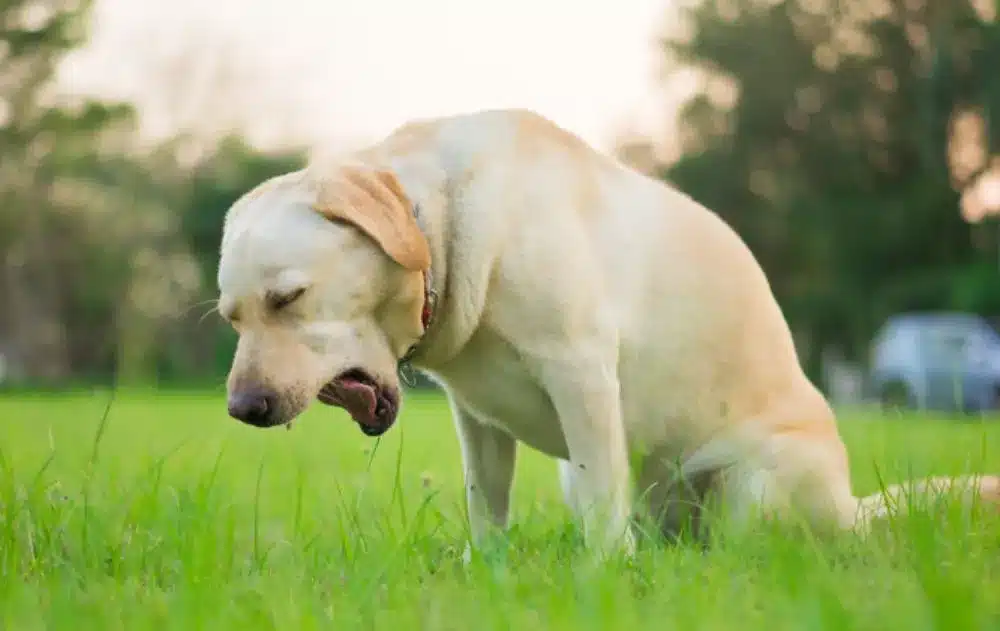
Table of Contents
Why Dog Dry Heaving Matters More Than You Think
It’s tempting to brush off dog dry heaving as “just a weird thing dogs do.” And sometimes, that’s exactly what it is. But the reason veterinarians take retching seriously is because it shares symptoms with bloat, one of the deadliest canine emergencies.
According to the American Kennel Club, bloat can kill a dog within hours if untreated. Large, deep-chested breeds like Great Danes, German Shepherds, and Standard Poodles are most at risk, but it can happen to any dog. The stomach fills with gas, twists on itself, and cuts off blood supply to vital organs.
Even when bloat isn’t the cause, repeated dry heaving puts stress on the esophagus and abdominal muscles. Chronic retching can signal underlying issues like acid reflux, respiratory infections, or gastrointestinal blockages that need attention.
The good news? Most causes are manageable once you know what you’re dealing with.
What Happens When a Dog Dry Heaves
Dry heaving is your dog’s body trying to vomit without success. The diaphragm contracts, the abdominal muscles tighten, and the glottis opens — but the stomach either has nothing to expel or something is preventing the contents from coming up.
Here’s what’s happening inside your dog during a dry heave. The vagus nerve, which runs from the brain to the abdomen, gets triggered by irritation in the stomach, throat, or esophagus. This sends a signal to the vomiting center in the brain, which activates the retching reflex.
In a productive vomit, that process ends with stomach contents being expelled. In dry heaving, the cycle repeats without resolution. That’s what makes it so uncomfortable for your dog and so stressful for you to watch.
Dry heaving looks different from coughing, gagging, or reverse sneezing. During a dry heave, your dog’s entire body engages. You’ll see abdominal contractions, an extended neck, and an open mouth. If your dog is also coughing alongside the retching, that can point toward respiratory causes like kennel cough or tracheal irritation.
Common Causes of Dog Dry Heaving
Understanding why your dog is dry heaving narrows down what you need to do about it. Here are the most frequent culprits.
Eating too fast. This is the number one cause in otherwise healthy dogs. When dogs gulp their food, they swallow large amounts of air along with it. That air builds up in the stomach and triggers the retching reflex. You’ll usually notice it within 15–30 minutes of a meal.
Bloat (Gastric Dilatation-Volvulus). The most dangerous cause. The stomach fills with gas and may twist, trapping the contents inside. Symptoms include a visibly distended abdomen, restlessness, drooling, and unsuccessful attempts to vomit. This is a surgical emergency.
Foreign object obstruction. Dogs explore the world with their mouths. Sticks, bones, toy fragments, and socks are common offenders. If something is lodged in the throat or esophagus, your dog will retch repeatedly without producing anything.
Kennel cough. This highly contagious respiratory infection causes a harsh, honking cough that often ends in a gag or dry heave. If your dog recently visited a boarding facility, dog park, or grooming salon, kennel cough is a likely suspect. Keeping your dog’s vaccinations up to date is the best prevention.
Nausea or acid reflux. Just like humans, dogs can feel nauseous from motion sickness, medication side effects, dietary changes, or an empty stomach. Morning dry heaving on an empty stomach often points to bile reflux. If your dog is also throwing up yellow bile, acid reflux is likely at play.
Tonsillitis or throat irritation. Swollen tonsils, post-nasal drip, or irritation from inhaling dust or smoke can trigger the gag reflex and lead to dry heaving episodes.
Common Mistakes Dog Owners Make (and Fixes)
- Mistake: Assuming dry heaving is always harmless. The fix: Always check for a bloated or hard abdomen. If the stomach feels tight like a drum, go to the emergency vet now.
- Mistake: Giving food or water immediately after an episode. The fix: Wait 30–60 minutes after the dry heaving stops before offering small sips of water. Reintroduce food slowly with a bland diet.
- Mistake: Trying to reach into the dog’s throat to check for an obstruction. The fix: You risk getting bitten or pushing the object deeper. Let a vet handle it with proper tools and sedation.
- Mistake: Ignoring recurring dry heaving because “nothing comes up.” The fix: If episodes happen more than once a week, keep a log of timing, meals, and activity. Share this with your vet.
- Mistake: Feeding one large meal per day to a deep-chested breed. The fix: Split daily food into two or three smaller meals. Avoid exercise 30 minutes before and after eating.
- Mistake: Using elevated food bowls for bloat-prone breeds. The fix: Research from Purdue University actually found that elevated bowls may increase bloat risk in large dogs. Feed at ground level unless your vet specifically recommends otherwise.
Slowing Down a Fast Eater to Prevent Dry Heaving
One of the simplest ways to stop recurring dry heaving is addressing how your dog eats. Fast eaters swallow massive amounts of air, and that excess air is the direct trigger for post-meal retching in most healthy dogs.
A slow feeder bowl forces your dog to work around ridges and obstacles to reach their food. This naturally slows eating speed by 5 to 10 times and dramatically reduces the amount of air swallowed with each bite.
Outward Hound Fun Feeder Slo Bowl is a popular choice among dog owners dealing with gulping and post-meal gagging. It holds up to 4 cups of food, features a non-slip base to prevent sliding, and the flower-pattern ridges genuinely slow dogs down. It’s ideal for medium to large breeds who inhale their meals. The one downside is that very determined chewers may gnaw on the ridges over time, so it works best for dogs who eat enthusiastically but aren’t destructive.
CHECK PRICE ON AMAZON: https://amzn.to/40buzas
For owners who want something specifically engineered for larger breeds, the JASGOOD Slow Feeder Dog Bowl offers deeper channels and a wider base for added stability. Its anti-gulping design was built to reduce bloating and choking risk, making it a solid pick for deep-chested dogs like Labradors, Boxers, or German Shepherds. The material feels durable, and it’s dishwasher safe. It may be too challenging for very small dogs or puppies, so size your choice carefully.
CHECK PRICE ON AMAZON: https://amzn.to/4bSghCM
What to Do When Your Dog Is Dry Heaving: Step by Step
- Stay calm and observe. Panicking won’t help your dog. Watch their body language closely for 2–3 minutes. Note whether the retching is producing any foam, bile, or nothing at all.
- Check the abdomen. Gently feel your dog’s belly. A normal belly is soft and pliable. A bloated belly feels tight, swollen, and drum-like. If the abdomen is distended, skip the remaining steps and go to the emergency vet.
- Look inside the mouth (carefully). If your dog allows it, gently open their mouth and look for visible obstructions like sticks, bone fragments, or string. Do not reach in blindly.
- Remove food and water temporarily. If your dog just ate, take away the food bowl. Offer nothing by mouth for 30–60 minutes to let the stomach settle.
- Monitor for escalation. Watch for drooling, pacing, whining, a hunched posture, or repeated unsuccessful attempts to vomit. Any of these signals need a vet visit within the hour.
- Try a short, gentle walk. If your dog seems otherwise normal, a slow walk can help move trapped gas through the digestive tract. Keep it short — 5 to 10 minutes.
- Reintroduce food gradually. When the episode has passed, offer a small portion of bland food like boiled chicken and plain rice. If your dog keeps it down for an hour, return to their regular diet at the next meal.
- Log the episode. Write down the date, time, what your dog ate, how long the retching lasted, and any other symptoms. This information is invaluable if you need to visit the vet later.
Troubleshooting: Quick If/Then Guide
- If dry heaving happens only after meals → Then switch to a slow feeder and split meals into smaller portions.
- If the belly is hard and swollen → Then go to the emergency vet immediately. Do not wait.
- If your dog also has a honking cough → Then suspect kennel cough and schedule a vet appointment within 24 hours.
- If dry heaving occurs mostly in the morning on an empty stomach → Then try feeding a small snack before bedtime to reduce bile buildup.
- If your dog is drooling heavily and pawing at their mouth → Then suspect a foreign body. Head to the vet for imaging.
- If episodes happen after exercise → Then wait at least 30 minutes after eating before any vigorous activity.
- If your dog recently ate something unusual (garbage, bones, a toy) → Then monitor closely and contact your vet if retching continues beyond 30 minutes.
Supporting a Dog Prone to Nausea and Digestive Issues
Some dogs are just more prone to sensitive stomachs, especially after dietary changes, stressful events, or rounds of medication. A quality probiotic can help stabilize the gut flora and reduce nausea-related dry heaving over time.
Purina Pro Plan FortiFlora is one of the most widely recommended probiotics by veterinarians. Each packet contains a guaranteed level of live microorganisms that support digestive health and stool quality. It’s especially useful for dogs recovering from antibiotics, experiencing stress-related stomach upset, or dealing with chronic loose stools that sometimes precede dry heaving. The individual packets make dosing easy, and most dogs love the taste. The only drawback is the per-serving cost, which adds up for multi-dog households. If your dog’s digestive issues are linked to broader nutritional gaps, exploring a complete supplements guide can help you build a well-rounded plan.
CHECK PRICE ON AMAZON: https://amzn.to/3ZySvV4
When to See a Vet About Dog Dry Heaving
Not every episode needs a vet visit, but certain red flags demand immediate attention. Don’t second-guess these warning signs.
Go to the emergency vet right now if:
- Your dog’s stomach is visibly bloated or feels hard and tight.
- They’re pacing, restless, or can’t get comfortable.
- Dry heaving has continued for more than 15–20 minutes without producing anything.
- Your dog is drooling excessively or appears to be in pain.
- They collapse or seem weak and unsteady.
Schedule a regular vet visit if:
- Dry heaving happens more than once a week.
- Your dog has lost weight or appetite alongside the episodes.
- The retching is accompanied by diarrhea or bloody stool.
- Your dog has been coughing for more than a few days.
- You suspect they swallowed a foreign object, even if they seem fine now.
Expert Opinion
Dog dry heaving sits in a tricky gray zone. Most of the time, it resolves on its own and the cause is something benign like swallowed air, mild nausea, or a tickle in the throat. But the overlap with bloat symptoms is what makes every episode worth taking seriously.
Veterinarians consistently emphasize that bloat is a time-sensitive emergency. According to the American Veterinary Medical Association (AVMA), gastric dilatation-volvulus progresses rapidly and requires immediate surgical intervention. The survival rate drops significantly with every hour of delay. For owners of large and deep-chested breeds, having a bloat action plan — knowing where the nearest 24-hour emergency vet is — can make a life-or-death difference.
For recurring non-emergency dry heaving, the most effective long-term approach combines dietary management (slow feeders, smaller meals, consistent feeding times) with gut health support (probiotics, avoiding sudden food changes). This information is for general guidance and should not replace a professional veterinary diagnosis.
Frequently Asked Questions
Why is my dog dry heaving but acting normal?
Most likely they swallowed air while eating or drinking too fast. If they’re playful, eating well, and the retching stops quickly, it’s usually nothing serious. Monitor for any changes over the next few hours.
Is dog dry heaving the same as gagging?
Not exactly. Gagging is a throat reflex, while dry heaving involves full abdominal contractions like vomiting but without producing anything. Dry heaving engages the diaphragm and stomach muscles more intensely.
Can dry heaving be a sign of bloat?
Yes. Non-productive retching is one of the earliest and most recognizable symptoms of bloat (GDV). If combined with a swollen belly, restlessness, or drooling, treat it as an emergency.
What breeds are most prone to dry heaving from bloat?
Large, deep-chested breeds face the highest risk. Great Danes, Standard Poodles, German Shepherds, Weimaraners, Boxers, and Saint Bernards are among the most commonly affected according to the AKC.
Should I feed my dog after dry heaving?
Wait at least 30–60 minutes. Then offer a small amount of bland food like boiled chicken with white rice. If they keep it down without retching, you can resume normal feeding at the next meal.
Can kennel cough cause dry heaving?
Yes. The persistent hacking cough from kennel cough often triggers a gag or retch at the end. It typically sounds like a goose honk and may produce white foam.
Does dry heaving mean my dog swallowed something?
It’s possible. Dogs that retch repeatedly and paw at their mouth or drool heavily may have a foreign object stuck in their throat or esophagus. A vet can use X-rays or endoscopy to confirm.
How can I prevent my dog from dry heaving?
Use a slow feeder bowl, split meals into two or three servings, avoid exercise immediately after eating, and keep small objects out of reach. For bloat-prone breeds, discuss preventive gastropexy with your vet.
When should I worry about dog dry heaving?
Worry when it lasts longer than 15 minutes, comes with a swollen belly, or your dog shows signs of pain or distress. Also see a vet if episodes happen frequently, even if they seem mild.
Can stress cause dry heaving in dogs?
Yes. Anxiety and stress can trigger nausea and retching in dogs, just like in humans. If your dog dry heaves during thunderstorms, car rides, or when left alone, exploring anxiety management strategies can help.
Wrapping Up
Dog dry heaving looks scary, but knowledge turns panic into confidence. Now you know the difference between a harmless post-meal retch and the warning signs of bloat. You know how to check your dog’s abdomen, when to wait it out, and when to get in the car and drive to the emergency vet.
For everyday prevention, start with the basics: slow feeder bowls, properly portioned meals, and keeping small chewable objects away from curious mouths. If your dog has a sensitive stomach, adding a probiotic to their routine can smooth things out over time. And for bloat-prone breeds, talk to your vet about preventive gastropexy during their next check-up.
The most important thing you can do is pay attention. Dogs can’t tell us when something feels wrong, but dry heaving is their body’s way of waving a red flag. Trust your gut, watch for the warning signs, and when in doubt, call your vet. Your dog is counting on you.